Loading subject page…


16,515 views


Video Summary: Equilibrium Conditions for a Particle Explained
Ever wonder why a balanced seesaw stays perfectly still? Equilibrium conditions for a particle determine whether objects remain at rest or move with constant velocity. When forces acting on a particle result in zero net force and zero net torque, the system achieves equilibrium-just like the Golden Gate Bridge's suspension cables maintaining perfect balance under massive loads. Watch the full video on JoVE Coach to master this concept with expert-led visuals and step-by-step explanations.
Equilibrium represents one of physics' most fundamental concepts, governing everything from skyscrapers to molecular interactions. When we examine equilibrium conditions for a particle, we're studying the precise mathematical relationships that determine whether an object will maintain its current state of motion-or lack thereof.
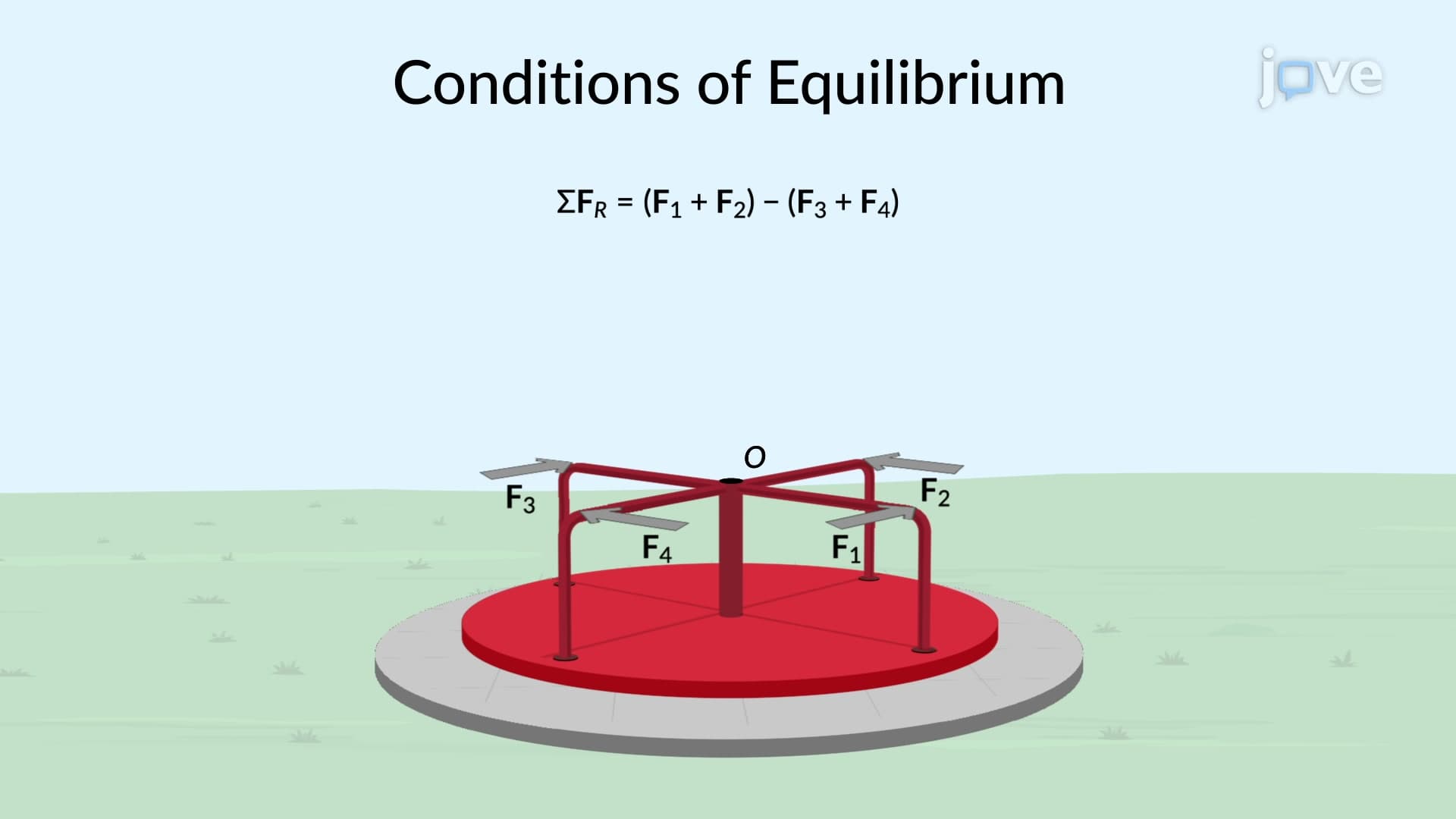
For any particle to achieve equilibrium, two conditions must be satisfied simultaneously. First, the vector sum of all forces acting on the particle must equal zero (ΣF = 0). This means forces in opposite directions must perfectly cancel each other out. Second, the net torque about any axis through the particle must be zero (Στ = 0), ensuring no rotational tendency exists.
These conditions apply whether we're analyzing a stationary traffic light suspended by cables or a satellite orbiting Earth at constant velocity. In both cases, the net force equals zero-gravity pulls down on the traffic light while tension pulls up, and gravitational force provides exactly the centripetal force needed for the satellite's circular motion.
Static equilibrium occurs when a particle remains completely at rest, like the Washington Monument standing motionless despite wind forces and its own weight. Engineers designing such structures must ensure all forces-compression, tension, and lateral loads-perfectly balance.
Dynamic equilibrium involves motion at constant velocity, exemplified by a commercial airliner cruising at 35,000 feet. Thrust exactly balances drag, while lift precisely counteracts weight, allowing the aircraft to maintain steady flight. This principle applies equally to cars traveling on level highways at constant speed.
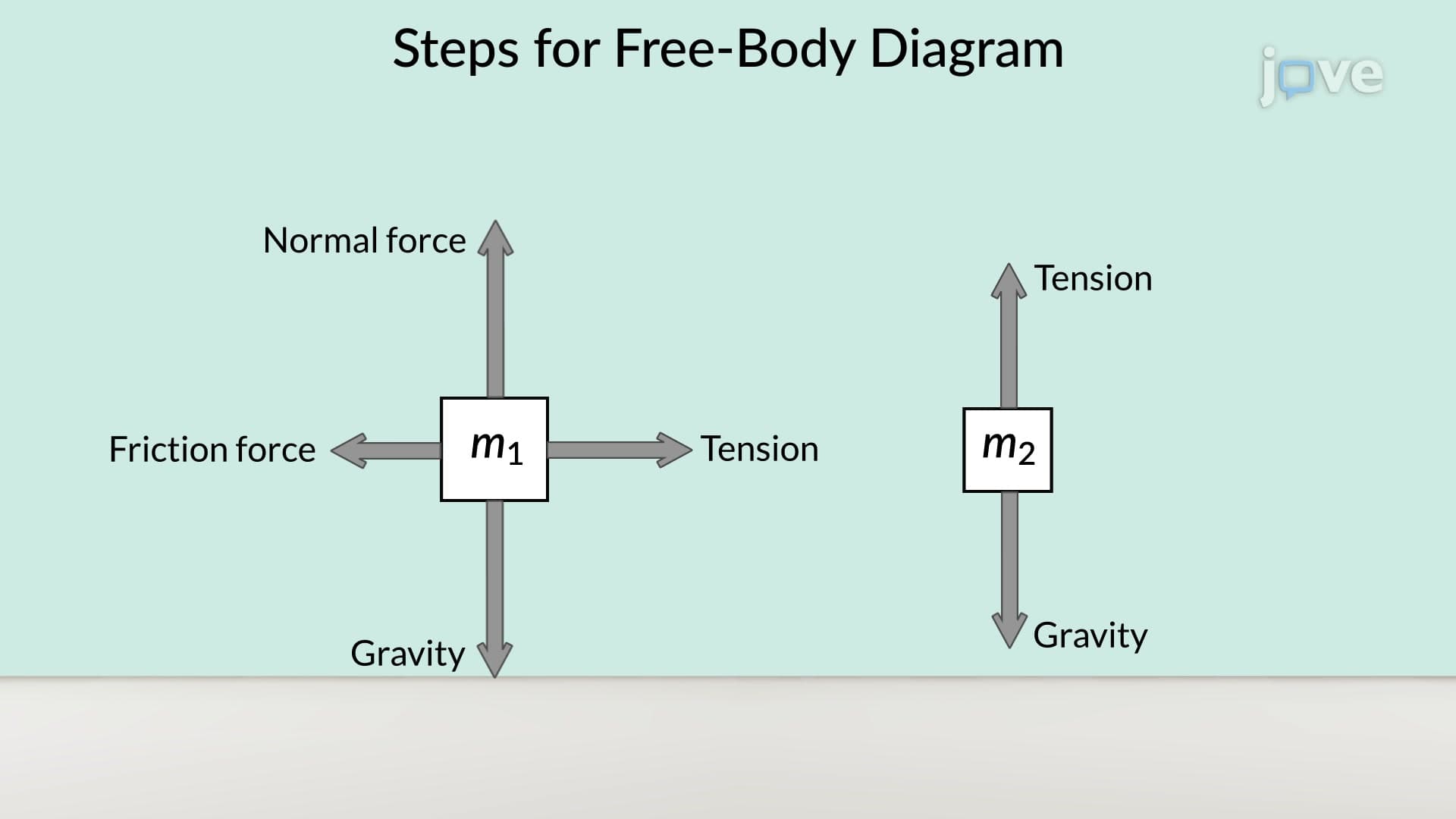
Equilibrium problems frequently appear on AP Physics exams, SAT Subject Tests, and college mechanics courses. Students typically encounter scenarios involving hanging signs, balanced levers, or objects on inclined planes. The key strategy involves drawing accurate free-body diagrams, identifying all forces, and applying equilibrium equations systematically.
For example, when analyzing a traffic light hanging from two cables at different angles, students must resolve forces into components, apply ΣFx = 0 and ΣFy = 0, then solve the resulting system of equations. This mathematical approach transfers directly to engineering applications, from bridge design to aerospace systems.
Related Micro-courses