Loading video…


 9 Concepts
 10.9K views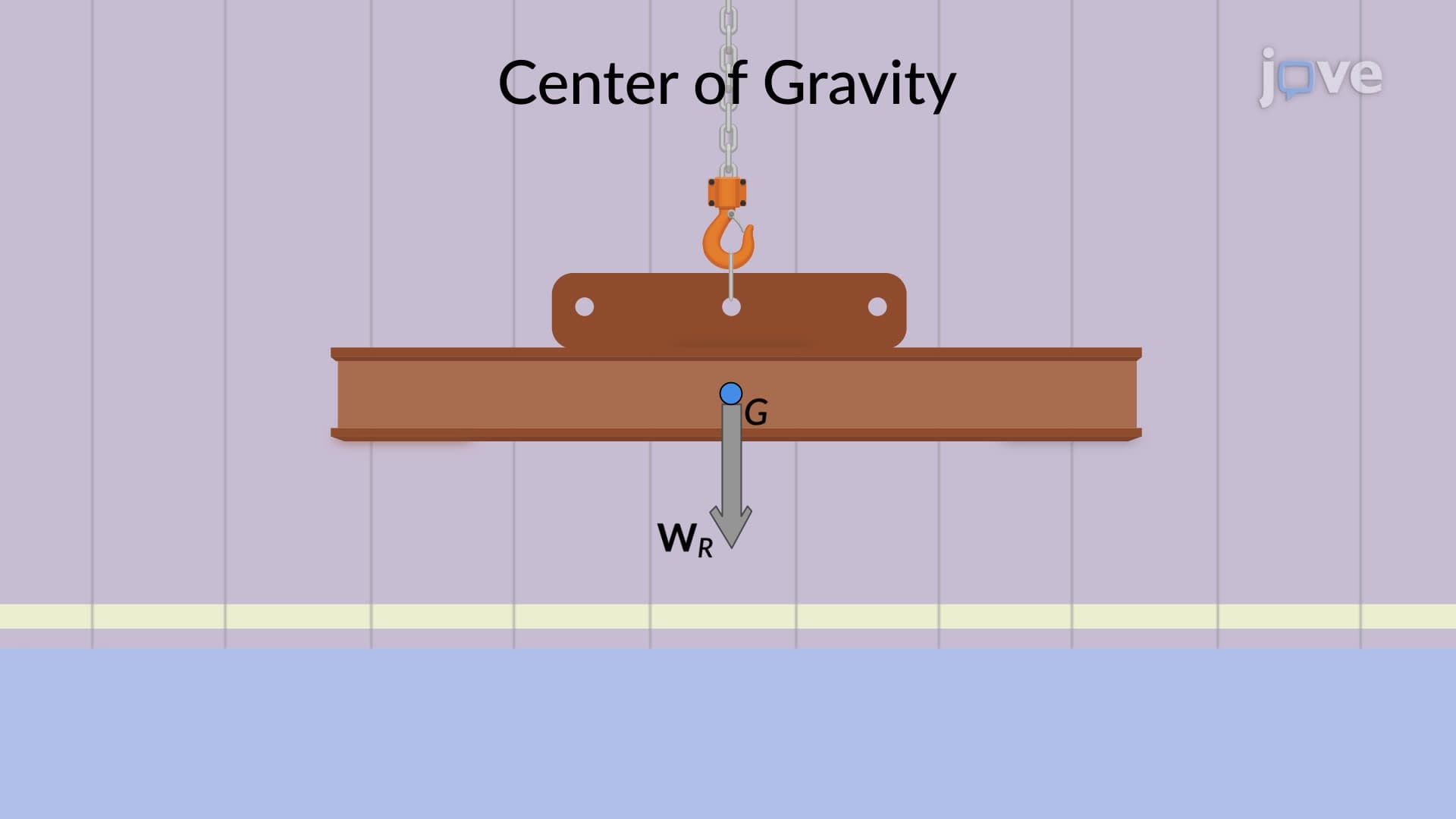

Video Summary: Internal Forces and Center of Gravity Explained
Ever wonder why the Leaning Tower of Pisa doesn't topple over, or how crane operators safely lift massive steel beams on construction sites? Internal forces and center of gravity work together to determine whether structures remain stable or collapse catastrophically. Internal forces like tension and compression act within materials, while the center of gravity determines the balance point-critical knowledge for engineers designing everything from Golden Gate Bridge supports to NASA spacecraft. Watch the full video on JoVE Coach to master this concept with expert-led visuals and step-by-step explanations.
Internal forces and center of gravity represent two interconnected concepts essential for understanding structural mechanics and engineering design. Internal forces develop within materials when external loads are applied, creating stress patterns that determine whether a structure will succeed or fail. Meanwhile, the center of gravity serves as the theoretical point where all gravitational forces can be considered to act, making it crucial for stability analysis.
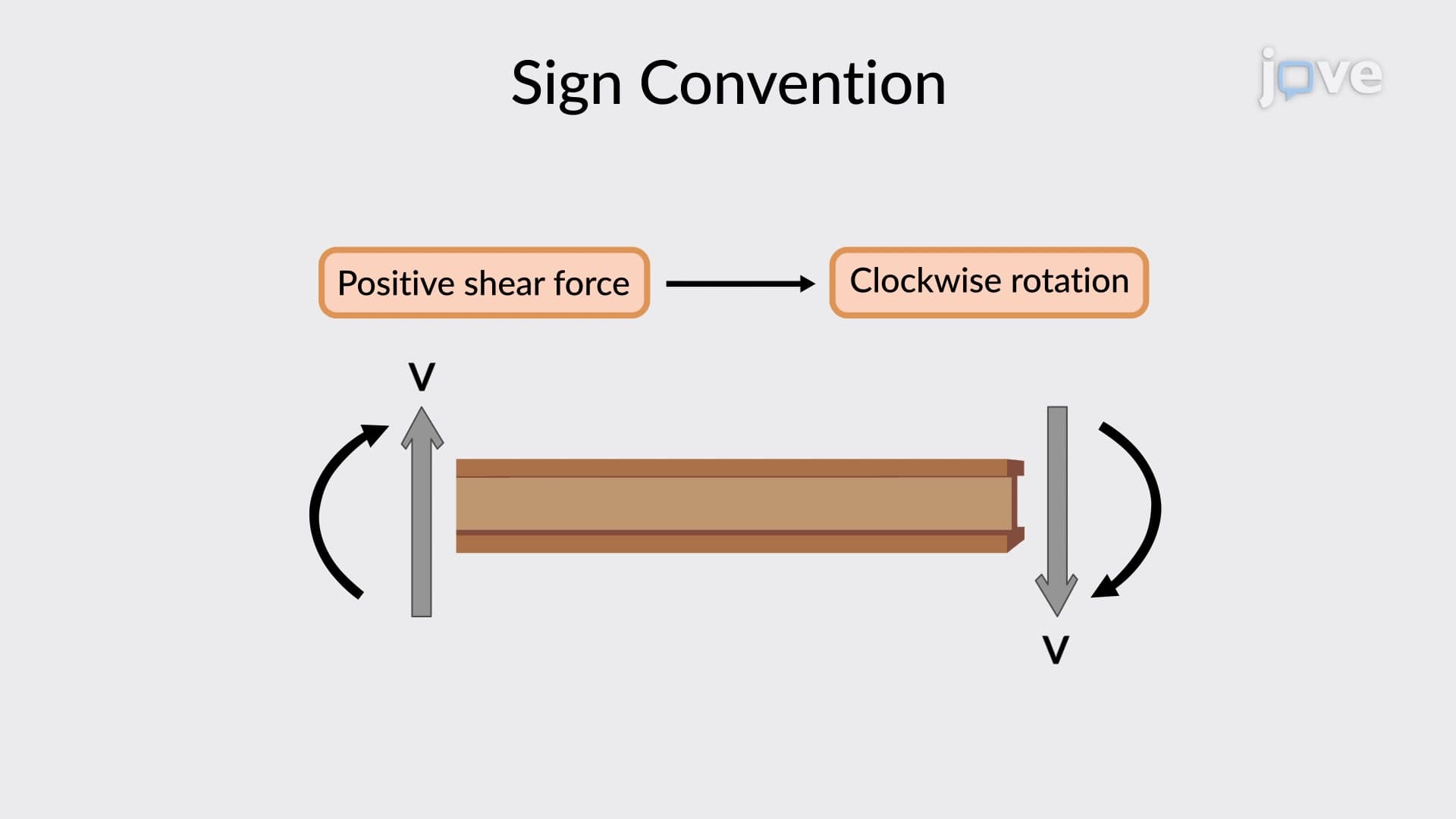
Internal forces manifest in three primary forms within engineering materials. Tension forces occur when materials are pulled apart, like the cables supporting San Francisco's Golden Gate Bridge or the steel reinforcement in concrete buildings. Compression forces push materials together, evident in concrete columns supporting skyscrapers or the legs of the Gateway Arch in St. Louis. Shear forces cause materials to slide past each other, critical in bolt connections and beam-to-column joints in steel frame construction.
These internal forces always exist as Newton's third law pairs-equal in magnitude but opposite in direction. In a steel cable supporting a construction load, the tension force pulling upward on the bottom section equals the tension force pulling downward on the top section. This force pairing maintains equilibrium throughout the structure, preventing catastrophic failure under normal operating conditions.
The center of gravity represents the point where gravitational forces effectively concentrate, determining an object's stability characteristics. For symmetrical objects like uniform steel beams or concrete blocks, the center of gravity aligns with the geometric center. However, irregular shapes-such as L-shaped structural members or buildings with architectural setbacks-have centers of gravity shifted toward their heavier portions.
Consider the construction industry example of placing a concrete counterweight on a tower crane. Engineers must calculate the combined center of gravity to ensure the crane remains stable while lifting materials to upper floors of buildings like those in Manhattan's skyline. If the load becomes too heavy on one side, the center of gravity shifts beyond the crane's base, potentially causing dangerous tipping.
Understanding these concepts proves essential for success in AP Physics courses, where students encounter equilibrium problems involving multiple forces and torques. College-level statics courses expand these principles to analyze complex structural systems, while professional engineering exams (FE and PE) test application of these fundamentals to real-world design scenarios.
Related Micro-courses