Loading subject page…


10,939 views


Video Summary: Three Dimensional Support Reactions in Structural Systems
Ever wondered how skyscrapers withstand hurricane-force winds or how the Golden Gate Bridge supports millions of vehicles annually? Three-dimensional support reactions in structural systems are the invisible forces that keep our world stable by preventing structures from moving or rotating in space. From robotic manufacturing arms in Tesla factories to the support joints in stadium bleachers, engineers strategically design different types of supports-ball and socket joints, pin supports, fixed supports, and hinge supports-each providing specific combinations of reaction forces and moments. Watch the full video on JoVE Coach to master this concept with expert-led visuals and step-by-step explanations.
Three-dimensional support reactions in structural systems represent the foundation of structural stability, governing how forces and moments are transferred through connections in space. Unlike two-dimensional problems commonly introduced in introductory physics, real-world structures operate in three dimensions, requiring engineers to consider six possible motions: translation along x, y, and z axes, plus rotation about these same axes.
Ball and socket joints, exemplified by hip prosthetics manufactured by companies like Stryker Corporation, provide three reaction forces while allowing rotational freedom. These supports prevent translation in all three directions but permit rotation about any axis passing through the joint center. In robotic applications, such as those used in Ford's assembly plants, ball joints enable manipulator arms to reach complex positions while maintaining structural connection. The reaction forces (R_x, R_y, R_z) develop automatically to maintain equilibrium, but no moment reactions occur since rotation remains unrestricted.
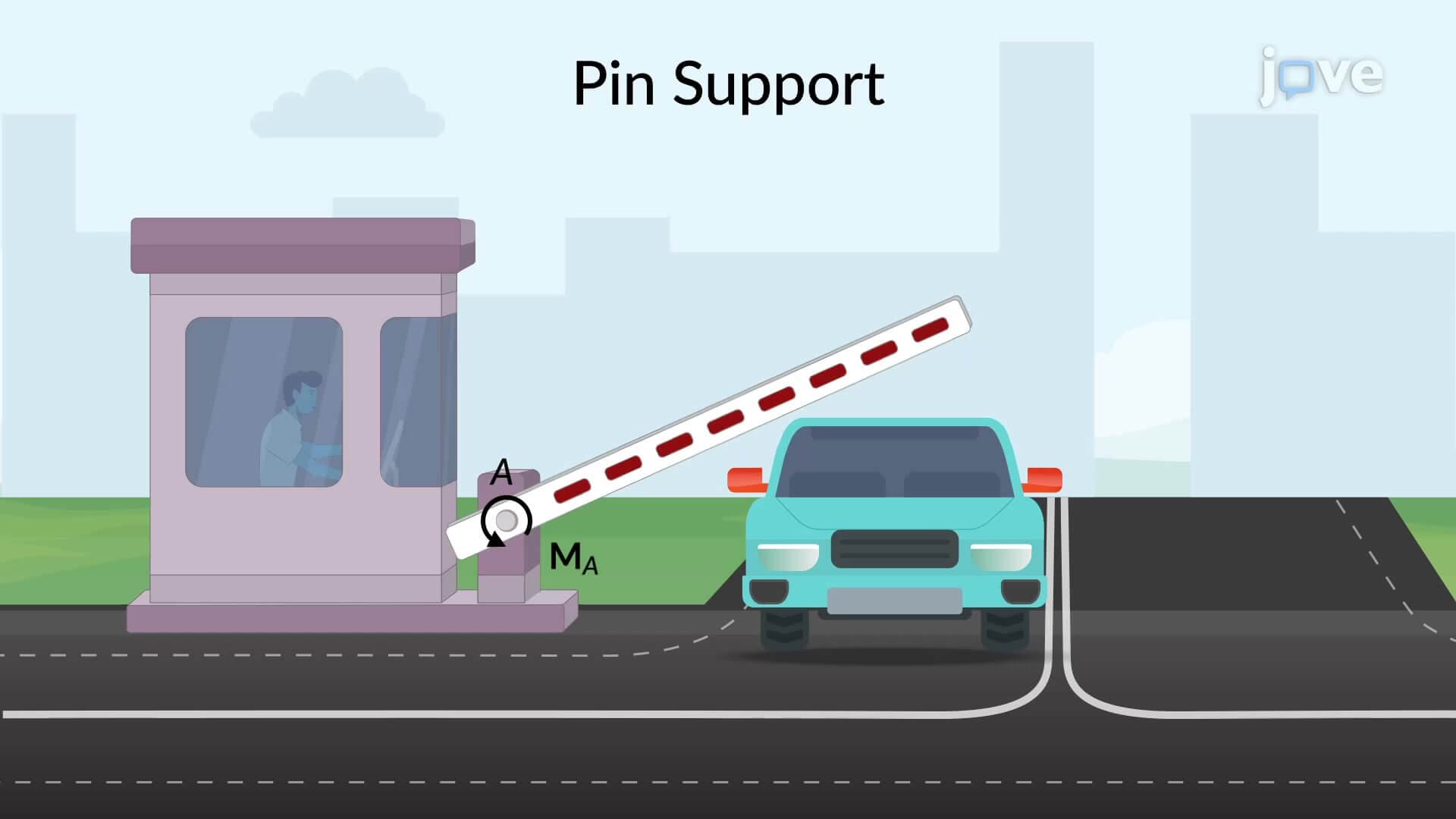
Single pin supports generate three reaction forces and two couple moments, restricting translation and two rotational degrees of freedom while allowing rotation about the pin axis. Consider the main rotor hub of a Sikorsky helicopter-the pin connection permits blade rotation while preventing other motions. Fixed supports, representing the most restrictive connection type, develop three reaction forces and three reaction moments, completely eliminating all six degrees of freedom. The foundation bolts securing wind turbines in Texas wind farms exemplify fixed supports, transferring enormous loads safely into concrete foundations.
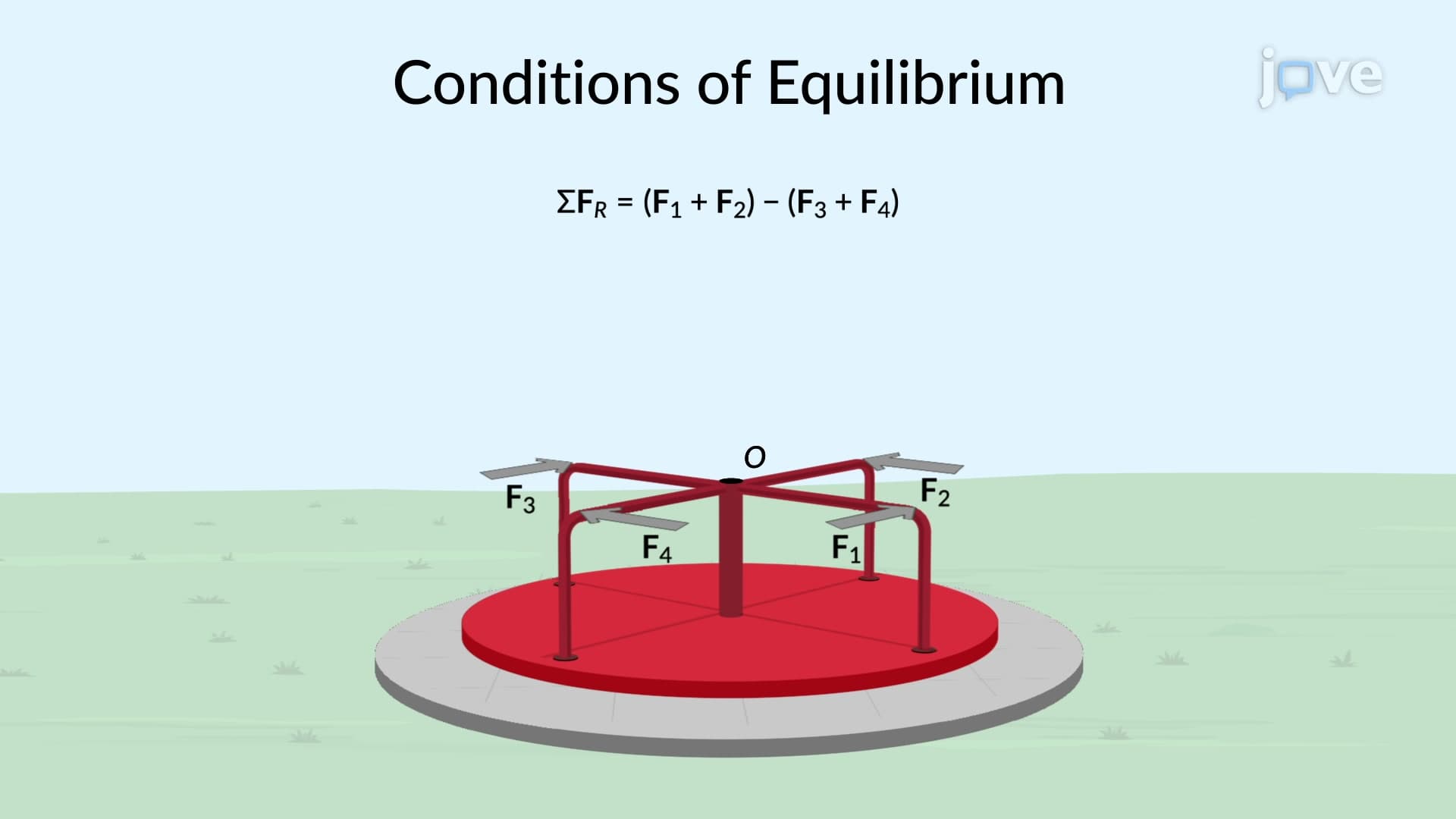
For AP Physics students and college engineering majors, understanding support reactions proves crucial for statics courses and professional practice. The 2023 AP Physics C: Mechanics exam featured problems requiring students to identify reaction components in complex support systems. Similarly, the Fundamentals of Engineering (FE) exam tests candidates' ability to apply equilibrium equations with various support configurations. Students preparing for these assessments should focus on drawing proper free-body diagrams, identifying constraint conditions, and systematically applying equilibrium equations: ΣF_x = 0, ΣF_y = 0, ΣF_z = 0, ΣM_x = 0, ΣM_y = 0, ΣM_z = 0.
Related Micro-courses