Loading video…


 9 Concepts
 10.9K views


Video Summary: What are Equations of Equilibrium
Ever wonder why a construction crane doesn't tip over despite lifting massive steel beams? The answer lies in equations of equilibrium, the fundamental principles that ensure structures remain stable under various forces. These mathematical relationships describe the conditions necessary for any object-from a simple tripod leg to complex engineering systems like the Golden Gate Bridge-to maintain perfect balance. By mastering what are equations of equilibrium, students unlock the ability to analyze everything from playground seesaws to skyscraper foundations. Watch the full video on JoVE Coach to master this concept with expert-led visuals and step-by-step explanations.
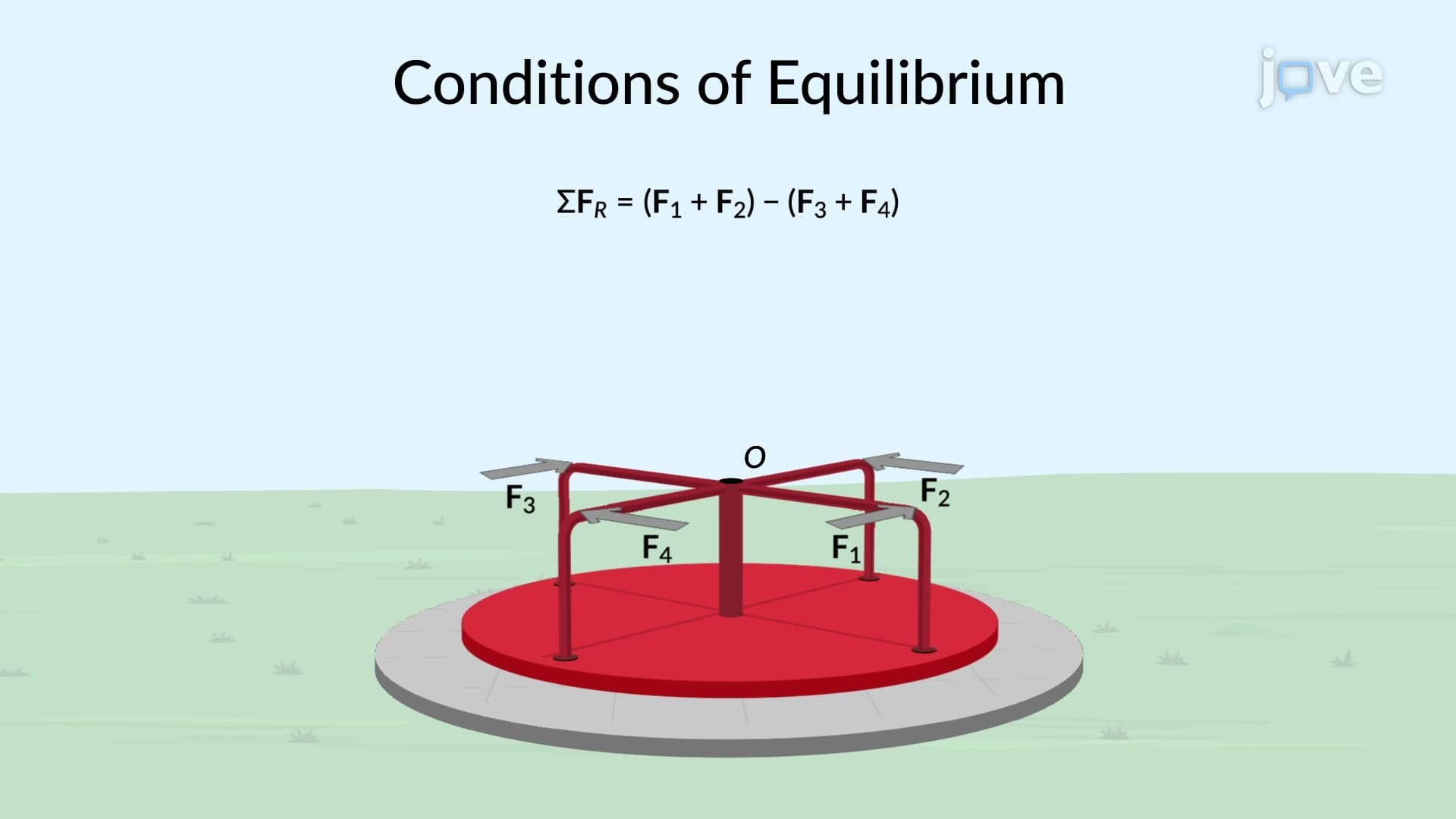
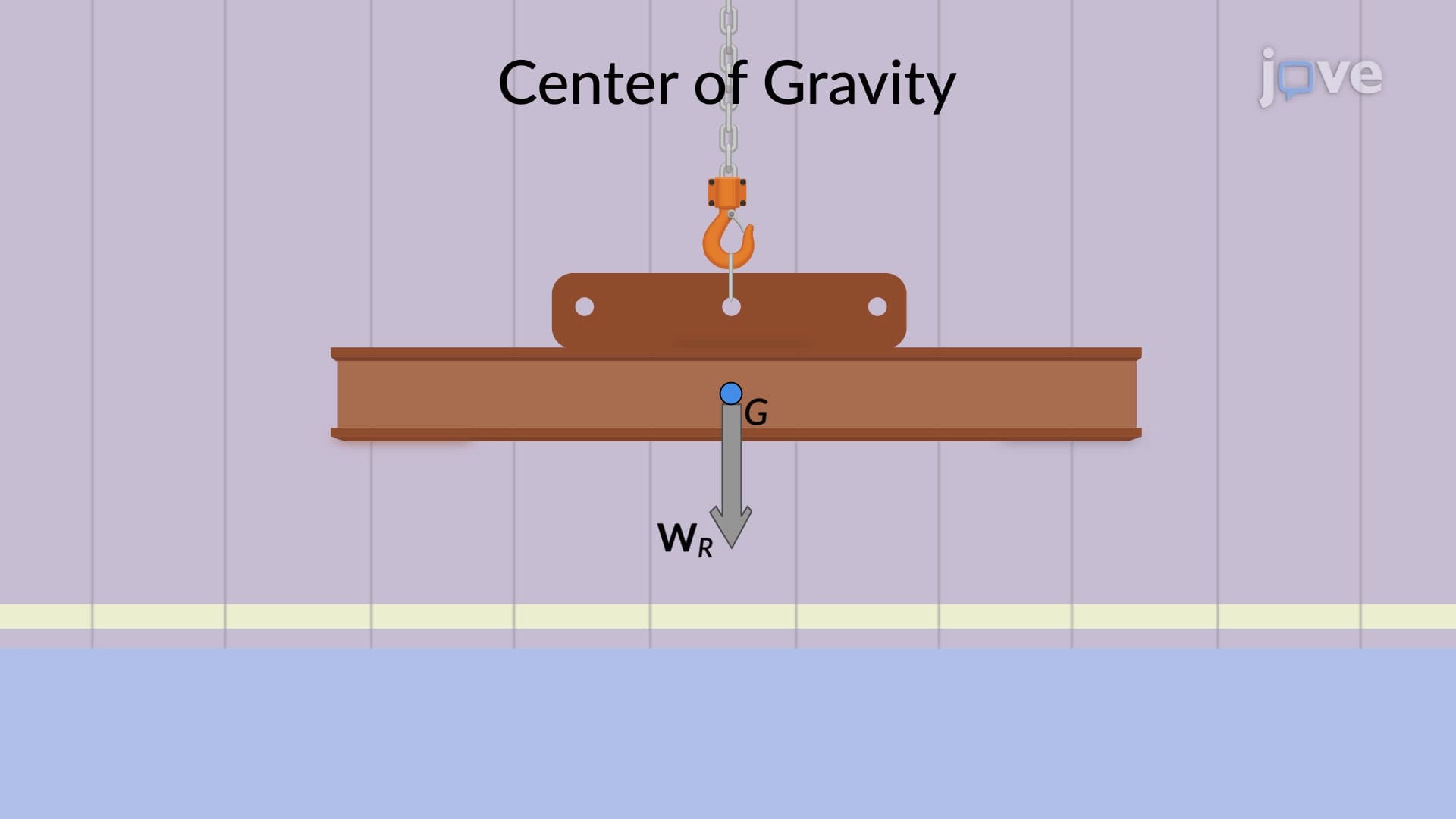
Equations of equilibrium represent the mathematical foundation for analyzing stationary objects in engineering mechanics. When a rigid body experiences no acceleration-neither linear nor rotational-it exists in a state of static equilibrium. This condition requires that all external forces and moments acting on the object sum to zero, creating the fundamental equilibrium equations that engineers use daily.
The concept extends far beyond simple textbook problems. Consider the Statue of Liberty: engineers must ensure that wind forces, the statue's weight, and ground reactions all balance perfectly. Without satisfying equilibrium equations, this iconic structure would either slide, overturn, or experience internal stress failures.
The types of equations of equilibrium fall into two categories: vector equations and scalar equations. Vector equations provide a compact mathematical representation:
These vector equations contain all necessary information but require vector mathematics for solution. Scalar equations break down these vectors into components along coordinate axes, making calculations more manageable for students.
For three-dimensional analysis, six scalar equilibrium equations emerge:
American engineering projects demonstrate equilibrium principles daily. The Space Needle in Seattle relies on equilibrium equations to withstand Pacific Northwest winds. Engineers calculated precise foundation reactions and structural member forces to ensure stability during construction and operation.
Similarly, oil derricks in Texas must satisfy equilibrium conditions under varying loads. As drilling equipment moves vertically, engineers continuously verify that support reactions maintain the structure's stability. These calculations prevent catastrophic failures that could endanger workers and equipment.
Students encounter equilibrium equations throughout their academic journey. AP Physics courses introduce basic two-dimensional equilibrium, while college engineering mechanics expands to three-dimensional analysis. The SAT occasionally features equilibrium concepts in physics subject tests.
Understanding these principles proves essential for MCAT preparation, particularly in physics sections covering statics and biomechanics. Medical students apply equilibrium concepts when studying musculoskeletal systems, analyzing how bones, muscles, and joints maintain body stability during movement and rest.
Related Micro-courses