Loading subject page…


10,939 views


Video Summary: What Is Two Force Member
Ever wonder why a traffic light hanging from a cable doesn't fall despite weighing hundreds of pounds? The answer lies in understanding what is two force member, a structural element where forces act only at two points with no loads between them. In engineering analysis, like examining the Golden Gate Bridge's suspension cables, a two force member must have equal and opposite forces along the same line of action to maintain equilibrium. Watch the full video on JoVE Coach to master this concept with expert-led visuals and step-by-explanations.
A two force member represents one of the most important concepts in statics and structural analysis. This structural element experiences forces at exactly two points with no applied loads between these connection points. The concept appears throughout engineering curricula, from high school AP Physics to college-level statics courses, forming the foundation for analyzing complex structures like the steel framework of skyscrapers or the suspension systems of major bridges.
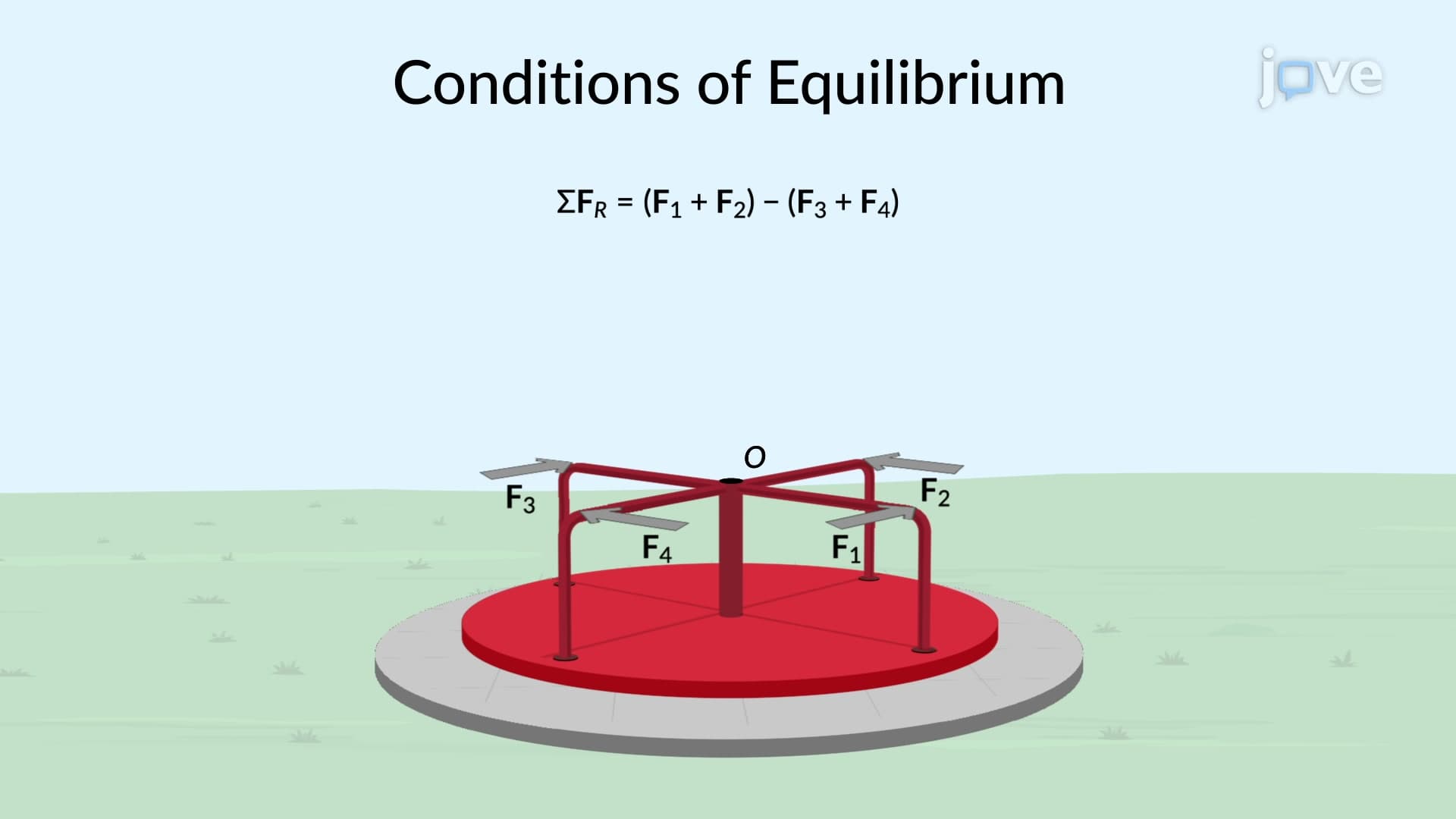
For any two force member to remain in static equilibrium, two critical conditions must be satisfied. First, the forces at both ends must be equal in magnitude but opposite in direction, if point A experiences 500 pounds of force, point B must experience exactly 500 pounds in the opposite direction. Second, both forces must act along the same line of action to prevent rotational motion. This principle explains why suspension bridge cables work effectively; the tension forces at each end align perfectly along the cable's length.
Two force member analysis proves essential in countless American engineering projects. Consider the analysis of transmission tower members supporting power lines across states like Texas and California. Each diagonal brace in these towers functions as a two force member, experiencing either tension or compression depending on wind and load conditions. Similarly, the connecting rods in automotive engines, the support struts in aircraft landing gear, and even the simple connecting links in playground equipment all demonstrate two force member principles.
Students encounter two force member problems frequently on standardized tests including the AP Physics exam and college engineering assessments. The key advantage in problem-solving lies in the reduced number of unknown variables, knowing one force automatically determines the other. This simplification proves particularly valuable when analyzing complex trusses where multiple two force members connect at joints. Engineering students at universities like MIT and Stanford regularly apply these concepts in structural analysis courses, often using software like MATLAB to model real bridge designs where two force member identification becomes crucial for determining load paths and ensuring structural safety.
Related Micro-courses