Loading subject page…


29,238 views


Video Summary: Administering Oxygen by Nasal Cannula Explained
Every minute in US hospitals, thousands of patients receive life-saving oxygen therapy through a simple plastic tube. Administering oxygen by nasal cannula is one of the most common medical procedures, used in everything from post-surgical recovery at Johns Hopkins to emergency care at rural clinics across America. This non-invasive technique delivers supplemental oxygen directly through the nostrils, making it essential knowledge for healthcare students and professionals. Watch the full video on JoVE Coach to master this concept with expert-led visuals and step-by-step explanations.
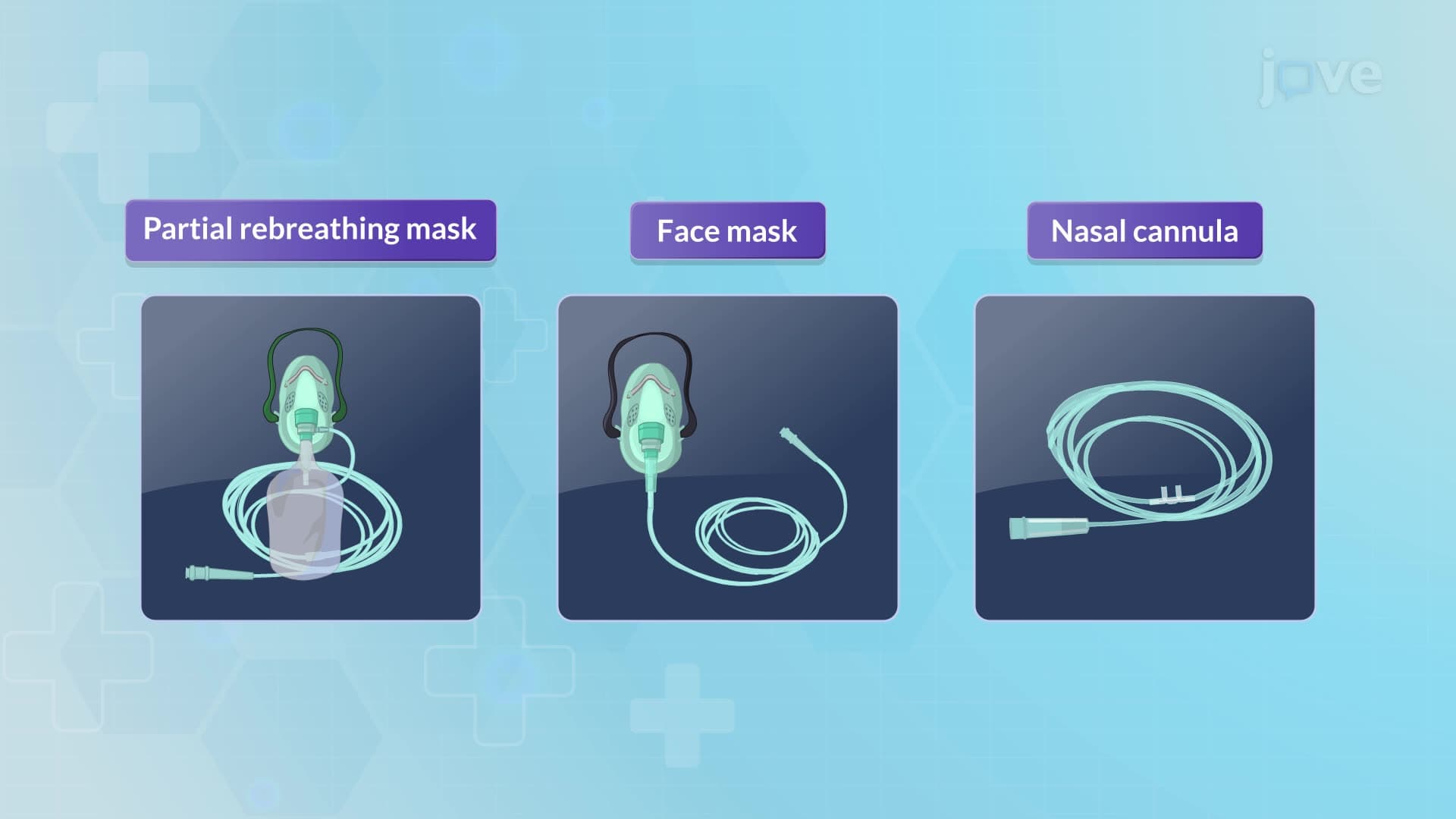
Administering oxygen by nasal cannula represents a cornerstone of respiratory care in American healthcare settings. This low-flow oxygen delivery system provides supplemental oxygen at concentrations of 24-44% (compared to room air's 21%) through two small prongs inserted into the patient's nostrils. Unlike high-flow systems or mechanical ventilation, nasal cannulas offer patient mobility and comfort while maintaining therapeutic oxygen levels.
The physiological principle relies on the nasopharynx acting as an oxygen reservoir. During inspiration, supplemental oxygen mixes with room air in the upper respiratory tract before reaching the lungs. This method proves particularly effective for patients with mild to moderate hypoxemia, common conditions seen in medical-surgical units across hospitals from Massachusetts General to UCLA Medical Center.
Proper equipment preparation ensures both patient safety and therapeutic effectiveness. The oxygen delivery system includes a wall-mounted or portable oxygen source, flow meter for precise control, humidifier to prevent mucosal drying, and the nasal cannula itself. Modern hospitals use disposable cannulas to prevent cross-contamination between patients.
Personal protective equipment becomes crucial, especially following lessons learned during the COVID-19 pandemic. Healthcare workers must don gloves, masks, and eye protection when indicated. Hand hygiene before and after patient contact remains the gold standard for infection prevention, emphasized in nursing programs from Johns Hopkins School of Nursing to UCSF.
Clinical assessment drives appropriate oxygen flow rates, typically ranging from 1-6 liters per minute. Higher flow rates (above 4 L/min) require humidification to prevent nasal irritation and epistaxis. Pulse oximetry monitoring provides objective data, with target oxygen saturation levels usually maintained between 88-92% for COPD patients or 94-98% for others.
Patient comfort considerations include proper cannula positioning to prevent pressure ulcers behind the ears, particularly important for elderly patients or those requiring prolonged therapy. Gauze padding at pressure points represents a simple but effective intervention taught in nursing skills laboratories nationwide.
This procedure appears frequently in healthcare education, from NCLEX preparation to medical school clinical rotations. Students learn to recognize signs of respiratory distress, adjust therapy based on arterial blood gas results, and communicate effectively with patients about their treatment. The skill translates directly to real-world scenarios in emergency departments, medical floors, and outpatient settings across the US healthcare system.
Related Micro-courses