Loading subject page…


29,238 views


Video Summary: Tracheostomy Suctioning I Pre Procedural Steps Explained
Did you know that proper pre-procedural preparation can reduce tracheostomy suctioning complications by up to 75% in US intensive care units? Tracheostomy suctioning I pre procedural steps form the critical foundation for safe airway management, requiring meticulous equipment preparation, patient assessment, and positioning protocols. Healthcare professionals at major medical centers like Johns Hopkins follow these standardized steps to ensure patient safety and procedure efficacy. Watch the full video on JoVE Coach to master this concept with expert-led visuals and step-by-step explanations.
Tracheostomy suctioning represents one of the most critical skills in respiratory care, particularly in intensive care units across major US healthcare systems. The pre-procedural phase establishes the foundation for safe, effective airway clearance while minimizing patient discomfort and reducing infection risk. These standardized protocols, developed by organizations like the American Association for Respiratory Care (AARC), ensure consistent quality care regardless of the clinical setting.
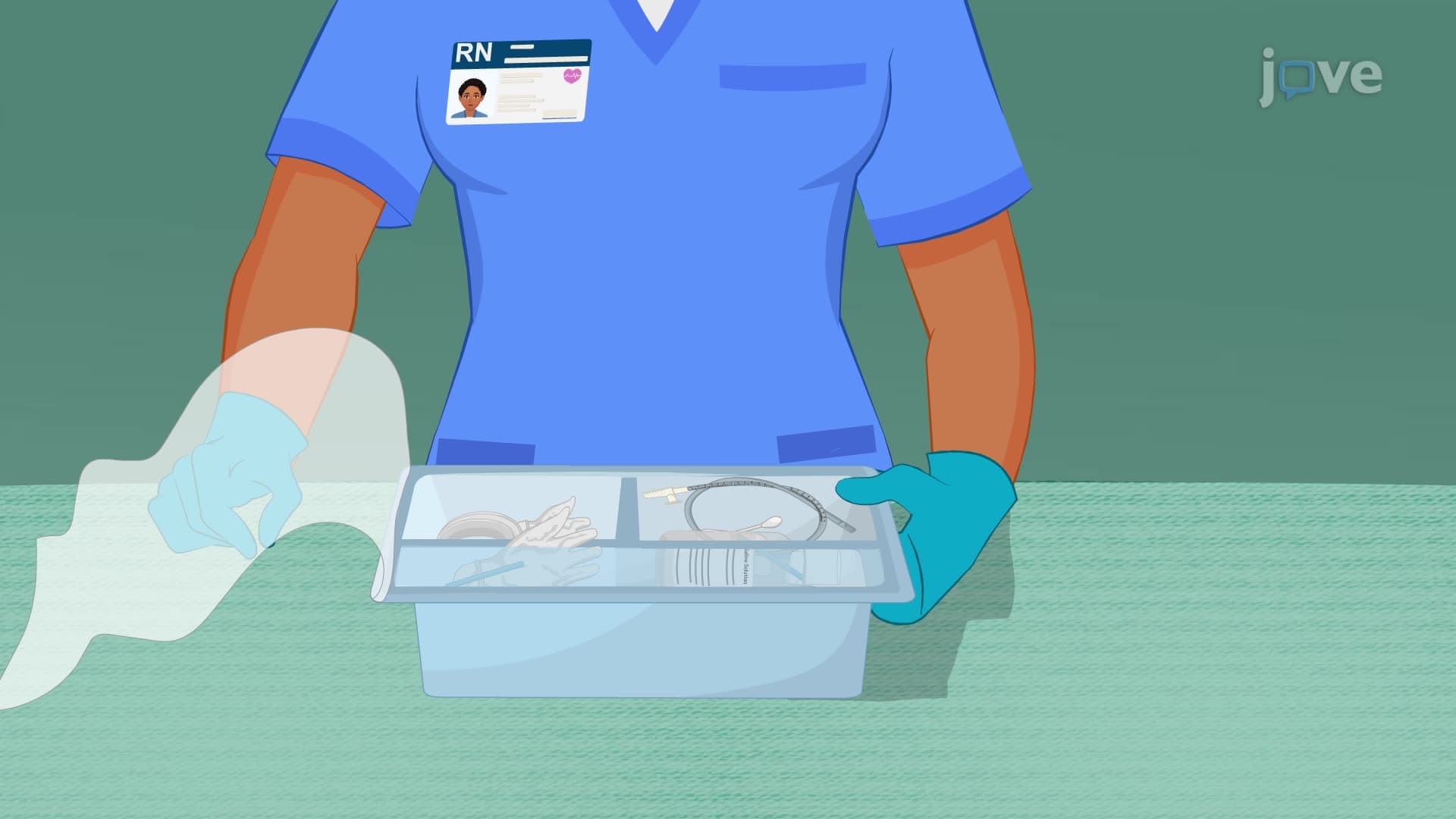
The equipment gathering phase requires systematic organization to maintain sterility and efficiency. Modern US hospitals typically use closed suction systems to reduce infection risk, but open systems remain prevalent in emergency and resource-limited settings. The sterile suction catheter sizing follows specific guidelines: typically 14-16 French for adult patients, with the catheter diameter not exceeding half the tracheostomy tube's internal diameter. This sizing principle, frequently tested on NCLEX examinations, prevents excessive negative pressure that could cause tissue trauma or cardiovascular instability.
Suction pressure settings vary by patient age and condition, with adult recommendations ranging from 80-120 mmHg. These parameters appear regularly on respiratory therapy board examinations and MCAT practice tests focusing on pulmonary physiology. The resuscitation bag preparation with 100% oxygen serves as a critical safety measure, allowing immediate ventilation support if complications arise during suctioning.
Pre-procedural patient assessment extends beyond basic vital signs to include pain evaluation, anxiety levels, and respiratory status. The semi-Fowler's position (30-45 degree elevation) for conscious patients leverages gravity to improve diaphragmatic excursion and reduces aspiration risk. This positioning concept frequently appears on AP Biology examinations when discussing respiratory mechanics and gas exchange optimization.
For unconscious patients, lateral positioning prevents tongue obstruction while facilitating secretion drainage through gravitational flow. These positioning principles reflect fundamental physics concepts taught in introductory college courses, where students learn how gravitational forces affect fluid dynamics within the respiratory system.
Hand hygiene protocols follow CDC guidelines, emphasizing the 20-second washing technique or alcohol-based sanitizer application. Patient identification procedures align with Joint Commission standards, requiring at least two unique identifiers to prevent medical errors. These safety measures, integral to US healthcare quality initiatives, demonstrate the interconnection between basic procedural steps and patient outcomes-a concept emphasized in healthcare administration courses at universities nationwide.
Related Micro-courses