Loading video…


 22 Concepts
 29.2K views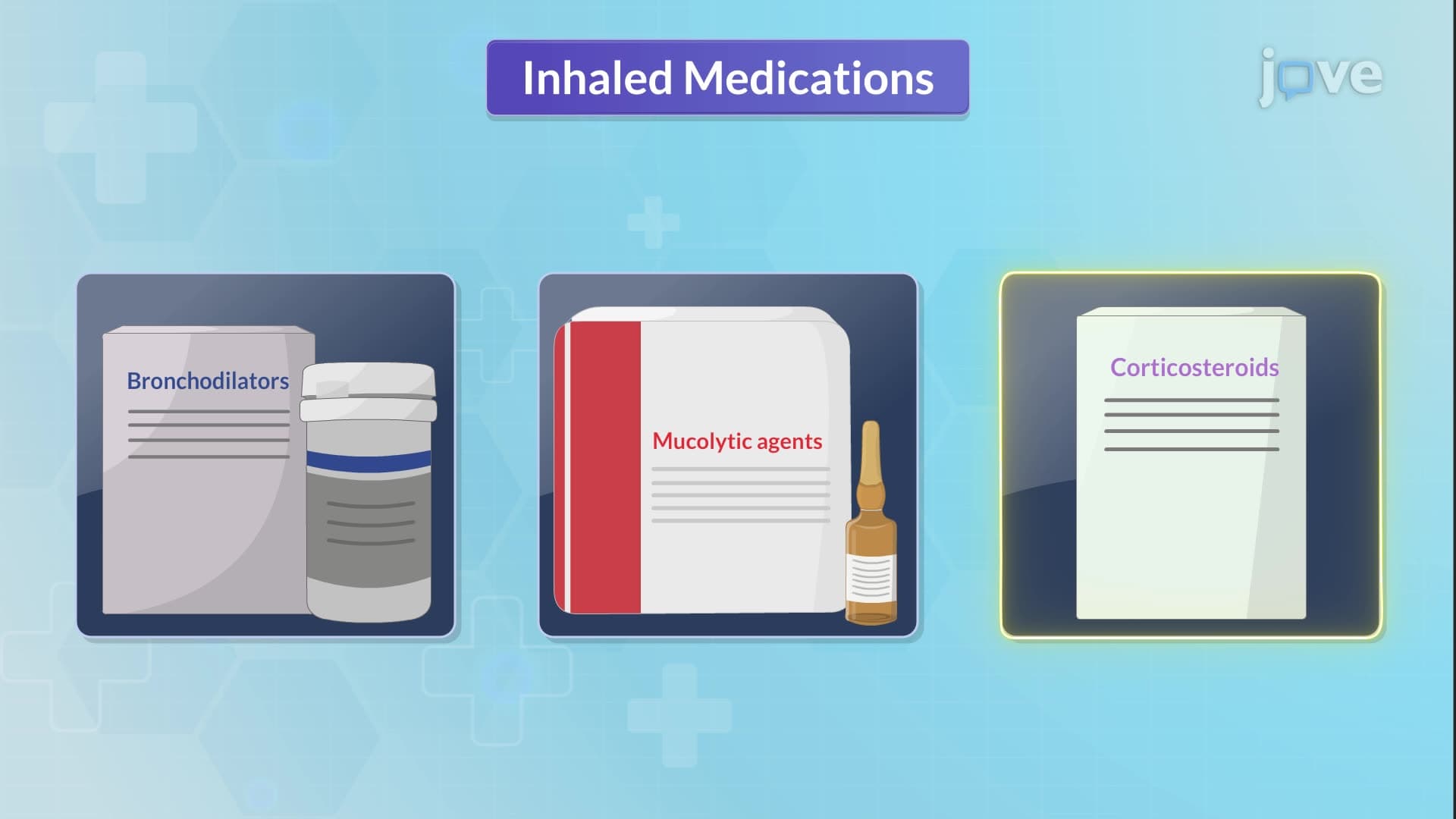

Video Summary: What are Inhaled Medications
Did you know that over 26 million Americans live with asthma, relying on inhaled medications delivered directly to their lungs? Inhaled medications like bronchodilators and corticosteroids treat respiratory conditions by bypassing the digestive system for faster, targeted relief. For instance, a student with exercise-induced asthma might use an albuterol inhaler before gym class at their high school. What are inhaled medications becomes clear when you understand their three main delivery systems: nebulizers, metered-dose inhalers, and dry-powder inhalers. Watch the full video on JoVE Coach to master this concept with expert-led visuals and step-by-step explanations.
What are inhaled medications represents a fundamental concept in respiratory pharmacology and clinical medicine. These therapeutic agents are specifically formulated to be delivered directly to the lungs through inhalation, providing rapid onset of action while minimizing systemic side effects. Unlike oral medications that must travel through the digestive system and bloodstream, inhaled medications reach their target tissues within seconds, making them invaluable for acute respiratory emergencies and chronic disease management.
The three primary types of inhaled medications include bronchodilators, anti-inflammatory agents, and mucolytic drugs. Bronchodilators like albuterol (commonly known by the brand name ProAir or Ventolin) work by relaxing smooth muscle in the bronchioles, providing immediate relief during asthma attacks. Inhaled corticosteroids such as fluticasone (Flovent) reduce chronic inflammation in airways, serving as controller medications for long-term asthma management. Mucolytic agents help break down thick secretions in conditions like cystic fibrosis, improving mucus clearance from respiratory passages.
Nebulizers convert liquid medications into fine aerosol particles using compressed air or ultrasonic energy, making them ideal for hospitalized patients or young children who cannot coordinate inhaler use. The Children's Hospital of Philadelphia routinely uses nebulizers for pediatric asthma patients during emergency department visits. Metered-dose inhalers (MDIs) deliver precise medication doses through pressurized canisters but require proper timing between device activation and inhalation - a skill that nursing students learn during clinical rotations at institutions like Johns Hopkins School of Nursing.
Understanding inhaled medications proves essential for students pursuing healthcare careers, with concepts frequently appearing on the MCAT's Chemical and Physical Foundations section and NCLEX-RN respiratory management questions. Pre-med students at universities like Stanford and UCLA study these mechanisms in pharmacology courses, while AP Biology students explore respiratory physiology applications. The proper technique for inhaler use represents a critical clinical skill that respiratory therapists, nurses, and physicians must master, with competency evaluations required in programs accredited by the Commission on Accreditation for Respiratory Care (CoARC).
Related Micro-courses