Loading subject page…


29,238 views

Video Summary: What Is Ventilatory Modes
Ever wondered how intensive care units at Johns Hopkins Hospital keep critically ill patients breathing when they can't do it themselves? Ventilatory modes are the different programmed breathing patterns that mechanical ventilators use to support or replace a patient's natural breathing. These sophisticated systems range from full machine control to gentle assistance that works with the patient's own respiratory efforts. Understanding what is ventilatory modes is crucial for anyone studying respiratory therapy, nursing, or medicine. Watch the full video on JoVE Coach to master this concept with expert-led visuals and step-by-step explanations.
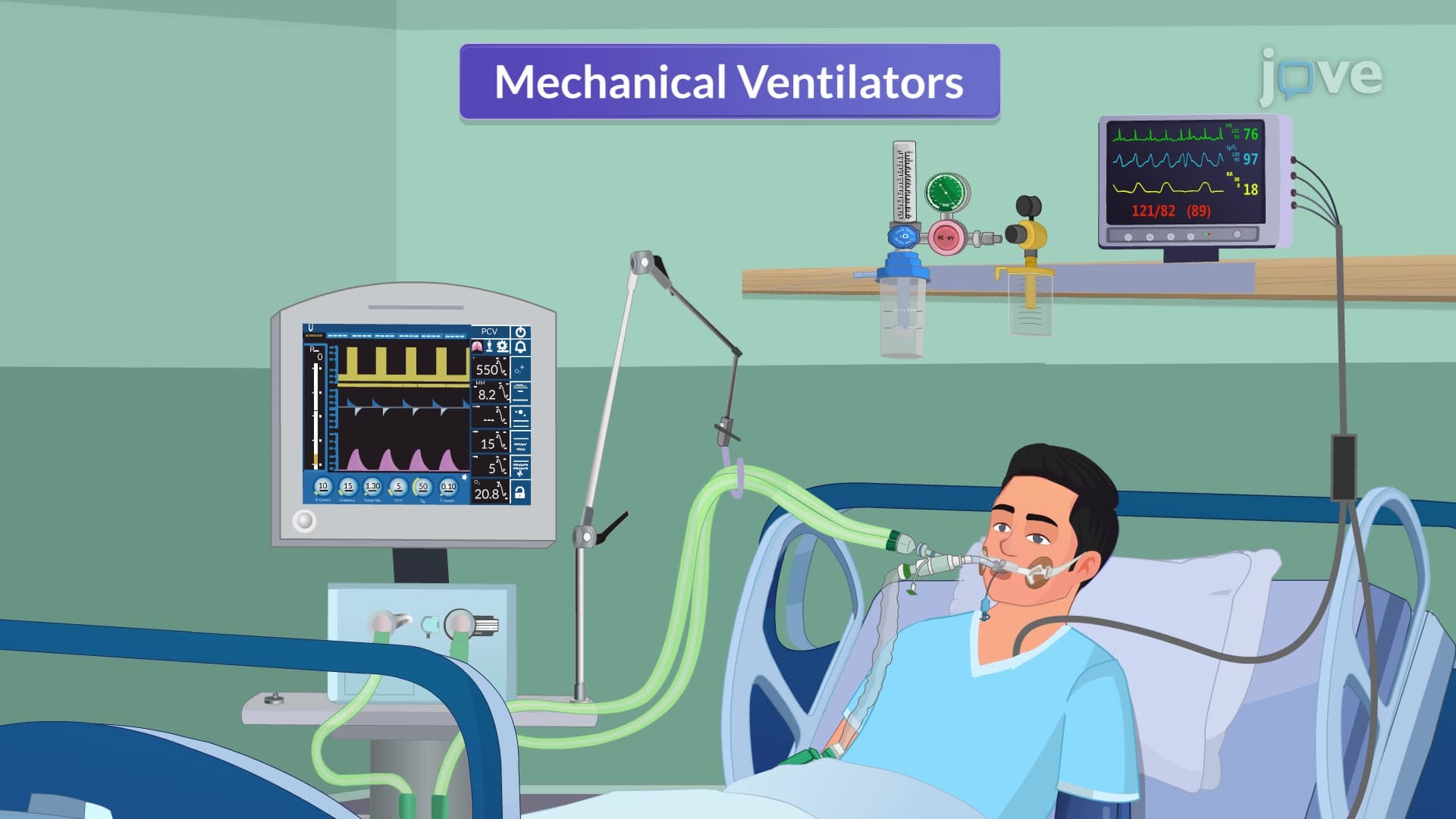
Ventilatory modes represent the fundamental programming options that determine how mechanical ventilators deliver life-sustaining breaths to patients. These modes are essentially different algorithms that control the timing, volume, pressure, and flow characteristics of artificial respiration. In major US medical centers like Mayo Clinic and Cleveland Clinic, respiratory therapists and physicians select specific modes based on patient condition, lung compliance, and recovery goals.
Full support modes provide complete breathing assistance for patients who cannot maintain adequate ventilation independently. Controlled Mechanical Ventilation (CMV) delivers predetermined breaths at set intervals, regardless of patient effort-commonly used during surgery or deep sedation. Assist-Control Ventilation (A/C) combines scheduled breaths with patient-triggered breaths, ensuring minimum ventilation while allowing spontaneous breathing attempts. Pressure-Control Ventilation (PCV) delivers breaths by reaching a preset pressure rather than volume, offering better pressure limitation for patients with acute respiratory distress syndrome (ARDS).
These concepts frequently appear on the NCLEX-RN examination and HESI A2 assessment, where nursing students must demonstrate understanding of ventilator management principles.
Partial support modes facilitate the weaning process as patients recover respiratory function. Synchronized Intermittent Mandatory Ventilation (SIMV) provides a set number of mandatory breaths while allowing spontaneous breathing between cycles. This mode appears regularly in MCAT practice questions testing respiratory physiology knowledge.
Pressure Support Ventilation (PSV) assists patient-initiated breaths by providing pressure support during inspiration, reducing work of breathing while maintaining respiratory muscle activity. Continuous Positive Airway Pressure (CPAP) maintains constant positive pressure throughout the breathing cycle, preventing alveolar collapse-a concept tested extensively in AP Biology examinations when covering gas exchange mechanisms.
Modern ventilators incorporate sophisticated modes like Neurally Adjusted Ventilatory Assist (NAVA), which uses diaphragmatic electrical activity to trigger and control ventilator support. This represents cutting-edge technology used in leading US hospitals for patients requiring long-term ventilation.
Airway Pressure-Release Ventilation (APRV) allows spontaneous breathing throughout most of the ventilatory cycle while maintaining higher baseline pressures-particularly beneficial for patients with severe lung injury. Understanding these advanced modes becomes crucial for respiratory therapy students preparing for NBRC credentialing examinations.
Related Micro-courses