Loading video…


 11 Concepts
 236.9K views

Video Summary: What Is Initiation of Translation
Every protein in your body, from the insulin regulating your blood sugar to the hemoglobin carrying oxygen through your bloodstream, begins its existence through the precise process of initiation of translation. One nucleotide shift during this critical first step would render every protein completely nonfunctional-imagine diabetes medications failing because ribosomes started reading genetic instructions at the wrong position. What is initiation of translation, and how do cellular machines achieve such remarkable precision? Watch the full video on JoVE Coach to master this concept with expert-led visuals and step-by-step explanations.
Initiation of translation represents the most tightly regulated step in protein synthesis, where cells commit enormous energy resources to ensure ribosomes begin reading mRNA at precisely the correct nucleotide position. This process determines whether cells produce functional proteins or wasteful, potentially toxic polypeptides. In humans, defects in translation initiation contribute to cancer, neurodegeneration, and metabolic disorders-making this concept crucial for pre-med students preparing for the MCAT or students in AP Biology courses.
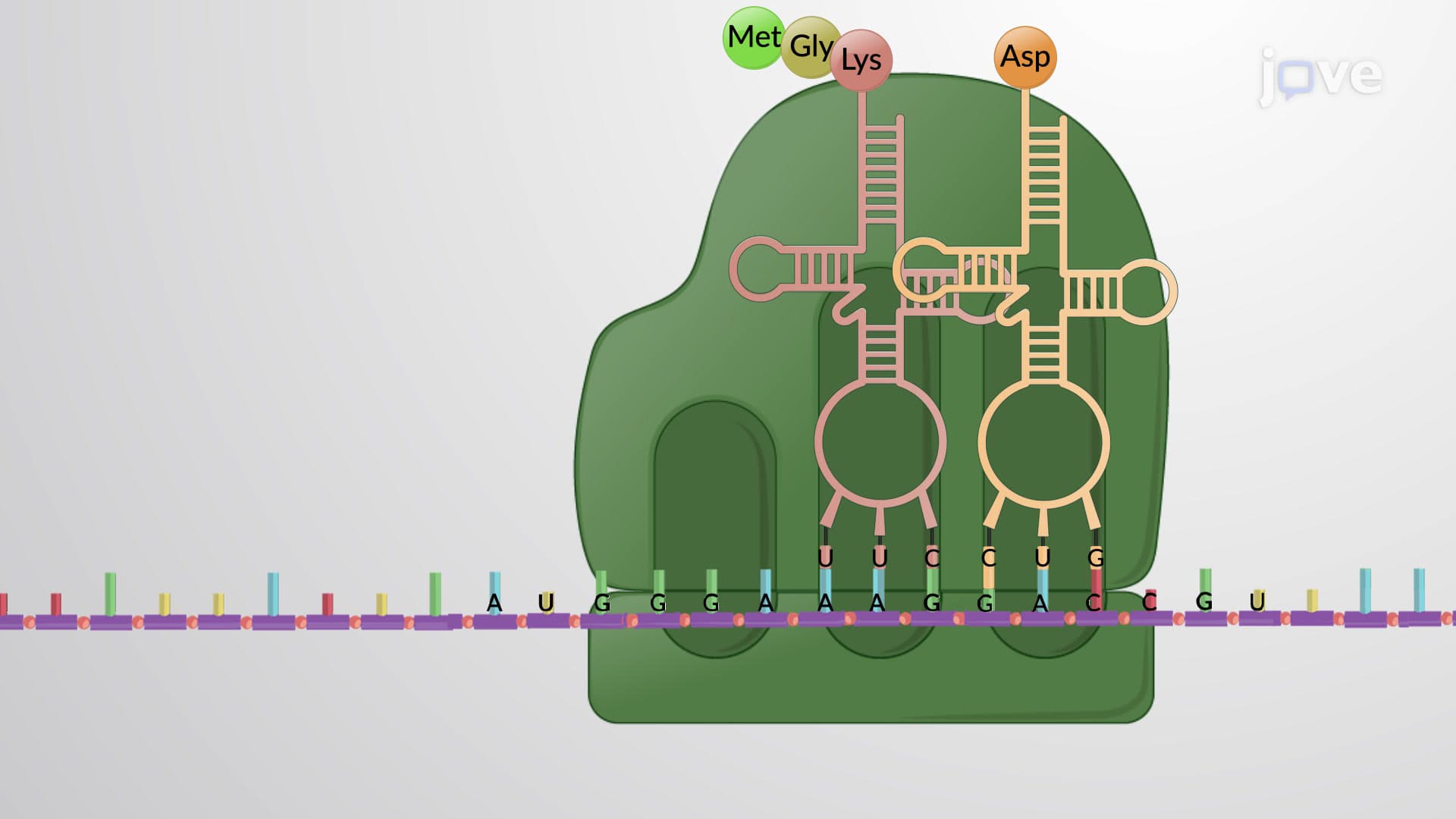
The eukaryotic initiation process begins when eIF2-GTP delivers methionyl-tRNA to the small ribosomal subunit's P-site, forming the 43S pre-initiation complex. Unlike the simplified textbook version, this process involves over a dozen initiation factors working in concert. The cap-binding complex, comprising eIF4E (cap recognition), eIF4G (scaffolding), and eIF4A (RNA helicase), recruits the pre-initiation complex to the mRNA's 5' terminus.
The subsequent scanning phase consumes significant ATP as the complex moves 5' to 3', with eIF4A unwinding secondary structures that could impede progress. This scanning continues until the initiator tRNA's anticodon encounters the first AUG codon in favorable sequence context-typically containing purines at positions -3 and +4 relative to the adenine of AUG. Upon recognition, GTP hydrolysis triggers initiation factor release, allowing the large 60S subunit to join and form the complete 80S ribosome.
Bacterial translation initiation bypasses the energy-intensive scanning mechanism entirely. Instead, the Shine-Dalgarno sequence (consensus: 5'-AGGAGG-3') located 5-10 nucleotides upstream of the start codon directly base-pairs with complementary sequences near the 3' end of 16S rRNA. This direct recognition allows multiple ribosomes to simultaneously initiate translation on polycistronic bacterial mRNAs-a mechanism impossible in eukaryotes due to their cap-dependent scanning requirement.
Understanding initiation mechanisms proves essential for interpreting genetic diseases and developing therapeutics. For instance, mutations affecting eIF2α phosphorylation underlie certain forms of intellectual disability, while cancer cells often overexpress eIF4E to enhance oncogene translation. Students preparing for standardized exams should focus on comparing eukaryotic versus prokaryotic mechanisms, as this contrast frequently appears in MCAT passages and AP Biology free-response questions examining evolutionary differences in gene expression control.
Related Micro-courses