Loading subject page…


236,915 views


Video Summary: What Is Trna Activation
Every second, your cells perform molecular precision rivaling NASA's most complex operations-yet most students at Stanford University and MIT struggle to grasp how proteins are assembled with near-perfect accuracy. tRNA activation serves as the critical quality control checkpoint that ensures each amino acid finds its correct partner before protein synthesis begins. This biochemical process prevents the cellular equivalent of using the wrong building materials in construction, which would be catastrophic for organisms from bacteria to humans. Watch the full video on JoVE Coach to master this concept with expert-led visuals and step-by-explanations.
tRNA activation represents one of biology's most elegant quality control systems, ensuring that proteins-the molecular workhorses of life-are built with extraordinary precision. This process occurs millions of times per second in human cells, yet maintains an error rate lower than 1 in 10,000 amino acid additions.
The tRNA activation process unfolds through a carefully orchestrated two-step reaction catalyzed by aminoacyl-tRNA synthetases. During amino acid activation, the target amino acid enters the enzyme's active site and reacts with ATP, forming an aminoacyl-AMP intermediate. This energy-requiring step essentially "charges" the amino acid, preparing it for attachment. In the subsequent esterification step, this activated amino acid transfers to the 3' hydroxyl group of its corresponding tRNA molecule, creating the final aminoacyl-tRNA product ready for protein synthesis.
Students preparing for the MCAT or AP Biology exams should recognize that this mechanism exemplifies coupled reactions-the hydrolysis of ATP drives an otherwise unfavorable amino acid attachment reaction. This principle appears frequently in biochemistry coursework at universities like UCLA and Harvard Medical School.
The 20 different aminoacyl-tRNA synthetases each recognize their specific amino acid through precise molecular interactions within the enzyme's active site. Larger amino acids simply cannot fit, providing an initial screening mechanism. However, the real innovation lies in the proofreading system for amino acids of similar size.
When potentially incorrect amino acids pass the initial size filter, they encounter a secondary editing site within the enzyme. This editing pocket possesses dimensions that accommodate only the correct amino acid. Incorrect aminoacyl-AMPs become trapped and undergo hydrolysis rather than attachment to tRNA, preventing downstream errors in protein synthesis.
Understanding tRNA activation proves crucial for medical professionals and researchers across the United States. Antibiotics like chloramphenicol target the translation machinery, while genetic disorders affecting aminoacyl-tRNA synthetases can cause neurological conditions. Students at Johns Hopkins and Mayo Clinic medical programs study these connections to understand both normal physiology and disease mechanisms.
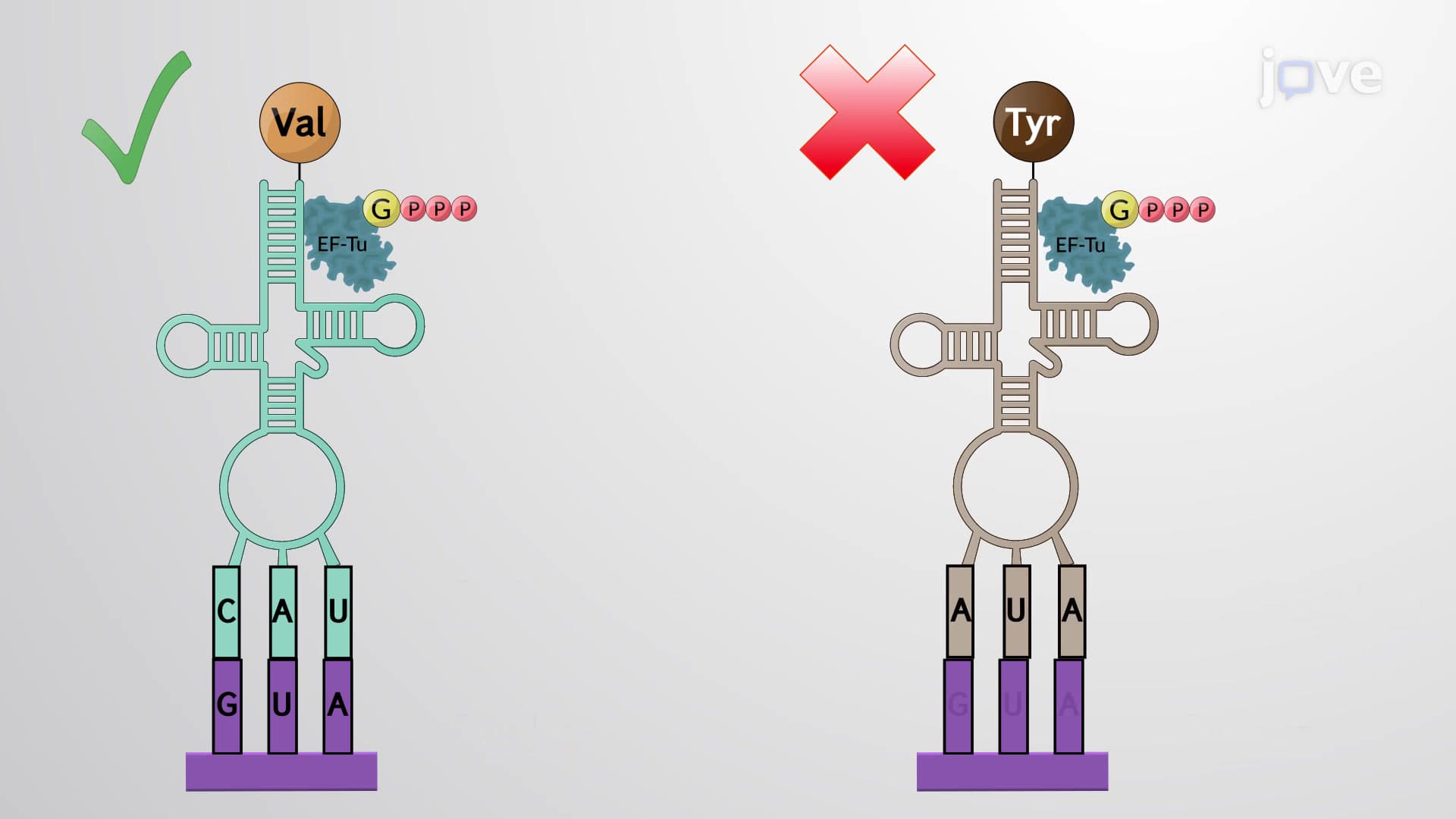
The wobble base pairing phenomenon-where the third codon position shows flexibility-reduces the cellular burden of maintaining 61 different tRNAs while preserving translation accuracy. This elegant solution demonstrates evolution's optimization of biological systems.
Related Micro-courses