Loading video…


 11 Concepts
 17.4K views

Video Summary: What are Allergic Drug Reactions
Ever wondered why some people break out in hives after taking penicillin while others don't? Allergic drug reactions are immune system responses to medications that occur independently of the drug's intended therapeutic effects. Unlike predictable side effects listed on medication labels, these hypersensitivity reactions involve complex antibody-mediated processes that can range from mild skin rashes to life-threatening anaphylaxis, as seen in approximately 10% of Americans who experience penicillin allergies. Watch the full video on JoVE Coach to master this concept with expert-led visuals and step-by-step explanations.
Allergic drug reactions represent a critical intersection between pharmacology and immunology that every healthcare student must master. Unlike dose-dependent adverse drug reactions or predictable side effects, these hypersensitivity responses occur when the immune system mistakenly identifies a medication as a foreign threat. The key distinction lies in their independence from the drug's therapeutic mechanism-a patient can experience an allergic reaction to insulin while the hormone still effectively lowers blood glucose levels.
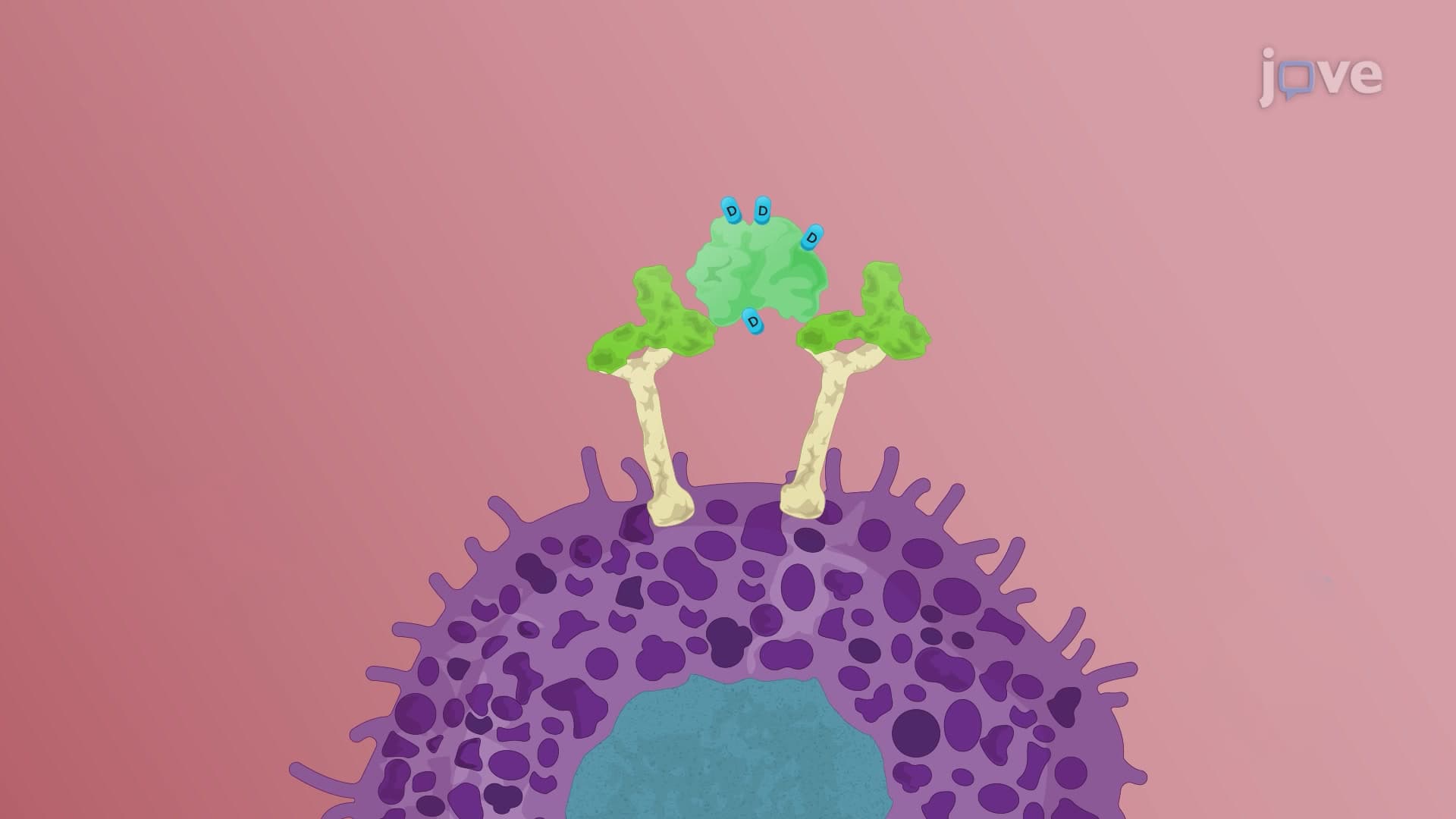
The Gell and Coombs classification system categorizes allergic drug reactions into four distinct types, each with unique immunological pathways. Type I reactions, mediated by IgE antibodies, represent the most clinically significant category due to their potential for anaphylaxis. When penicillin-the most common drug allergen in the United States-first enters the body, it conjugates with tissue proteins to form hapten-carrier complexes. These complexes stimulate B lymphocytes to produce specific IgE antibodies that bind to mast cell surfaces throughout the body.
Type II reactions involve cytotoxic mechanisms where IgG and IgM antibodies target drug-modified cell surfaces. A classic example occurs with heparin-induced thrombocytopenia, where antibodies attack platelet factor 4 complexes, leading to dangerous blood clots despite the drug's anticoagulant purpose. Type III reactions form immune complexes that deposit in tissues, causing serum sickness-like symptoms, while Type IV reactions involve delayed T-cell responses that manifest 48-72 hours after exposure.
The clinical presentation of allergic drug reactions depends heavily on the hypersensitivity type and the body systems involved. Type I reactions primarily target the skin (urticaria, angioedema), respiratory system (bronchospasm, laryngeal edema), gastrointestinal tract (nausea, cramping), and cardiovascular system (hypotension, shock). These reactions typically occur within minutes to hours of drug administration, making them particularly dangerous in hospital settings.
Understanding these mechanisms proves essential for success on standardized exams like the MCAT, where students must differentiate between various immune-mediated drug reactions. The USMLE Step 1 frequently tests knowledge of penicillin allergy mechanisms, while nursing exams like NCLEX emphasize recognition and immediate intervention protocols. College-level pharmacology courses build upon this foundation to explore drug desensitization protocols and alternative medication selection strategies.
In American healthcare settings, drug allergies affect approximately 10-15% of hospitalized patients, with penicillin allergies being the most commonly reported. However, studies from major medical centers like Johns Hopkins and Mayo Clinic reveal that over 90% of patients with documented penicillin allergies can actually tolerate the antibiotic safely when properly tested. This highlights the importance of understanding true immunological mechanisms versus patient-reported adverse experiences, a critical skill for healthcare providers in optimizing antibiotic stewardship and patient care outcomes.
Related Micro-courses