Loading subject page…


72,830 views

Video Summary: Adiabatic Processes for an Ideal Gas Explained
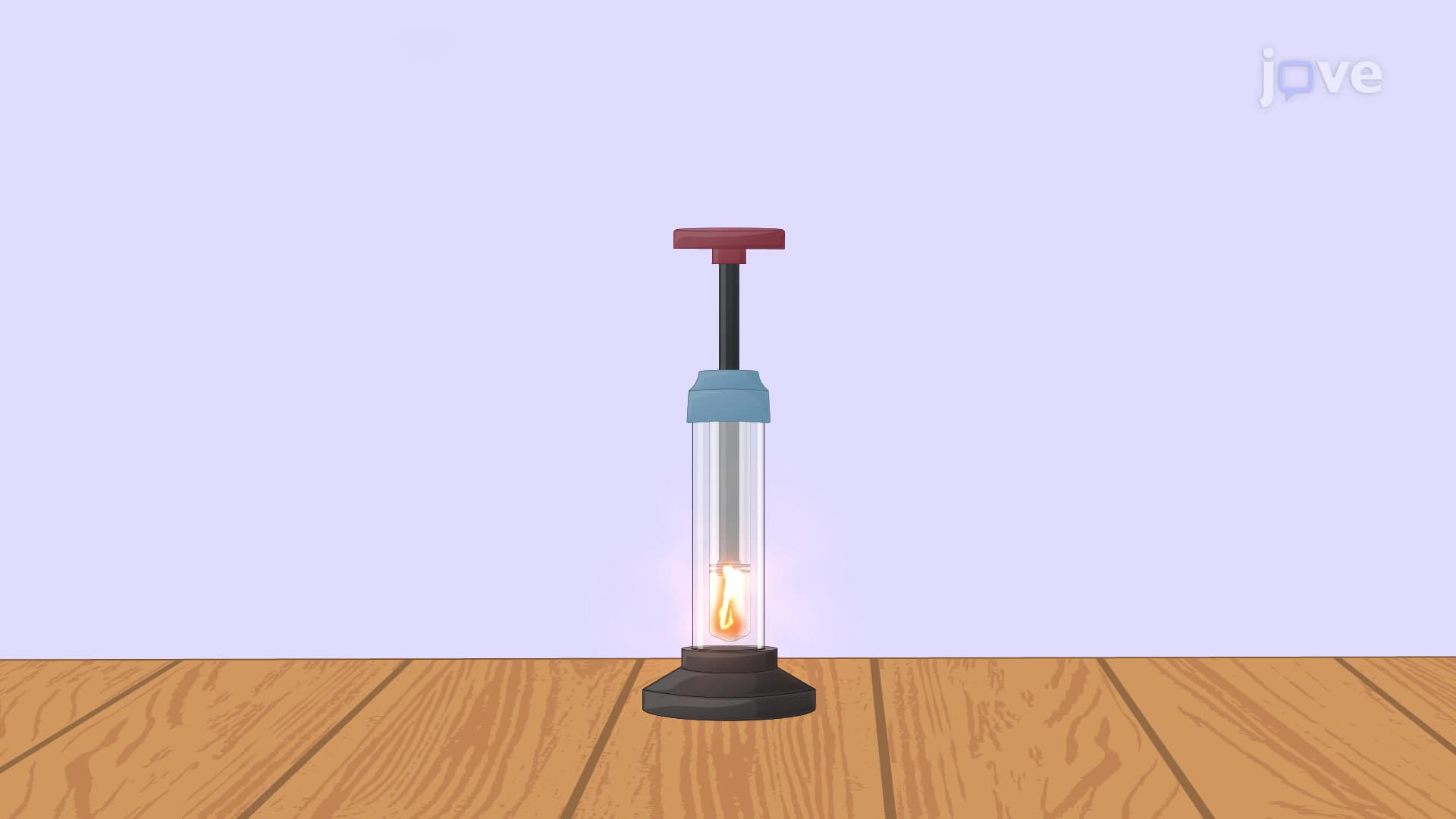
Ever wondered why a bicycle pump gets hot when you inflate a tire, even though you're not adding heat? Adiabatic processes for an ideal gas occur when gas undergoes compression or expansion without heat transfer, causing dramatic temperature changes through work alone. Picture the fire piston used in physics demonstrations at universities like MIT-rapidly compressing air ignites cotton through adiabatic compression, reaching over 500°F instantly. Adiabatic Processes For An Ideal Gas Explained reveals the fascinating physics behind these everyday phenomena. Watch the full video on JoVE Coach to master this concept with expert-led visuals and step-by-step explanations.
An adiabatic process represents one of the most important thermodynamic processes where a gas undergoes changes in pressure, volume, and temperature without any heat transfer to or from its surroundings. This isolation occurs either through perfect thermal insulation or when the process happens so rapidly that there's insufficient time for heat exchange. The mathematical foundation rests on the first law of thermodynamics: ΔU = Q - W. Since Q = 0 for adiabatic processes, we get ΔU = -W, meaning all temperature changes result purely from work done on or by the gas.
During adiabatic compression, external work compresses the gas, decreasing volume while increasing both pressure and temperature. The classic fire piston demonstration showcases this dramatically-rapid compression of air raises its temperature above the ignition point of tinder, creating fire without external heat. Conversely, adiabatic expansion allows gas to do work on its surroundings, increasing volume while decreasing both pressure and temperature. This explains why aerosol cans feel cold when spraying and why high-altitude air temperatures drop significantly.
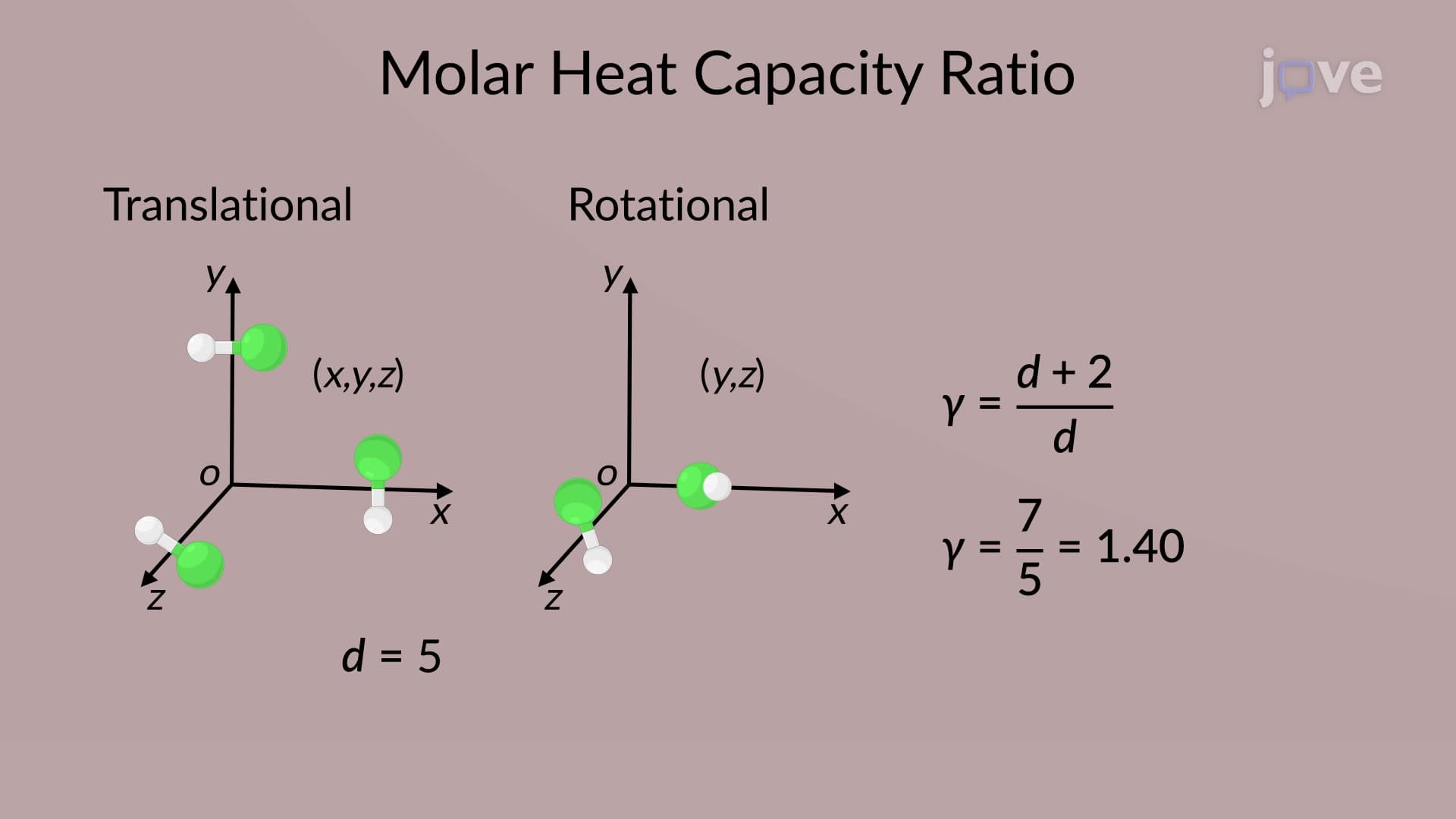
The adiabatic equation PV^γ = constant governs ideal gas behavior during these processes, where γ (gamma) represents the specific heat ratio Cp/Cv. For monatomic gases like helium, γ = 1.67, while diatomic gases like oxygen have γ = 1.4. This relationship enables calculations of final states when initial conditions change. Students preparing for AP Physics or college thermodynamics courses must master manipulating this equation alongside the ideal gas law PV = nRT to solve complex problems involving temperature and work calculations.
Adiabatic processes appear throughout engineering applications and natural phenomena. Diesel engines rely on adiabatic compression to achieve the high temperatures needed for fuel ignition without spark plugs. Meteorology extensively uses adiabatic concepts-rising air masses cool adiabatically as atmospheric pressure decreases with altitude, creating clouds and weather patterns. Refrigeration cycles incorporate adiabatic expansion and compression stages. Understanding these processes proves essential for students pursuing engineering degrees or preparing for the MCAT's physics sections, where thermodynamics questions frequently test adiabatic process comprehension.
Related Micro-courses