Loading subject page…

- Physics
- The First Law of Thermodynamics
- Cyclic Processes And Isolated Systems
Micro-course: The First Law of Thermodynamics
72,807 views
Learn key concepts and earn your certificate.









Cyclic Processes And Isolated Systems


00:00
01:19
Video Summary: Cyclic Processes and Isolated Systems Explained
Ever wonder why your car's engine can run continuously without losing energy, or how refrigerators keep cooling without breaking down? Cyclic processes and isolated systems form the foundation of these everyday technologies. In isolated systems like a perfectly insulated thermos bottle, no heat or work exchanges occur with surroundings, keeping internal energy constant. Meanwhile, cyclic processes-like those in automotive engines across Detroit's manufacturing plants-return systems to their original state while converting heat into useful work. Watch the full video on JoVE Coach to master this concept with expert-led visuals and step-by-step explanations.
- Understand the fundamental principles of cyclic processes and isolated systems and their role in thermodynamic analysis
- Identify the key characteristics that distinguish isolated systems from other thermodynamic systems
- Analyze how internal energy changes (or remains constant) in different system types and process conditions
- Compare clockwise versus counterclockwise cyclic processes and their relationship to positive and negative work
- Evaluate pV diagrams to determine net work done in cyclic processes using enclosed area calculations
- Apply the first law of thermodynamics to solve problems involving isolated systems and cyclic processes
- Recognize real-world applications of these concepts in engines, refrigerators, and biological systems
- Explore the mathematical relationships between heat transfer, work done, and internal energy changes
Understanding Cyclic Processes And Isolated Systems
Cyclic processes and isolated systems represent two fundamental concepts in thermodynamics that help us understand energy conservation and transformation. These principles govern everything from the engines powering vehicles on Interstate highways to the metabolic processes occurring in our bodies.
Isolated Systems: Perfect Energy Conservation
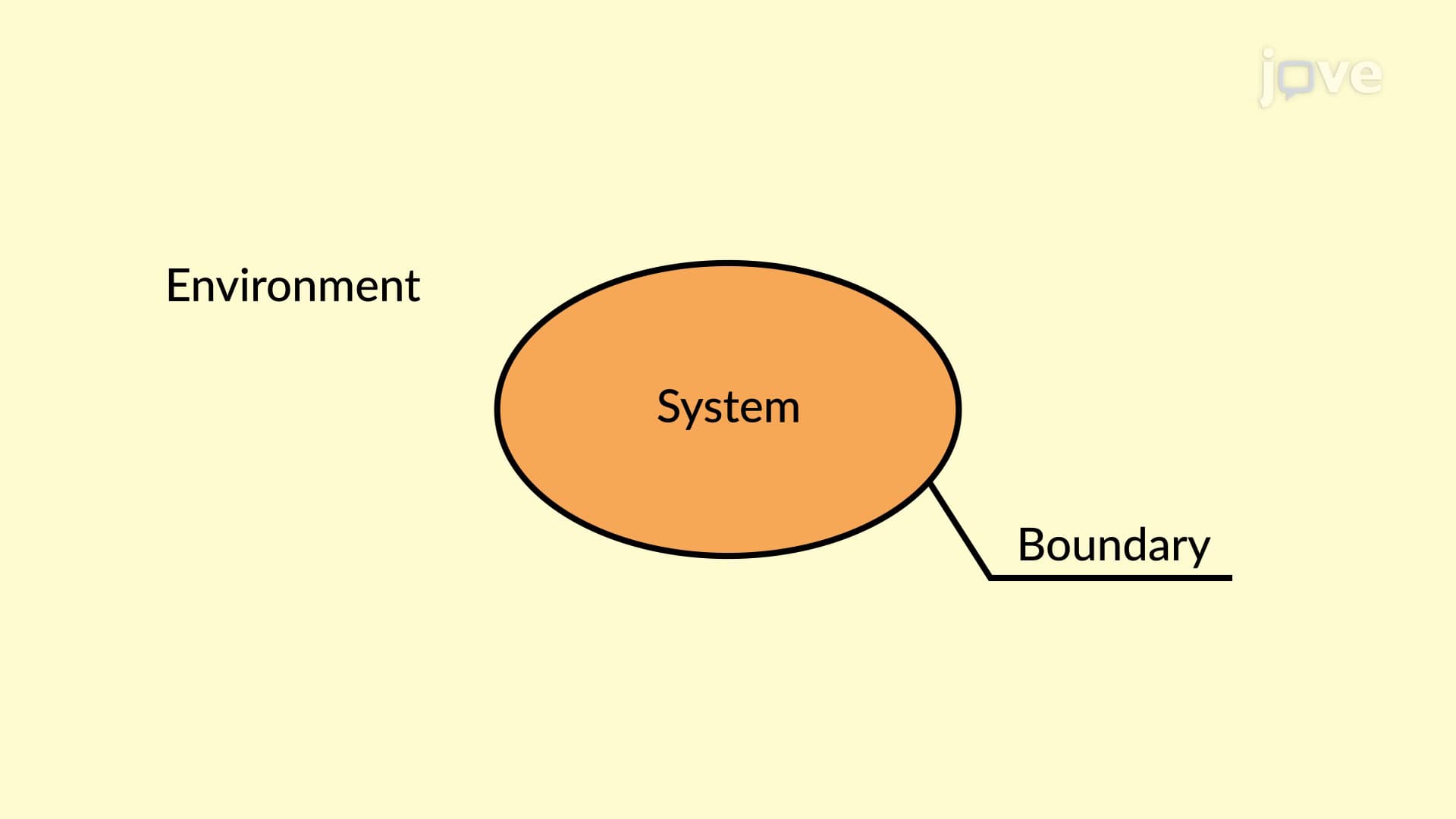
An isolated system represents the idealized scenario where no energy crosses system boundaries-no heat transfer, no work exchange, and no mass transfer with surroundings. Think of a perfectly insulated container with rigid walls containing gas molecules. In such systems, the first law of thermodynamics simplifies dramatically: ΔU = 0, meaning internal energy remains absolutely constant.
Real-world approximations include high-quality thermos bottles used by hikers in Yellowstone National Park or the insulated chambers used in calorimetry experiments at universities like MIT and Stanford. While perfect isolation is impossible, these systems approach ideal behavior closely enough for practical analysis.
Cyclic Processes: Returning to Start
Cyclic processes describe thermodynamic transformations where systems return to their initial state after completing a series of changes. The human respiratory system exemplifies this beautifully-air pressure and volume in lungs cycle through expansion and compression, ultimately returning to baseline conditions with each breath.
In engineering applications, Otto cycles power gasoline engines in vehicles manufactured across Michigan's automotive corridor, while Rankine cycles drive steam turbines at power plants throughout Texas and California. These processes demonstrate that while individual state variables may fluctuate dramatically, the system's final state matches its initial condition.
pV Diagrams and Work Calculations
The graphical representation of cyclic processes on pressure-volume (pV) diagrams provides powerful analytical tools. The enclosed area within the cycle directly equals net work performed. Clockwise cycles (like those in heat engines) produce positive work output, while counterclockwise cycles (characteristic of refrigerators and heat pumps) require work input.
Students preparing for AP Physics exams or college thermodynamics courses frequently encounter problems requiring area calculations from pV diagrams. These calculations prove essential for analyzing engine efficiency and refrigerator performance-skills directly applicable to mechanical engineering programs at institutions like Georgia Tech and Purdue University.
For cyclic processes, internal energy returns to its original value (ΔU = 0), making the first law relationship particularly elegant: W(net) = Q(net). This means all net heat absorbed converts directly to useful work output, explaining why cyclic processes form the backbone of virtually all heat engines powering modern civilization.
Frequently Asked Questions
Cyclic processes return thermodynamic systems to their original state after a series of changes, while isolated systems exchange neither heat nor work with surroundings. Cyclic processes maintain constant internal energy over complete cycles, whereas isolated systems maintain constant internal energy continuously. These concepts are fundamental to understanding engines, refrigerators, and energy conservation principles.
These concepts frequently appear in MCAT physics sections and AP Physics 2 thermodynamics units, typically involving pV diagram analysis and first law applications. Students must calculate work from enclosed areas, determine heat transfer requirements, and analyze engine efficiency. Practice problems often feature automotive engines, refrigeration cycles, and biological systems like respiratory processes.
Clockwise cycles on pV diagrams represent positive work output (system does work on surroundings), while counterclockwise cycles represent negative work (surroundings do work on system). This distinction determines whether the device functions as a heat engine (producing useful work) or heat pump/refrigerator (requiring work input). Understanding this relationship is crucial for college-level thermodynamics courses.
Automotive engines throughout Detroit's manufacturing sector utilize Otto cycles (cyclic processes) to convert gasoline combustion into mechanical work. Power plants across Texas employ Rankine cycles for electricity generation, while refrigeration systems in commercial buildings use reverse cycles. These applications demonstrate how theoretical concepts directly enable modern technological infrastructure.
No advanced calculus is required for introductory understanding-basic algebra and geometry suffice for most high school and early college applications. Students need comfort with area calculations, basic derivatives for instantaneous rates, and fundamental physics principles. Even AP Physics students successfully master these concepts using primarily algebraic approaches.
Focus on connecting mathematical relationships to physical intuition-practice sketching pV diagrams, calculating areas, and relating results to real engines or refrigerators. Work through diverse problem types, emphasizing first law applications and energy conservation principles. Create concept maps linking isolated systems, cyclic processes, and practical applications to reinforce understanding.
Progress to entropy and second law thermodynamics, which explain why perfect heat engines are impossible and establish efficiency limits. Study specific cycles (Otto, Diesel, Carnot, Rankine) used in real engines and power plants. These concepts prepare students for advanced mechanical engineering coursework and professional applications in energy systems design.
Human cardiovascular and respiratory systems exemplify cyclic processes-hearts pump blood through repetitive contraction cycles, while lungs expand and contract rhythmically during breathing. Each cycle returns the system to its starting state while accomplishing essential work (circulating blood, exchanging gases). These biological examples help students visualize abstract thermodynamic principles in familiar contexts.
Related Micro-courses

12 Concepts
16 Concepts
13 Concepts