Loading subject page…


72,830 views

Video Summary: What are Thermodynamic Systems
Did you know that your smartphone battery operates as a thermodynamic system every time you charge it? Thermodynamic systems are fundamental concepts in physics that define how matter and energy interact within defined boundaries. From a Tesla Model S electric motor to a Coca-Cola can cooling in your refrigerator, What are Thermodynamic Systems helps us understand energy transfer in everyday American technology. The three main types-isolated, closed, and open systems-govern everything from power plant efficiency to your home's HVAC system. Watch the full video on JoVE Coach to master this concept with expert-led visuals and step-by-step explanations.
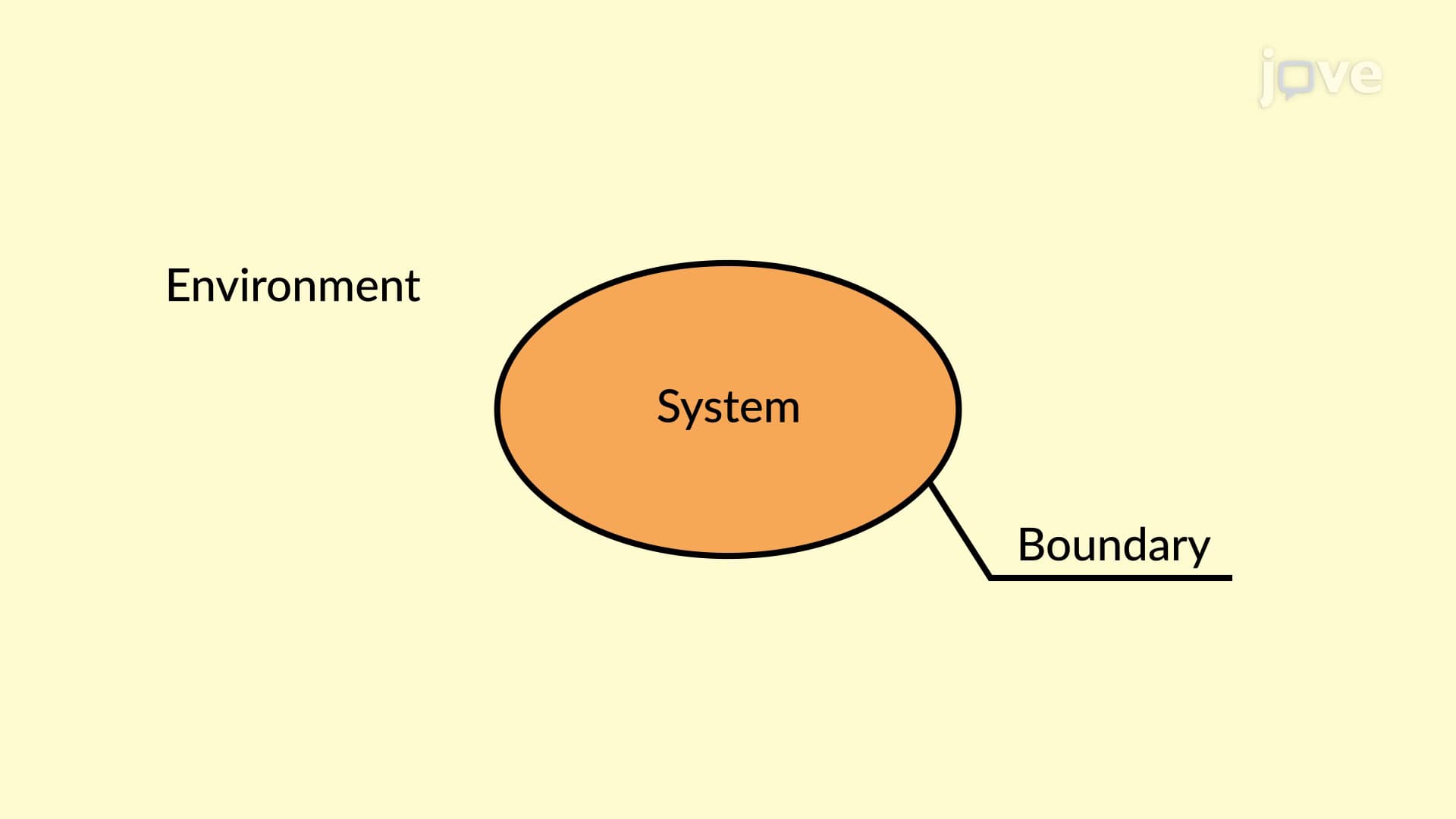
Thermodynamic systems form the foundation of energy analysis in physics and engineering. A system represents any defined region of space or collection of matter that we choose to study, while everything outside the system boundary constitutes the environment or surroundings. This seemingly simple distinction becomes powerful when analyzing energy transfer, heat engines, refrigeration cycles, and chemical reactions.
The key to mastering types of thermodynamic systems lies in understanding how matter and energy cross system boundaries. American students encounter these concepts extensively in AP Physics, college-level thermodynamics courses, and pre-engineering programs. The classification system provides a systematic approach to solving complex energy problems.
Isolated systems represent the most restrictive category, where neither matter nor energy crosses the system boundary. A perfectly insulated thermos bottle approaches this ideal, though true isolation rarely exists in practice. NASA's spacecraft in deep space operate as near-isolated systems, making them excellent examples for understanding energy conservation principles.
Closed systems allow energy transfer but prohibit matter exchange across boundaries. Consider a sealed pressure cooker heating on your stove-steam and heat energy transfer through the walls, but the water molecules remain contained within the system. This concept appears frequently on MCAT physics sections and college thermodynamics exams.
Open systems permit both matter and energy exchange with surroundings. Your body functions as an open system, consuming food and oxygen while releasing carbon dioxide and heat. Industrial examples include gas turbines in power plants, where fuel and air enter while exhaust gases and mechanical work exit the system.
Understanding thermodynamic systems proves essential for analyzing efficiency in American manufacturing. Ford's assembly plants use open systems for paint booth operations, while Boeing's aircraft engines represent complex open systems optimized for fuel efficiency. Even household appliances like General Electric refrigerators operate as closed systems with specific energy transfer characteristics.
Students preparing for standardized tests should focus on identifying system boundaries and classifying energy/matter flows. These concepts connect directly to broader topics in chemistry (reaction calorimetry), physics (heat engines), and environmental science (energy conservation).
Related Micro-courses