Loading video…


 19 Concepts
 72.8K views

Video Summary: What Is Heat and Free Expansion
Ever wonder why a compressed air canister feels cold when you release the valve quickly? Heat and free expansion demonstrates a fascinating thermodynamic principle where gas behavior changes dramatically based on whether work is performed during expansion. Consider NASA's rocket fuel systems, where understanding gas expansion under different conditions is critical for engine efficiency. What is Heat And Free Expansion reveals how the same gas can reach identical final volumes through completely different pathways-one involving work done against pressure, another through instantaneous expansion with zero work output. Watch the full video on JoVE Coach to master this concept with expert-led visuals and step-by-step explanations.
Heat and free expansion represents a cornerstone concept in thermodynamics that illustrates how identical initial and final states can be reached through dramatically different processes. This principle demonstrates that work done by any thermodynamic system fundamentally depends on the specific pathway taken, not merely the starting and ending conditions.
The concept becomes particularly relevant for students preparing for AP Chemistry, AP Physics, and college-level thermodynamics courses. Understanding this principle helps explain everything from how refrigeration systems operate to why rocket engines require precise pressure management during fuel expansion.
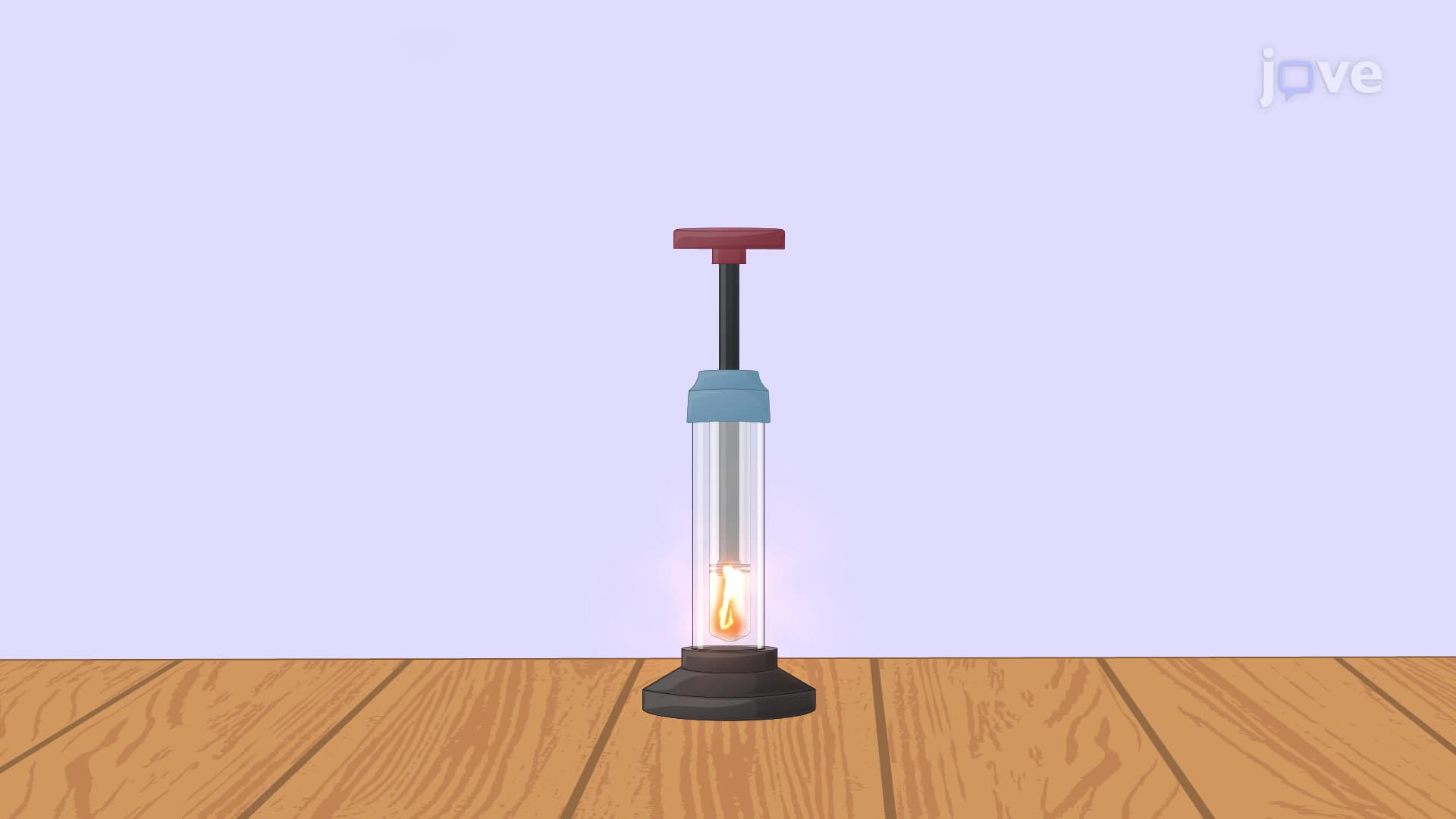
In the first pathway, when cylinder A containing ideal gas receives heat input, the gas molecules absorb thermal energy, increasing their kinetic energy and consequently raising internal pressure. This pressure increase forces open the connecting valve, allowing gas to expand isothermally into empty cylinder B. During this process, the expanding gas performs work against the valve mechanism and surrounding pressure.
This controlled expansion process occurs frequently in industrial applications across the United States, from compressed air systems in manufacturing plants to pneumatic tools in automotive repair shops. Students encounter this concept extensively in MCAT preparation, where understanding work-energy relationships in biological systems requires solid thermodynamic foundations.
The second pathway involves removing the valve entirely while the system remains thermally insulated. Without any barriers to resist expansion, gas molecules rapidly distribute throughout both cylinders, achieving the same final volume as the heated expansion process. However, since no boundaries move during this instantaneous expansion, zero work is performed by the gas.
This free expansion scenario exemplifies what occurs in vacuum chambers used by NASA and private aerospace companies like SpaceX during spacecraft testing. Understanding these principles becomes crucial for students pursuing engineering careers in aerospace, where precise gas behavior predictions determine mission success.
Both expansion processes demonstrate the path-dependent nature of thermodynamic work, a concept that appears regularly on standardized exams including the MCAT, AP Physics exams, and college thermodynamics midterms. Students should recognize that while both processes achieve identical final states, the energy transformations and work outputs differ completely based on the expansion pathway chosen.
Related Micro-courses