Loading subject page…


72,831 views


Video Summary: What Is Internal Energy
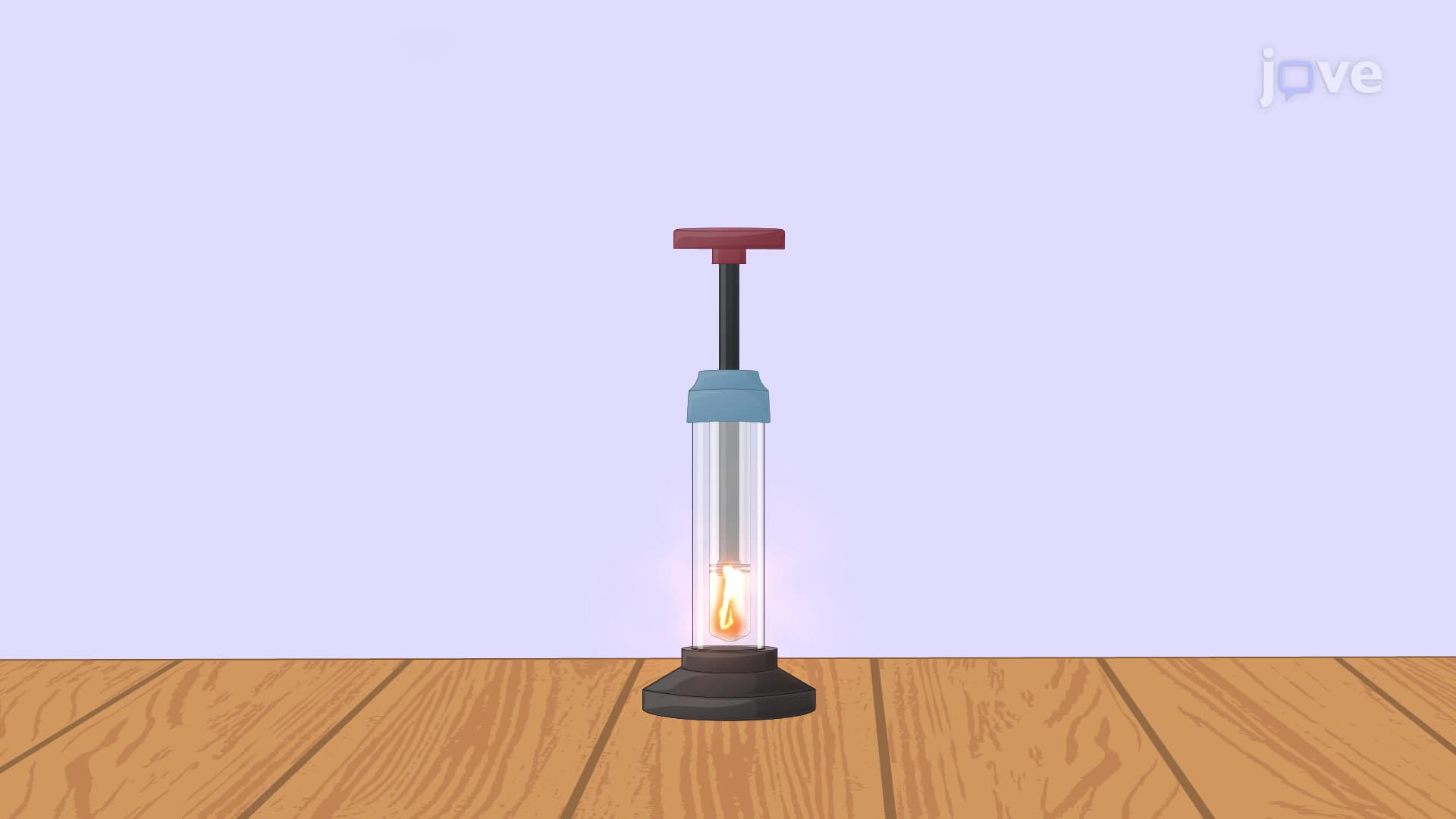
Ever wonder why a hot coffee cup eventually cools to room temperature, or why your car engine gets warm during operation? Internal energy is the total kinetic and potential energy of all atoms and molecules within a system, determining how substances store and transfer thermal energy. For instance, when natural gas burns in a power plant turbine in Texas, the internal energy of the combustion products drives electricity generation across the state. Watch the full video on JoVE Coach to master this concept with expert-led visuals and step-by-step explanations.
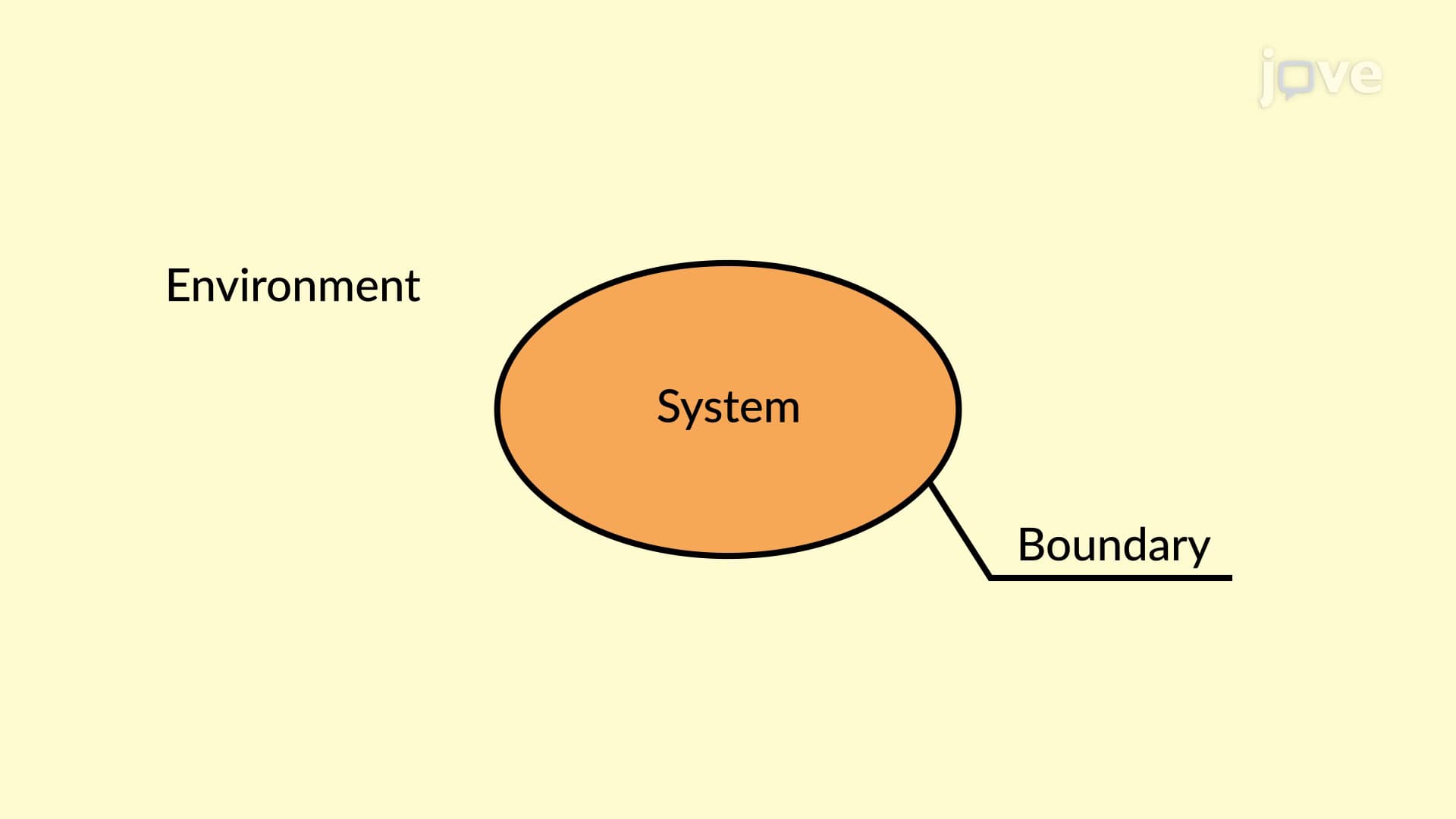
Internal energy represents one of the most fundamental concepts in thermodynamics, bridging the gap between microscopic particle behavior and macroscopic thermal properties. At its core, internal energy encompasses all forms of energy contained within a system's boundaries-primarily the kinetic energy of molecular motion and the potential energy arising from intermolecular forces.
For an ideal gas, internal energy simplifies beautifully. Since ideal gas particles experience no intermolecular attractions or repulsions, their potential energy remains zero. This leaves only translational kinetic energy, which directly correlates with temperature. The mathematical relationship U = (3/2)NkBT reveals that internal energy increases linearly with temperature, where N represents the number of atoms, kB is Boltzmann's constant (1.38 × 10^-23 J/K), and T is absolute temperature in Kelvin.
One of internal energy's most important characteristics is its nature as a state function. This means internal energy depends solely on the system's current state-temperature, pressure, volume, and composition-regardless of how that state was achieved. Consider water at 25°C: whether it reached this temperature by cooling from boiling point or warming from ice, its internal energy remains identical.
This path independence proves crucial for engineering applications. When designing HVAC systems for buildings in Chicago or Miami, engineers can calculate energy requirements based on initial and final states without tracking every intermediate step. The first law of thermodynamics, ΔU = Q - W, relies heavily on this principle.
Internal energy concepts frequently appear on AP Physics exams, MCAT passages, and college thermodynamics courses. Students typically encounter problems involving:
Practical applications span from automotive engines (where internal combustion increases gas internal energy to produce work) to refrigeration systems in American grocery stores (where energy transfer cycles maintain food preservation temperatures).
Understanding internal energy also provides foundation knowledge for advanced topics like enthalpy, Gibbs free energy, and chemical thermodynamics-essential for pre-med students preparing for organic chemistry and biochemistry coursework.
Related Micro-courses