Loading subject page…


72,830 views


Video Summary: What Is Thermodynamic Potentials
Ever wonder how NASA engineers predict rocket fuel efficiency or how power plants optimize energy output? Thermodynamic potentials are the mathematical tools that make these calculations possible. These state functions-including internal energy, enthalpy, Helmholtz free energy, and Gibbs free energy-describe how energy flows in systems from steam turbines at Con Edison to the metabolic processes in your own cells. Watch the full video on JoVE Coach to master this concept with expert-led visuals and step-by-step explanations.
Thermodynamic potentials represent one of the most powerful conceptual frameworks in physical chemistry and engineering. These mathematical functions serve as comprehensive descriptors of a system's energy state, allowing scientists and engineers to predict how systems will behave under different conditions. From the design of jet engines at General Electric to pharmaceutical research at Pfizer, these potentials provide the theoretical foundation for understanding energy transformations.
Internal Energy (U) serves as the starting point for understanding thermodynamic potentials. Expressed as a function of entropy (S) and volume (V), internal energy represents the total energy contained within a system. The beauty of this relationship lies in how temperature and pressure emerge naturally as partial derivatives: T = (∂U/∂S) at constant V, and P = -(∂U/∂V) at constant S.
Enthalpy (H) becomes crucial when dealing with constant-pressure processes, common in everything from brewing beer at Anheuser-Busch to manufacturing steel at U.S. Steel. Defined as H = U + PV, enthalpy transforms into a function of entropy and pressure, making temperature and volume accessible through partial differentiation.
Helmholtz Free Energy (F) proves invaluable for constant-temperature processes. Given by F = U - TS, this potential naturally depends on volume and temperature, with entropy and pressure obtainable as partial derivatives. This relationship becomes essential in materials science, particularly in understanding phase transitions in semiconductors manufactured by Intel or AMD.
For students preparing for AP Chemistry or college physical chemistry courses, understanding these relationships proves crucial. The MCAT frequently tests these concepts in passages about biological energetics, while engineering students encounter them in thermodynamics courses when analyzing power cycles and refrigeration systems.
Gibbs Free Energy (G), perhaps the most practically important potential, governs spontaneity in chemical reactions. Expressed as G = H - TS or equivalently G = U + PV - TS, this function depends on temperature and pressure-the conditions most easily controlled in laboratory and industrial settings. Pharmaceutical companies like Johnson & Johnson rely on Gibbs free energy calculations to predict drug stability and reaction feasibility.
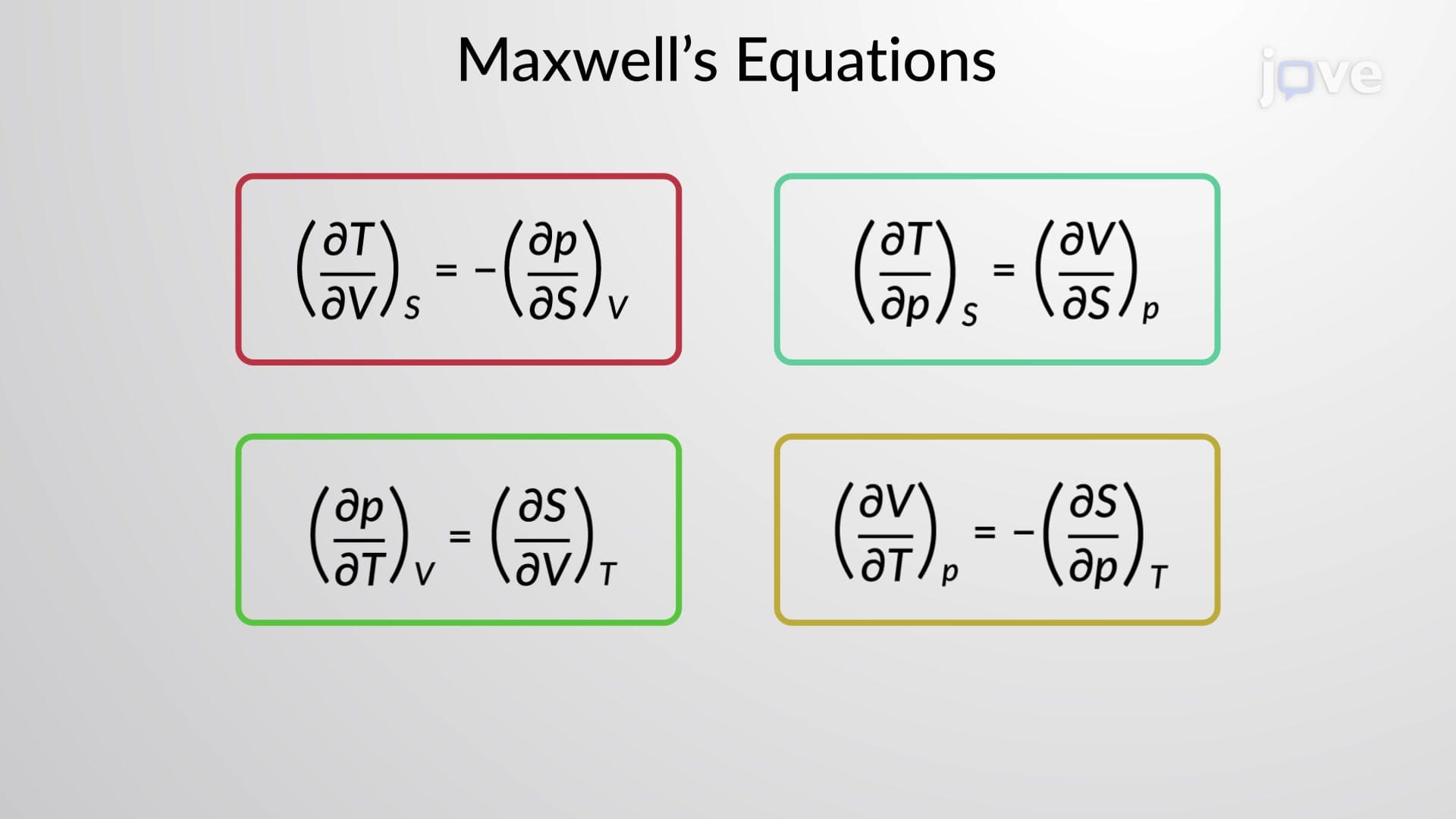
The mathematical elegance of these potentials lies in their interconnectedness through Legendre transformations, allowing chemists and engineers to choose the most convenient potential for their specific conditions and constraints.
Related Micro-courses