Loading subject page…


49,704 views


Video Summary: Mean Free Path and Mean Explained
Ever wonder why air molecules don't constantly crash into each other despite moving at 500 meters per second? The mean free path and mean collision concepts explain this fascinating phenomenon in gas behavior. In laboratory air at room temperature, a nitrogen molecule travels about 68 nanometers before hitting another molecule-a distance 200 times larger than the molecule itself! This principle helps engineers design everything from vacuum pumps at NASA to air filtration systems in US hospitals. Watch the full video on JoVE Coach to master this concept with expert-led visuals and step-by-step explanations.
The mean free path and mean collision concept forms the bridge between microscopic molecular motion and macroscopic gas properties we observe daily. When gas molecules move randomly through space, they don't travel in straight lines indefinitely-they collide with other molecules, changing direction and speed. The mean free path represents the average distance a molecule travels between these collisions, while mean free time measures the average duration between impacts.
Consider gas molecules as spheres with radius r moving at velocity v. When two molecules collide, their centers are separated by exactly 2r at the moment of impact. This collision criterion creates an effective "collision cylinder" with radius 2r around each moving molecule. Any molecule whose center enters this cylinder will collide with the reference molecule.
The collision frequency depends on three key factors: molecular density (N/V), relative velocity between molecules, and the effective collision cross-section (π × (2r)²). Students taking AP Chemistry or college-level physical chemistry courses encounter this relationship when studying kinetic molecular theory. The mathematical expression shows that mean free path = v × mean free time, where mean free time equals the reciprocal of collision frequency.
Mean free path calculations prove essential in numerous American industries. At Intel's semiconductor fabrication plants in Oregon and Arizona, engineers must maintain ultra-high vacuum conditions where the mean free path exceeds the chamber dimensions-preventing contaminating molecules from reaching silicon wafers. Similarly, NASA's vacuum chambers at Johnson Space Center rely on mean free path principles to simulate space conditions for equipment testing.
In atmospheric science, meteorologists use these concepts to understand how pollutants disperse through different air layers. The Environmental Protection Agency applies mean free path calculations when modeling particulate matter behavior in urban environments like Los Angeles or New York City.
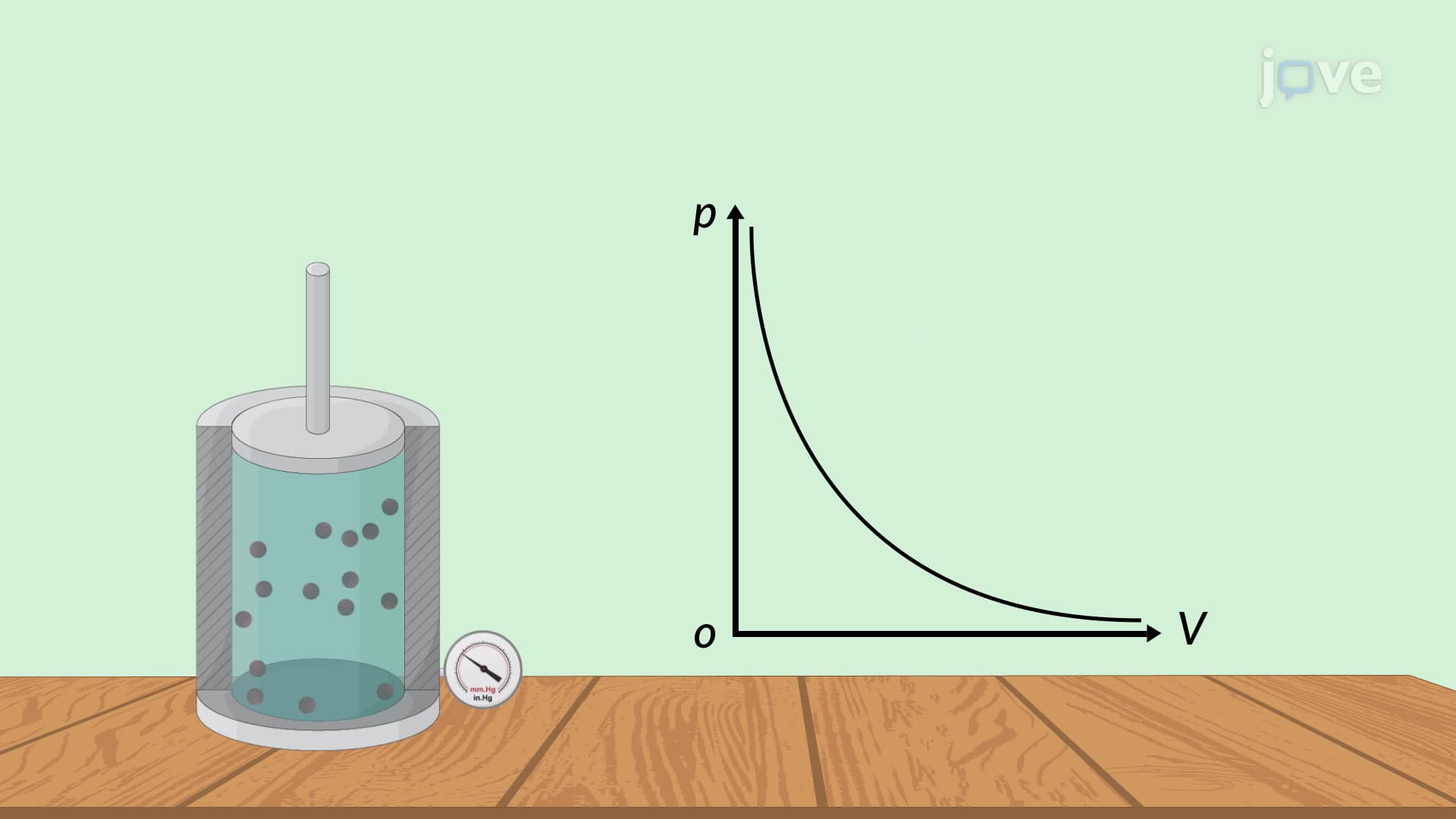
The beauty of mean free path theory lies in its connection to observable gas properties through the ideal gas equation PV = NkT. By substituting this relationship into mean free path expressions, we can predict how temperature and pressure changes affect molecular collision patterns. This connection appears frequently on MCAT physics sections and college thermodynamics exams, where students must link molecular-level behavior to bulk gas properties like diffusion rates and thermal conductivity.
Related Micro-courses