Loading video…


 13 Concepts
 49.7K views

Video Summary: What Is Distribution of Molecular Speeds
Ever wonder why perfume spreads faster on hot summer days? The distribution of molecular speeds explains this phenomenon through the random motion of gas molecules in any container. In medical oxygen tanks used in US hospitals, molecules don't all move at the same speed-they follow a specific pattern called the Maxwell-Boltzmann distribution, where temperature determines both average speed and the spread of velocities. Watch the full video on JoVE Coach to master this concept with expert-led visuals and step-by-step explanations.
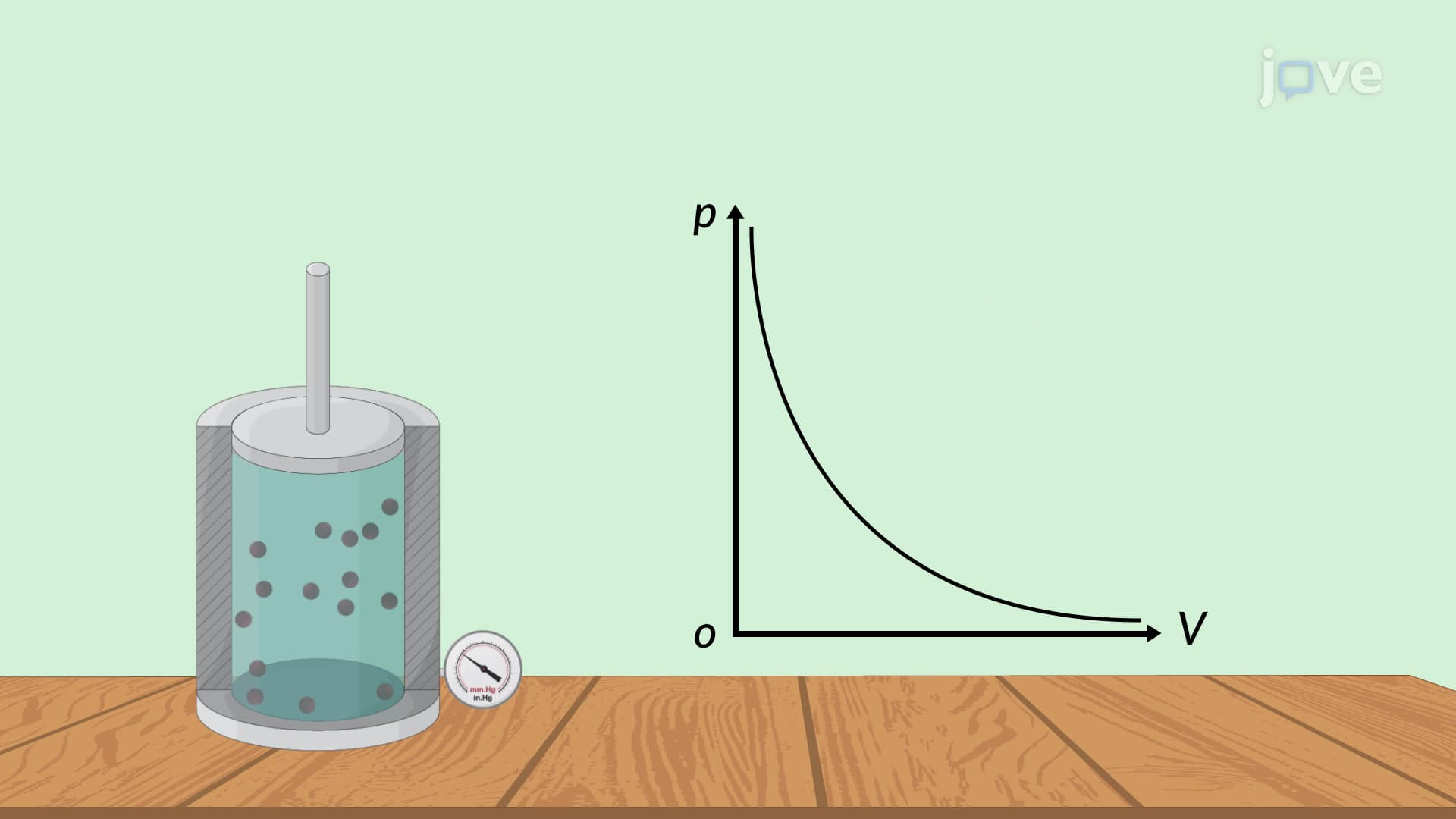
The distribution of molecular speeds describes how gas molecules in any container don't all move at identical velocities. Instead, they exhibit a range of speeds that follows a predictable statistical pattern. This concept builds directly on kinetic molecular theory, which states that gas particles are in constant, random motion with velocities that vary in both magnitude and direction.
Consider the emergency oxygen systems in US ambulances. The oxygen molecules inside these tanks move at different speeds-some fast, some slow, but most clustered around an average value. This speed variation occurs because molecules constantly collide with each other and container walls, continuously exchanging kinetic energy and changing individual velocities.
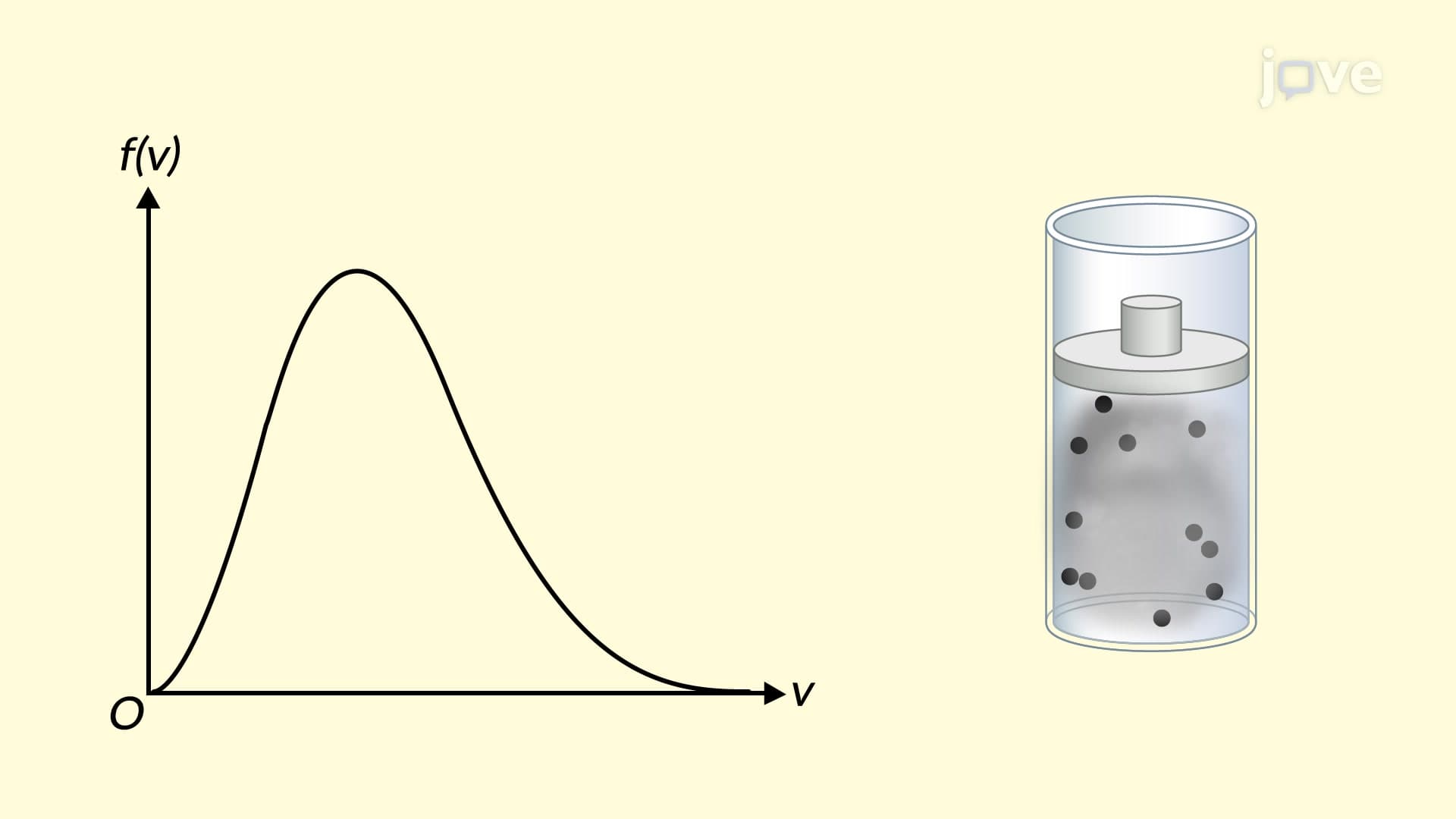
The distribution of molecular speeds follows what scientists call the Maxwell-Boltzmann distribution, named after James Clerk Maxwell and Ludwig Boltzmann. This distribution creates a characteristic asymmetric curve when graphing the number of molecules versus their speeds. The curve starts at zero (no molecules have zero speed in gases above absolute zero), rises to a peak representing the most probable speed, then gradually tails off toward higher speeds.
This asymmetric shape occurs because while there's a theoretical upper limit to molecular speeds based on available thermal energy, there's always a small population of very fast-moving molecules. Students preparing for AP Chemistry or college physical chemistry courses should note that this distribution is fundamental to understanding gas behavior and appears frequently in exam problems.
Temperature dramatically influences the distribution of molecular speeds. At higher temperatures, the entire curve shifts toward higher speeds and becomes broader, indicating both increased average speeds and greater speed variation. The root-mean-square (RMS) speed-calculated as the square root of the average of all squared velocities-increases proportionally with the square root of absolute temperature.
For MCAT preparation, remember that RMS speed differs from the most probable speed (the peak of the distribution curve). The RMS speed is always higher because it's influenced more heavily by the fast-moving molecules in the distribution's tail. This relationship helps explain why volatile compounds like gasoline vapors escape more readily on hot days-higher temperatures mean more molecules achieve the speeds necessary for evaporation.
Understanding molecular speed distribution proves essential in numerous US industries. Pharmaceutical companies use this knowledge when designing drug delivery systems, particularly for inhaled medications where particle size and speed affect lung deposition. Environmental scientists apply these principles when modeling air pollution dispersion patterns around major US cities like Los Angeles or Houston.
Related Micro-courses