Loading video…


 13 Concepts
 49.7K views

Video Summary: What Is Molecular Kinetic Energy
Why does a basketball feel harder when you pump more air into it? The answer lies in molecular kinetic energy, the energy of motion possessed by gas molecules as they constantly bounce around inside the ball. In a pressurized basketball used by NBA players, billions of air molecules are moving at speeds of over 400 meters per second, creating the pressure that keeps the ball inflated through their collisions with the inner walls. Understanding what is molecular kinetic energy reveals how this microscopic motion translates into the macroscopic pressure we can measure and feel. Watch the full video on JoVE Coach to master this concept with expert-led visuals and step-by-step explanations.
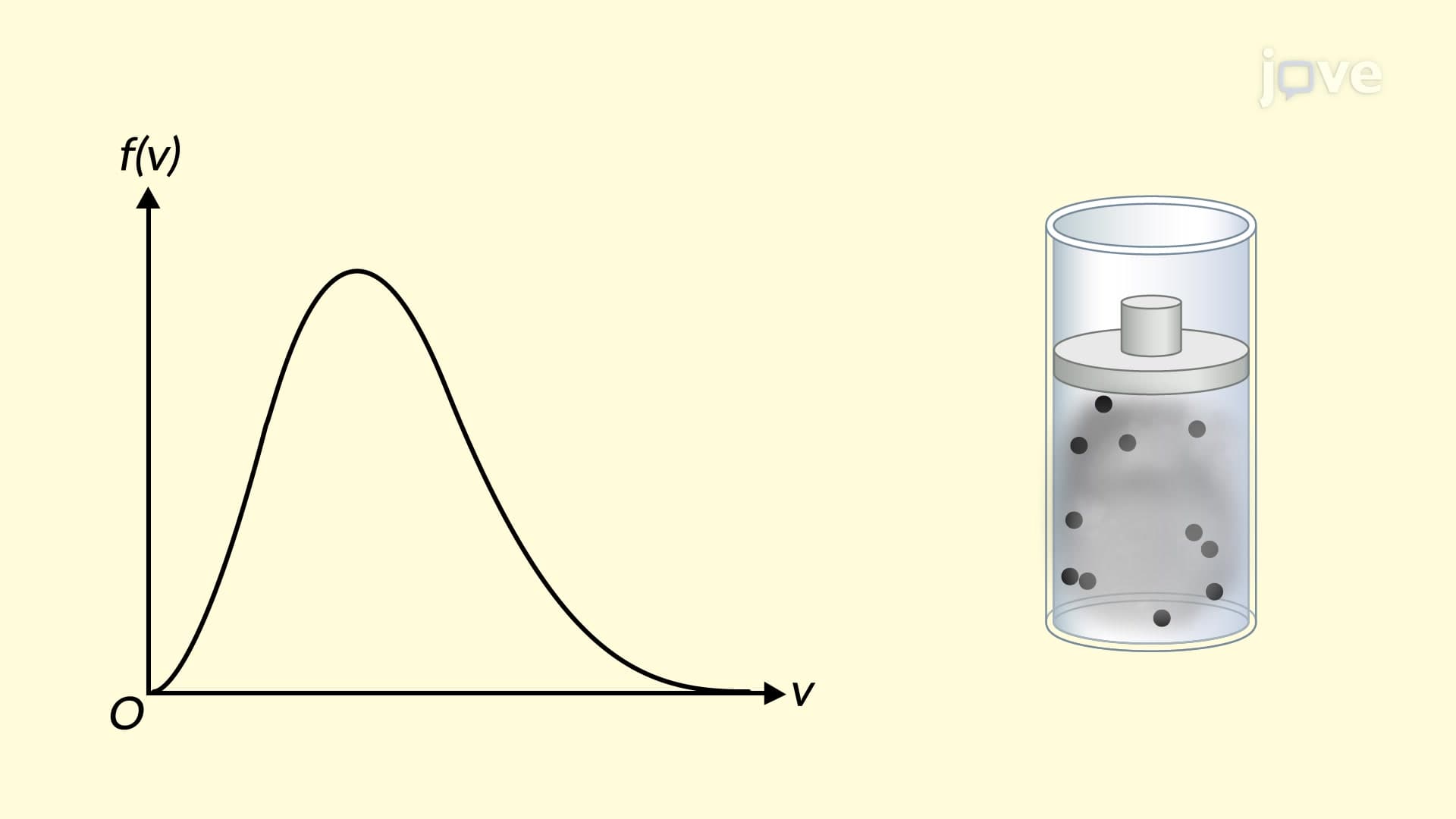
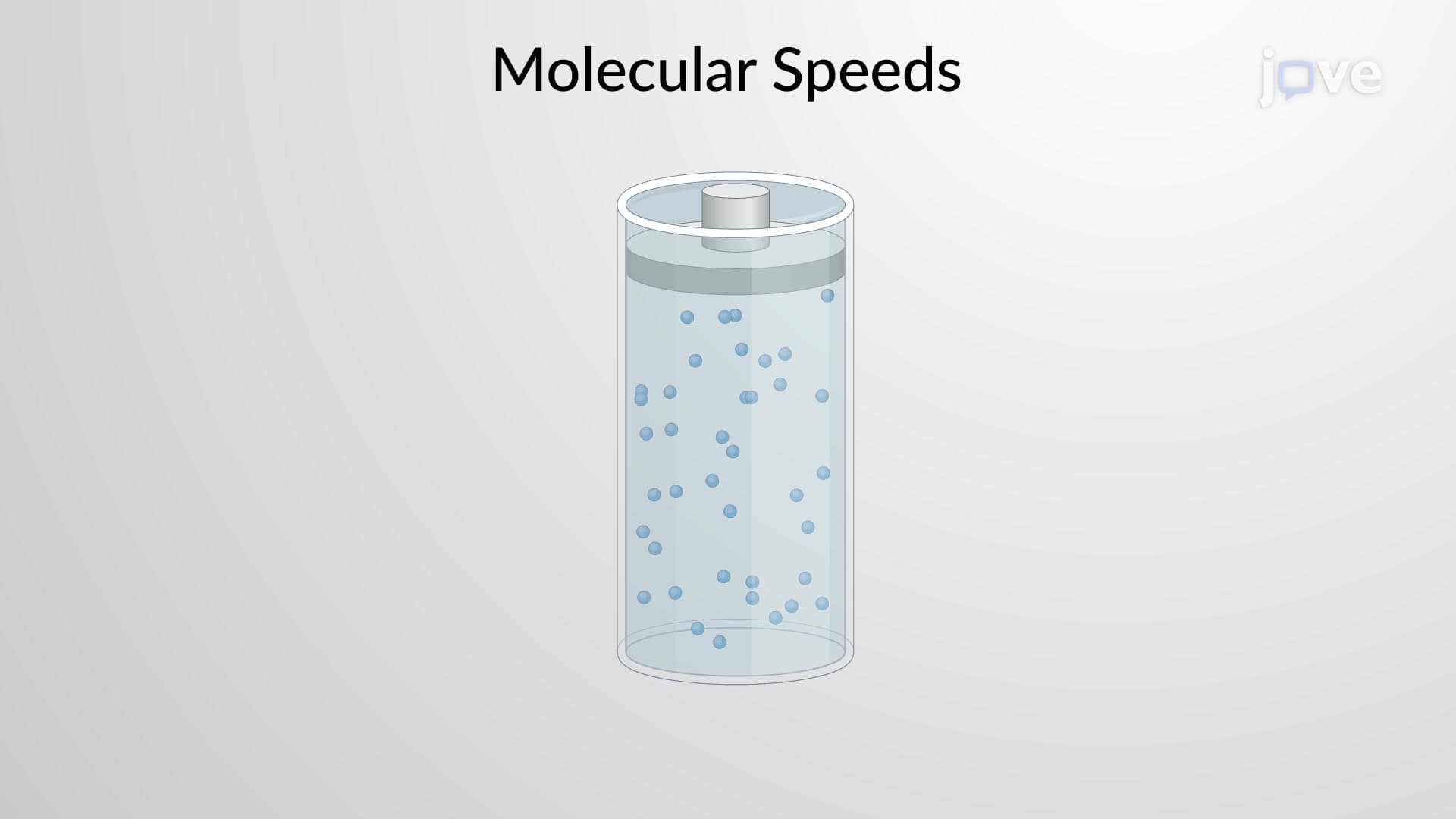
Molecular kinetic energy represents the energy associated with the translational motion of molecules in gases, liquids, and solids. In gases, this concept becomes particularly important because molecules move freely and independently, constantly colliding with each other and container walls. Unlike the organized motion of a moving car, molecular motion is completely random, molecules zip around in all directions at tremendous speeds, typically hundreds of meters per second at room temperature.
The fundamental principle underlying molecular kinetic energy connects the invisible world of molecular motion to measurable properties like pressure and temperature. When you feel air pressure pushing against your hand, you're experiencing the cumulative effect of countless molecular collisions occurring every second.
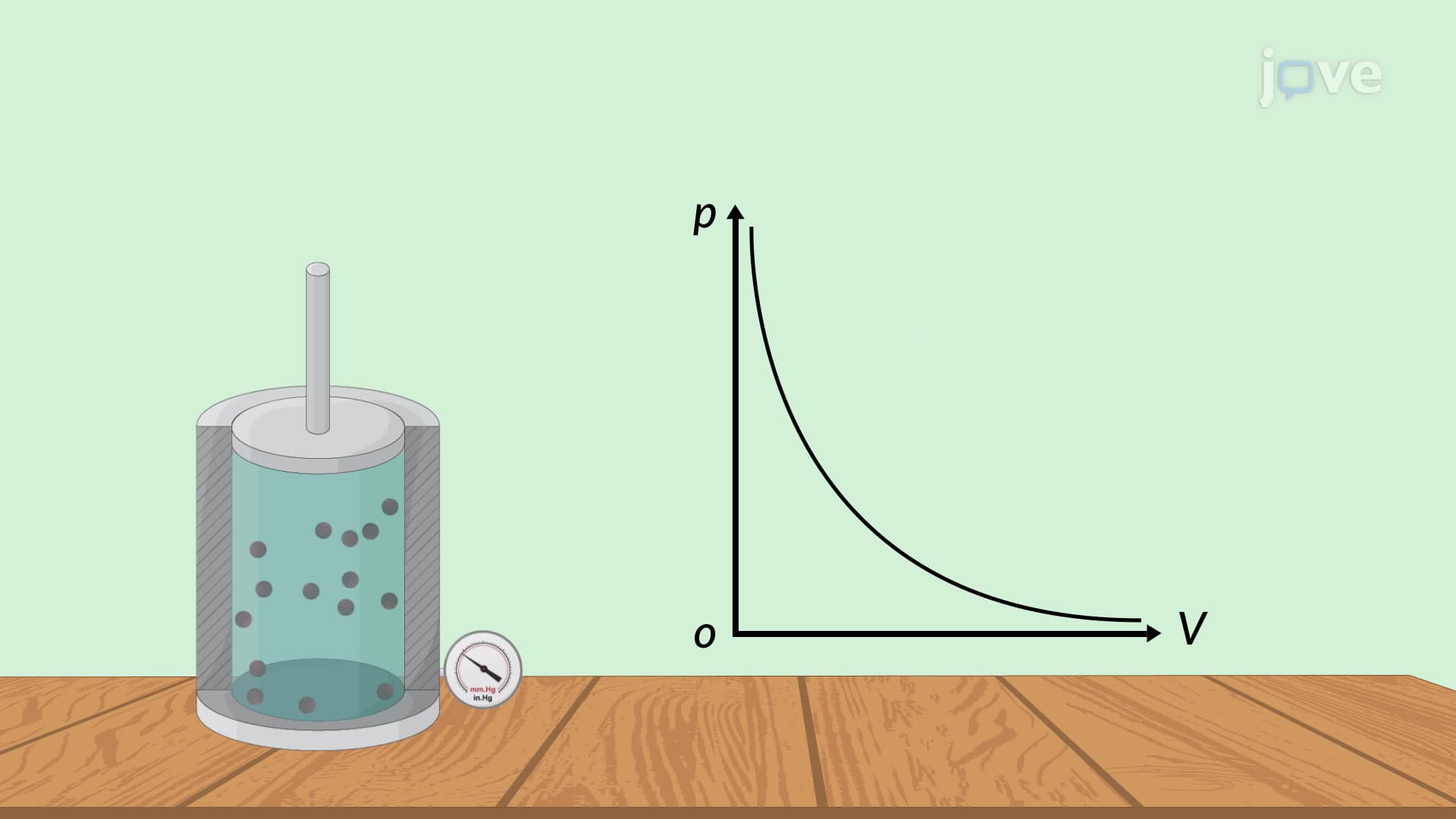
Gas pressure originates from molecular collisions with container walls. Consider a propane tank used for backyard grilling, inside, propane molecules continuously strike the tank walls. Each collision transfers momentum from the molecule to the wall, creating a tiny force. With billions of collisions per second, these individual forces combine to produce measurable pressure.
The mathematical relationship emerges from Newton's second law. When a molecule collides elastically with a wall, it reverses its velocity component perpendicular to the wall. For a molecule with mass m and velocity component vx, the momentum change equals 2mvx. The frequency of collisions depends on molecular speed and number density, leading to the pressure formula: P = (1/3)nm⟨v²⟩, where n is number density, m is molecular mass, and ⟨v²⟩ is the average squared speed.
Real gases exhibit isotropic motion, molecules move equally in all directions with no preferred orientation. This isotropy means the average kinetic energy splits equally among the three spatial dimensions (x, y, and z directions). Mathematically, ⟨vx²⟩ = ⟨vy²⟩ = ⟨vz²⟩ = (1/3)⟨v²⟩, where the brackets indicate averages over all molecules.
This equal distribution proves crucial for connecting molecular kinetic energy to temperature. The average translational kinetic energy per molecule equals (1/2)m⟨v²⟩ = (3/2)kT, where k is Boltzmann's constant and T is absolute temperature. This relationship explains why heating a gas increases both molecular speeds and pressure.
Students encounter molecular kinetic energy concepts in AP Chemistry, AP Physics, and college-level physical chemistry courses. The MCAT frequently tests understanding of kinetic theory, particularly how molecular motion explains gas laws and phase transitions. Practical applications include automotive tire pressure monitoring systems, respiratory therapy equipment calibration, and atmospheric science modeling used by the National Weather Service.
Understanding molecular kinetic energy also explains everyday phenomena like why aerosol cans become less effective in cold weather or how altitude affects cooking times in cities like Denver, Colorado, where lower atmospheric pressure results from reduced molecular collision frequencies at high elevation.
Related Micro-courses