Loading subject page…

- Social Psychology
- Close Relationships
- Relationship Formation
Micro-course: Close Relationships
170,404 views
Learn key concepts and earn your certificate.


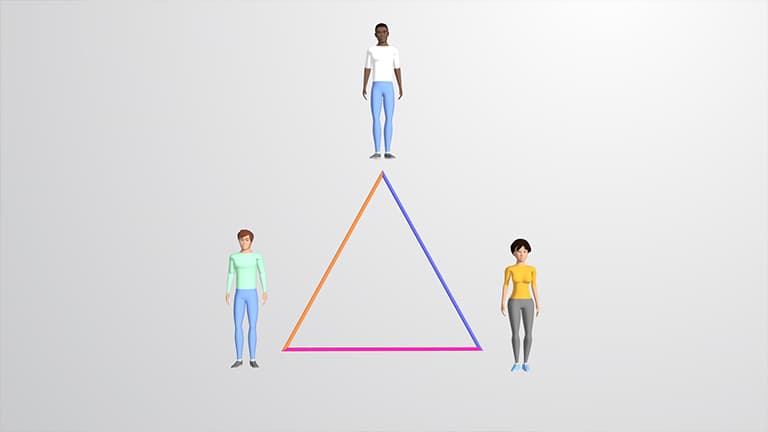

Relationship Formation


00:00
02:12
Video Summary: What Is Relationship Formation
Why do college roommates often become lifelong friends while strangers on opposite sides of campus rarely connect? Relationship formation depends on two powerful psychological forces: proximity and similarity. Students at universities like UCLA or Harvard typically form their closest friendships with dormmates they see daily, demonstrating how physical closeness drives social bonds. The process involves key mechanisms like the mere exposure effect, homophily, and reciprocity that determine which relationships flourish. Watch the full video on JoVE Coach to master this concept with expert-led visuals and step-by-step explanations.
- Understand what is relationship formation and identify the two primary factors that influence how people connect
- Recognize how proximity creates opportunities for relationship development through increased interaction frequency
- Analyze the mere exposure effect and its role in developing preferences for familiar people
- Identify homophily as the tendency to form relationships with similar individuals
- Evaluate the importance of reciprocity and self-disclosure in maintaining established relationships
- Apply knowledge of physical attractiveness factors that influence romantic relationship formation
- Explore how cultural norms and personal preferences shape attraction patterns
- Compare the roles of similarity versus complementarity in successful long-term relationships
Understanding Relationship Formation Fundamentals
What is relationship formation encompasses the psychological and social processes that drive how humans create, develop, and maintain interpersonal connections. This fundamental concept in social psychology explains why certain people become friends, romantic partners, or close associates while others remain strangers despite similar circumstances.
The Power of Proximity in Social Connections
Proximity serves as the foundation for most relationships. Research consistently shows that physical closeness dramatically increases the likelihood of relationship formation. At American universities like Stanford or Duke, students living in adjacent dorm rooms are significantly more likely to become friends than those on different floors. This proximity effect operates through increased interaction opportunities and the mere exposure effect-a psychological phenomenon where repeated exposure to stimuli increases positive feelings toward them.
The mere exposure effect explains why coworkers often develop friendships, why neighbors become close, and why students in the same classes form study groups. For AP Psychology students, understanding this concept is crucial for exam questions about social psychology and interpersonal attraction.
Similarity and Homophily in Relationship Development
Homophily, the tendency to associate with similar others, represents the second major force in relationship formation. People gravitate toward individuals who share similar backgrounds, attitudes, values, and lifestyle choices. This might include shared experiences like being first-generation college students, having similar political views, or enjoying the same music genres.
While homophily strengthens bonds through shared understanding and common ground, it can also limit diversity in social circles. Students preparing for the MCAT should understand how homophily affects healthcare disparities and patient-provider relationships in American medical settings.
Relationship Maintenance Through Reciprocity
Once formed, relationships require ongoing maintenance through reciprocity-the balanced exchange of resources, emotions, and support. Self-disclosure, the sharing of personal information, plays a crucial role in deepening connections. Successful relationships demonstrate equal give-and-take, whether through emotional support during college stress or practical help like sharing textbooks.
This reciprocity principle appears frequently in college psychology courses and standardized exams, particularly when discussing relationship satisfaction and longevity in American cultural contexts.
Frequently Asked Questions
Relationship formation is the process by which people develop interpersonal connections through proximity, similarity, and mutual attraction. It involves initial contact, developing familiarity, and establishing ongoing bonds through reciprocity and self-disclosure. This concept is fundamental to understanding human social behavior and appears frequently in psychology coursework.
AP Psychology exams often test relationship formation through multiple-choice questions about proximity effects, mere exposure, and homophily. Free-response questions may ask students to apply these concepts to scenarios like college friendships or workplace relationships. Understanding the research behind attraction theories helps students analyze case studies effectively.
The MCAT Psychology/Sociology section frequently includes relationship formation in questions about social processes, group dynamics, and healthcare disparities. Medical school applicants should understand how homophily affects patient-provider relationships and how proximity influences community health outcomes. These concepts also appear in questions about social support systems and therapeutic relationships.
In American corporations like Google or Microsoft, relationship formation principles explain why employees in open office layouts develop stronger working relationships than those in isolated cubicles. Proximity through shared workspaces, similarity in professional backgrounds, and reciprocal collaboration create effective teams. Understanding these dynamics helps in networking and career advancement strategies.
No advanced background is required to grasp relationship formation basics. High school students can easily understand proximity and similarity concepts through everyday examples like school friendships and family relationships. The fundamental principles are intuitive, making this an accessible introduction to social psychology for beginners.
Create real-life examples for each concept: proximity (dorm friendships), mere exposure (favorite songs), homophily (friend groups), and reciprocity (mutual favors). Practice applying these terms to case studies and memorize key researchers like Robert Zajonc for mere exposure effects. Focus on distinguishing between different attraction factors for multiple-choice questions.
Research shows certain physical features like facial symmetry and clear skin are considered universally attractive across cultures, including American society. However, cultural norms significantly influence preferences-for example, American beauty standards differ from those in other countries. The matching hypothesis suggests people ultimately choose partners of similar attractiveness levels.
After understanding relationship formation, explore relationship maintenance, conflict resolution, and dissolution patterns. Advanced topics include attachment theory, love triangles (Sternberg's model), and cultural variations in relationship norms. These concepts build naturally from formation basics and appear in upper-level psychology and sociology courses.
Related Micro-courses


6 Concepts

5 Concepts