Loading subject page…


170,405 views


Video Summary: What Is Theory of Romantic Attachment
Ever wonder why some college couples seem effortlessly secure while others constantly worry about breakups? The theory of romantic attachment reveals how our earliest relationships with caregivers shape our adult romantic patterns throughout life. Research by Hazan and Shaver shows that American adults fall into predictable attachment styles-with 60% being secure in relationships, while 40% struggle with anxiety or avoidance patterns that mirror their childhood experiences. Watch the full video on JoVE Coach to master this concept with expert-led visuals and step-by-step explanations.
The theory of romantic attachment represents a groundbreaking extension of developmental psychology into adult relationships. Building on John Bowlby's seminal work on childhood attachment, researchers Cindy Hazan and Phillip Shaver recognized striking parallels between how infants relate to caregivers and how adults navigate romantic partnerships. Just as babies feel secure when mothers are responsive and distressed when separated, adults experience similar emotional patterns with romantic partners.
This theoretical framework has profound implications for understanding relationship dynamics in American society, where divorce rates hover around 40-50%. The theory helps explain why some couples thrive while others struggle, providing a scientific lens for examining romantic behavior patterns that students encounter daily on high school and college campuses.
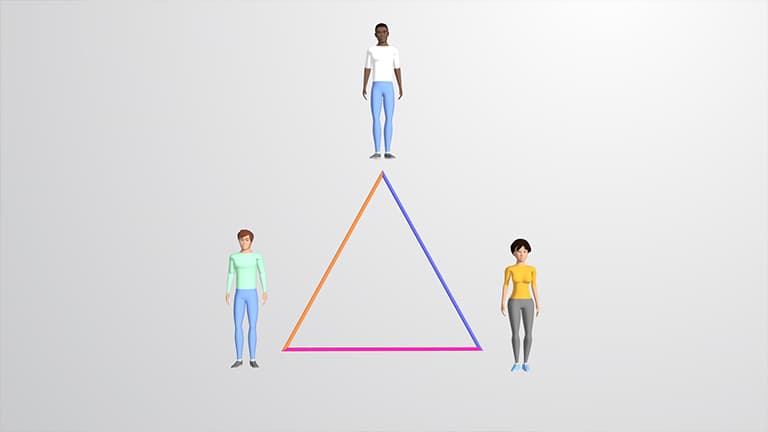
Hazan and Shaver's original research identified three distinct attachment styles mirroring Mary Ainsworth's infant categories. Secure attachment (60% of American adults) involves comfort with intimacy and confidence in partner availability. These individuals typically report higher relationship satisfaction and demonstrate better conflict resolution skills-qualities highly valued in AP Psychology coursework and relationship psychology studies.
Avoidant attachment (20% of adults) manifests as discomfort with closeness and preference for emotional distance. Students might recognize this pattern in peers who seem uncomfortable with public displays of affection or struggle with vulnerability in relationships. Anxious-resistant attachment (also 20%) involves heightened worry about partner availability and fear of abandonment, often leading to clingy or demanding behaviors.
Modern attachment research has evolved beyond simple categories toward a more nuanced dimensional approach. This model examines two continuous variables: attachment anxiety and attachment avoidance. High attachment anxiety correlates with constant worry about partner responsiveness-think of the college student who panics when their boyfriend doesn't text back immediately. Low attachment anxiety reflects confidence in relationship stability.
Attachment avoidance operates independently, with high levels indicating discomfort with intimacy and interdependence. Students studying for the MCAT or preparing for graduate psychology programs should understand that these dimensions can vary independently, creating four distinct attachment patterns rather than just three categories.
This theory appears frequently on AP Psychology exams, particularly in developmental and social psychology units. College students studying psychology, sociology, or human development encounter attachment theory across multiple courses, from Introduction to Psychology through advanced relationship counseling classes. Understanding these patterns helps explain everything from dating app behavior to marriage counseling outcomes, making it essential knowledge for students considering careers in mental health, social work, or relationship therapy.
Related Micro-courses