Loading subject page…

- Social Psychology
- Group Dynamics
- Deindividuation
Micro-course: Group Dynamics
185,302 views
Learn key concepts and earn your certificate.



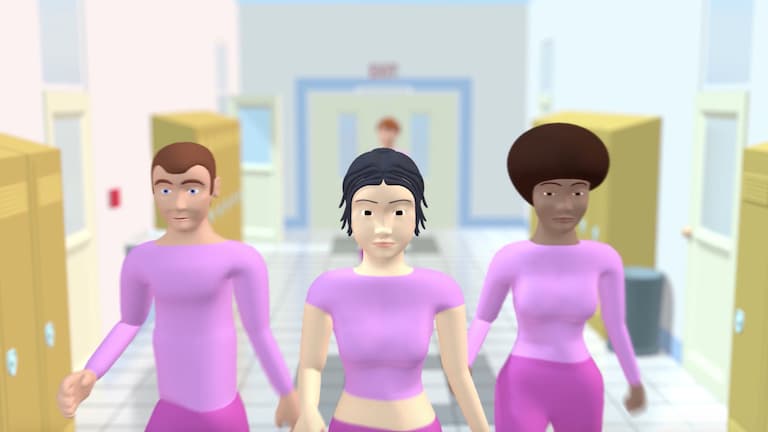
Deindividuation


00:00
00:57
Video Summary: What Is Deindividuation
Ever wonder why normally law-abiding students might vandalize property during a college riot or why peaceful protesters sometimes turn violent in large crowds? Deindividuation occurs when people lose their individual identity and self-control within group settings, leading to behaviors they'd never consider alone. During the 2020 protests across American cities, researchers observed how masked participants in large crowds were more likely to engage in property damage than identifiable individuals. This psychological phenomenon helps explain how group anonymity can override personal moral standards. Watch the full video on JoVE Coach to master this concept with expert-led visuals and step-by-step explanations.
- Understand what is deindividuation and how it manifests in group psychological dynamics
- Identify the key environmental factors that promote deindividuation, including anonymity, group size, and arousal
- Analyze real-world scenarios where deindividuation influences behavior, from sports riots to online harassment
- Compare deindividuation with related concepts like conformity and social loafing in social psychology
- Evaluate the role of personal responsibility and self-awareness in preventing antisocial group behaviors
- Apply deindividuation theory to explain crowd behavior in various American social contexts
- Recognize the warning signs of deindividuation in both face-to-face and digital environments
- Explore strategies for maintaining individual accountability within group settings
Understanding What is Deindividuation: Core Psychological Mechanisms
Deindividuation represents a fundamental shift in human psychology where individuals temporarily lose their sense of personal identity and moral constraints when absorbed into group situations. This phenomenon occurs when normal self-regulatory mechanisms fail, allowing people to act in ways that contradict their typical moral framework. The process involves three critical components: reduced self-awareness, diminished personal responsibility, and weakened adherence to social norms.
Environmental Triggers of Deindividuation
Several environmental factors consistently promote deindividuation across different contexts. Anonymity serves as the primary catalyst-when people cannot be easily identified, they feel liberated from social accountability. Physical disguises, darkness, or large crowd sizes all contribute to this anonymity effect. Arousal and excitement further amplify the process, which explains why deindividuation frequently occurs at sporting events, concerts, or political rallies. The Stanford Prison Experiment famously demonstrated how uniforms and role assignments could trigger deindividuation, though ethical concerns now limit such research approaches.
Real-World Applications in American Society
Deindividuation manifests prominently in American social phenomena, from college campus riots during major sporting events to cyberbullying on social media platforms. Following major sports victories, cities like Philadelphia and Boston have witnessed property damage by fans who would never consider such actions individually. Digital environments particularly facilitate deindividuation through screen-mediated anonymity-online gaming harassment and social media pile-ons exemplify this digital manifestation.
Academic and Exam Relevance
Students encounter deindividuation across multiple academic contexts. AP Psychology courses extensively cover this topic within social psychology units, while MCAT test-takers must understand its relationship to conformity and obedience studies. College social psychology courses examine deindividuation alongside classic experiments like Zimbardo's research on anonymity and aggression. Understanding this concept helps explain broader sociological patterns and prepares students for advanced coursework in criminal justice, organizational behavior, and clinical psychology programs.
Frequently Asked Questions
Deindividuation is when people lose their individual identity and self-control in group settings, often leading to behavior they wouldn't normally display. It happens when anonymity and group dynamics override personal moral standards. Think of it as temporarily "losing yourself" in a crowd.
AP Psychology tests often include deindividuation in free-response questions about social influence and group behavior. Students must distinguish it from conformity and explain real-world applications. Multiple-choice questions frequently test understanding of environmental triggers like anonymity and arousal.
The MCAT Psychology/Sociology section covers deindividuation under social processes and group behavior. It connects to identity formation, moral reasoning, and social cognitive theory. Students should understand how it relates to other influence phenomena like groupthink and social facilitation.
The 2011 Vancouver Stanley Cup riots provide a clear example-normally law-abiding citizens participated in looting and violence while masked in large crowds. Similarly, college students who would never cheat individually might participate in organized academic dishonesty when part of anonymous online groups.
Not at all-deindividuation builds on familiar experiences like peer pressure and crowd behavior. High school students readily grasp the concept through relatable examples like pep rallies, social media behavior, or sporting events. The basic principles are intuitive once explained clearly.
Focus on three key areas: definition and core components, environmental triggers (anonymity, arousal, group size), and real-world applications. Practice distinguishing it from related concepts like social loafing and conformity. Create examples from your own experience to strengthen memory retention.
Explore social identity theory, groupthink, and bystander effect to understand broader group psychology patterns. Social facilitation and social loafing complement deindividuation in explaining how groups influence individual behavior. These concepts frequently appear together on comprehensive psychology exams.
While often associated with antisocial behavior, deindividuation can occur in positive contexts too. Religious gatherings, charity events, and team-building activities can involve healthy deindividuation where people feel connected to something larger than themselves without harmful consequences.
Related Micro-courses
19 Concepts

15 Concepts

24 Concepts