Loading video…


 7 Concepts
 143K views
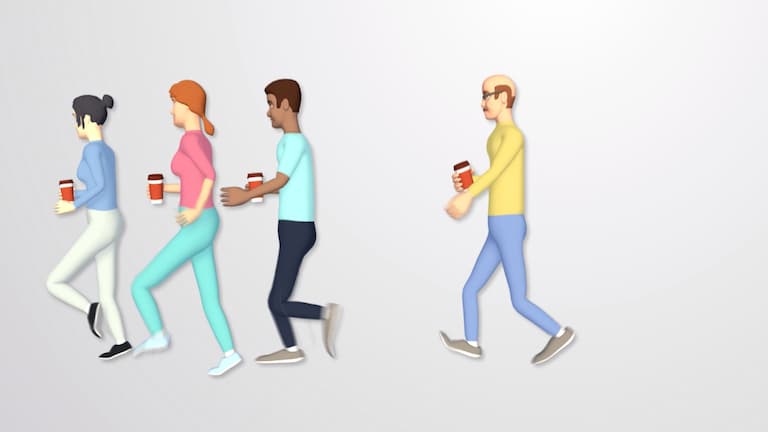

Video Summary: What Is Conformity
Ever wonder why you suddenly start clapping when everyone else does, even when you're not sure why? Conformity drives this everyday behavior, influencing how we match our actions to group expectations. From following pedestrian signals at busy New York intersections to mimicking study habits in college dorms, conformity shapes countless daily decisions through both social pressure and our need for guidance. Watch the full video on JoVE Coach to master this concept with expert-led visuals and step-by-step explanations.
What is conformity? At its core, conformity represents the psychological tendency for individuals to adjust their attitudes, beliefs, or behaviors to align with perceived group norms or expectations. This fundamental concept in social psychology explains why students might suddenly adopt new fashion trends, why employees follow unwritten workplace rules, or why entire communities rally behind local sports teams.
Conformity operates as a powerful social force that maintains group cohesion while simultaneously constraining individual expression. For AP Psychology students and college undergraduates studying social psychology, understanding conformity provides crucial insights into human behavior patterns that appear across cultures, age groups, and social contexts.
Social psychologists identify two distinct mechanisms driving conformity behavior. Normative conformity emerges from our fundamental need for social acceptance and fear of rejection. Consider a high school student who pretends to enjoy a popular music genre simply to fit in with their peer group, despite personally preferring different artists. This represents classic normative influence-behavior change motivated primarily by social approval concerns.
Informational conformity, conversely, occurs when individuals genuinely believe the group possesses superior knowledge or judgment. Picture a college freshman uncertain about proper dining hall etiquette who observes and mimics other students' behaviors. Here, conformity serves as a practical learning mechanism rather than mere social positioning.
Educational environments showcase conformity's complex dynamics regularly. Students often conform to classroom participation norms, study group behaviors, and even academic dishonesty patterns when peer pressure overwhelms individual moral standards. Research demonstrates that conformity significantly impacts college academic performance, with students frequently adjusting their study habits, course selections, and career aspirations based on dormitory or fraternity influences.
For students preparing for standardized exams like the MCAT or AP Psychology test, understanding conformity proves essential for analyzing case studies and research scenarios. Questions frequently explore conformity's role in group decision-making, organizational behavior, and social movement participation.
Conformity serves vital societal functions by facilitating cooperation, maintaining social order, and enabling efficient group coordination. Traffic laws, professional dress codes, and classroom behavioral expectations all rely on conformity mechanisms to function effectively. However, excessive conformity can stifle creativity, perpetuate harmful traditions, and enable groupthink phenomena that lead to poor decision-making.
Contemporary examples include social media behavior patterns, where users conform to platform-specific communication styles, sharing habits, and even political expression norms. Understanding these dynamics helps students navigate digital environments more consciously while recognizing conformity's pervasive influence on modern communication.
Related Micro-courses