Loading video…


 6 Concepts
 165.4K views

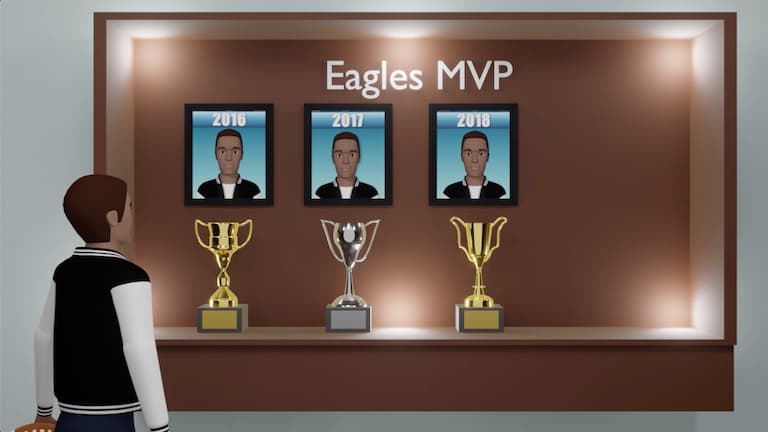
Video Summary: What Is Self Schemas
Ever wonder why a Stanford University student might see herself as "academic" while her roommate views her as "social"? Self schemas are the mental blueprints we use to organize everything we know about ourselves, from personality traits to abilities. For instance, when Maria activates her "athletic" self schema, she gravitates toward sports activities and views challenges through a fitness lens, while her "studious" schema drives her to prioritize academics during finals week. These cognitive structures shape how we interpret experiences and make decisions daily. Watch the full video on JoVE Coach to master this concept with expert-led visuals and step-by-step explanations.
Self schemas represent one of psychology's most fundamental concepts for understanding human cognition and behavior. These cognitive structures serve as organized knowledge systems that help us answer the essential question "Who am I?" by storing and retrieving information about our personalities, abilities, values, and experiences.
The concept builds upon William James's pioneering work from the late 1800s, when he introduced the "social me", the idea that our self-understanding emerges through social interactions and feedback. This historical foundation remains relevant for students preparing for AP Psychology exams, where understanding classical theories often provides context for modern research.
Self-schemas develop through two primary mechanisms: introspection and social feedback. When you reflect on your academic performance at UCLA or your leadership skills in high school student government, you're engaging in introspective processes that contribute to schema formation. However, this self-knowledge faces reliability challenges.
Research demonstrates that people often lack access to the unconscious mental processes that influence their behavior. For example, a Harvard pre-med student might believe she's motivated purely by intellectual curiosity, when unconscious factors like family expectations actually drive her career choice. This limitation appears frequently on MCAT psychology sections, where test-takers must distinguish between conscious self-perceptions and underlying psychological mechanisms.
Additionally, people sometimes engage in motivated reasoning, altering their self-schemas to maintain positive self-regard or meet social expectations. A student might emphasize their "creative" schema while downplaying their "analytical" abilities to fit in with an arts-focused peer group.
Most individuals possess multiple, context-dependent self-schemas that activate in different situations. A University of Texas student might activate her "athlete" schema during intramural sports, her "scholar" schema in organic chemistry class, and her "friend" schema during social gatherings. This multiplicity helps people navigate complex environments and maintain behavioral flexibility.
These schemas function similarly to other cognitive structures, organizing information to reduce mental processing demands. When facing decisions, from choosing a college major to selecting weekend activities, relevant self-schemas provide frameworks for evaluation and choice-making.
Understanding self-schemas proves essential for college success and personal development. Students who recognize their various self-schemas can better align their goals with their authentic interests and strengths. This concept frequently appears in developmental psychology courses and social cognition units, making it crucial for students pursuing psychology, education, or human services careers.
Related Micro-courses