Loading subject page…


6,130 views

Video Summary: What Is Definition of Laplace Transform
Ever wondered how NASA engineers predict satellite trajectories or how your smartphone processes audio signals in real-time? The region of convergence of Laplace transform determines where these mathematical tools actually work reliably. Understanding the definition of Laplace transform reveals why this frequency-domain conversion only functions within specific boundary conditions-much like how GPS systems in American aircraft rely on convergence regions for accurate navigation calculations. Watch the full video on JoVE Coach to master this concept with expert-led visuals and step-by-step explanations.
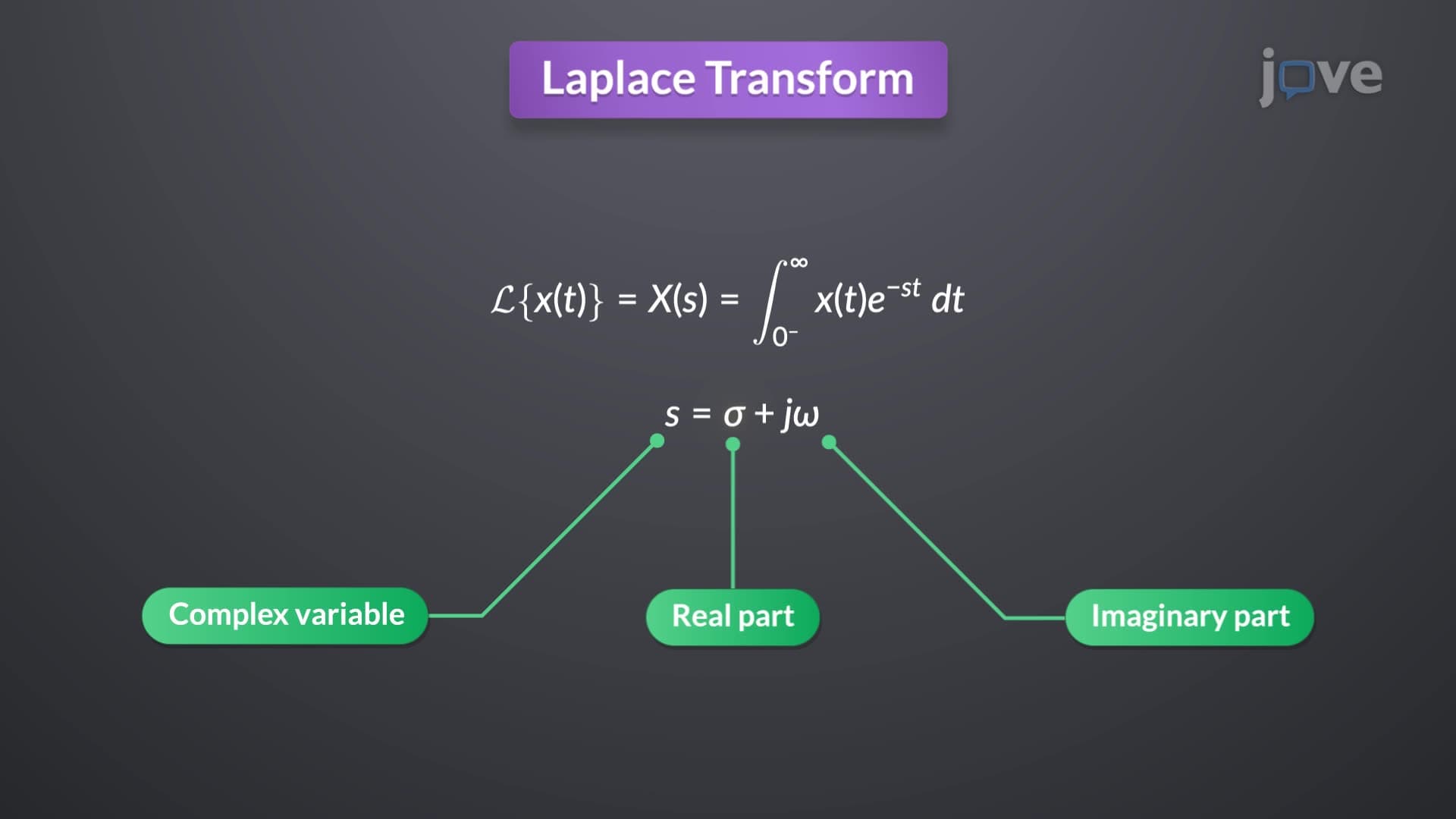
The Laplace transform serves as a mathematical bridge between time-domain problems and frequency-domain solutions, fundamentally changing how engineers and scientists approach complex differential equations. While the basic definition involves converting function x(t) using the integral L[x(t)] = ∫[0 to ∞] x(t)e^(-st)dt, the true power lies in understanding when this transformation actually works-which brings us to the critical concept of convergence regions.
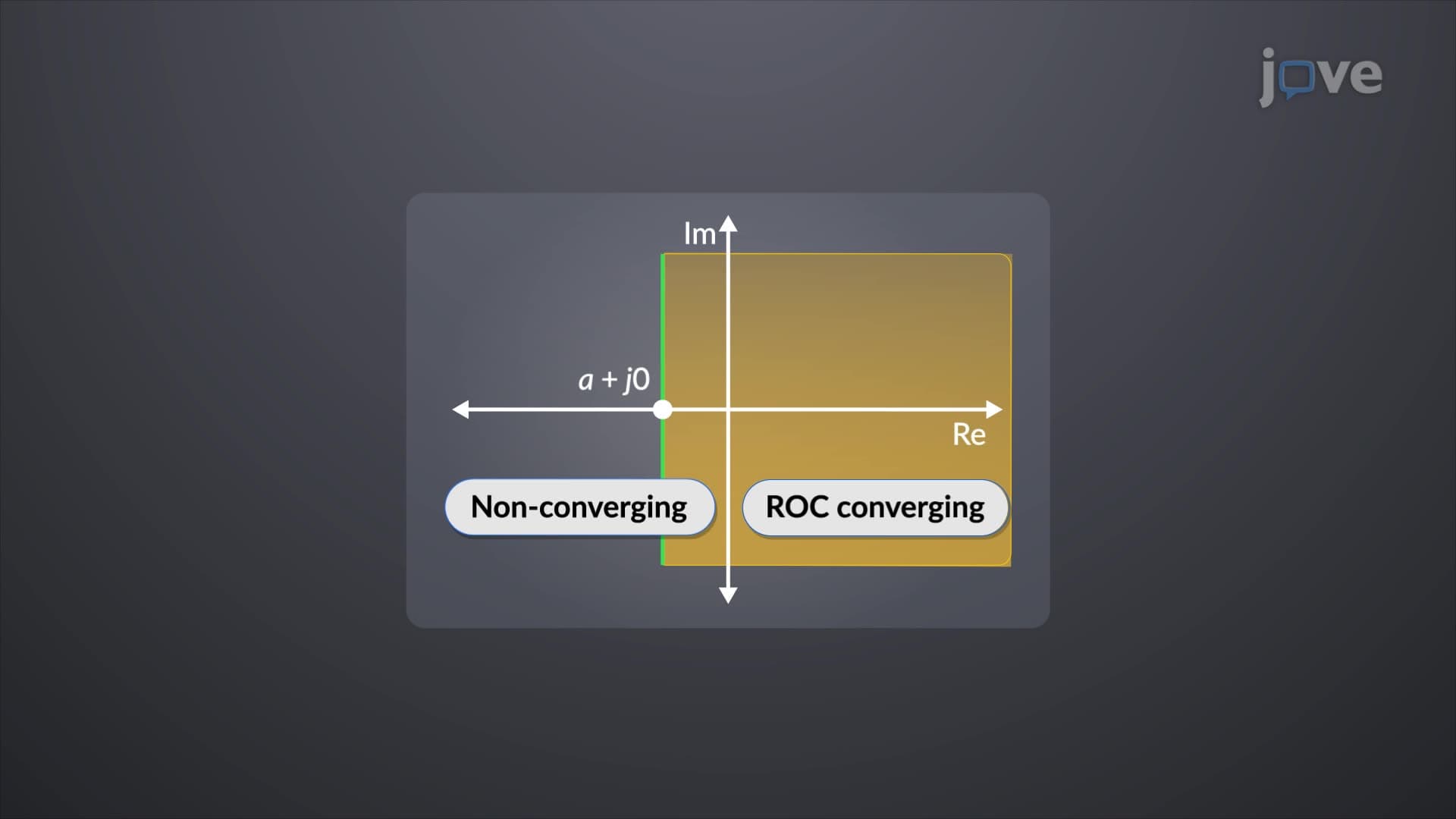
The region of convergence of Laplace transform defines the set of complex values for variable s where the transform integral converges to a finite value. This isn't just mathematical theory-it determines whether your calculations will produce meaningful results in real applications. For instance, when Boeing engineers design flight control systems, they must ensure their Laplace transforms converge within the operating parameters of the aircraft. The convergence region typically appears as a half-plane in the complex s-plane, bounded by the rightmost pole of the system.
American universities typically focus on unilateral transforms in undergraduate courses like those found in AP Calculus BC or introductory engineering programs at institutions like MIT or Stanford. The unilateral version assumes x(t) = 0 for t < 0, making it ideal for analyzing causal systems-those where output depends only on present and past inputs. This assumption aligns perfectly with real-world systems like audio amplifiers in concert halls or the suspension systems in American-made vehicles, where future inputs cannot influence current behavior.
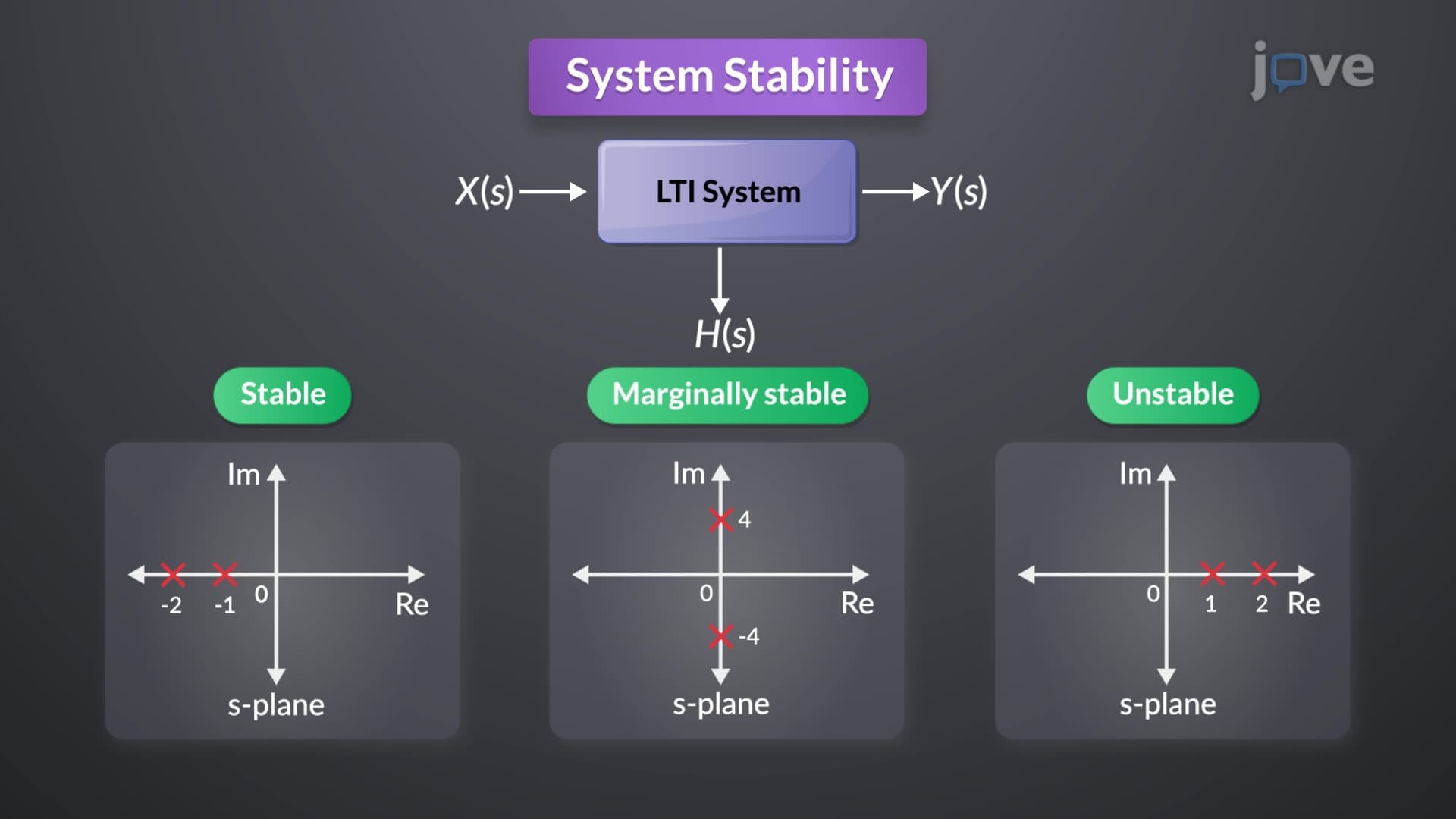
Students preparing for standardized tests like the AP Calculus BC exam or college entrance exams will encounter Laplace transforms in differential equations problems. The transform's ability to convert derivatives into algebraic expressions makes it invaluable for solving second-order differential equations that model everything from RLC circuits in Tesla's charging systems to population dynamics studied by the CDC. Understanding convergence regions helps predict system stability-crucial for applications ranging from medical devices approved by the FDA to NASA's Mars rover control systems.
Related Micro-courses