Loading video…


 5 Concepts
 6.1K views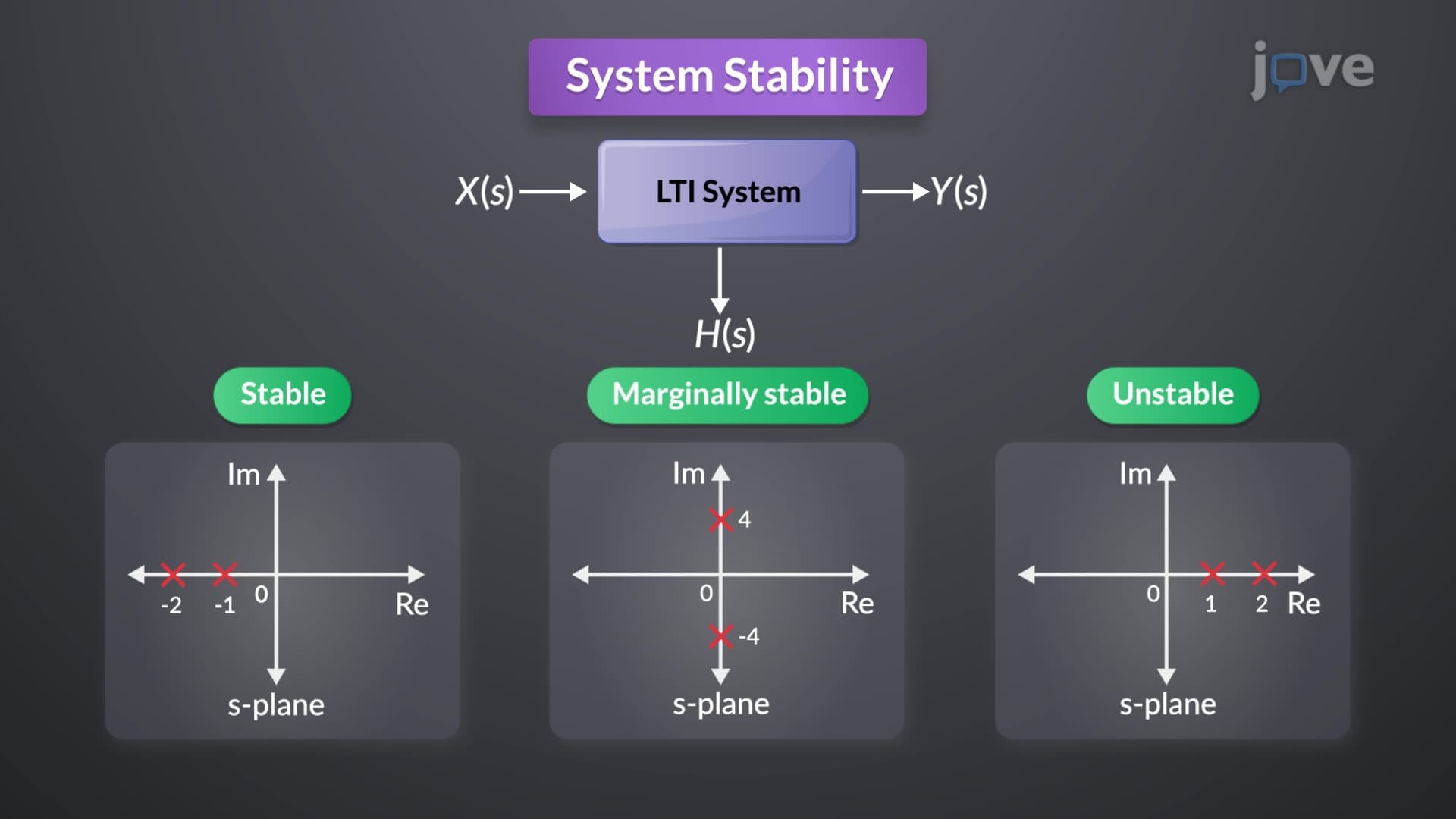

Video Summary: What Is Pole and System Stability
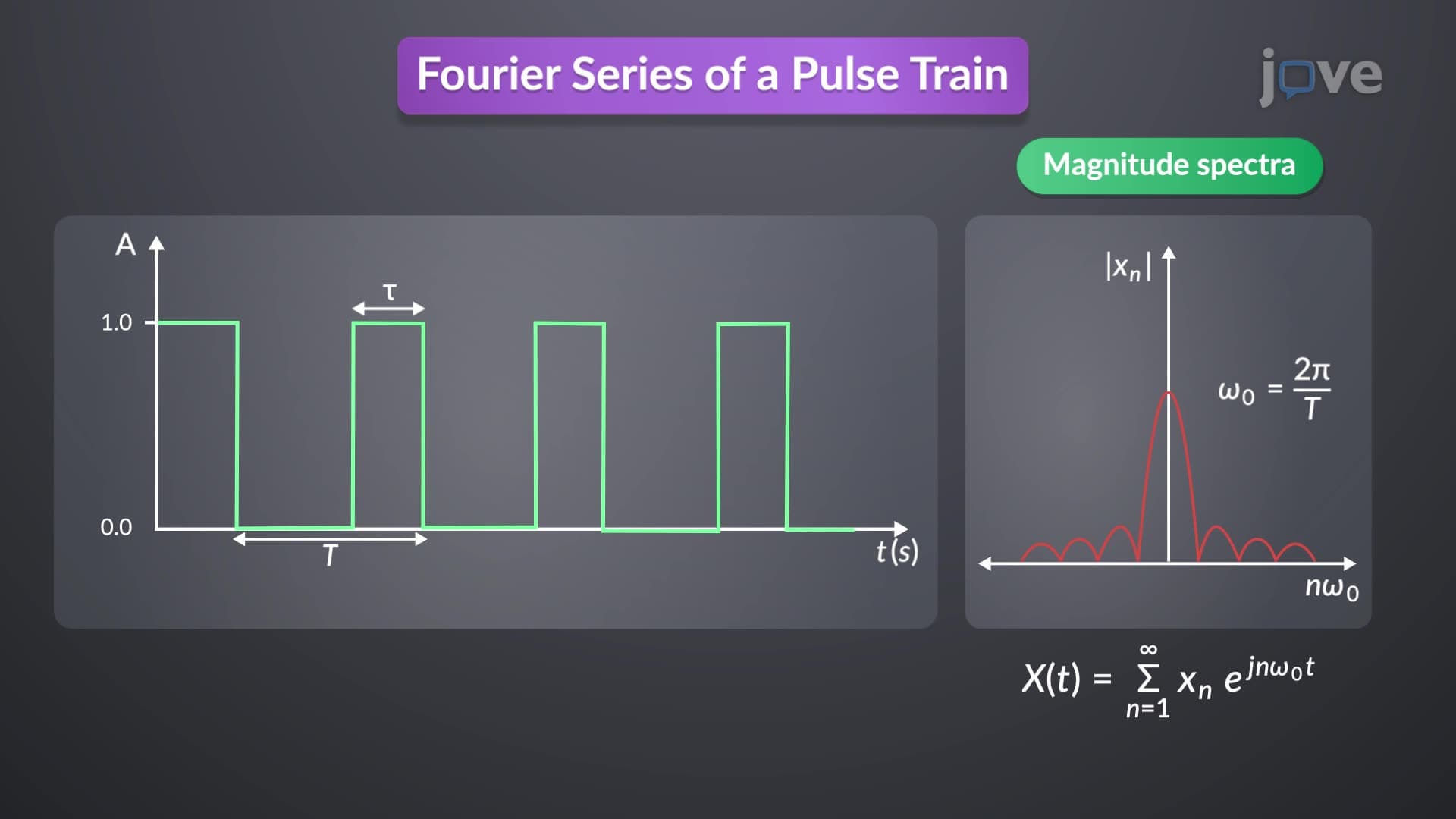
Ever wonder why your car's cruise control doesn't oscillate wildly or why audio amplifiers don't screech with feedback? The secret lies in trigonometric fourier series and system stability analysis. Engineers at companies like Texas Instruments use pole-zero analysis to ensure that digital signal processors in smartphones maintain stable performance without unwanted oscillations. What is Pole And System Stability reveals how mathematical poles in transfer functions determine whether systems like NASA's flight control computers will respond predictably or become dangerously unstable. Watch the full video on JoVE Coach to master this concept with expert-led visuals and step-by-step explanations.
Trigonometric fourier series analysis forms the mathematical foundation for understanding system stability through pole-zero relationships. In control systems and signal processing, transfer functions represent the relationship between system inputs and outputs as ratios of polynomials in the Laplace domain. The denominator roots, called poles, fundamentally determine whether a system will behave predictably or become unstable.
System poles fall into distinct categories that directly impact stability. Simple poles appear as single roots in the denominator polynomial, representing the most straightforward case for trigonometric fourier series overview analysis. These create exponential responses that either decay (stable) or grow (unstable) based on their s-plane location.
Repeated poles occur when roots appear multiple times in the characteristic equation. Unlike simple poles, repeated poles generate time-multiplied exponential responses, leading to slower decay rates even when positioned in the stable left half-plane. Complex poles always appear in conjugate pairs for real systems, creating oscillatory responses with frequencies determined by their imaginary components.
The trigonometric fourier series concept extends beyond basic pole identification to practical stability assessment. For BIBO stability-ensuring bounded outputs for bounded inputs-all system poles must reside in the left half-plane of the s-domain. This requirement appears frequently in AP Physics C and college-level differential equations courses.
Consider a feedback amplifier designed by engineers at Analog Devices. If any poles drift into the right half-plane due to component variations, the amplifier becomes unstable, producing exponentially growing outputs that can damage speakers or cause system failure. NASA's spacecraft attitude control systems undergo rigorous pole-placement verification to prevent catastrophic instability during mission-critical maneuvers.
Understanding trigonometric fourier series requires connecting mathematical theory to engineering practice. Proper rational functions, where numerator degree is less than denominator degree, follow standard stability rules and commonly appear in MCAT physics sections and engineering qualifying exams. Improper functions, with numerator degree equal to or exceeding denominator degree, are inherently BIBO unstable.
Partial fraction expansion becomes essential for inverse Laplace transforms, allowing engineers to predict time-domain behavior from frequency-domain pole locations. Students preparing for the FE (Fundamentals of Engineering) exam frequently encounter problems requiring pole-zero analysis of control systems, making this trigonometric fourier series basics knowledge crucial for professional engineering certification.
Related Micro-courses