Loading video…


 13 Concepts
 13.6K views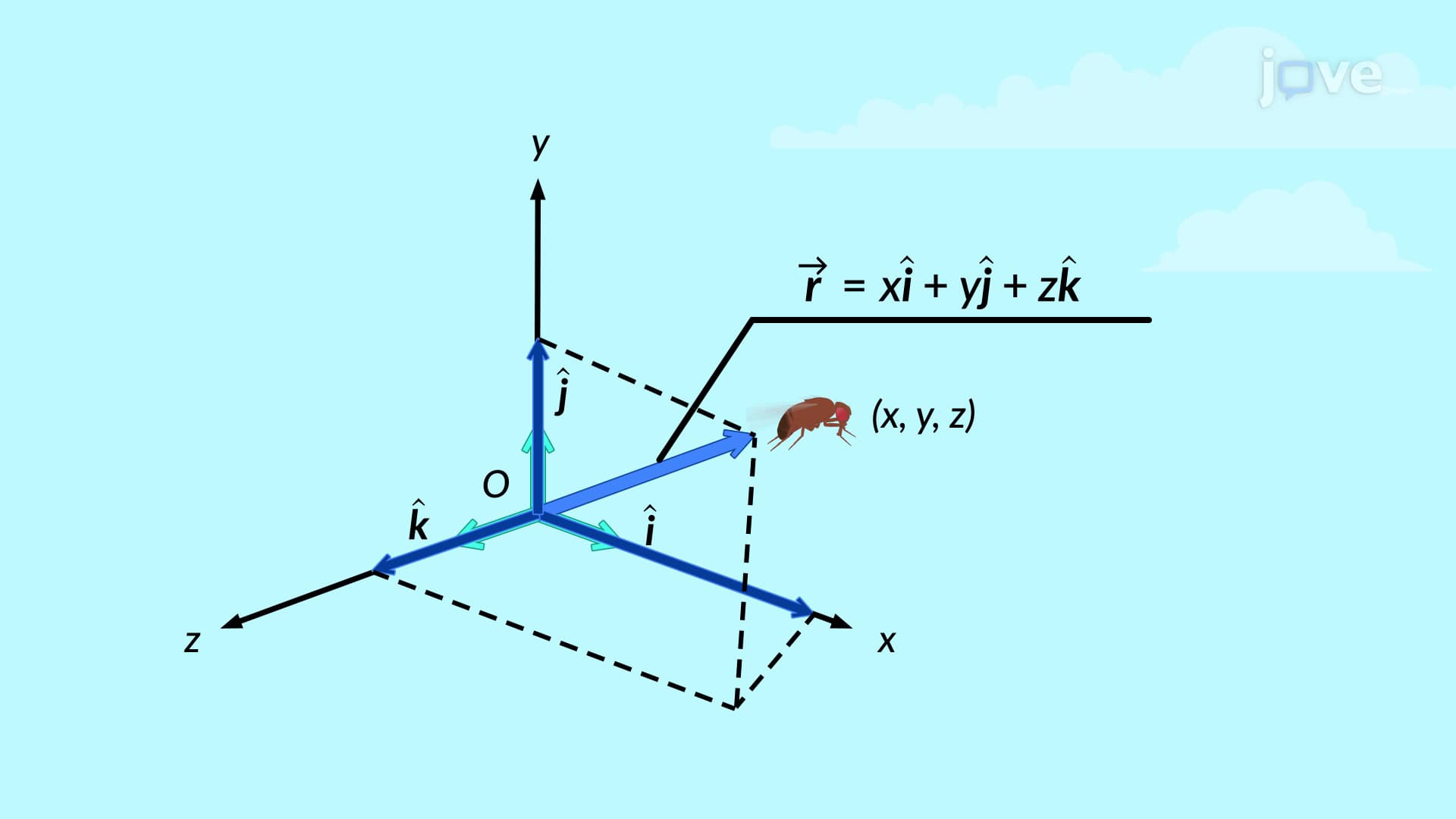

Video Summary: What are Position and Displacement Vectors
Ever wonder how NASA tracks the International Space Station's precise location 254 miles above Earth? Position and displacement vectors make this incredible feat possible by providing the mathematical framework to describe exactly where objects are and how they move through space. From GPS navigation systems guiding millions of American drivers daily to robotic arms assembling cars in Detroit factories, What are Position And Displacement Vectors represents one of physics' most practical and powerful tools. Watch the full video on JoVE Coach to master this concept with expert-led visuals and step-by-step explanations.
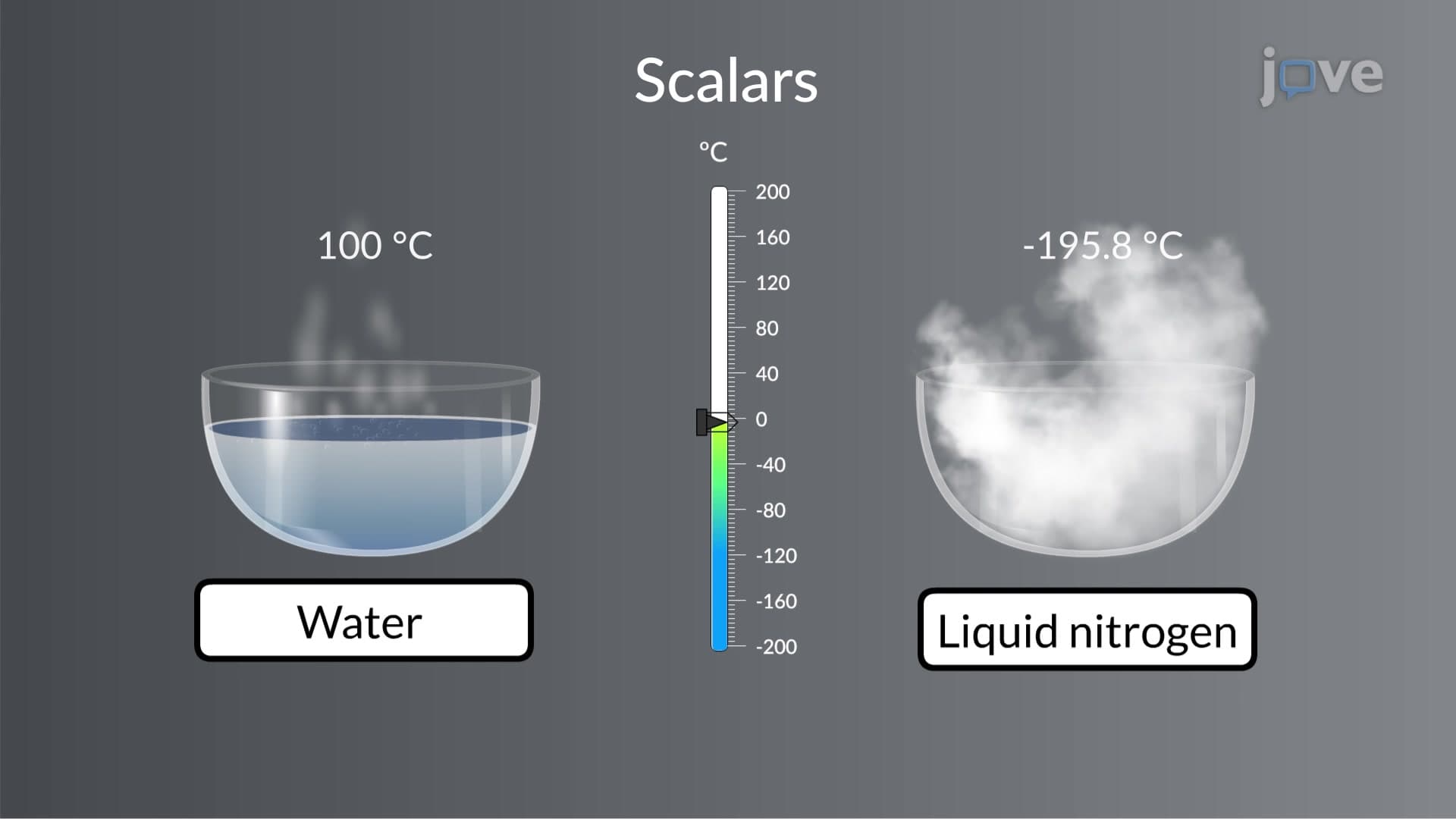
Position and displacement vectors form the mathematical backbone of modern physics and engineering, providing precise tools to describe location and movement in space. Unlike scalar quantities that only have magnitude, vectors possess both magnitude (size) and direction, making them invaluable for describing physical phenomena in our three-dimensional world.
A position vector r⃗ acts like a mathematical GPS coordinate, specifying the exact location of any point relative to a chosen reference point called the origin. Imagine the origin as the center of a coordinate system-much like how Times Square serves as the reference point for New York City addresses. The position vector draws an arrow from this origin directly to the object's location, completely defining where something exists in space.
In practical applications, NASA uses position vectors to track satellites orbiting Earth. The Johnson Space Center in Houston employs these mathematical tools to monitor the International Space Station's location with incredible precision. Similarly, the GPS system in your smartphone relies on position vectors to determine your exact coordinates relative to multiple satellites.
While position vectors tell us where something is, displacement vectors reveal where something has moved. The displacement vector Δr⃗ = rf⃗ - ri⃗ represents the straight-line distance and direction from an initial position to a final position. Crucially, displacement vectors capture the shortest path between two points, regardless of the actual route taken.
Consider a student walking from their dorm at UCLA to the chemistry building. Even if they take a winding path through campus, the displacement vector draws a straight line from starting point to destination. This concept proves essential in AP Physics courses and college mechanics classes, where students must distinguish between distance traveled (a scalar) and displacement (a vector).
These concepts appear frequently on standardized tests including the AP Physics exam, SAT Subject Tests, and college entrance exams. Students encounter position and displacement vector problems in kinematics units, where these serve as building blocks for understanding velocity and acceleration vectors.
In mechanical engineering programs at universities like MIT and Stanford, students apply these principles to design robotic systems, analyze structural movements, and model vehicle dynamics. The aerospace industry relies heavily on vector calculations for spacecraft navigation, while the automotive sector uses them in advanced driver assistance systems and autonomous vehicle development.
Related Micro-courses