Loading video…


 13 Concepts
 6.9K views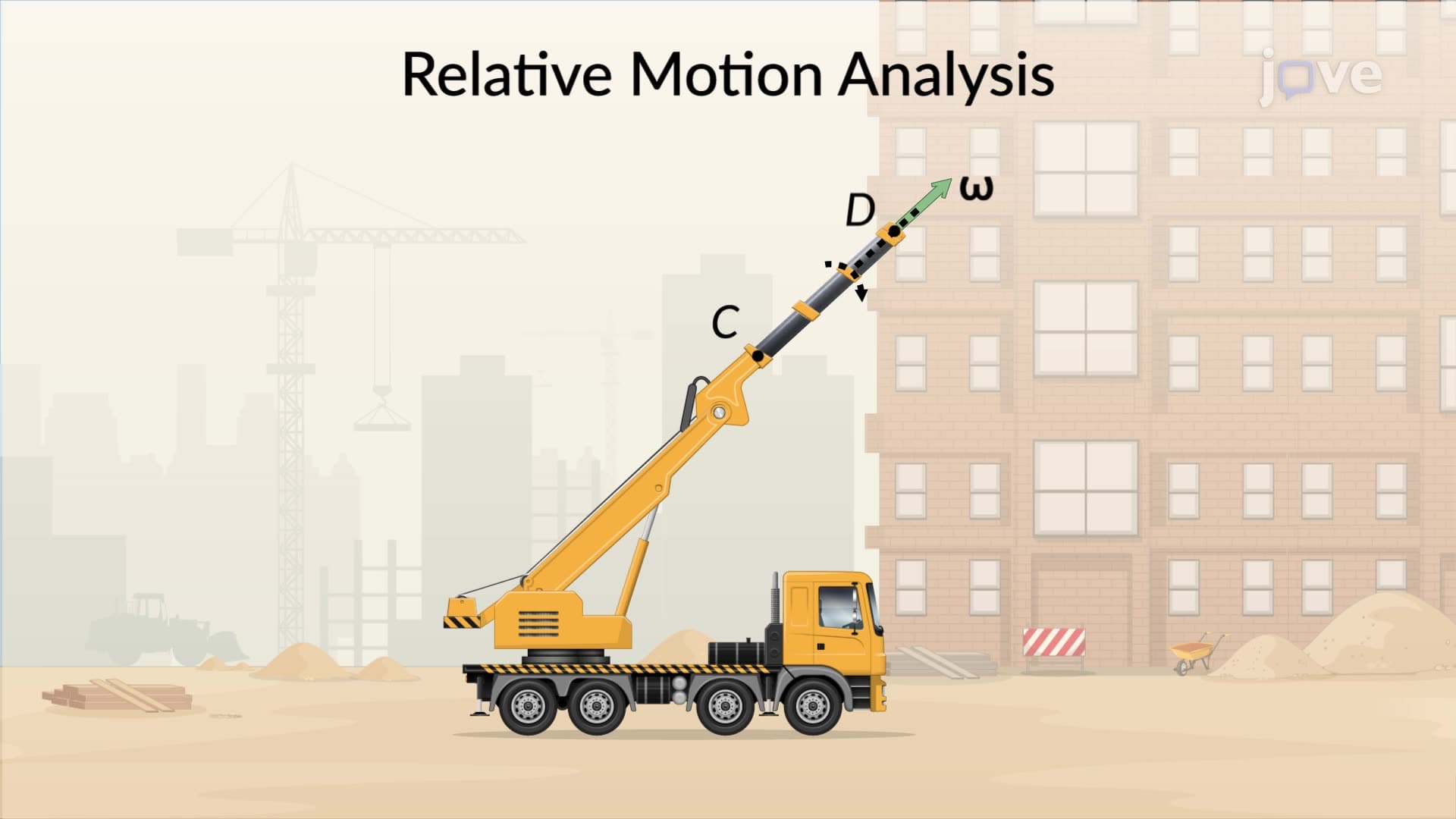

Video Summary: Problem Solving in Relative Motion Using Rotating Axes
Ever wondered how NASA engineers calculate spacecraft positions during orbital maneuvers, or how construction crews coordinate crane movements on skyscrapers? Problem-solving in relative motion using rotating axes is the key engineering principle behind these complex calculations. This fundamental concept helps analyze objects that simultaneously translate and rotate, like the telescopic boom of a construction crane extending while rotating around its base. The video demonstrates how to determine velocity and acceleration magnitudes when point D moves relative to point C in a rotating reference frame. Watch the full video on JoVE Coach to master this concept with expert-led visuals and step-by-step explanations.
Problem-solving in relative motion using rotating axes represents one of the most sophisticated analytical tools in mechanical engineering and physics. This methodology becomes essential when analyzing systems where objects undergo simultaneous translation and rotation, such as robotic arms in automotive manufacturing plants or the extendable ladder systems used by fire departments across the United States.
The fundamental principle involves establishing a rotating coordinate system attached to one moving object, then analyzing the motion of another object relative to this rotating frame. This approach simplifies complex three-dimensional motions that would be nearly impossible to solve using fixed coordinate systems alone.
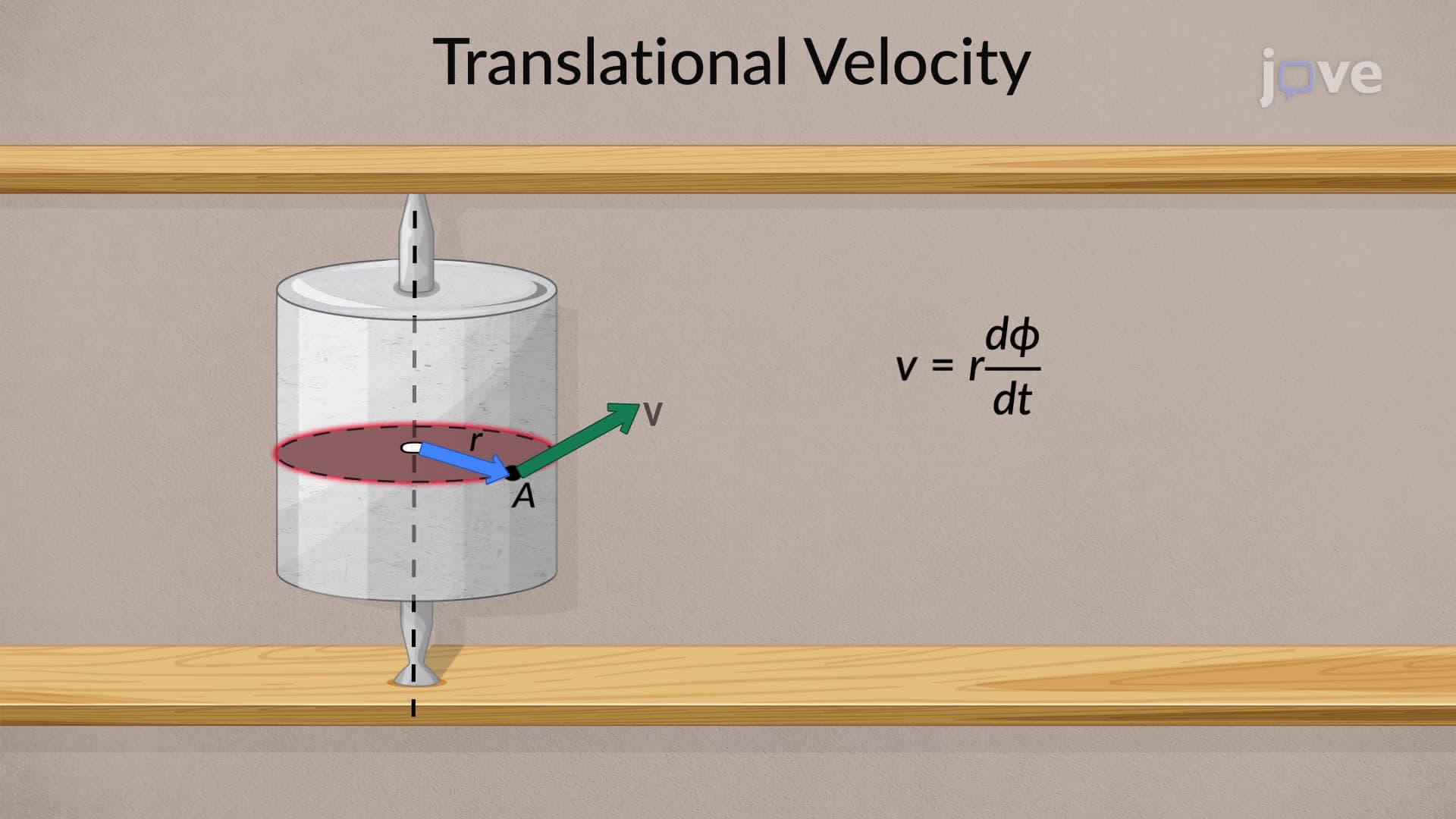
The relative velocity equation in rotating frames incorporates three key components: the velocity of the origin of the rotating frame, the velocity due to rotation of the frame itself, and the relative velocity measured within the rotating frame. For a point D moving relative to point C in a rotating system, engineers use:
v(D) = v(C) + ω × r(C to D) + v(D relative to C)
This equation appears frequently on AP Physics C mechanics exams and college-level dynamics courses. Students at institutions like MIT and Caltech encounter these problems in their introductory engineering mechanics courses, particularly when studying machinery and mechanism design.
Acceleration analysis in rotating reference frames introduces additional complexity through the Coriolis acceleration term. The complete acceleration equation includes normal acceleration, tangential acceleration, relative acceleration, and the Coriolis effect:
a(D) = a(C) + α × r(C to D) + ω × (ω × r(C to D)) + a(D relative to C) + 2ω × v(D relative to C)
The Coriolis term, 2ω × v(D relative to C), often surprises students but represents a crucial component in rotating systems. This term explains phenomena ranging from the apparent deflection of projectiles on Earth due to planetary rotation to the complex motions in industrial centrifuges used in petroleum refining.
Construction cranes, like those used in building skyscrapers in cities such as New York and Chicago, exemplify practical applications of rotating axes analysis. When a crane's boom extends while simultaneously rotating, operators must account for the resulting motion patterns to ensure precise load placement and structural safety.
Successful problem-solving requires systematic identification of the rotating reference frame, careful definition of known quantities, and methodical application of vector equations. Students preparing for the Fundamentals of Engineering (FE) exam encounter similar problems that test their ability to decompose complex motions into manageable components.
Related Micro-courses