Loading subject page…


326,603 views

Video Summary: What are Conditions on Early Earth
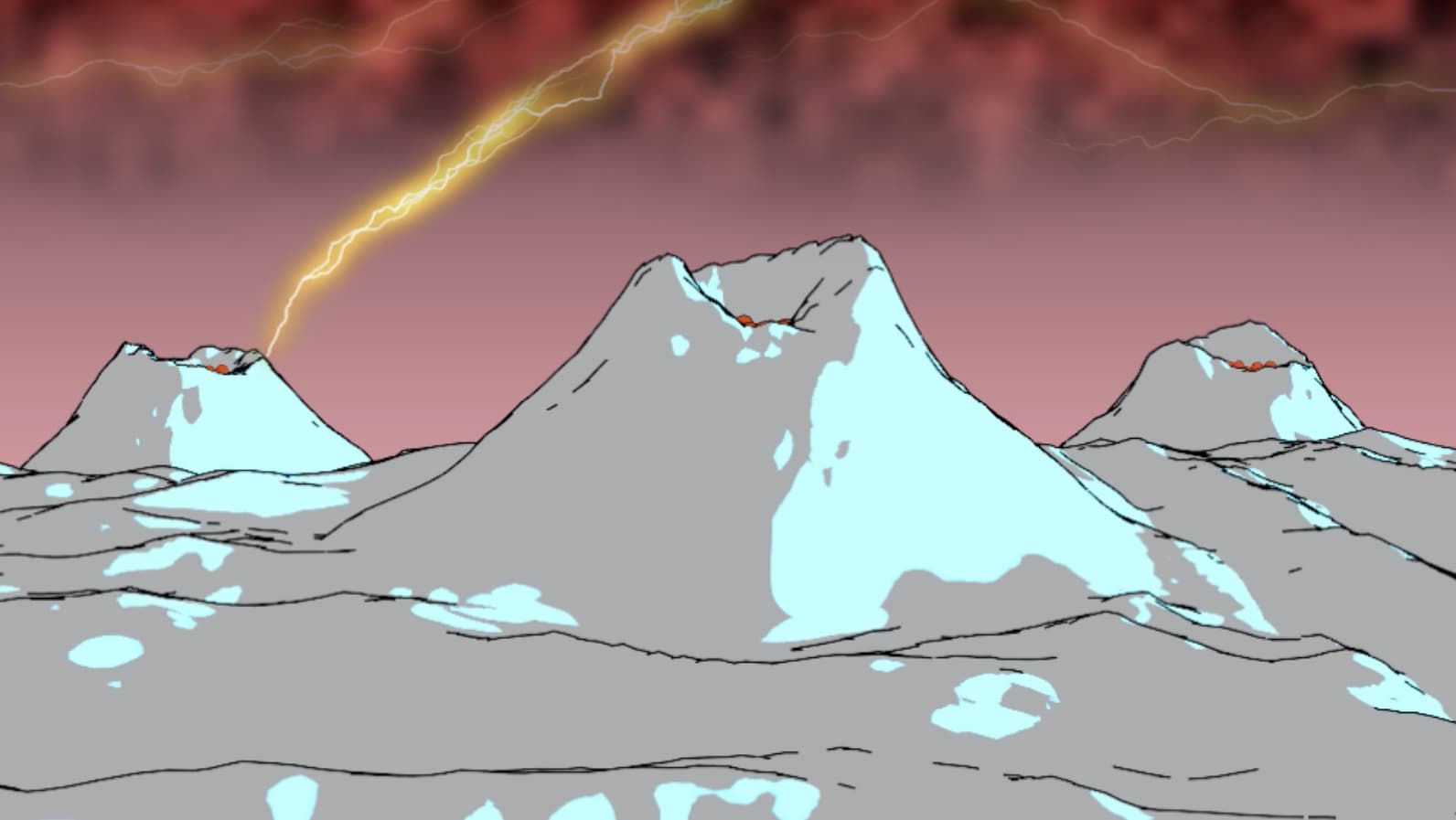
Four billion years ago, Earth's surface was a hellscape of volcanic eruptions and toxic gases that would kill any modern organism instantly. Yet these extreme conditions on early earth created the perfect chemical laboratory for life's emergence. The Miller-Urey experiment at the University of Chicago proved that lightning could spark amino acid formation in Earth's primordial atmosphere, mimicking conditions that led from simple gases to complex protocells. Watch the full video on JoVE Coach to master this concept with expert-led visuals and step-by-step explanations.
The conditions on early earth represented a dramatically different world than the oxygen-rich, temperate planet we know today. Approximately 4 billion years ago, Earth's surface was dominated by intense volcanic activity that continuously released gases including ammonia (NH₃), methane (CH₄), hydrogen (H₂), and massive amounts of water vapor into the atmosphere. This reducing atmosphere lacked free oxygen, creating chemical conditions that would be lethal to most modern life forms but proved essential for life's initial emergence.
In 1952, University of Chicago graduate student Stanley Miller and his advisor Harold Urey conducted what became one of biology's most famous experiments. They recreated the conditions early earth experienced by sealing water, methane, ammonia, and hydrogen in glass apparatus, then subjected the mixture to electrical discharges simulating lightning. Within days, they observed the formation of amino acids-the building blocks of proteins. This groundbreaking research provided the first laboratory evidence that organic molecules could spontaneously form under early Earth conditions, supporting the hypothesis that life could emerge from non-living matter through natural chemical processes.
Modern research has expanded beyond the Miller-Urey model to identify several environments where the conditions on early earth definition could support organic molecule formation. Hydrothermal vents on the ocean floor create high-temperature, mineral-rich environments that could catalyze complex chemical reactions. Deep-sea vents discovered near the Galápagos Islands demonstrate how these extreme conditions can support unique ecosystems even today. Additionally, meteorite impacts could have delivered organic compounds directly to Earth or created the high-energy conditions necessary for their formation.
The transition from simple organic molecules to living cells required several critical steps. Nucleotides spontaneously linked together to form RNA and DNA, while lipid molecules self-organized into vesicles that created distinct internal environments. These protocells represented the first step toward true cellular life, containing RNA that could both store genetic information and catalyze chemical reactions. This "RNA World" hypothesis explains how self-replicating systems could emerge and evolve into the DNA-based life forms that dominate Earth today.
Understanding these concepts proves essential for AP Biology students studying the origin of life, and frequently appears on college entrance exams and introductory biology coursework at institutions like UC Berkeley and Harvard.
Related Micro-courses