Loading video…


 6 Concepts
 49.9K views

Video Summary: What are Mapk Signaling Cascades
Ever wonder how a single hormone can trigger your cells to multiply during wound healing? MAPK signaling cascades are the cellular relay systems that amplify these critical messages throughout your body. These protein kinase pathways, including the famous Ras-MAPK pathway, transform signals from growth factors into precise cellular responses. In cancer research at institutions like MD Anderson Cancer Center, scientists study how disrupted MAPK cascades lead to uncontrolled cell division. Watch the full video on JoVE Coach to master this concept with expert-led visuals and step-by-step explanations.
MAPK signaling cascades represent one of biology's most elegant communication systems, transforming external signals into precise cellular responses. These pathways consist of sequential protein kinases that relay and amplify signals from cell surface receptors to the nucleus, where they ultimately control gene expression and cellular fate decisions.
The human genome encodes multiple types of MAPK signaling cascades, each specialized for different cellular contexts. The classical ERK1/2 pathway responds primarily to growth factors and promotes cell proliferation and survival. The p38 MAPK cascade activates during cellular stress, inflammation, and immune responses. Meanwhile, the JNK (c-Jun N-terminal kinase) pathway regulates apoptosis, stress responses, and developmental processes. This diversity allows cells to process multiple simultaneous signals and generate appropriate responses.
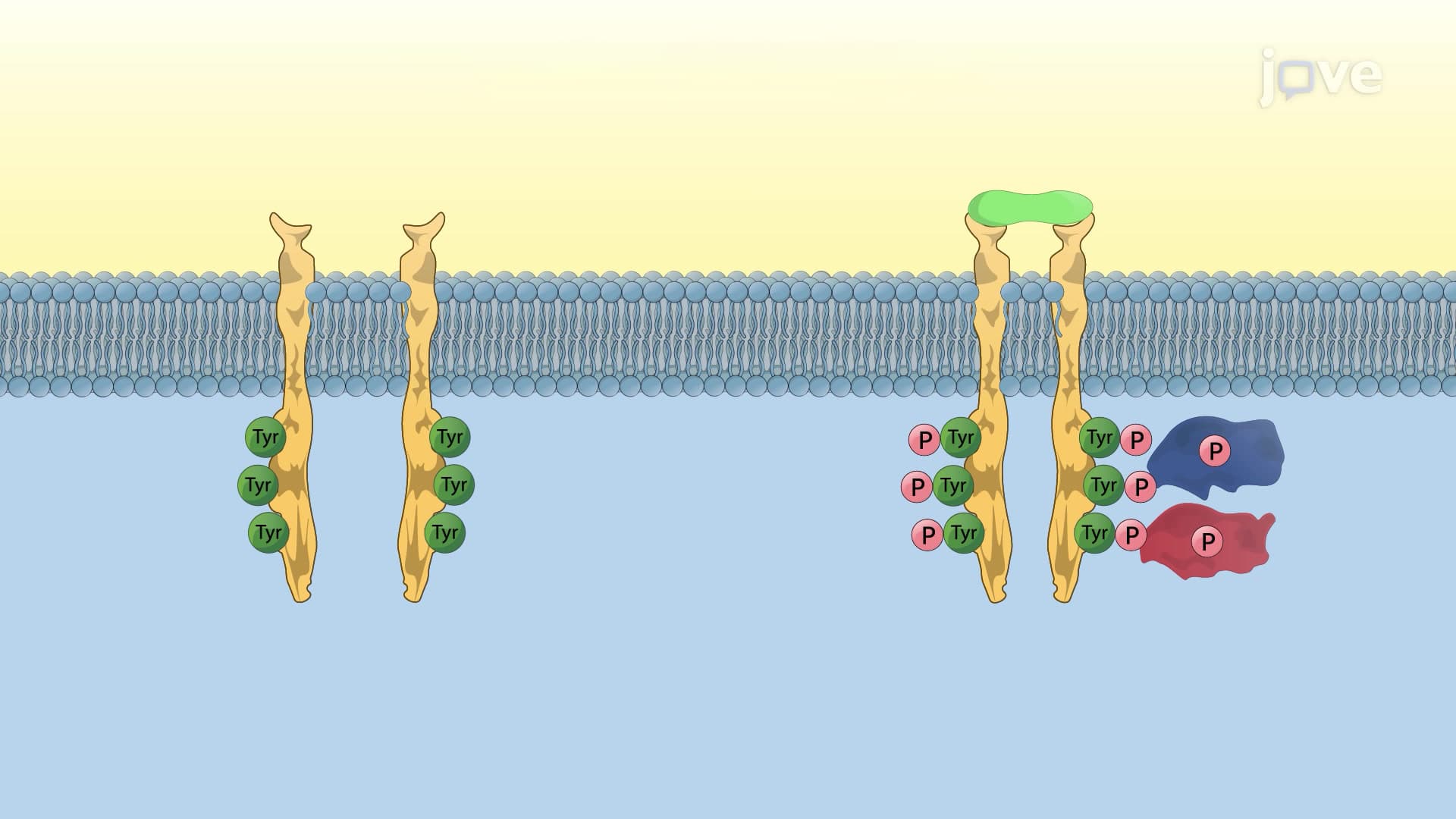
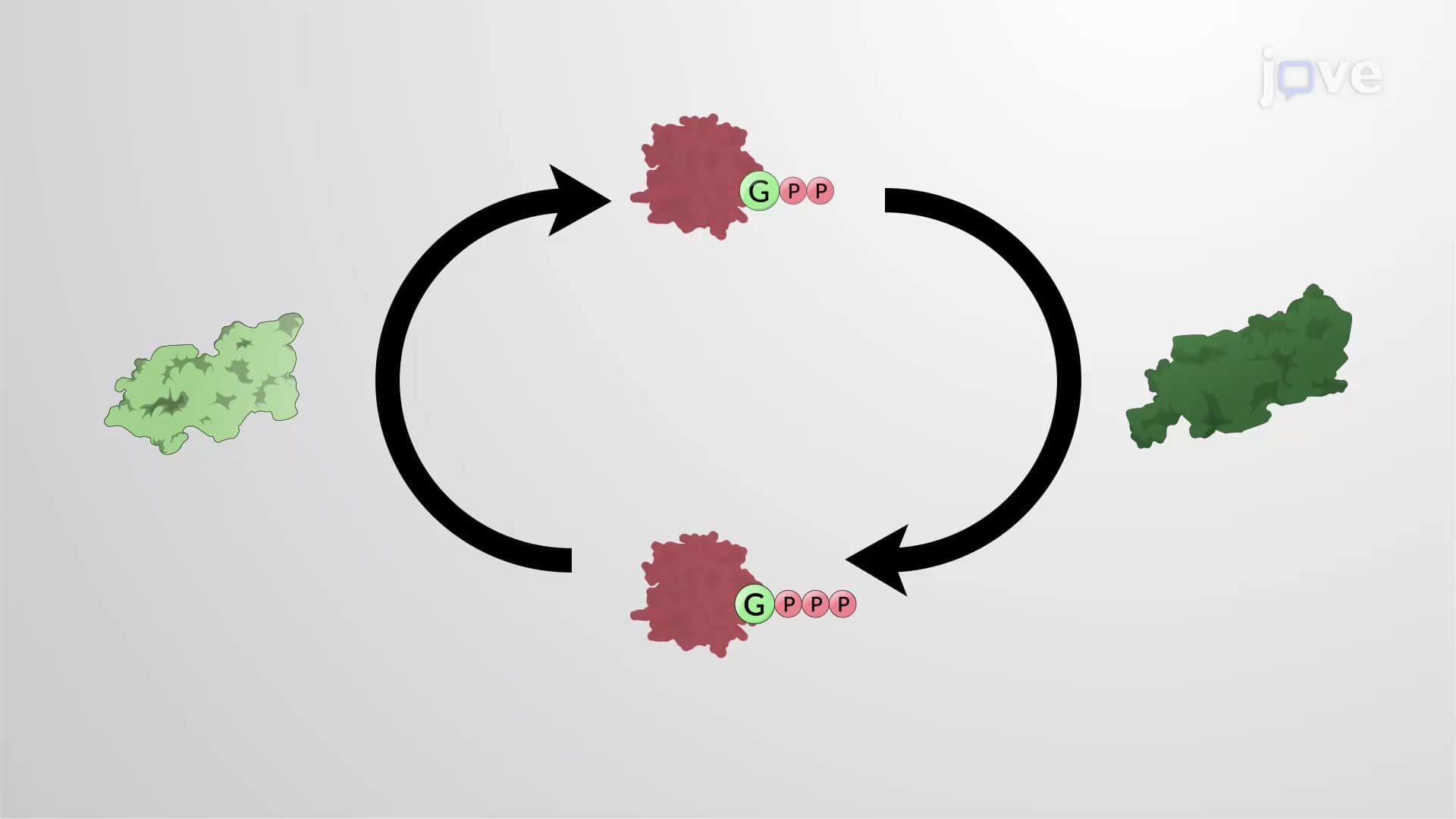
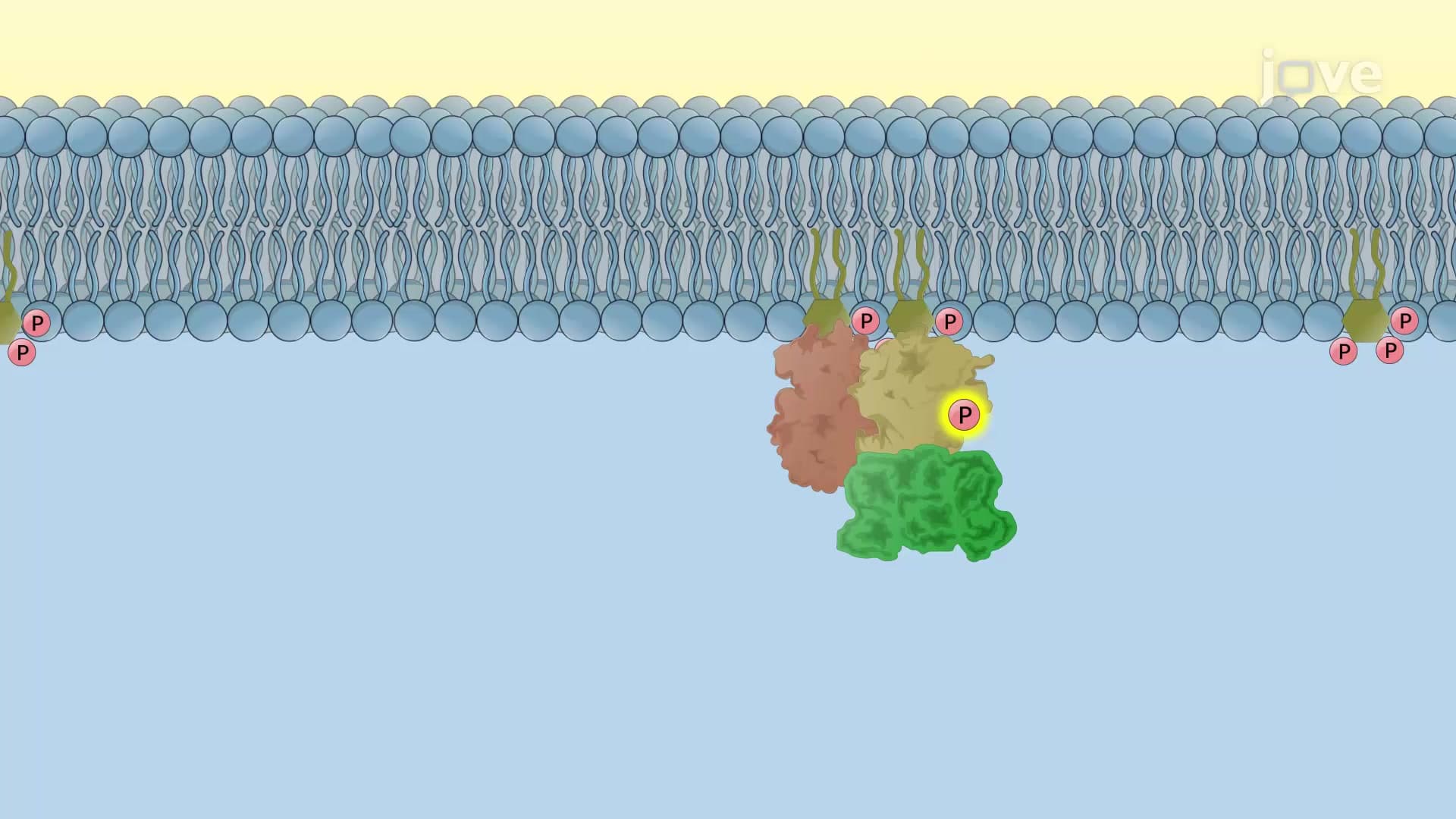
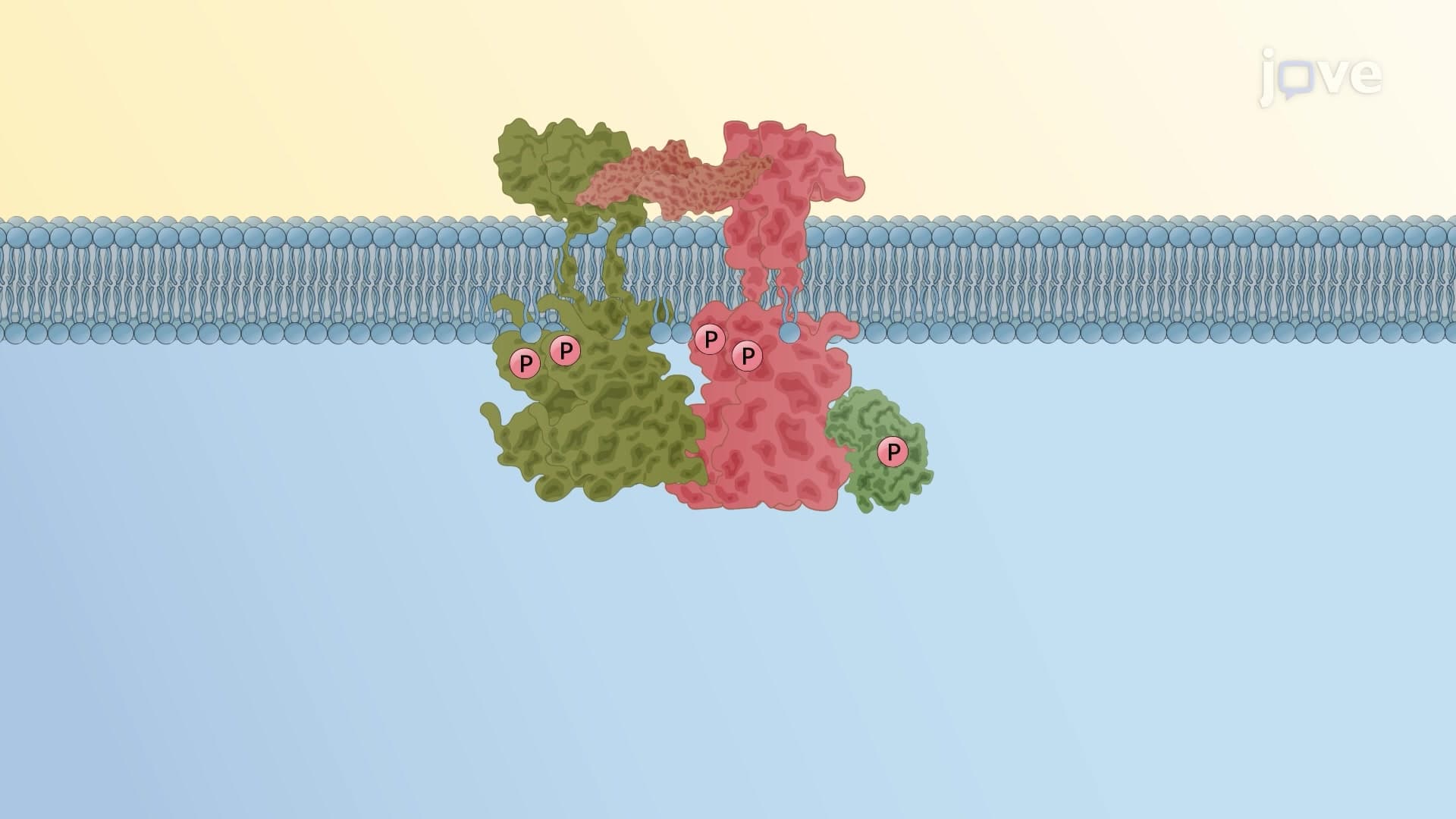
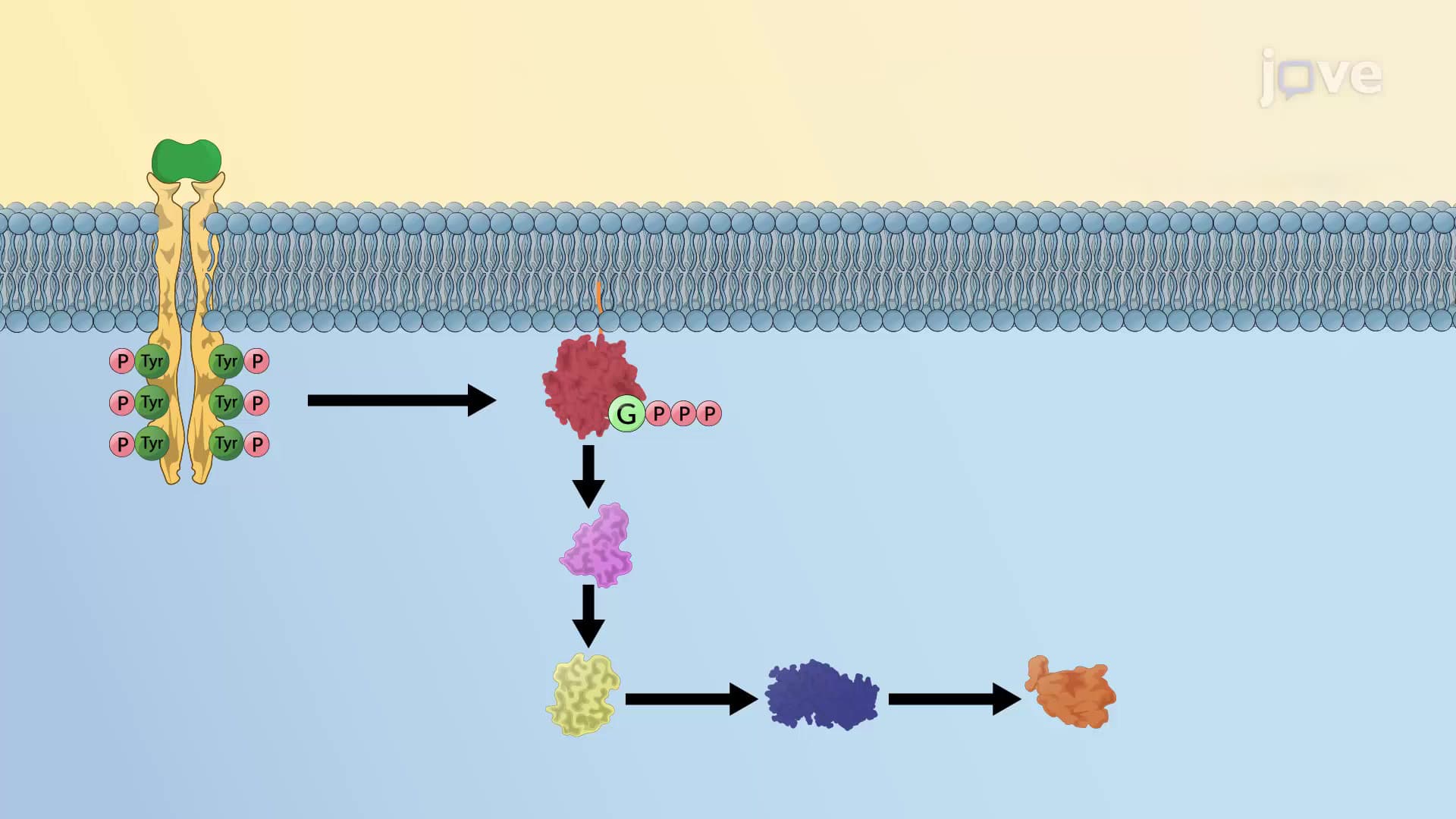
The Ras-MAPK pathway exemplifies how cells achieve signal specificity and amplification. When growth factors bind receptor tyrosine kinases (RTKs), they activate the small GTPase Ras, which serves as a molecular switch. Active Ras-GTP recruits and activates Raf kinase by disrupting its inhibitory interaction with 14-3-3 proteins. Activated Raf then phosphorylates MEK (MAPK/ERK kinase), which subsequently phosphorylates ERK (extracellular signal-regulated kinase). This three-tiered kinase cascade amplifies the initial signal by orders of magnitude-a single activated RTK can generate thousands of phosphorylated ERK molecules.
Understanding MAPK signaling cascades proves essential for medical applications and appears frequently on standardized exams like the MCAT and AP Biology. Approximately 30% of human cancers involve mutations in Ras proteins, making this pathway a prime therapeutic target. At cancer centers like Memorial Sloan Kettering, researchers develop drugs that specifically inhibit overactive MAPK signaling in tumors. Students studying for medical school admissions should recognize how MAPK dysregulation contributes to diseases ranging from cancer to developmental disorders, as this knowledge forms the foundation for understanding modern targeted therapies.
Related Micro-courses