Loading subject page…


202,200 views

Video Summary: What Is Nuclear Stability
Did you know Earth would shrink to just 1/30,000th its current size if compressed to nuclear density? Nuclear stability determines whether an atom's nucleus will hold together or spontaneously decay through radioactive processes. This fundamental concept explains why elements like uranium-238 power nuclear reactors across the United States while carbon-12 remains perfectly stable in our bodies. Understanding what is nuclear stability reveals the delicate balance between attractive nuclear forces and repulsive electromagnetic forces that governs every atom's fate. Watch the full video on JoVE Coach to master this concept with expert-led visuals and step-by-step explanations.
Nuclear stability represents the delicate equilibrium between forces within an atom's nucleus that determines whether it will remain intact or undergo radioactive decay. This concept forms the cornerstone of nuclear chemistry and physics, explaining phenomena from medical imaging techniques used in US hospitals to the operation of nuclear power plants generating electricity across America.
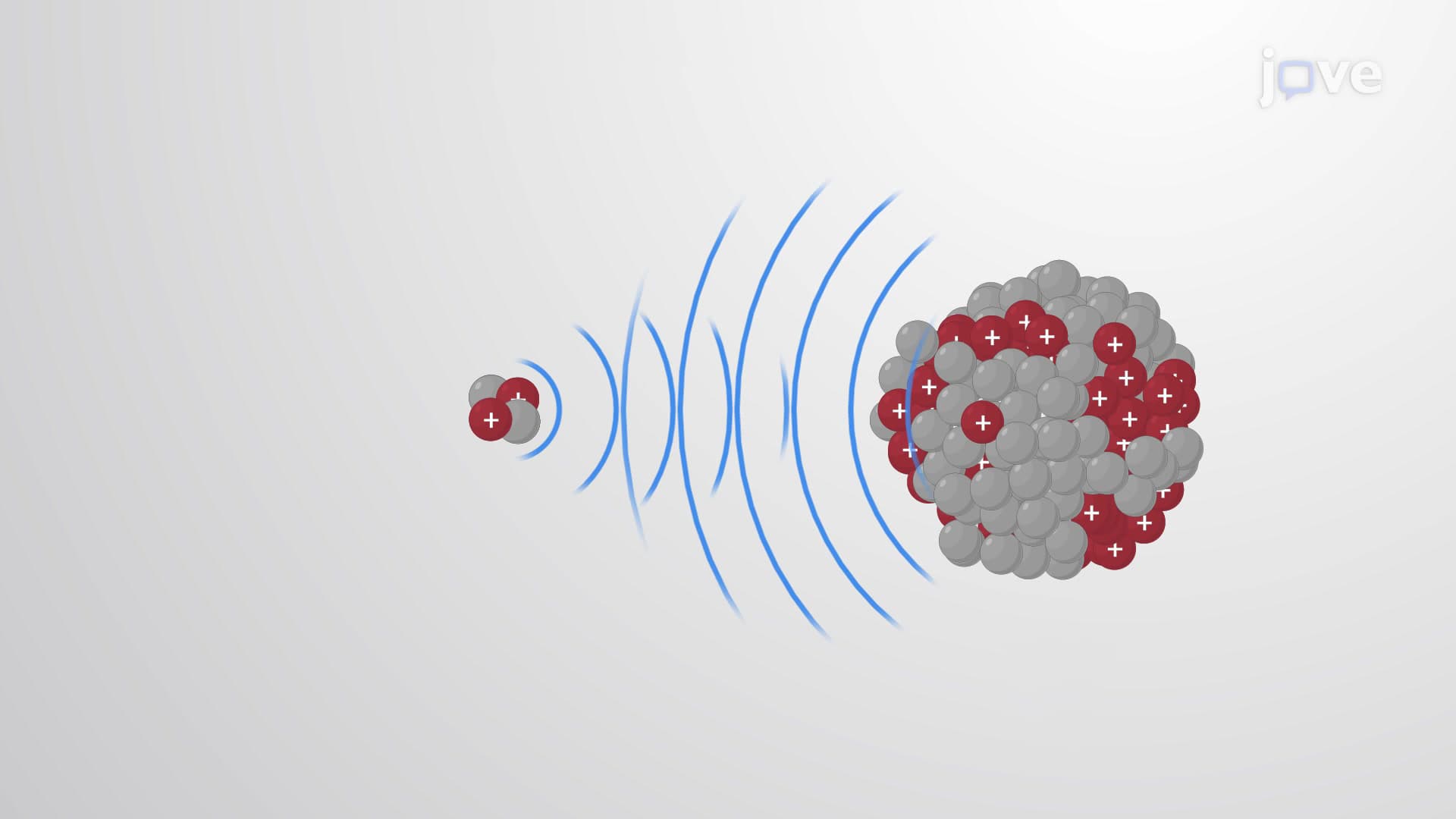
At its core, nuclear stability definition centers on the competition between two opposing forces: the strong nuclear force that binds nucleons together and the electromagnetic repulsion between positively charged protons. The strong nuclear force operates only at extremely short ranges (about 10^-15 meters), while electromagnetic repulsion acts over much greater distances. This fundamental tension shapes every nucleus in existence.
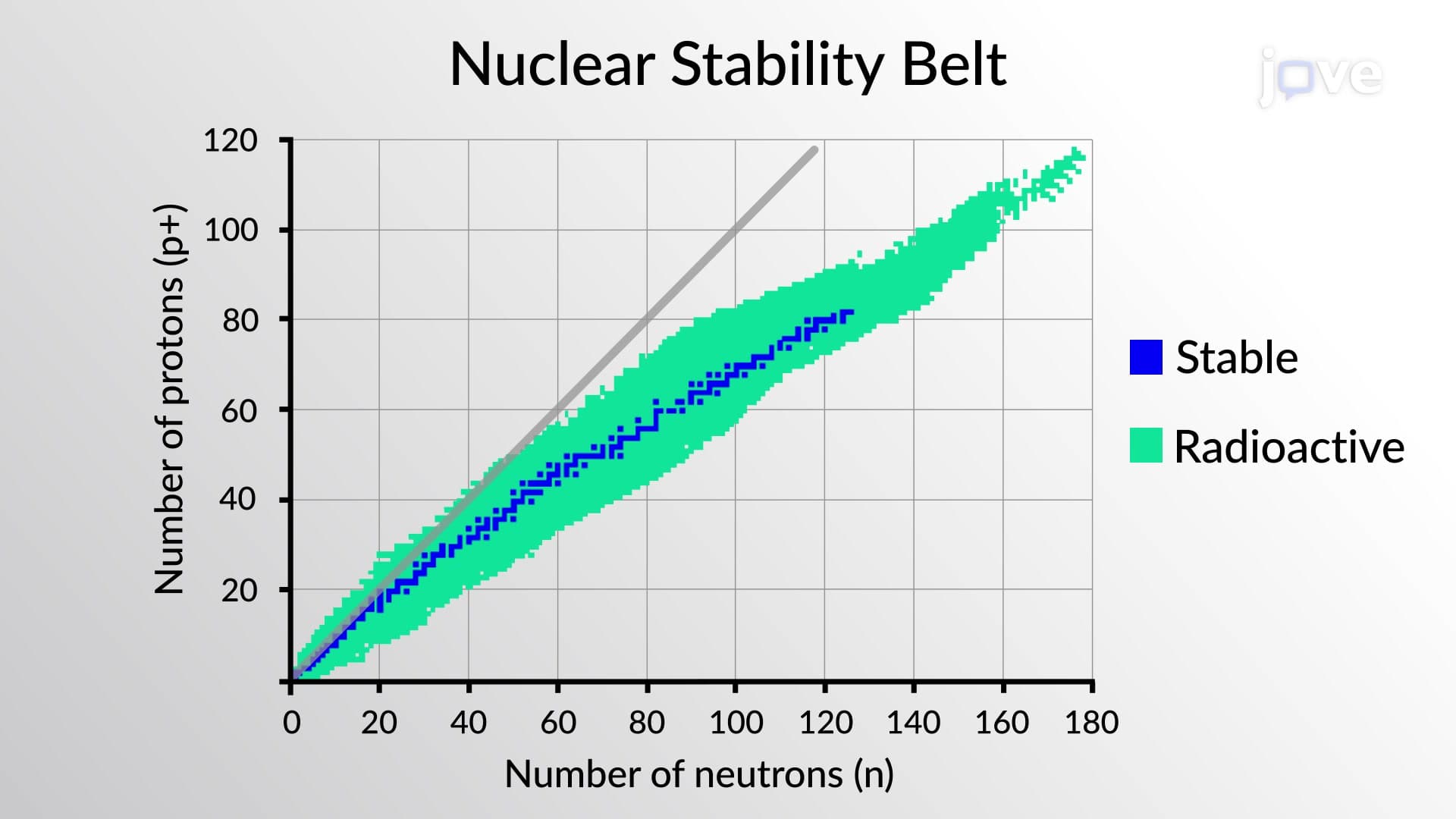
The nuclear stability overview becomes clearer when examining the belt of stability-a narrow band on nuclear charts where stable isotopes cluster. For lighter elements up to calcium (atomic number 20), stable nuclei typically maintain neutron-to-proton ratios near 1:1. Carbon-12, with six protons and six neutrons, exemplifies this perfect balance.
However, as atomic numbers increase beyond 20, stable nuclei require increasingly higher neutron-to-proton ratios. This occurs because additional neutrons provide extra binding energy through strong nuclear force interactions without contributing electromagnetic repulsion. Elements like iron-56, crucial in steel production throughout US manufacturing, demonstrate this principle with 26 protons and 30 neutrons.
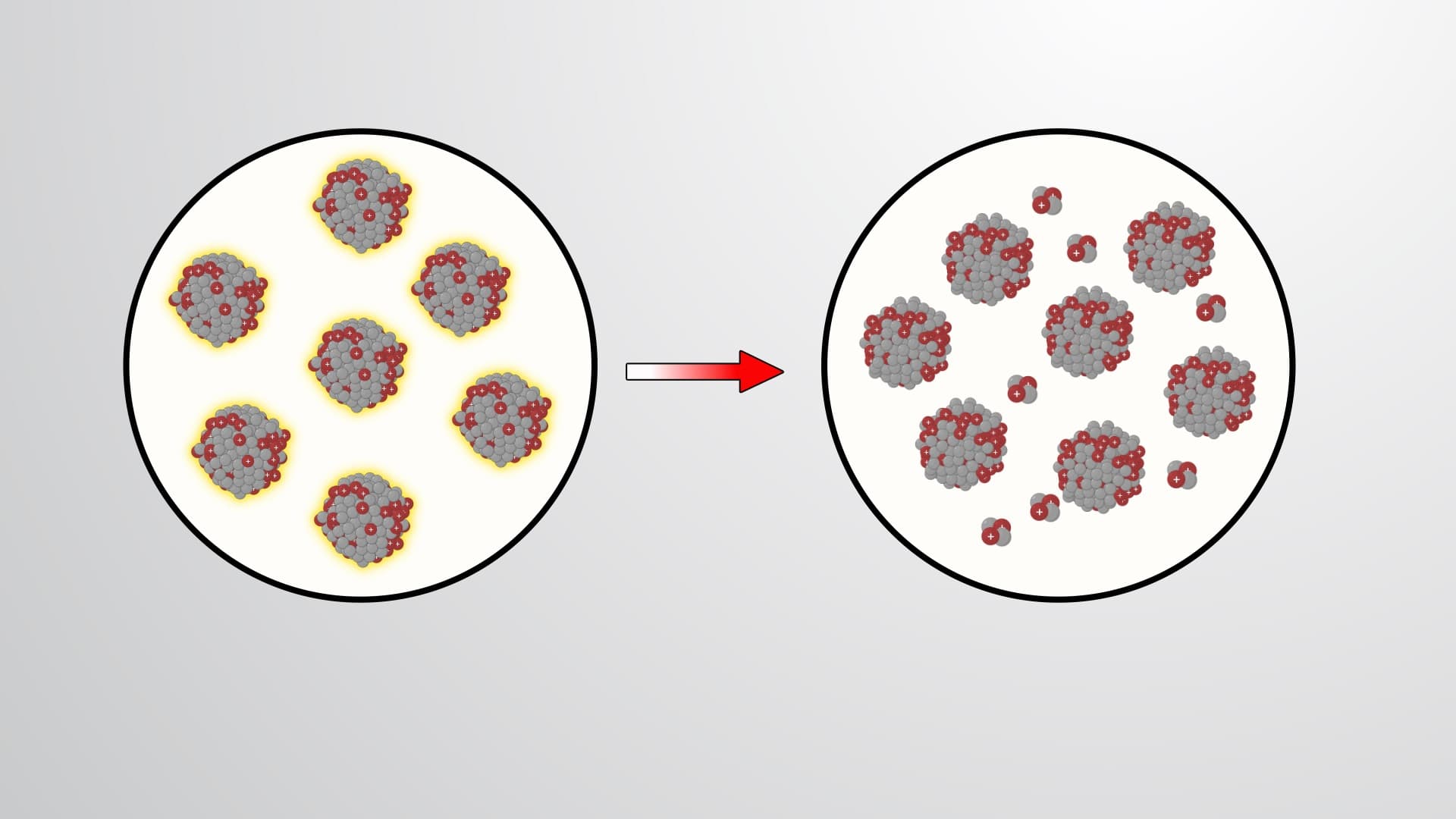
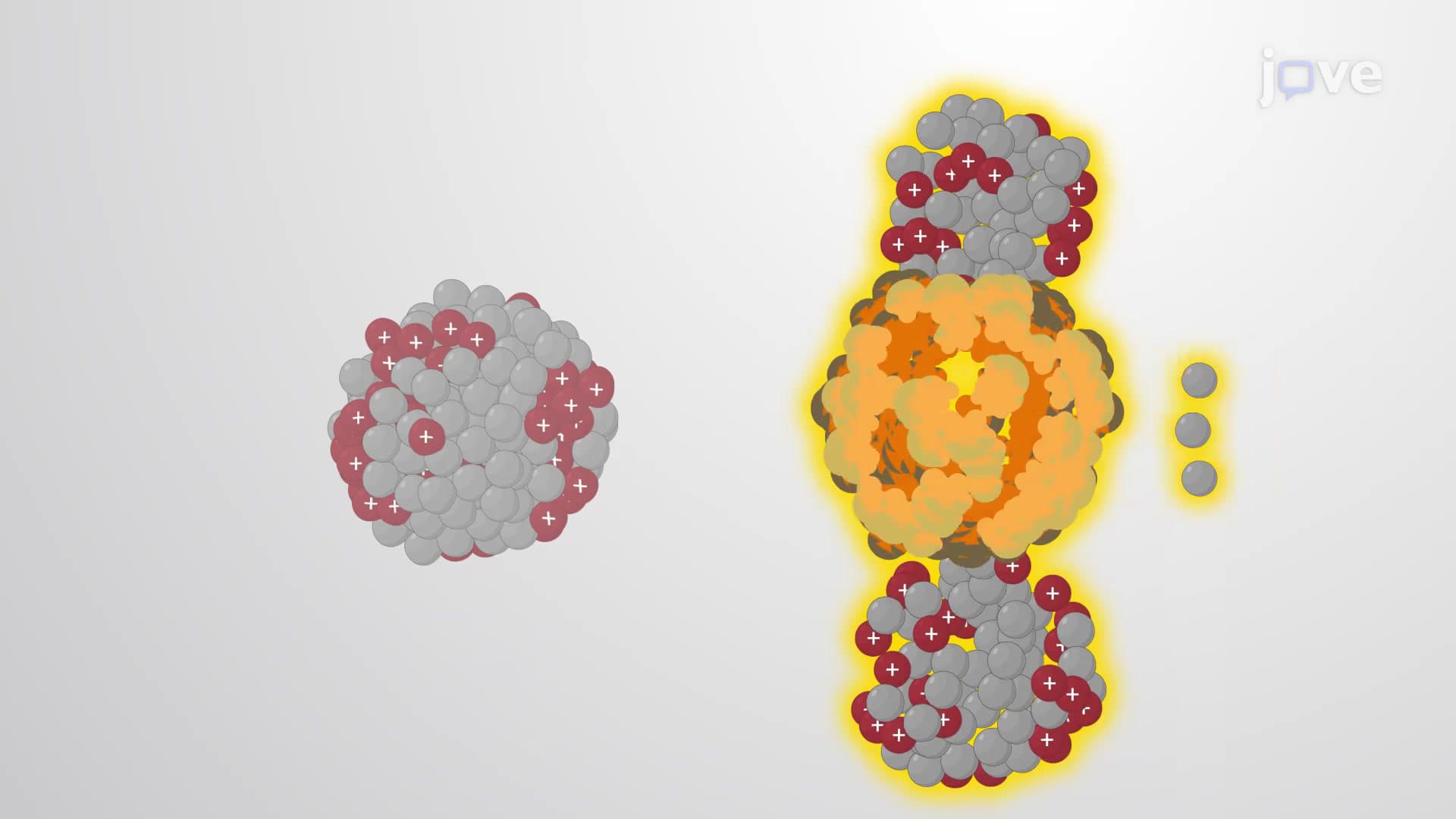
Understanding nuclear stability in detail reveals why no stable elements exist beyond bismuth-209. Once nuclei contain more than 82 protons, electromagnetic repulsion inevitably overcomes nuclear binding forces, making radioactive decay inevitable. This explains why uranium and plutonium serve as nuclear fuel-their instability releases tremendous energy when properly controlled.
Nuclear stability basics include recognizing "magic numbers"-specific numbers of protons or neutrons (2, 8, 20, 28, 50, 82, 126) that confer exceptional stability. Nuclei with magic numbers of both protons and neutrons, called doubly magic, show remarkable stability. Helium-4, oxygen-16, and calcium-40 exemplify these doubly magic configurations.
Pairing effects also significantly influence stability. Even numbers of protons and neutrons allow complete pairing, similar to electron pairing in atomic orbitals. This explains why only five stable odd-odd nuclei exist naturally, while hundreds of even-even stable nuclei are known.
These nuclear stability concepts directly impact AP Chemistry and Physics courses, where students must predict decay modes and stability patterns. College-level nuclear chemistry builds upon these foundations, connecting to applications in medical diagnostics, carbon dating, and nuclear energy production powering millions of American homes.
Related Micro-courses