Loading subject page…


12 Concepts
7 Concepts
10 Concepts
13 Concepts
10 Concepts
12 Concepts
15 Concepts
8 Concepts
14 Concepts
9 Concepts
21 Concepts
13 Concepts
12 Concepts
10 Concepts
14 Concepts
15 Concepts
10 Concepts
10 Concepts
10 Concepts
10 Concepts
12 Concepts
 10 Concepts
 222.7K Views
 Popular topics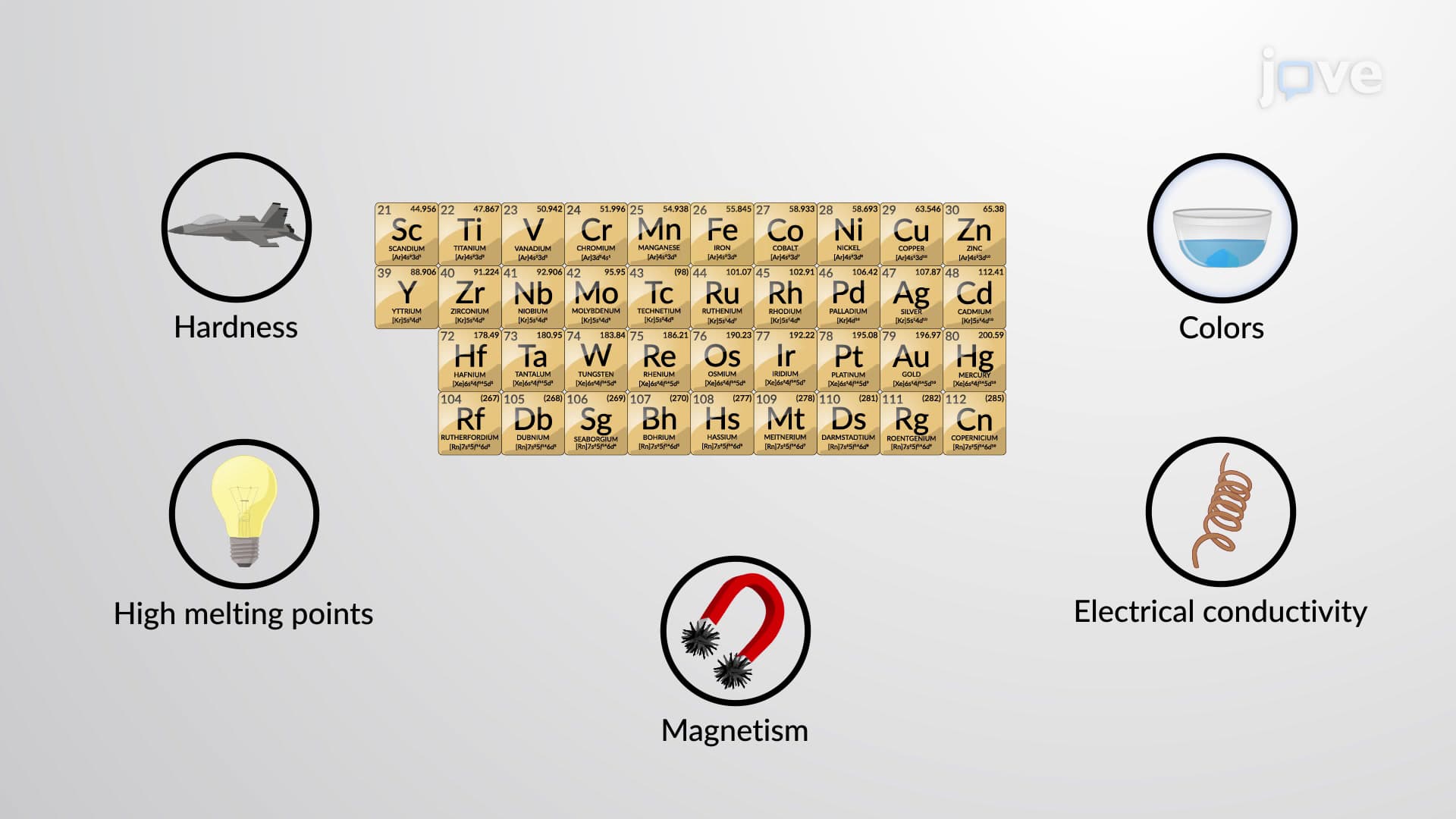



Transition metals form the backbone of coordination chemistry, creating colorful complexes with unique magnetic properties. These d-block elements exhibit variable oxidation states and bond with ligands through coordinate covalent bonds, forming coordination chemistry complexes essential in biological systems, industrial catalysis, and medical treatments. JoVE Coach provides comprehensive coverage of these fundamental concepts for students preparing for advanced chemistry coursework and standardized exams.
1. Properties and Electronic Structure of Transition Metals Transition metals occupy the d-block of the periodic table and exhibit distinctive properties including variable oxidation states, colorful compounds, and magnetic behavior. These elements fill d orbitals following the Aufbau principle, with notable exceptions like chromium and copper that achieve half-filled or completely filled d subshells for enhanced stability. The lanthanide contraction affects sixth-period transition metals, causing smaller atomic radii than expected due to poor shielding by f electrons. These unique electronic configurations enable transition metals to form multiple stable oxidation states and participate in diverse chemical reactions crucial for biological processes and industrial applications.
2. Coordination Compounds and Systematic Nomenclature Coordination chemistry complexes consist of central metal ions surrounded by ligands within a coordination sphere, often balanced by counterions. Alfred Werner's coordination theory established the concepts of primary valence (oxidation state) and secondary valence (coordination number). Systematic nomenclature follows specific rules: ligands are named alphabetically with appropriate prefixes (di-, tri-, tetra-), anionic ligands end in "-o," neutral ligands use molecular names or special cases like "aqua" and "ammine," and metal names include oxidation states in Roman numerals. For example, [Co(NH₃)₅Cl]Br₂ is named pentaamminechlorocobalt(III) bromide.
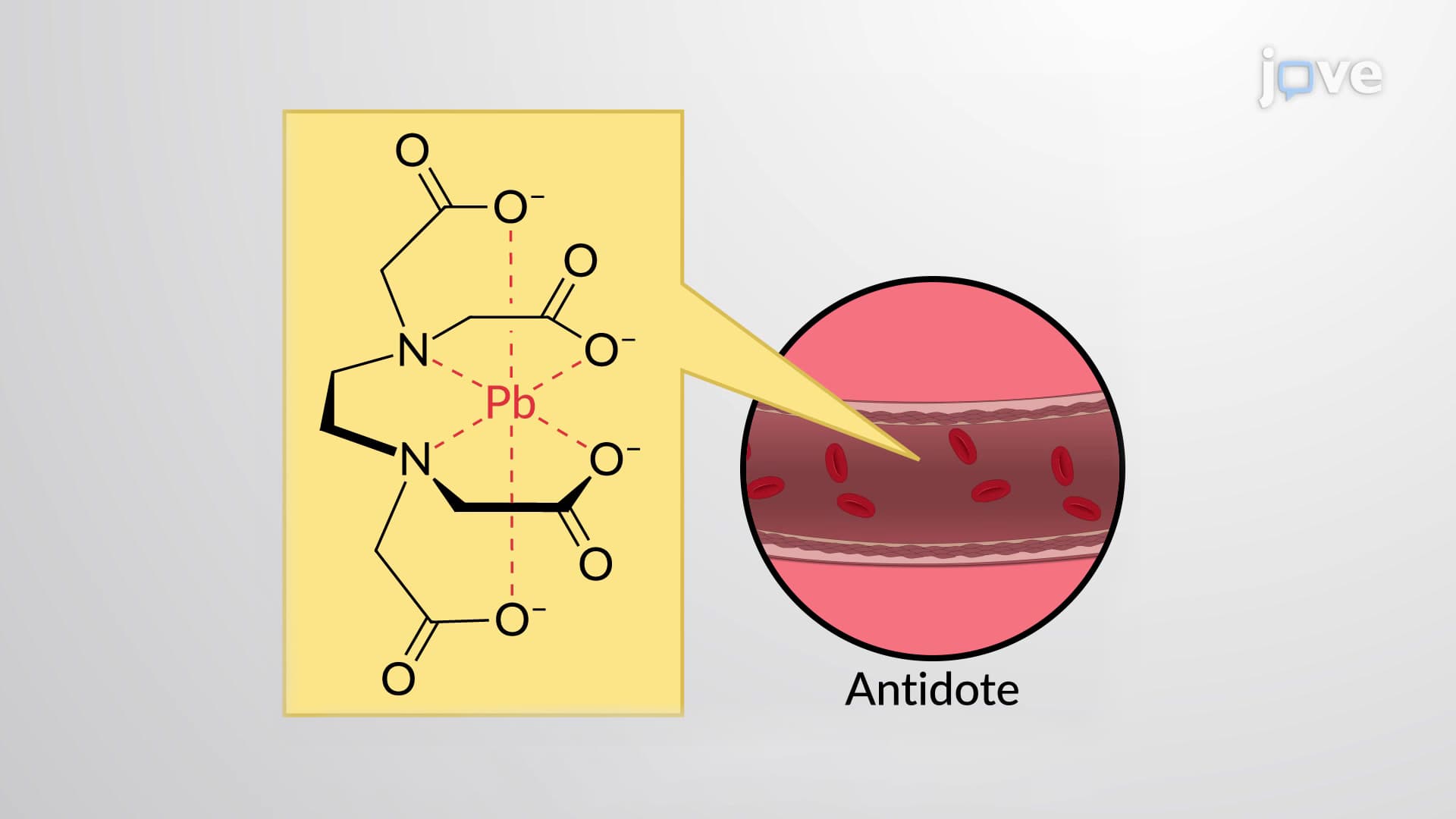
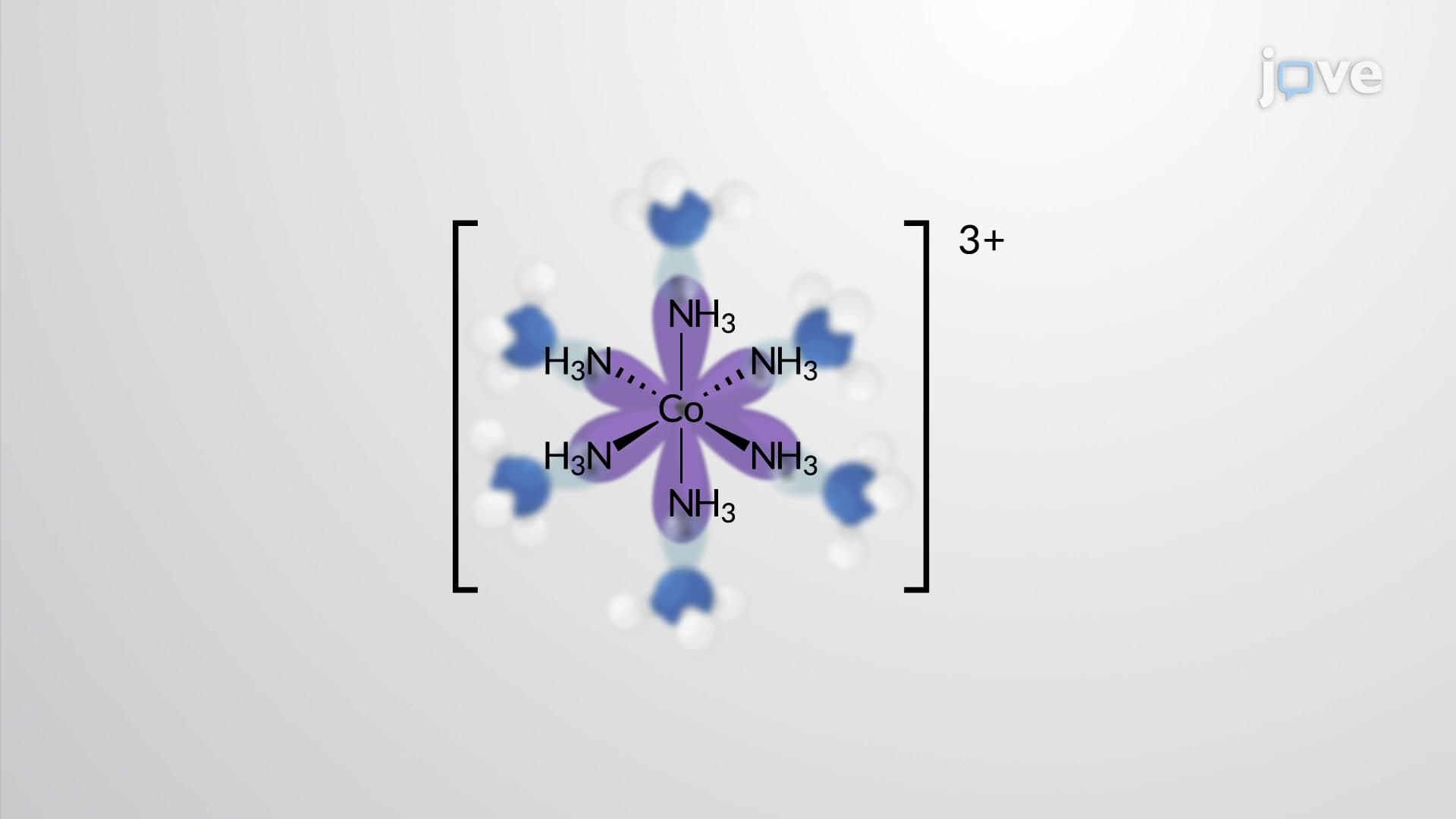
3. Ligands and Metal-Ligand Bonding Ligands function as Lewis bases, donating electron pairs to metal ions (Lewis acids) through coordinate covalent bonds. Structure and bonding in transition metal complexes depends on ligand denticity: monodentate ligands like H₂O and CN⁻ have one donor atom, while bidentate ligands like ethylenediamine possess two donor atoms. Polydentate ligands such as EDTA can form multiple bonds with a single metal center. Chelating agents create more stable complexes than monodentate ligands due to the chelate effect, making them valuable in applications like treating heavy metal poisoning and food preservation by complexing catalytic metal ions.
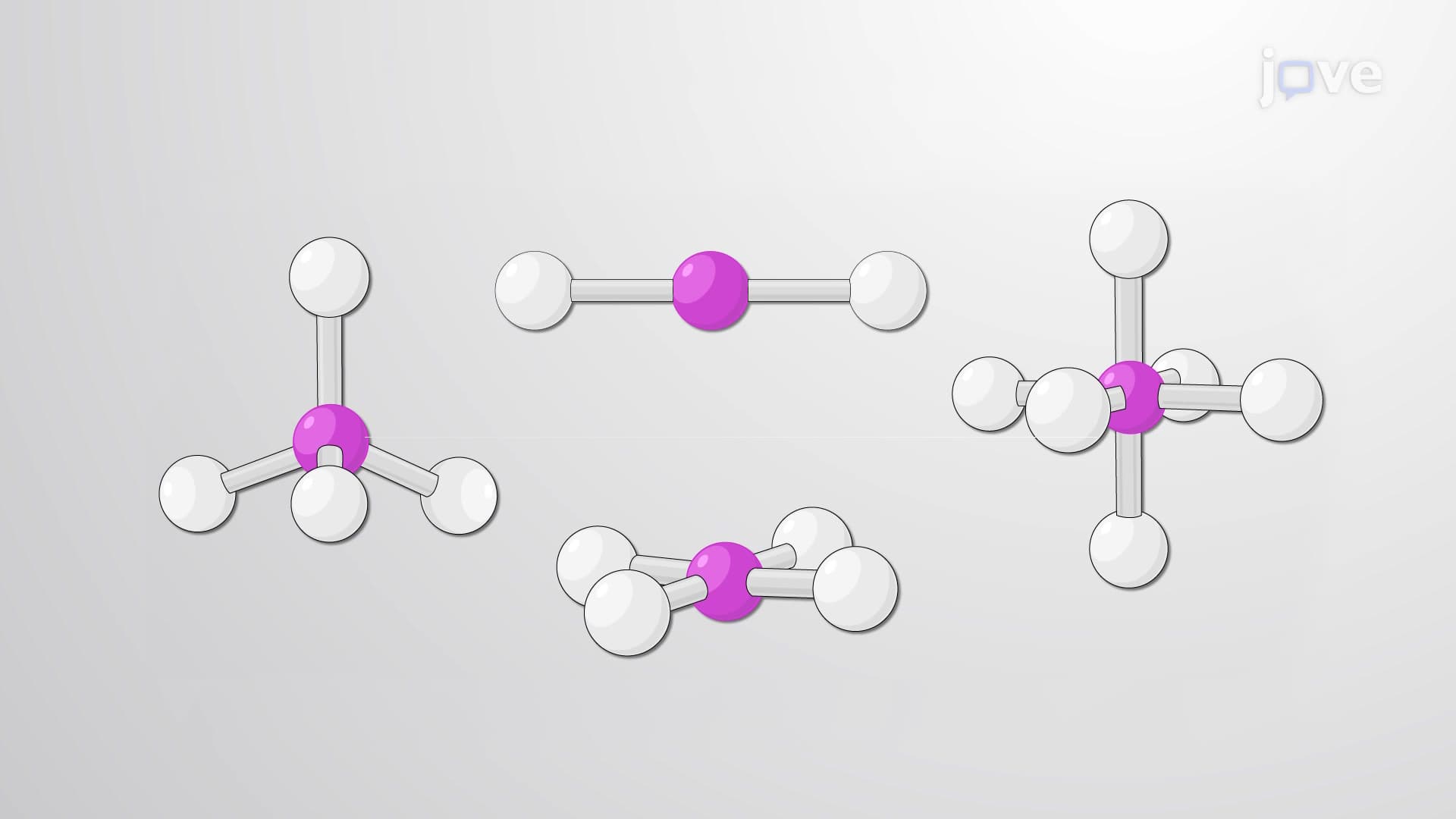
4. Coordination Number and Molecular Geometry The coordination number represents the number of donor atoms directly bonded to the central metal ion, typically ranging from 2 to 6. Structure and bonding in transition metal complexes determines molecular geometry: coordination number 2 yields linear geometry, coordination number 4 produces either tetrahedral or square planar arrangements, and coordination number 6 results in octahedral geometry. Factors influencing coordination number include ligand size (smaller ligands allow higher coordination numbers), ligand charge (anionic ligands reduce coordination numbers), and metal ion properties. For instance, Fe³⁺ coordinates with six small F⁻ ions but only four larger Cl⁻ ions.
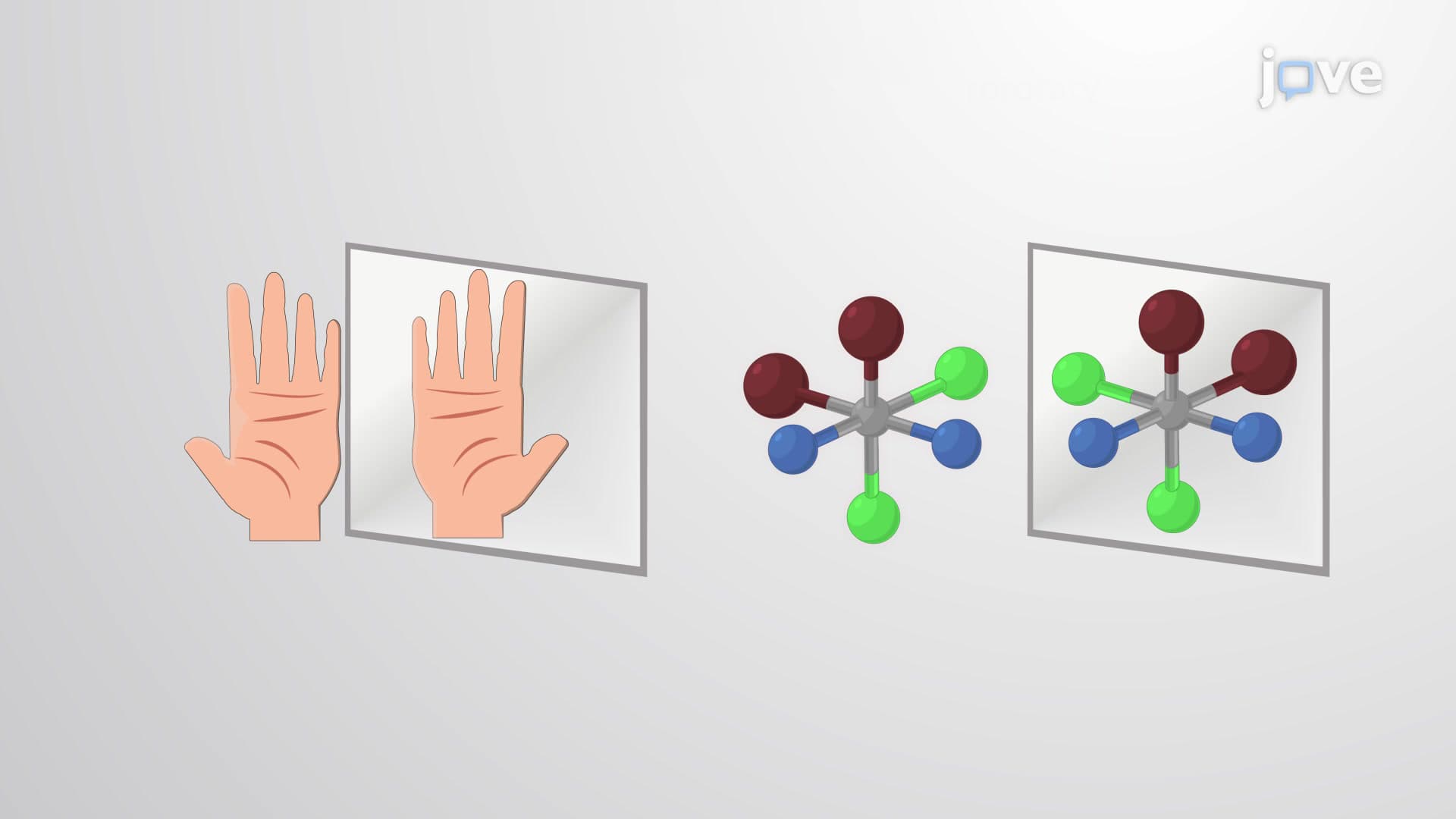
5. Structural and Stereoisomerism in Coordination Compounds Coordination chemistry complexes exhibit various types of isomerism despite having identical molecular formulas. Structural isomerism includes coordination sphere isomers (where ligands and counterions exchange positions) and linkage isomers (where ambidentate ligands like NO₂⁻ can coordinate through different donor atoms). Stereoisomerism encompasses geometric isomers (cis-trans in square planar MA₂B₂ complexes and fac-mer in octahedral MA₃B₃ complexes) and optical isomers (non-superimposable mirror images). Famous examples include cisplatin (anticancer drug) versus transplatin (inactive isomer), demonstrating how molecular arrangement dramatically affects biological activity.
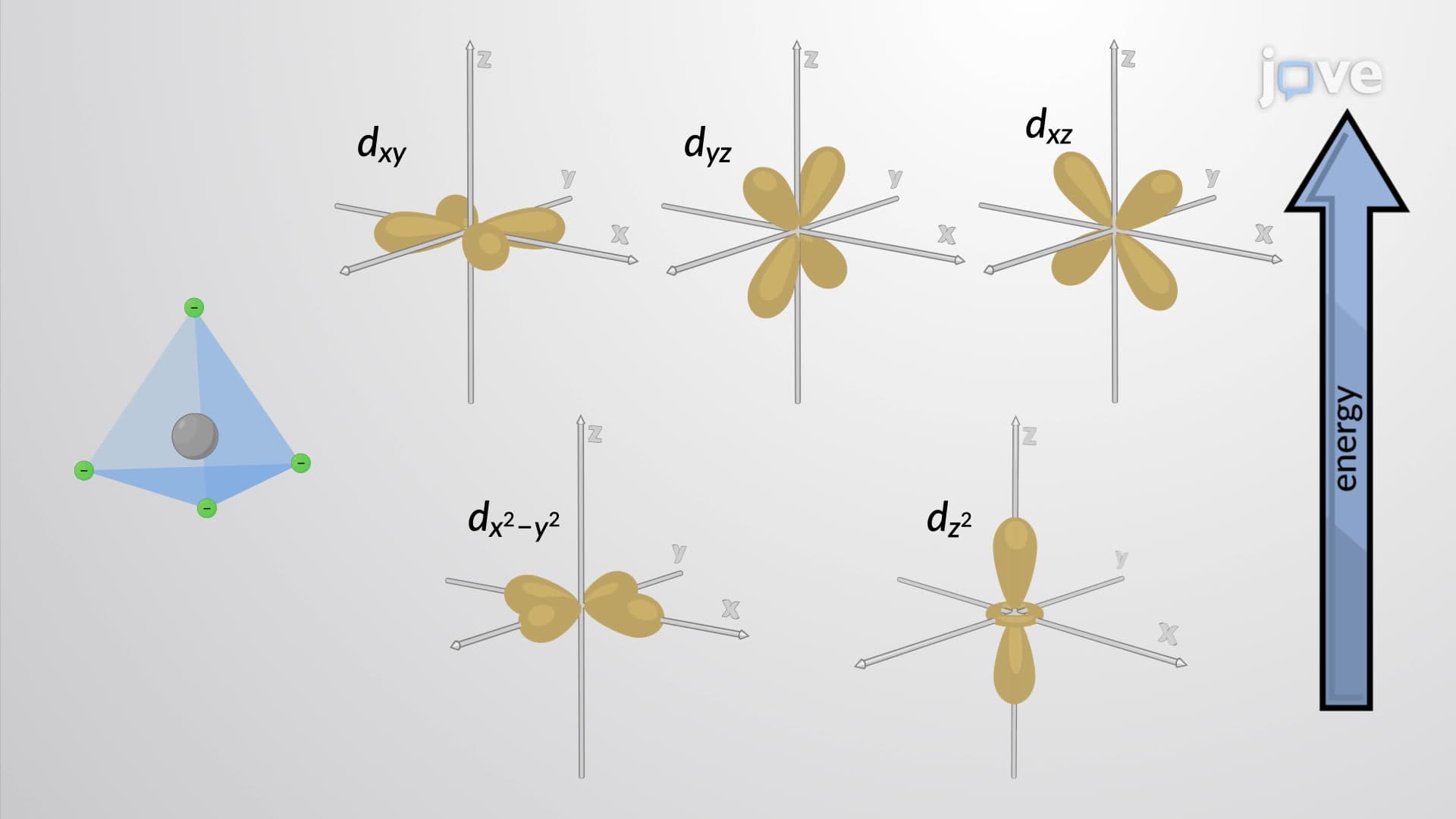
6. Crystal Field Theory and Orbital Splitting Ligand field theory models transition metal complexes by treating ligands as point charges that create electrostatic fields affecting d-orbital energies. In octahedral complexes, d orbitals split into higher-energy eₓ orbitals (dx²-y², dz²) and lower-energy t₂ₓ orbitals (dxy, dxz, dyz), with energy difference Δₒct. Tetrahedral complexes show inverted splitting with smaller Δtet values, while square planar complexes exhibit four distinct energy levels. The spectrochemical series ranks ligands by field strength: weak-field ligands (I⁻, Br⁻, Cl⁻) create small splitting, while strong-field ligands (CO, CN⁻) produce large splitting energies that determine electronic configurations and complex stability.
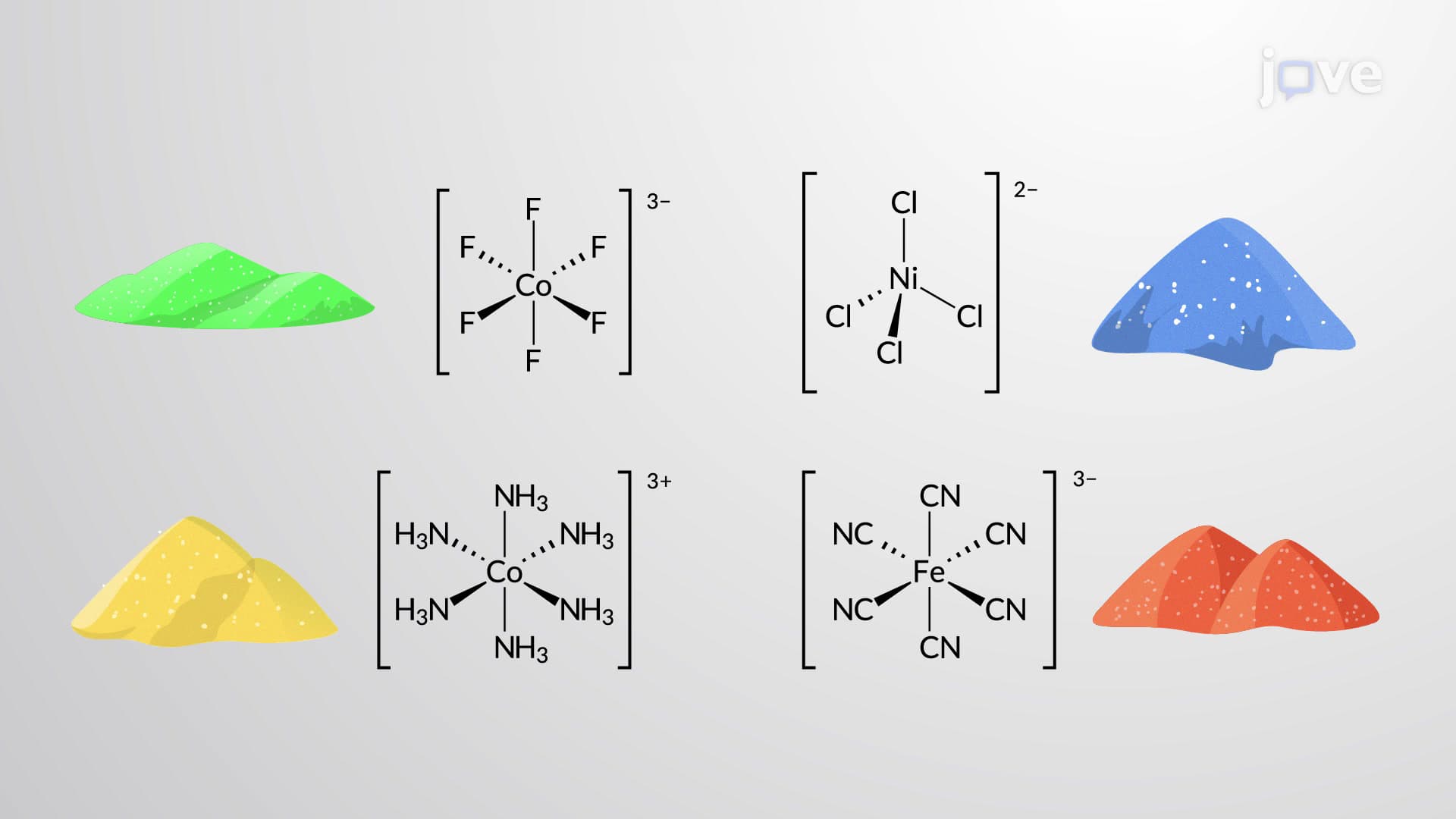
7. Color and Magnetism in Transition Metal Complexes The vibrant colors of transition metals arise from d-d electronic transitions when visible light energy matches crystal field splitting energy (Δ). Complexes absorb specific wavelengths and appear as complementary colors: [CoF₆]³⁻ absorbs red light and appears green, while [Co(NH₃)₆]³⁺ absorbs blue light and appears yellow. Magnetic properties depend on unpaired electrons: high-spin complexes (weak-field ligands, small Δ) maximize unpaired electrons and show paramagnetism, while low-spin complexes (strong-field ligands, large Δ) minimize unpaired electrons and may exhibit diamagnetism. These properties are crucial in applications like MRI contrast agents and magnetic materials.