Loading concepts…


12 Concepts
7 Concepts
10 Concepts
13 Concepts
10 Concepts
12 Concepts
15 Concepts
8 Concepts
14 Concepts
9 Concepts
21 Concepts
13 Concepts
12 Concepts
10 Concepts
14 Concepts
15 Concepts
10 Concepts
10 Concepts
10 Concepts
10 Concepts
12 Concepts
 10 Concepts
 251.1K Views
 Popular topics
Thermodynamics governs energy transformations and spontaneous processes in chemical and physical systems. This comprehensive micro-course explores fundamental laws, entropy, enthalpy, and Gibbs free energy calculations essential for understanding reaction spontaneity and equilibrium. Master thermodynamic principles through JoVE Coach's structured approach, connecting molecular behavior to macroscopic observations in real-world applications from industrial processes to biological systems.
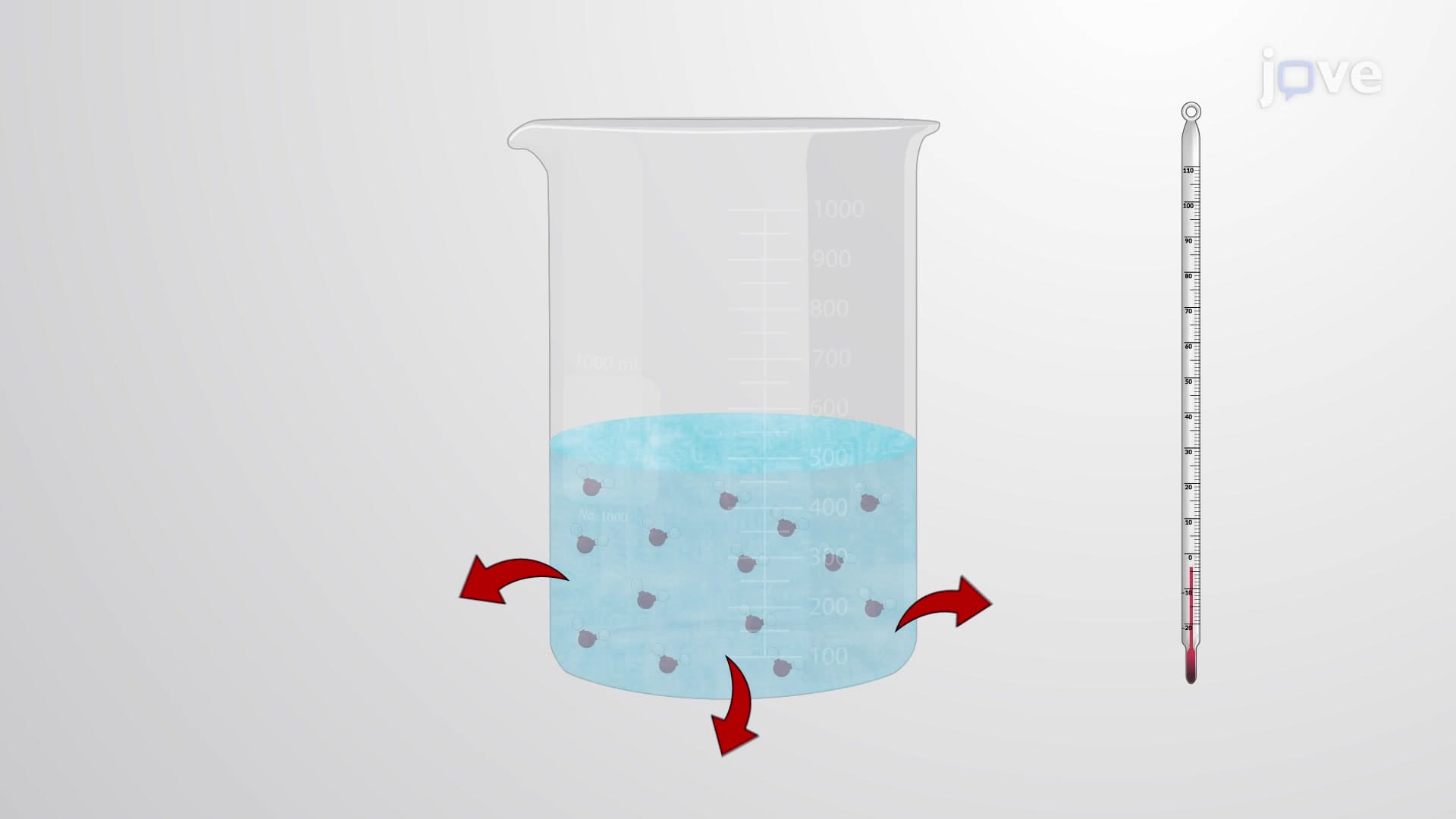
1. Spontaneous Processes and Energy Dispersal Spontaneous reactions occur naturally without external intervention under specific conditions, driven by energy and matter dispersal. The melting of ice at room temperature exemplifies spontaneity, while freezing requires specific conditions. Gas expansion from high to low pressure regions and heat transfer from hot to cold objects demonstrate natural energy dispersal. Importantly, spontaneity indicates thermodynamic favorability, not reaction speed-diamond conversion to graphite is spontaneous but extremely slow, while acid-base neutralizations proceed rapidly.
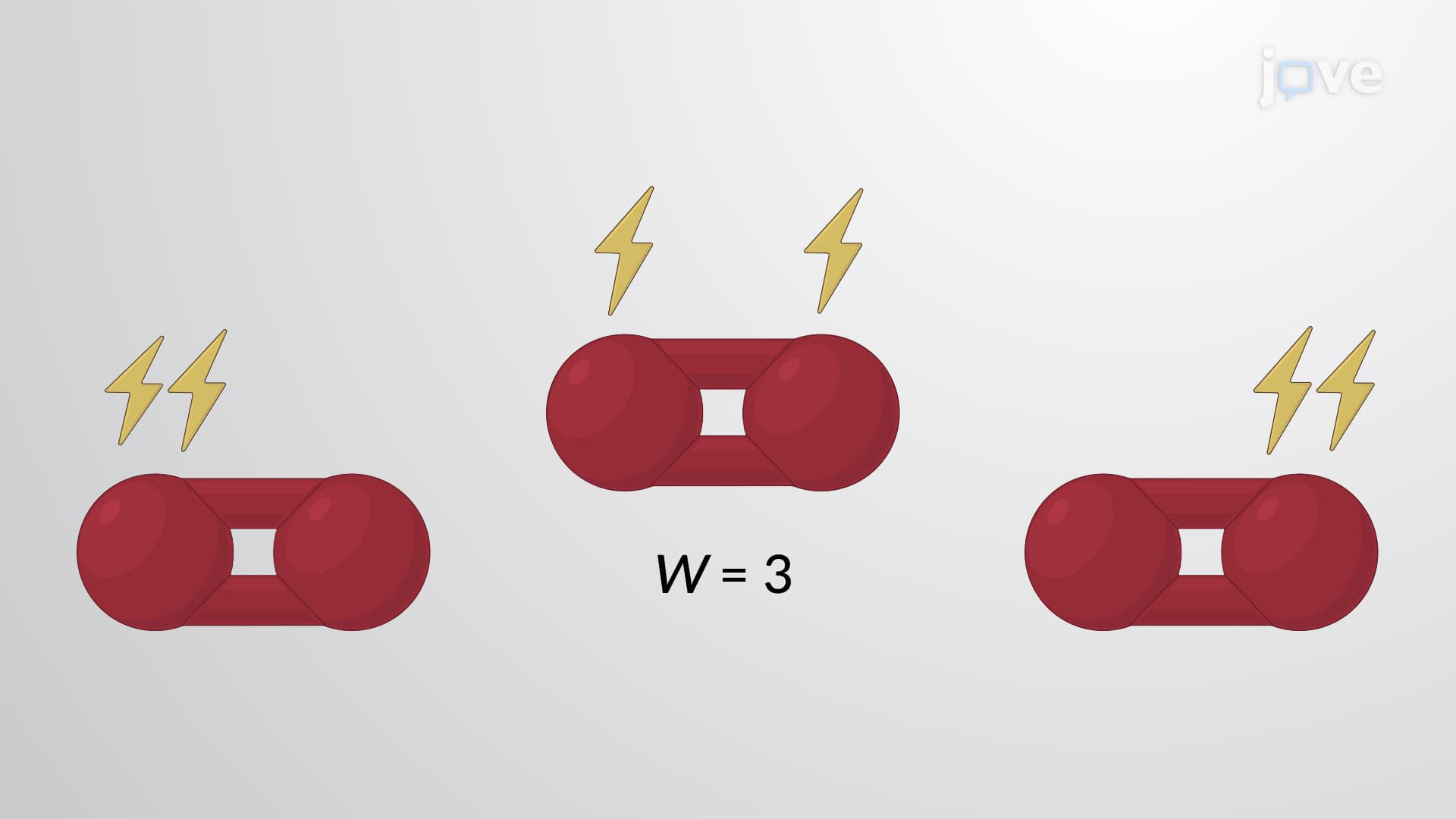
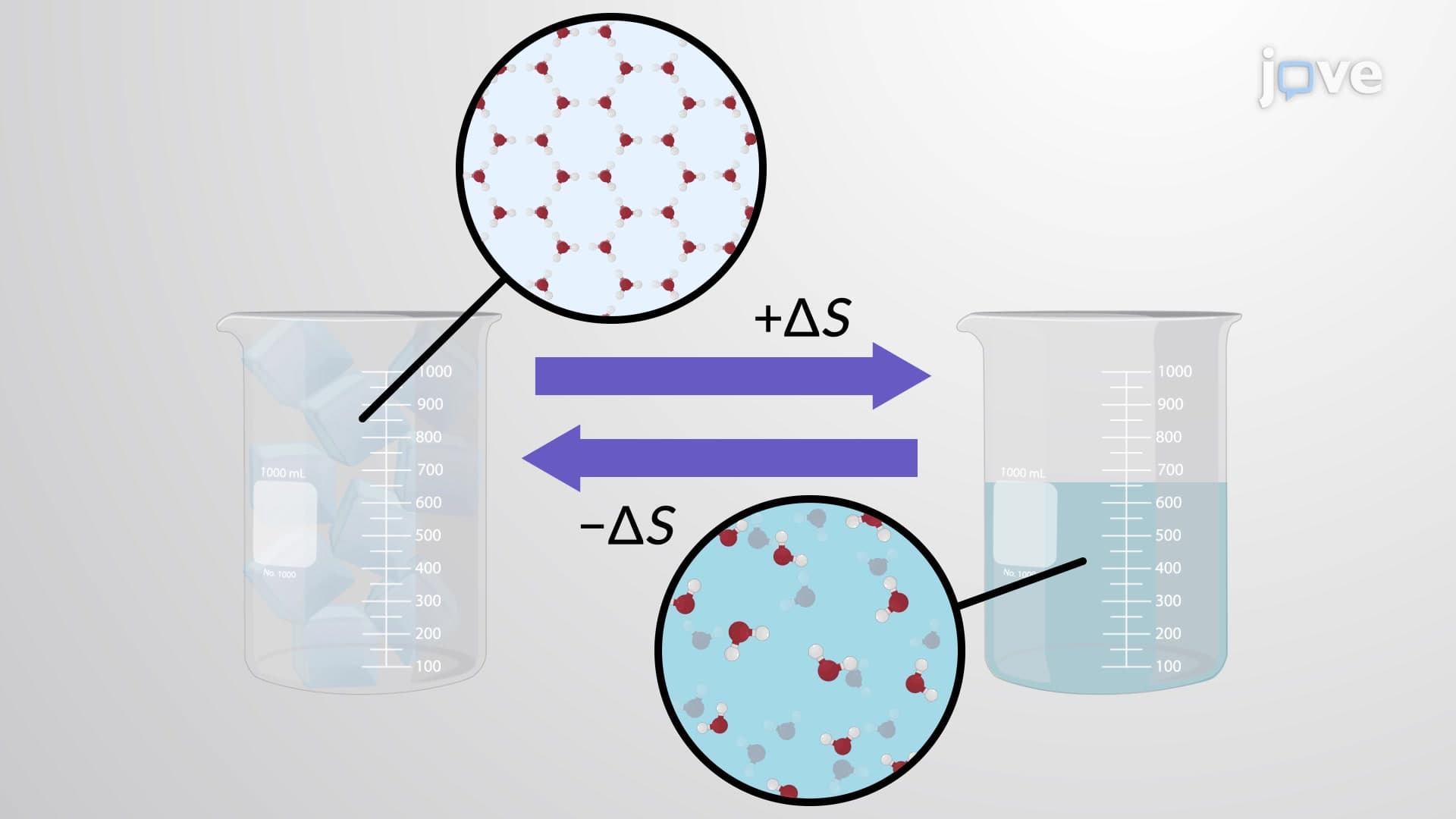
2. Entropy and the Second Law of Thermodynamics Entropy quantifies disorder and energy dispersal in systems, with the Second Law stating that universal entropy increases for all spontaneous processes. When ice melts, molecular disorder increases (positive ΔS), but when water freezes, the system becomes more ordered (negative ΔS). However, freezing remains spontaneous below 0°C because heat release to surroundings creates greater entropy increase than the system's entropy decrease. This explains why processes have temperature-dependent spontaneity and directional preferences in nature.
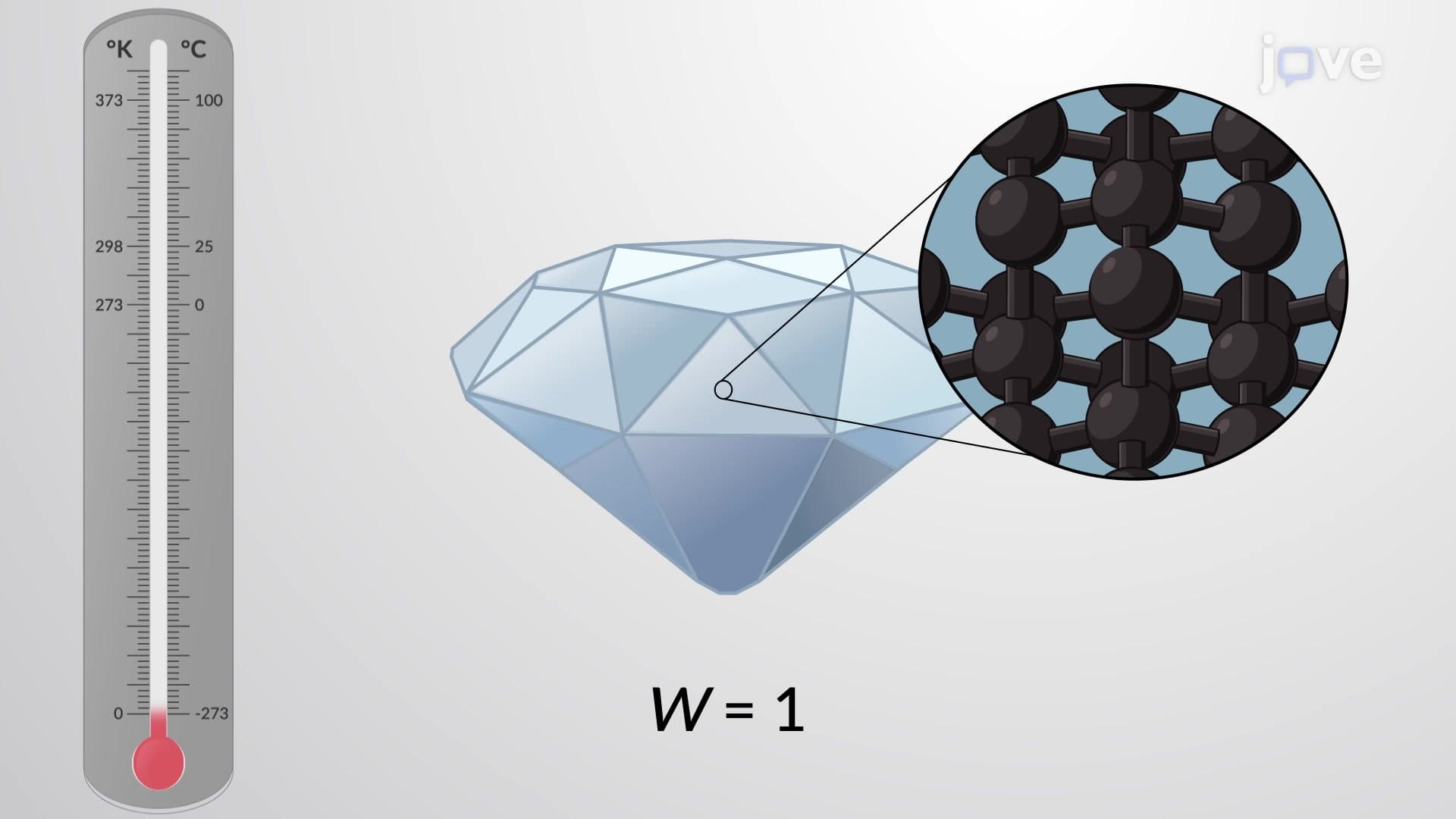
3. Third Law and Standard Entropy Values The Third Law establishes that perfectly crystalline substances have zero entropy at absolute zero (0 K), providing a reference point for all entropy measurements. Unlike enthalpies of formation, all substances have positive standard molar entropy values at 298 K. Entropy increases with molecular motion: gases > liquids > solids, and with structural flexibility-graphite has higher entropy than diamond due to sliding carbon layers. These principles help predict relative entropy values and explain phase transition behaviors.
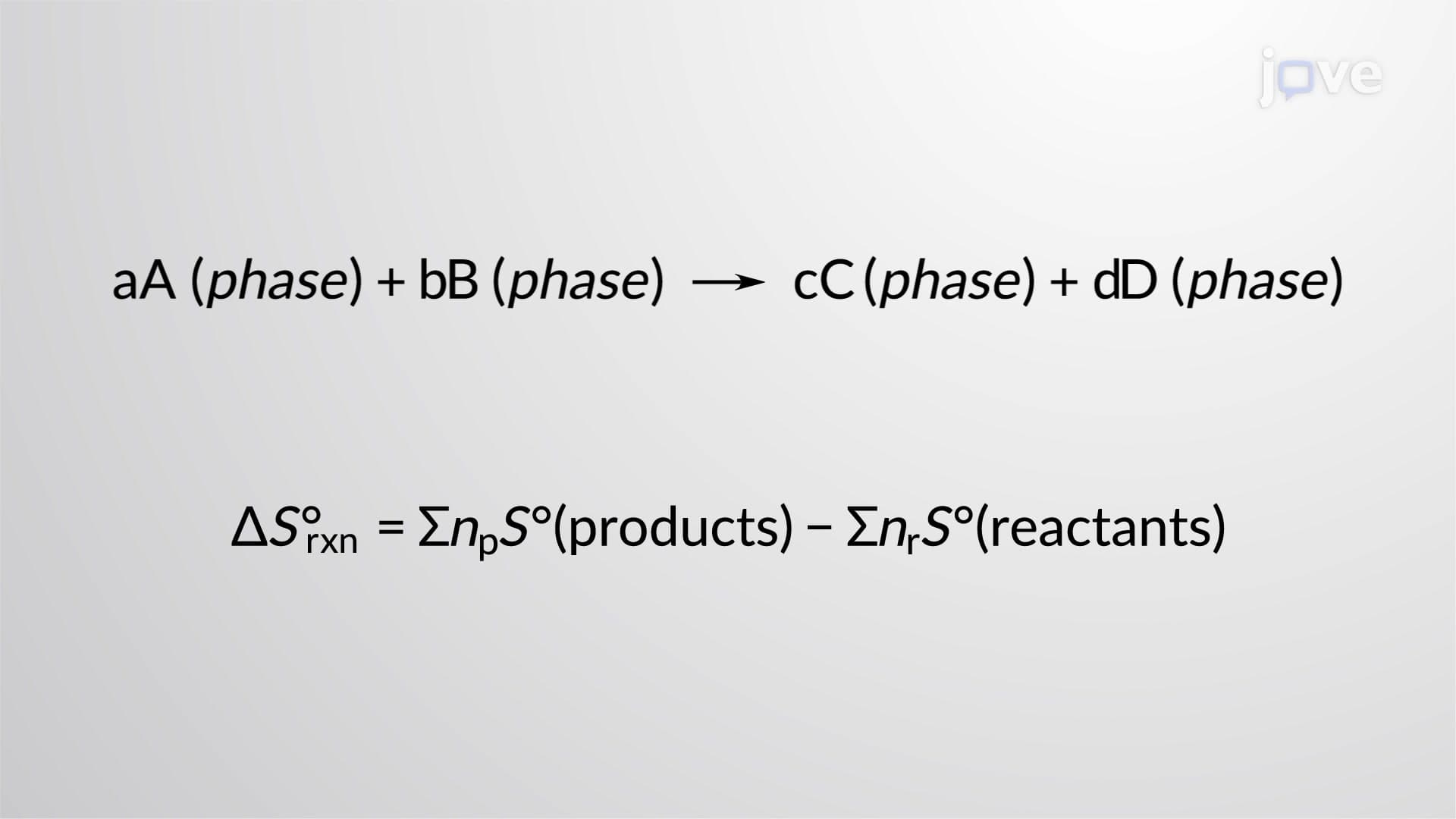
4. Standard Entropy Change Calculations Standard entropy changes (ΔS°) for reactions are calculated by subtracting reactant entropies from product entropies, each multiplied by stoichiometric coefficients. For ethylene combustion, fewer gas moles in products versus reactants indicate decreased disorder and negative ΔS°. This calculation method parallels enthalpy change computations but uses standard molar entropy values rather than formation data, enabling prediction of entropy changes from balanced equations and reference tables.
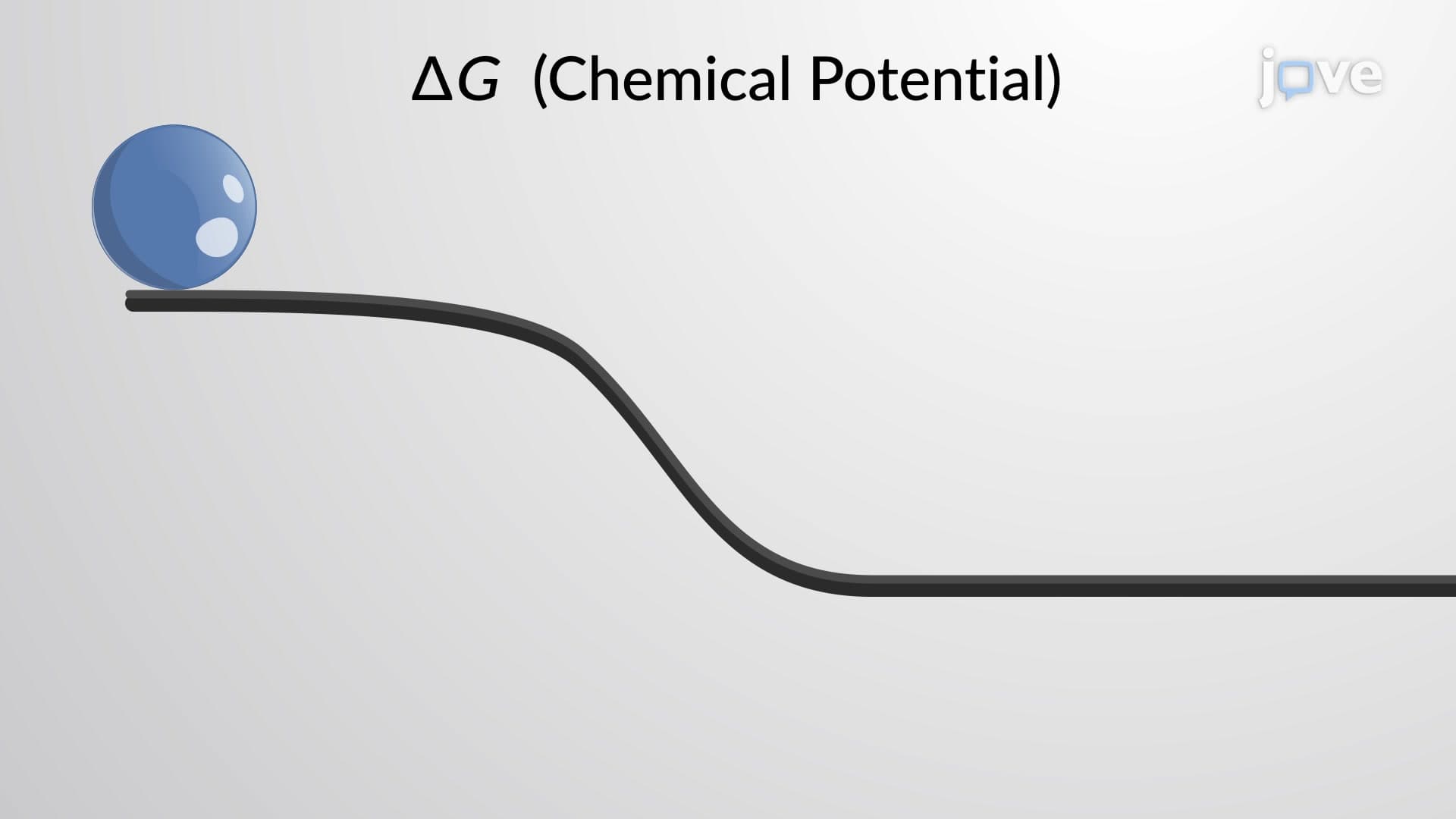
5. Gibbs Free Energy and Spontaneity Gibbs free energy (G) combines enthalpy and entropy effects to predict spontaneity without considering surroundings: ΔG = ΔH - TΔS. Negative ΔG indicates spontaneous processes, positive ΔG indicates nonspontaneous processes, and ΔG = 0 represents equilibrium. This relationship explains temperature-dependent spontaneity: exothermic reactions with increasing entropy (ΔH < 0, ΔS > 0) are always spontaneous, while endothermic reactions with decreasing entropy (ΔH > 0, ΔS < 0) are never spontaneous.
6. Temperature Effects on Free Energy Temperature significantly influences free energy through the TΔS term, creating four distinct scenarios for reaction spontaneity. Water freezing (ΔH < 0, ΔS < 0) occurs spontaneously only at low temperatures where the enthalpy term dominates. Chemical cold packs dissolving ammonium nitrate (ΔH > 0, ΔS > 0) proceed spontaneously at high temperatures where entropy effects overcome enthalpy penalties. Understanding these temperature dependencies helps predict optimal reaction conditions.
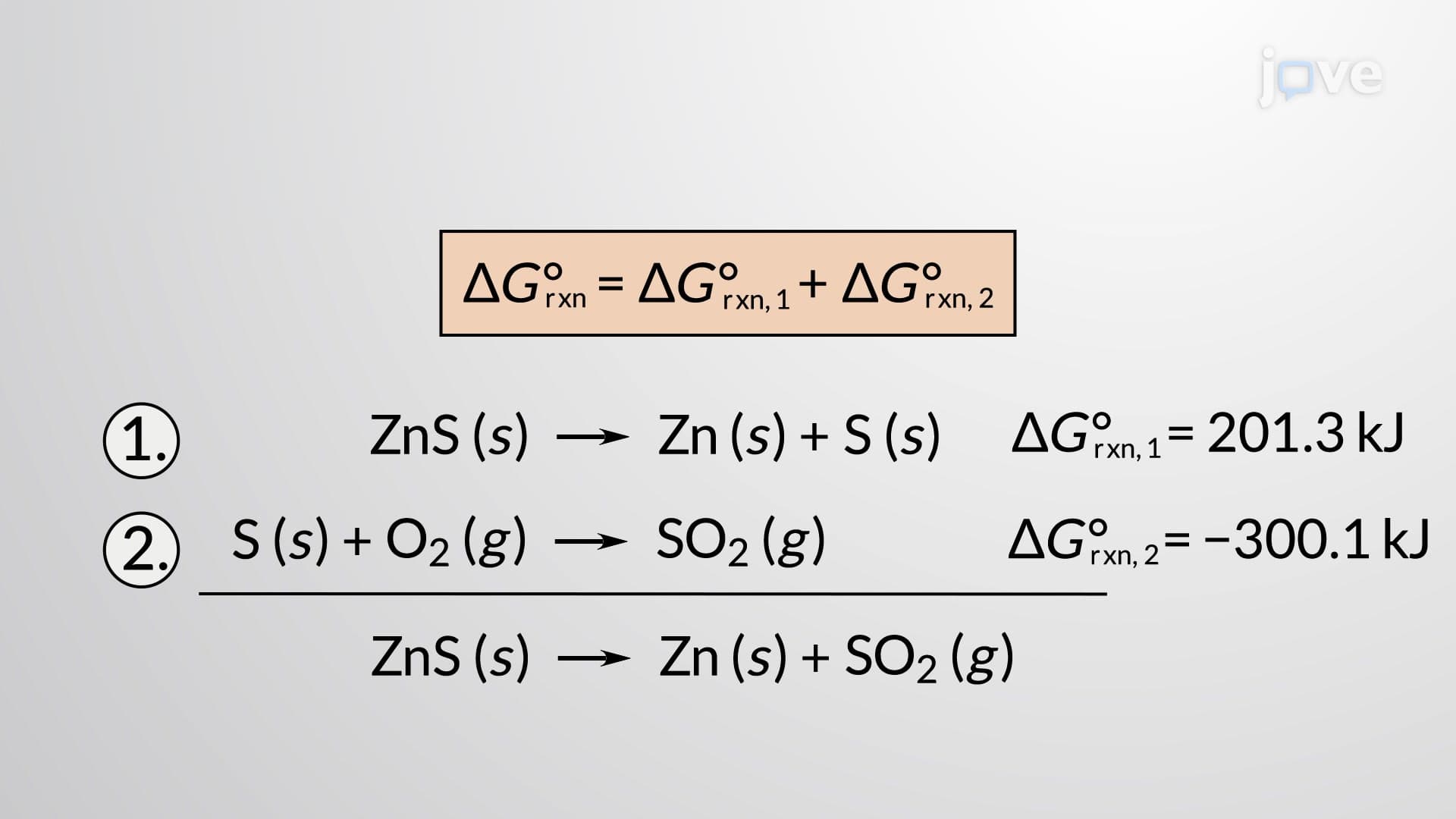
7. Standard Free Energy Change Calculations Three methods calculate standard free energy changes: direct computation using ΔG° = ΔH° - TΔS°, formation free energies (analogous to Hess's Law), and stepwise reaction coupling. Formation of calcium carbonate demonstrates the first method, while hydrogen chloride synthesis illustrates using formation free energies. Coupled reactions, like zinc sulfide combustion, show how nonspontaneous steps can be driven by coupling with highly spontaneous reactions.
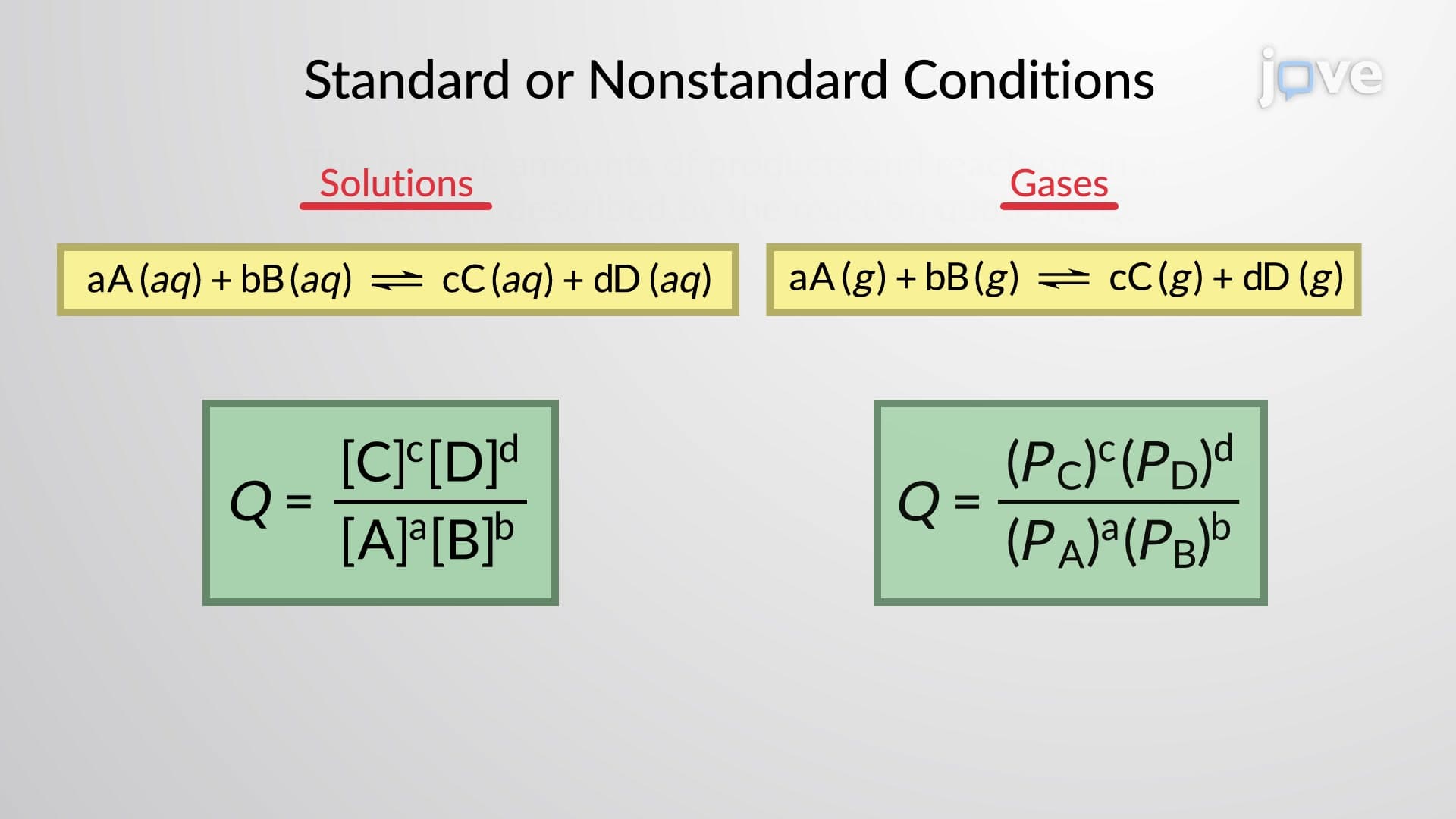
8. Nonstandard Conditions and Reaction Quotients Real reactions rarely occur under standard conditions, requiring the equation ΔG = ΔG° + RT ln Q, where Q is the reaction quotient. For ammonia synthesis, changing partial pressures alter Q values, affecting reaction spontaneity direction. When Q < K, the forward reaction is spontaneous; when Q > K, the reverse reaction is favored. This relationship connects thermodynamics to kinetics and explains how reaction conditions influence product formation.
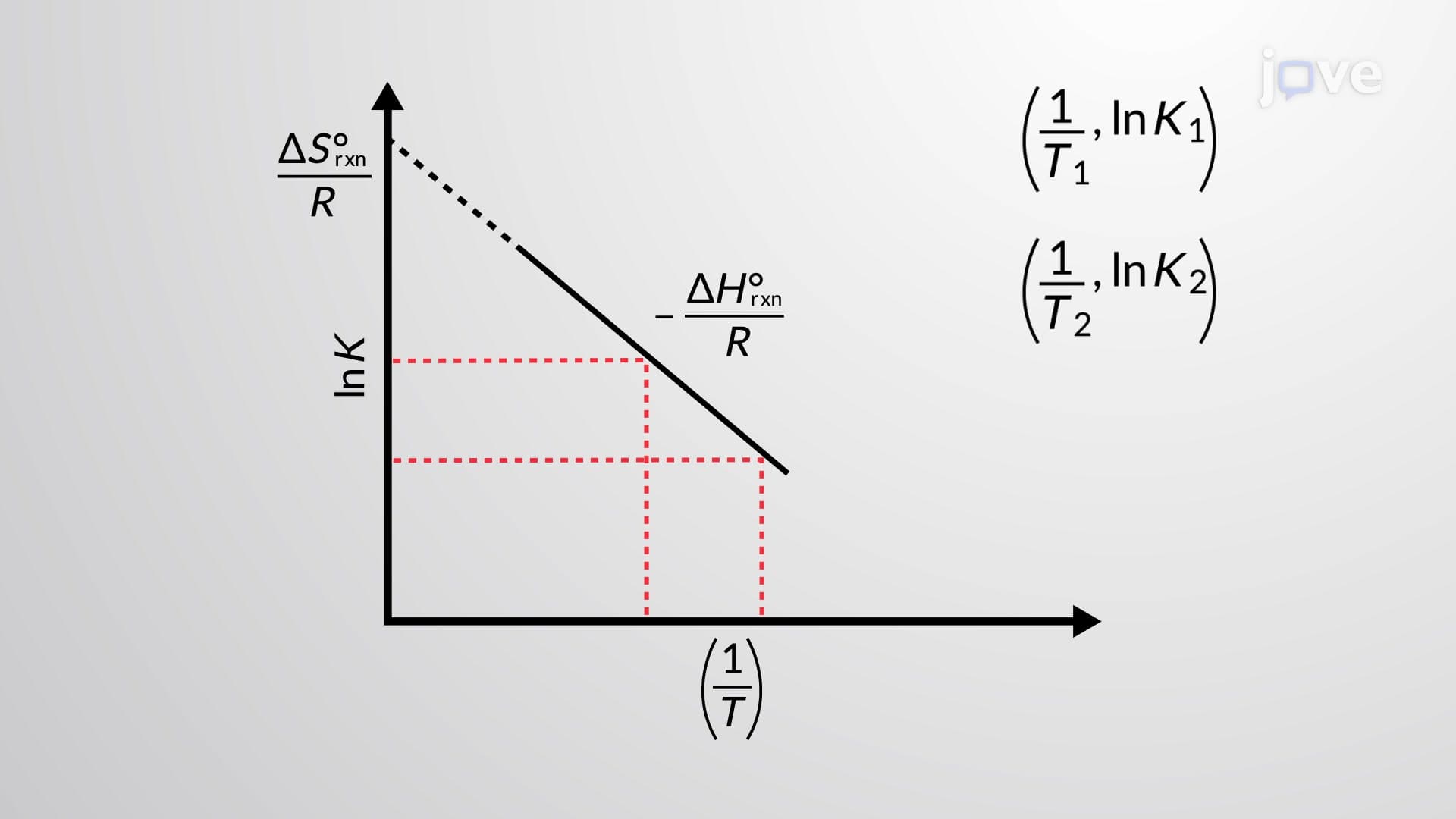
9. Free Energy and Chemical Equilibrium The relationship ΔG° = -RT ln K directly connects standard free energy changes to equilibrium constants. Large positive K values (K > 1) correspond to negative ΔG°, favoring products, while small K values (K < 1) indicate positive ΔG° and reactant favorability. Temperature dependence follows ln K = -ΔH°/RT + ΔS°/R, enabling equilibrium constant predictions at different temperatures and explaining Le Châtelier's principle through thermodynamic foundations.