Loading concepts…


12 Concepts
7 Concepts
10 Concepts
13 Concepts
10 Concepts
12 Concepts
15 Concepts
8 Concepts
14 Concepts
9 Concepts
21 Concepts
13 Concepts
12 Concepts
10 Concepts
14 Concepts
15 Concepts
10 Concepts
10 Concepts
10 Concepts
10 Concepts
12 Concepts
 13 Concepts
 411.8K Views
 Popular topics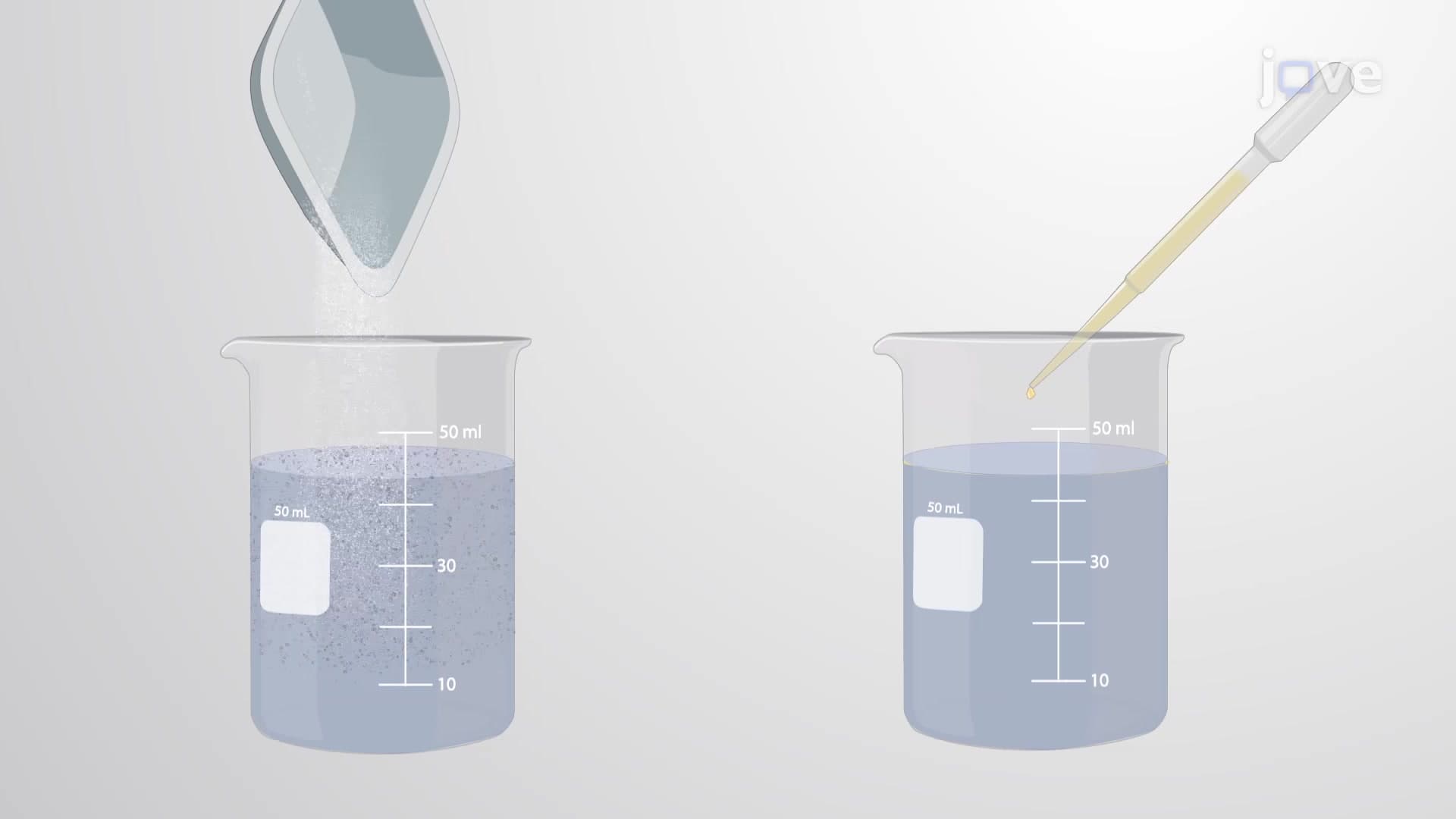

Solutions and colligative properties form the foundation of solution chemistry, covering everything from how salt dissolves in water to why antifreeze prevents car radiators from freezing. This comprehensive course explores solution formation, concentration units, and colligative effects like boiling point elevation and osmotic pressure, essential for understanding pharmaceutical preparations, environmental chemistry, and biological systems through JoVE Coach.
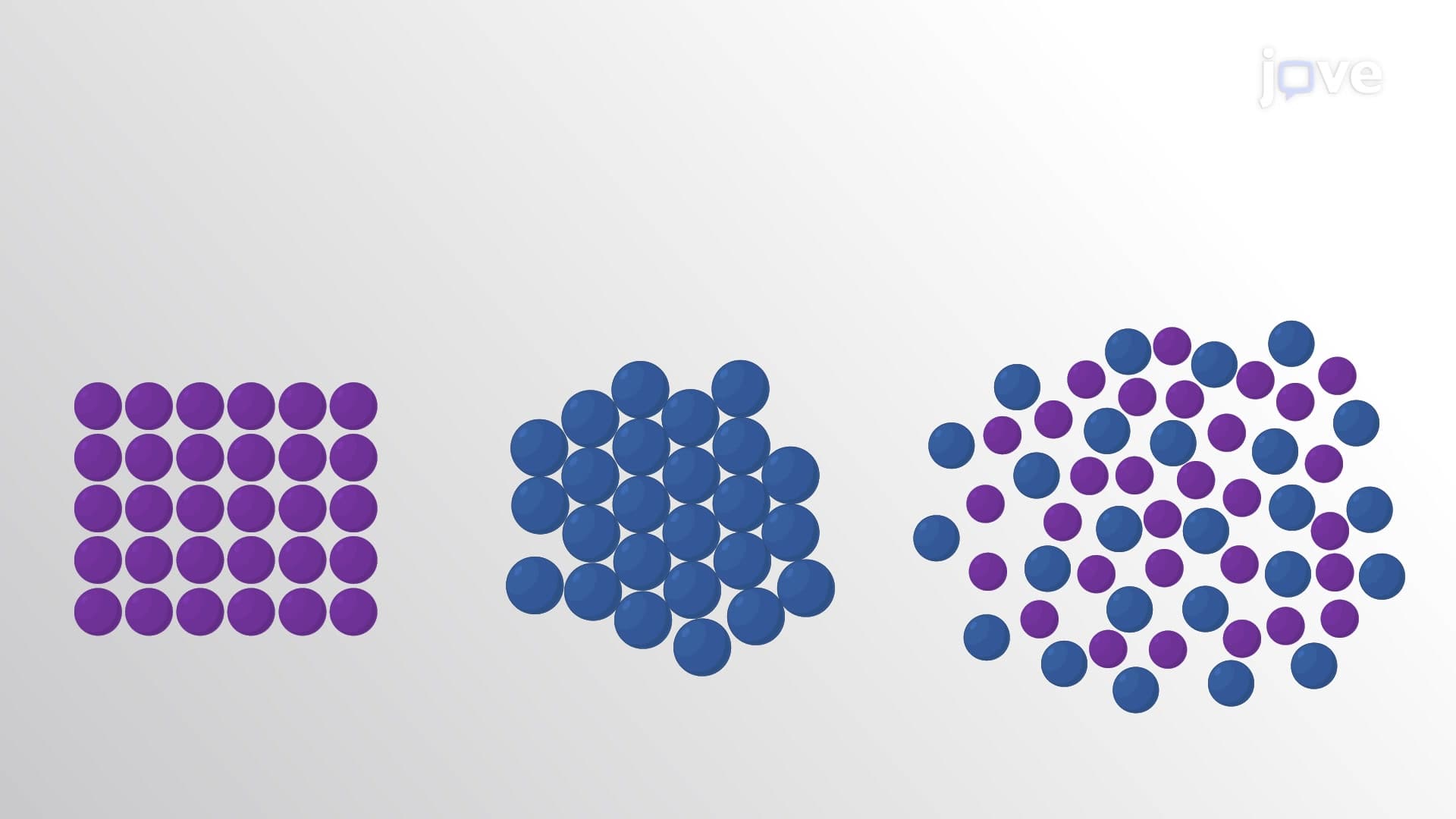
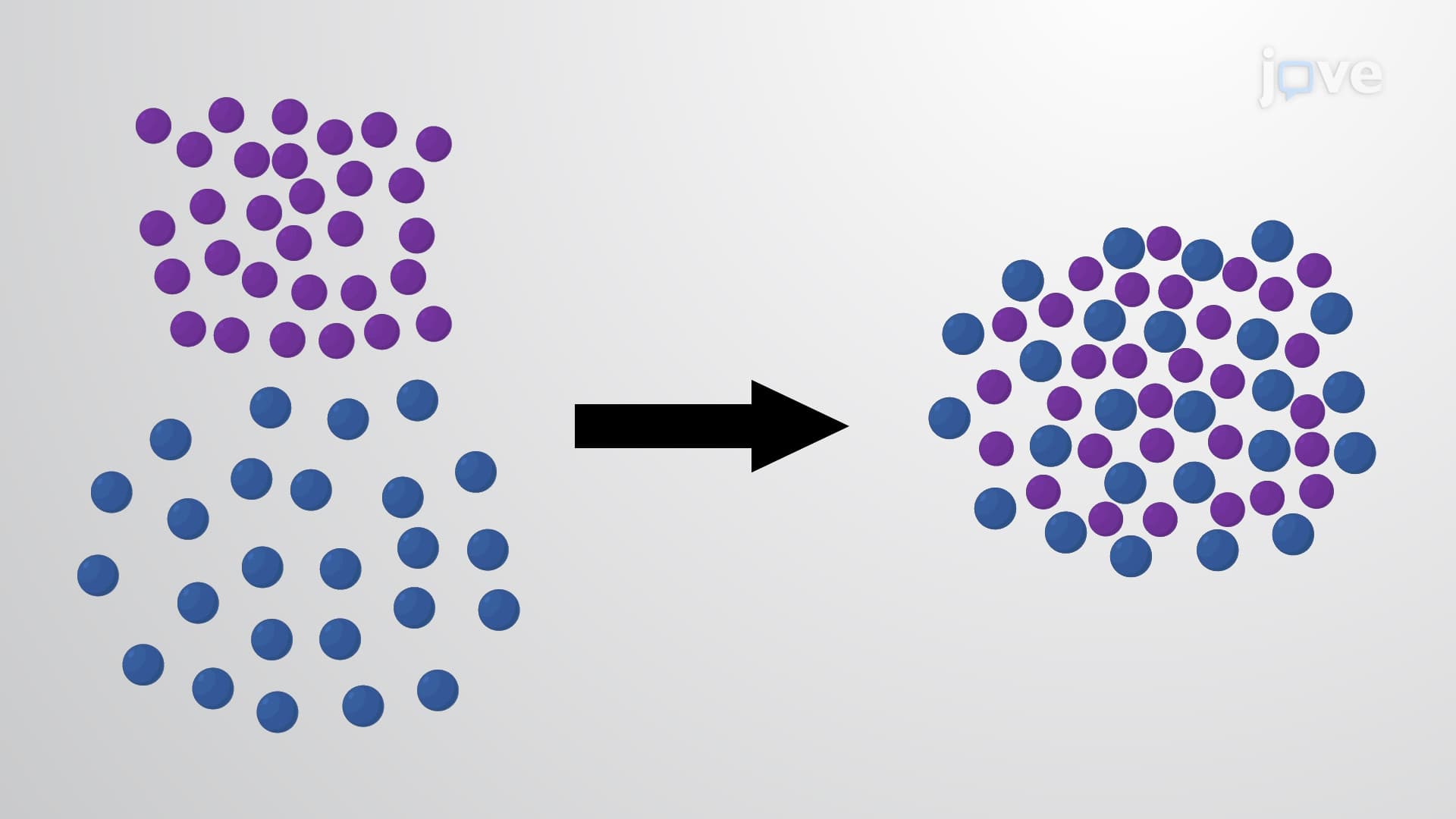
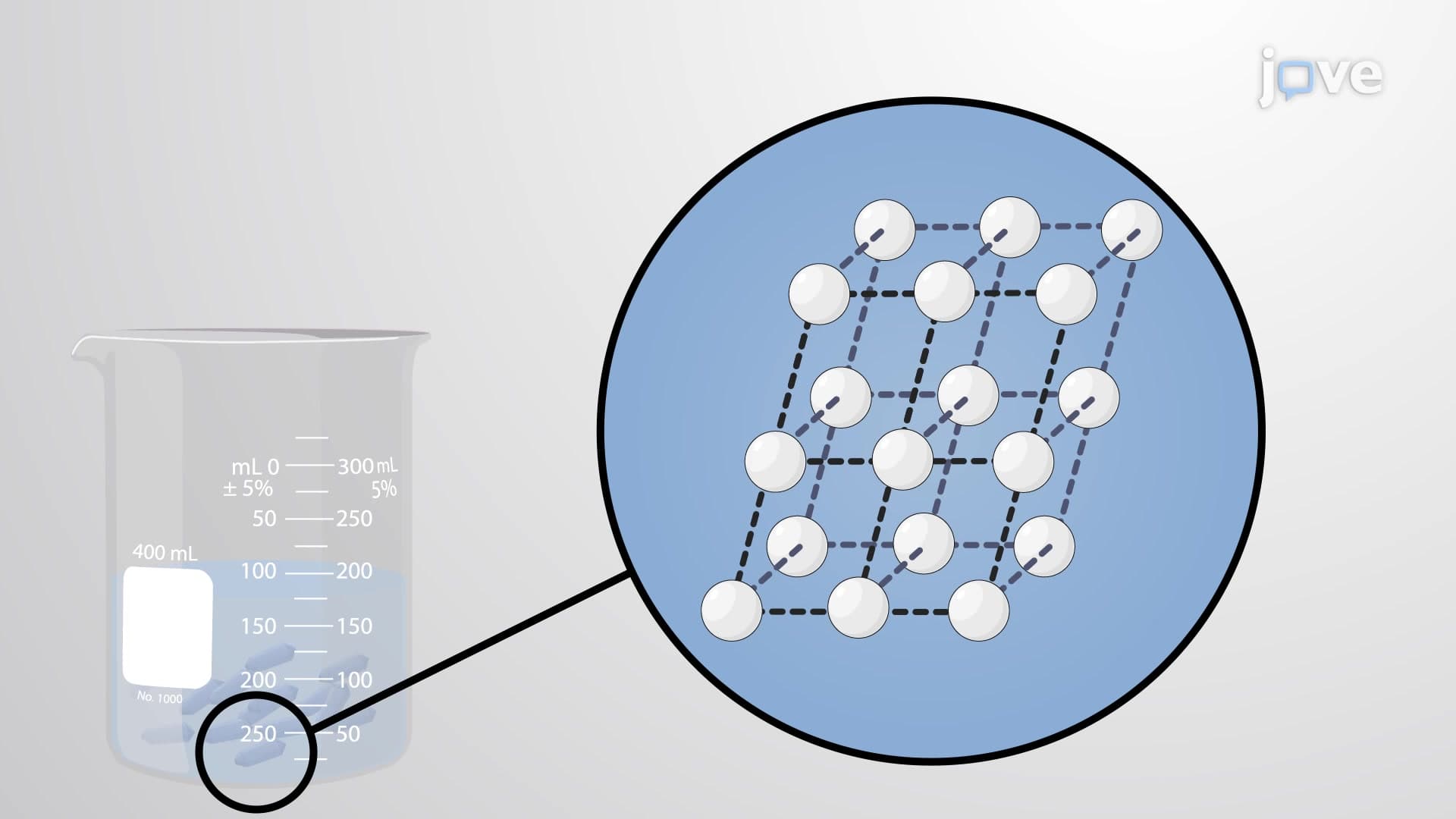
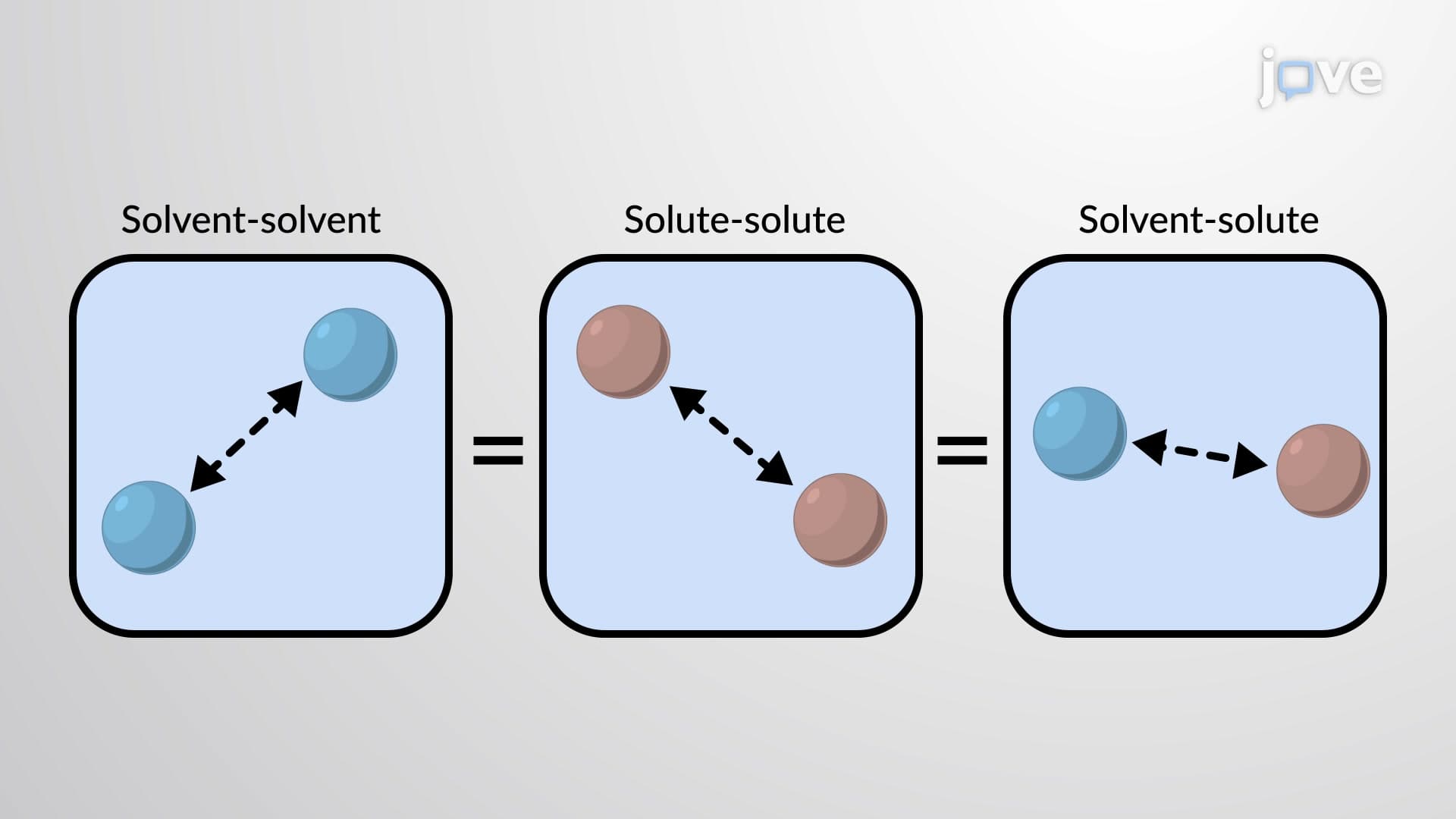
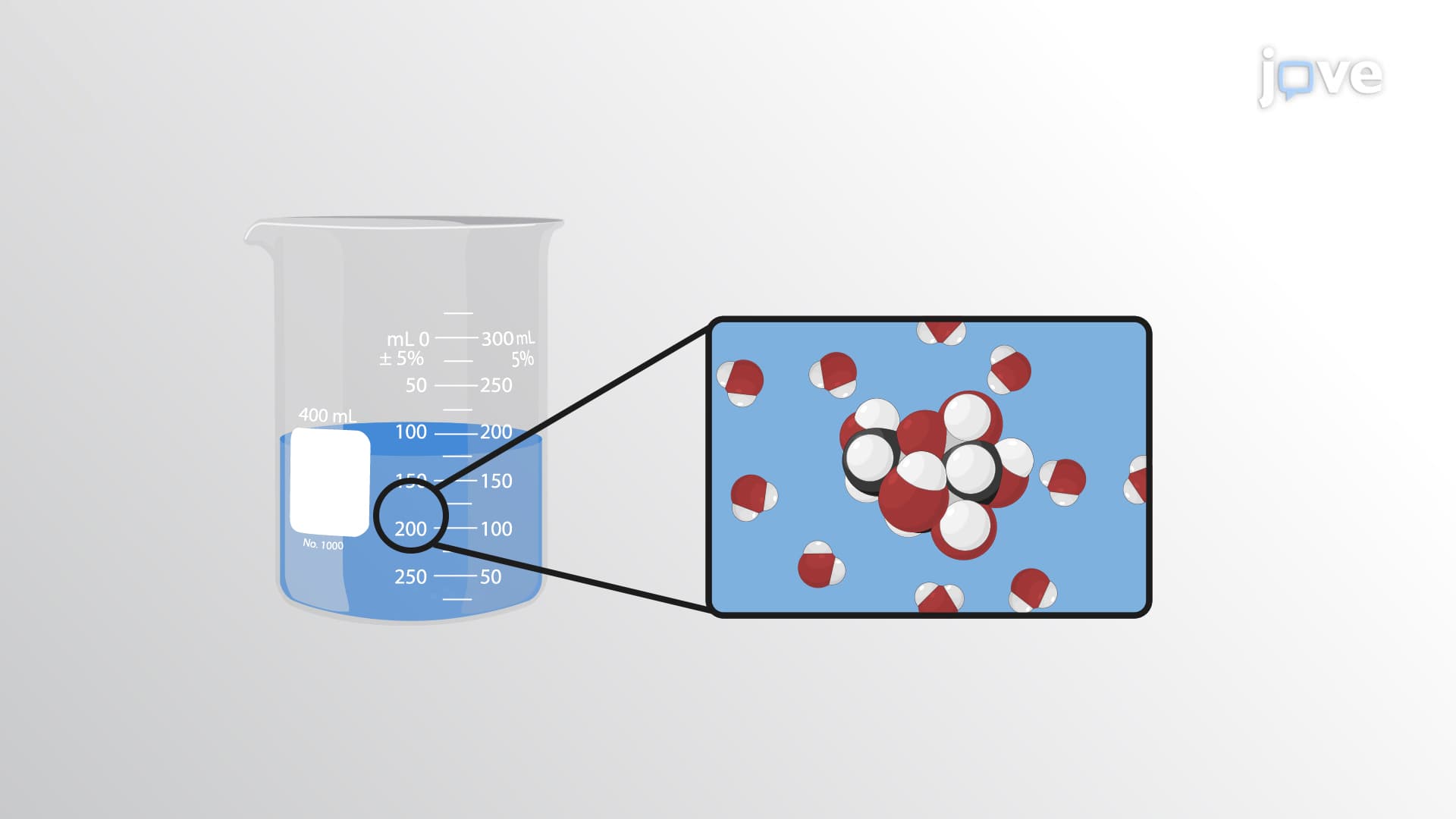
1. Solution Formation and Types Solutions represent homogeneous mixtures where solutes dissolve uniformly in solvents. Aqueous solutions use water as the solvent, while non-aqueous solutions employ organic solvents like ethanol or acetone. The dissolution process depends on intermolecular forces between solute-solute, solvent-solvent, and solute-solvent interactions. For example, sodium chloride dissolves in water because ion-dipole attractions overcome ionic bonding in the crystal lattice. Understanding these fundamental concepts helps predict solubility patterns and explain why "like dissolves like" - polar substances dissolve in polar solvents, while nonpolar substances dissolve in nonpolar solvents.
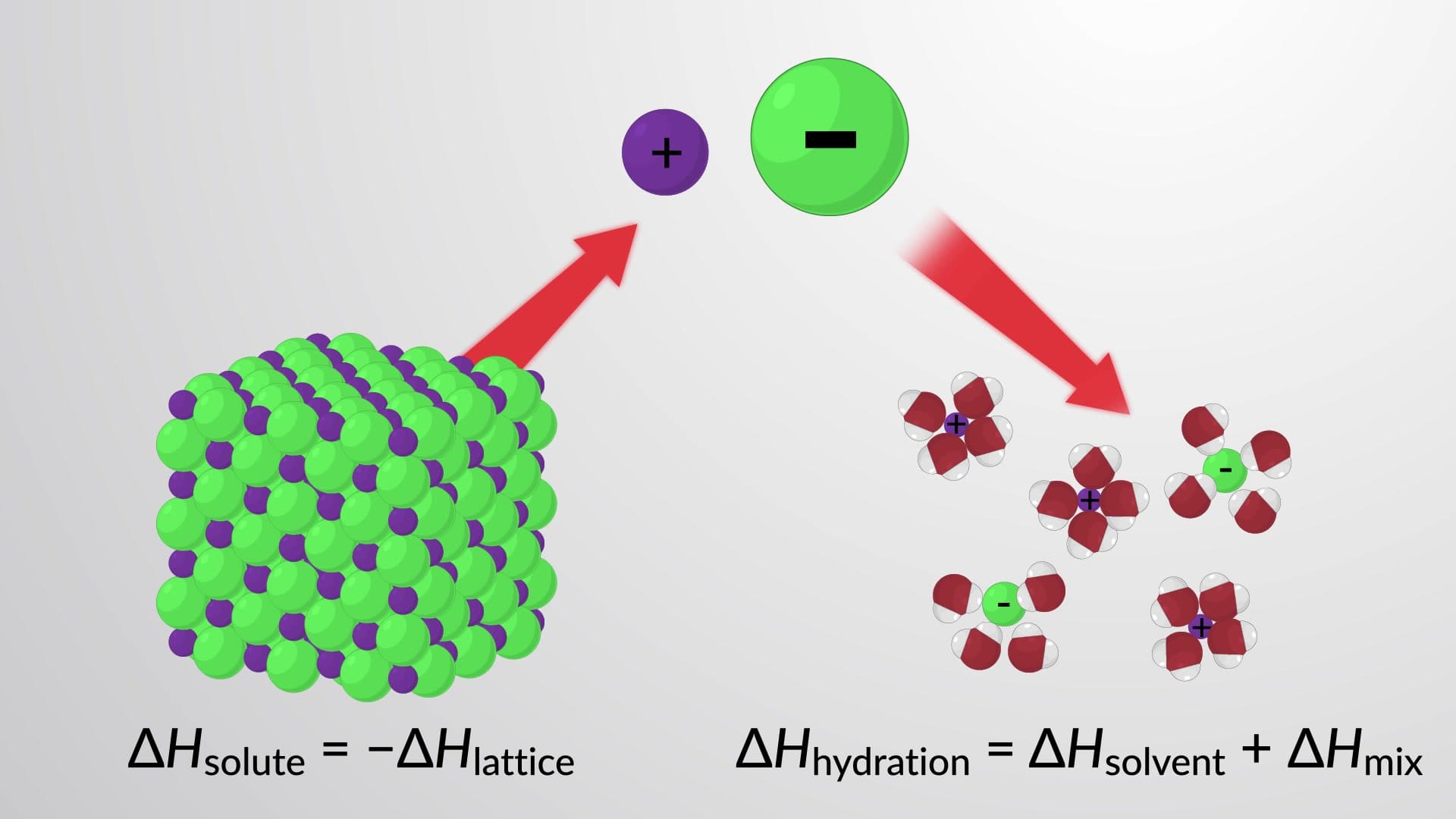
2. Enthalpy of Solution and Hydration Solution formation involves energy changes measured as enthalpy of solution. This three-step process includes breaking solute particles apart (endothermic), separating solvent molecules (endothermic), and forming new solute-solvent interactions (exothermic). When ionic compounds like sodium hydroxide dissolve in water, the overall process can be exothermic, releasing heat and warming the solution. Conversely, ammonium chloride dissolution is endothermic, cooling the solution. Hydration enthalpy specifically describes the energy released when ions interact with water molecules, crucial for understanding pharmaceutical drug solubility and biological ion transport.
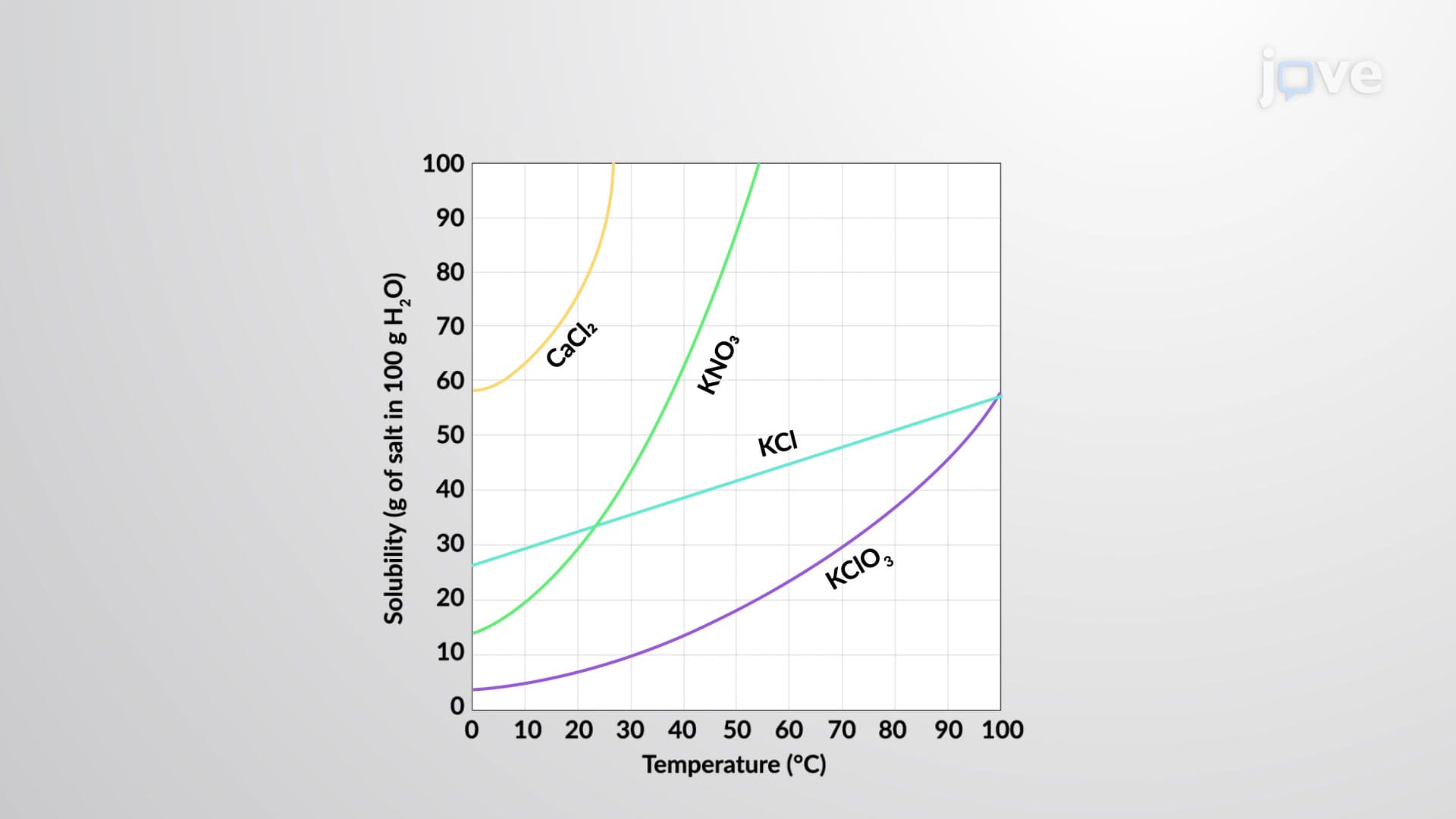
3. Solution Equilibrium and Saturation Solutions reach dynamic equilibrium when dissolution and crystallization rates balance, creating saturated solutions containing maximum solute at given temperature conditions. Unsaturated solutions can dissolve additional solute, while supersaturated solutions contain excess solute and remain unstable. Temperature significantly affects solubility - most solids become more soluble with heating, while gases become less soluble. This principle explains why hot tea dissolves more sugar than cold tea, and why warm soda goes flat faster than cold soda due to decreased carbon dioxide solubility at higher temperatures.
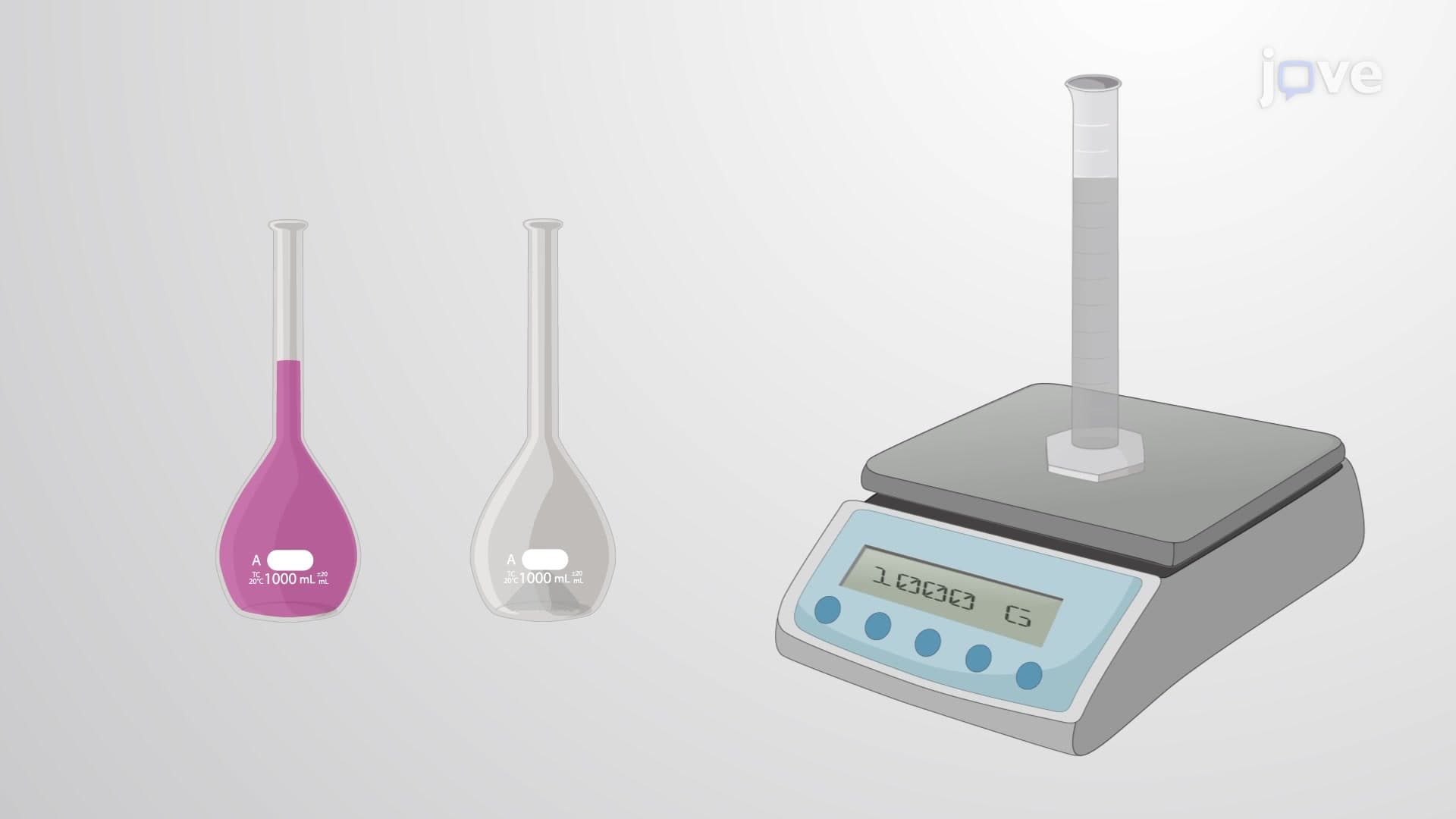
4. Concentration Units and Calculations Solution concentration can be expressed using various units depending on the application. Molarity (moles solute per liter solution) is common in laboratory work, while molality (moles solute per kilogram solvent) is used for colligative property calculations since it doesn't change with temperature. Mass percent and parts per million (ppm) describe environmental contaminants like lead in drinking water. Healthcare professionals use these concentration units for medication preparations - for example, calculating proper saline solution concentrations for IV fluids or determining appropriate drug dosages based on patient body weight.
5. Vapor Pressure and Raoult's Law Adding nonvolatile solutes to solvents decreases vapor pressure according to Raoult's law, where partial pressure equals mole fraction times pure component vapor pressure. This principle explains why sugar water has lower vapor pressure than pure water. Ideal solutions obey Raoult's law at all concentrations, showing linear relationships between vapor pressure and composition. Non-ideal solutions deviate from this behavior due to different intermolecular force strengths. Understanding vapor pressure lowering is essential for distillation processes in chemical manufacturing and explains why adding salt to water affects cooking times.
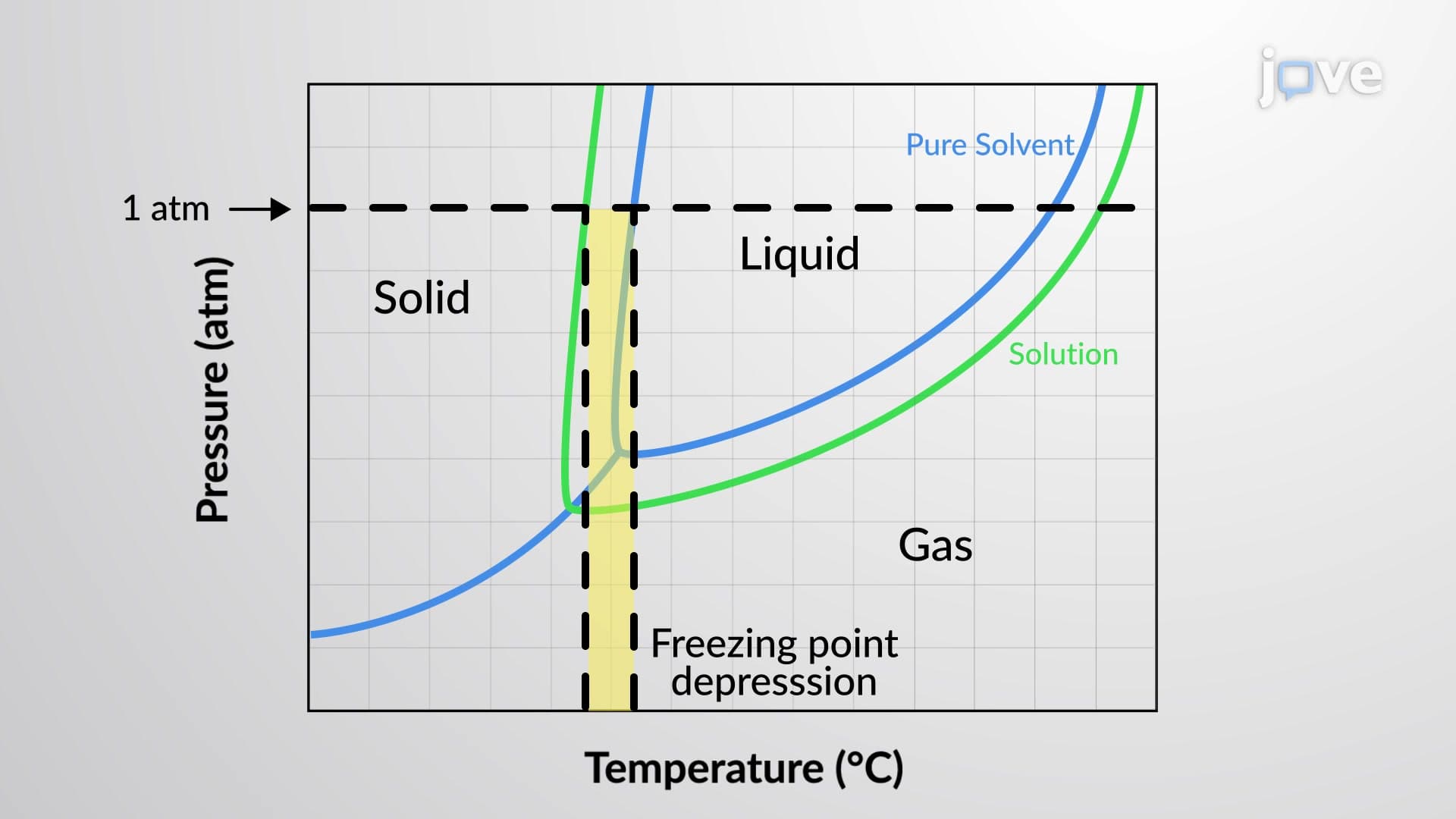
6. Colligative Properties: Boiling Point and Freezing Point Changes Colligative properties depend only on particle concentration, not particle identity. Boiling point elevation occurs because solutes lower vapor pressure, requiring higher temperatures to reach atmospheric pressure for boiling. The relationship ΔTb = Kb × m uses the molal boiling point elevation constant. Similarly, freezing point depression follows ΔTf = Kf × m. These principles explain practical applications like antifreeze in car radiators (ethylene glycol lowers freezing point) and salt spreading on icy roads. Food preservation also utilizes these concepts - adding salt or sugar increases boiling points and decreases freezing points.
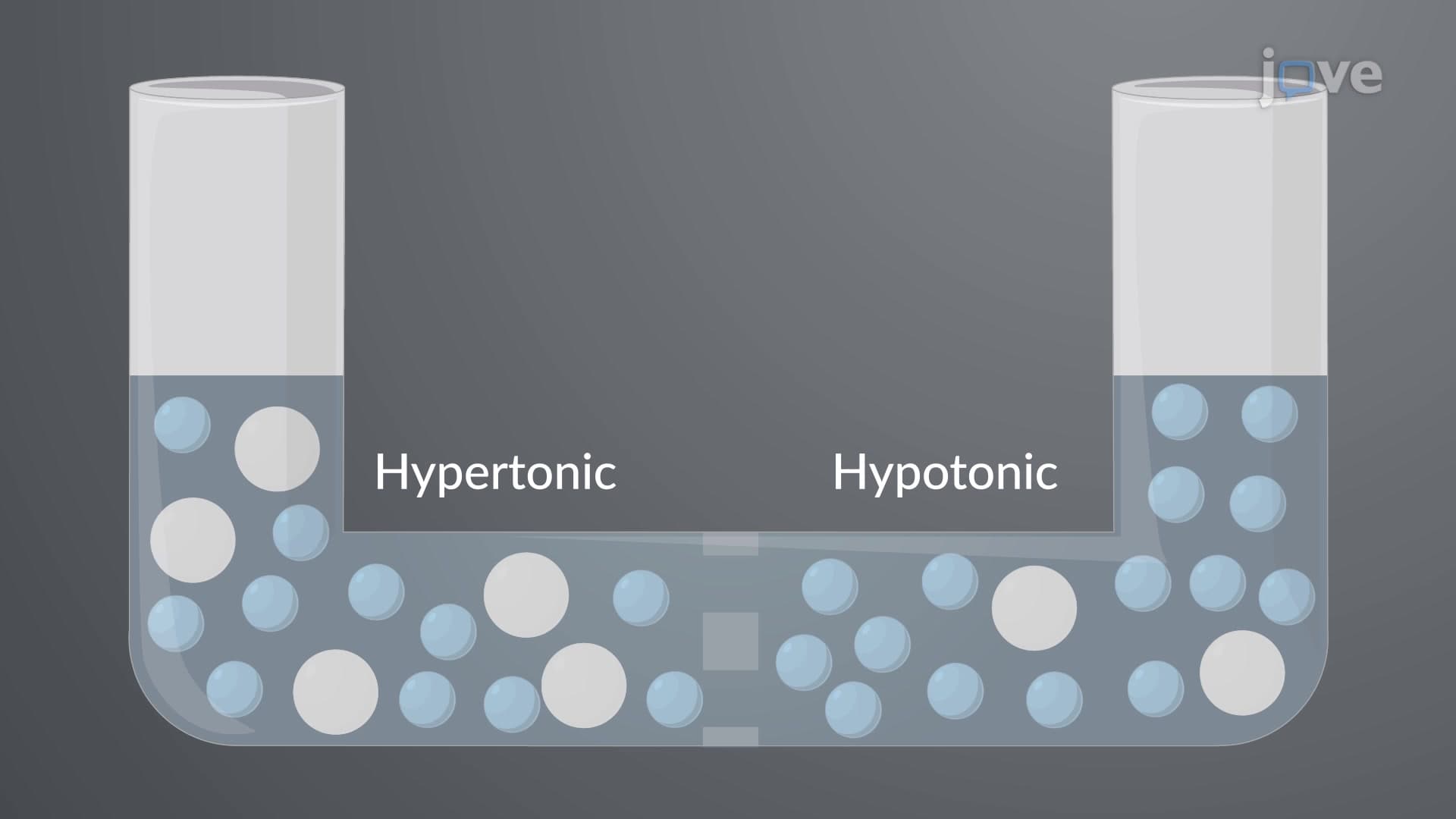
7. Osmosis and Osmotic Pressure Osmosis involves solvent movement across semipermeable membranes from low to high solute concentration regions. Osmotic pressure, calculated using π = MRT, represents the pressure needed to prevent osmosis. This concept is crucial in biological systems - red blood cells in hypertonic solutions undergo crenation (shrinkage), while hypotonic solutions cause hemolysis (cell bursting). Medical applications include designing isotonic IV solutions that match blood cell osmotic pressure, kidney dialysis treatments, and understanding plant water uptake. Reverse osmosis water purification systems apply pressure to force water through membranes, removing dissolved impurities.
8. Electrolytes and van't Hoff Factor Electrolytes dissociate into ions when dissolved, affecting colligative properties more than expected from molecular formulas alone. The van't Hoff factor (i) represents the ratio of actual particles formed to formula units dissolved. For example, sodium chloride theoretically gives i = 2 (Na⁺ + Cl⁻), but actual values are slightly lower due to ion pairing effects. Strong electrolytes like hydrochloric acid dissociate completely, while weak electrolytes like acetic acid partially dissociate. Understanding electrolyte behavior is essential for medical professionals managing patient electrolyte balances, sports drink formulations, and battery electrolyte solutions.
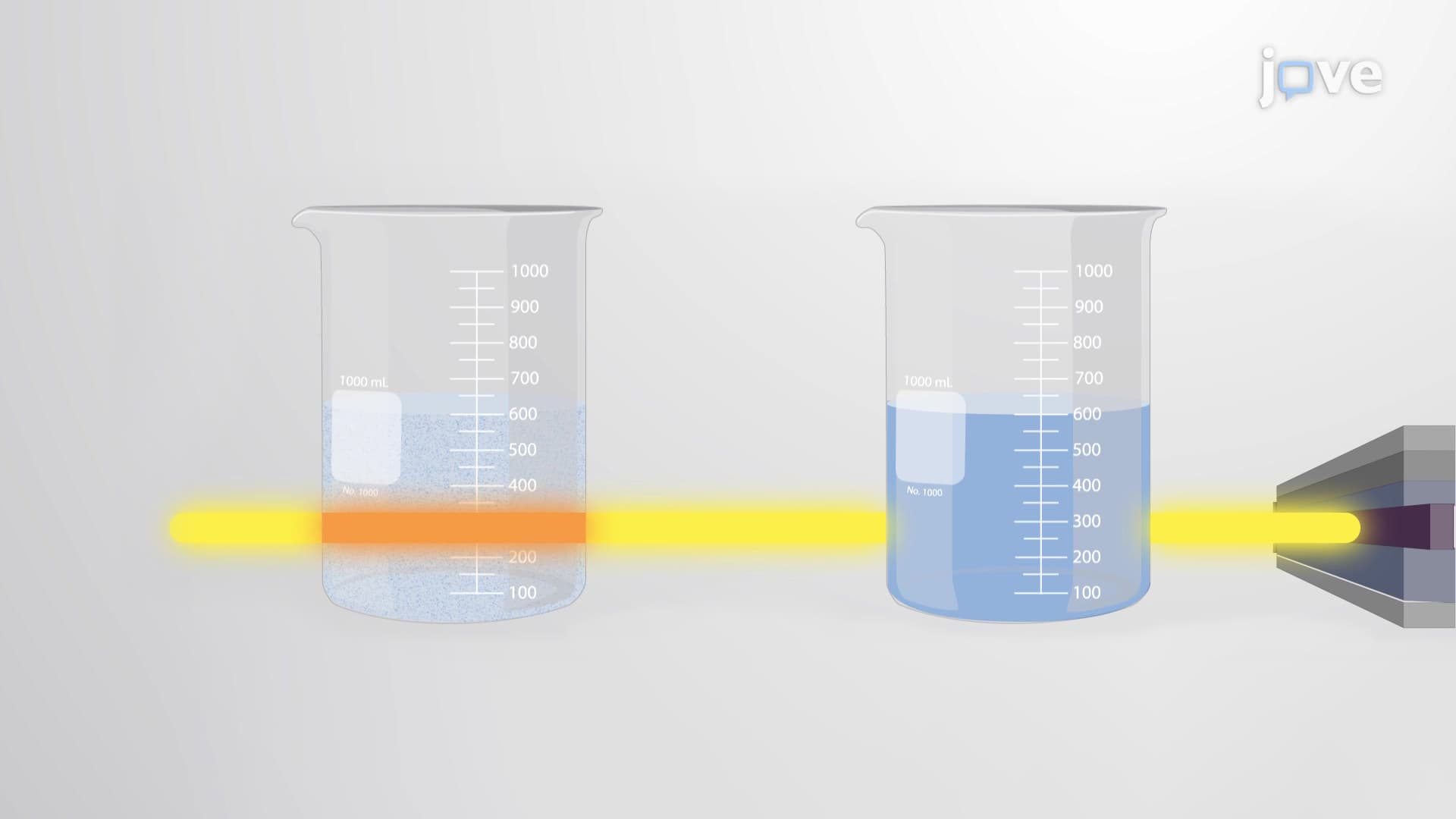
9. Colloids and Their Properties Colloids contain particles larger than dissolved molecules but smaller than suspensions, typically 1-1000 nanometers in diameter. Examples include milk (fat globules in water), fog (water droplets in air), and gelatin (protein networks). Colloids exhibit unique properties like Brownian motion, Tyndall effect (light scattering), and stability through electrical charges on particle surfaces. Medical applications include colloidal drug delivery systems, blood plasma expanders, and diagnostic imaging contrast agents. Industrial uses span food processing (mayonnaise, whipped cream), cosmetics (creams, lotions), and materials science (aerogels, nanocomposites).