Loading subject page…


202,200 views

Video Summary: What Is Nuclear Transmutation
Ever wondered how scientists create elements that don't exist naturally on Earth? Nuclear transmutation transforms one element into another through radioactive decay, nuclear fusion, or nuclear fission processes. Ernest Rutherford first demonstrated this remarkable phenomenon at the University of Manchester when he converted nitrogen-14 into oxygen-17 using alpha particles. Modern particle accelerators at facilities like Fermilab can achieve transmutation speeds exceeding 90% of light speed. Watch the full video on JoVE Coach to master this concept with expert-led visuals and step-by-step explanations.
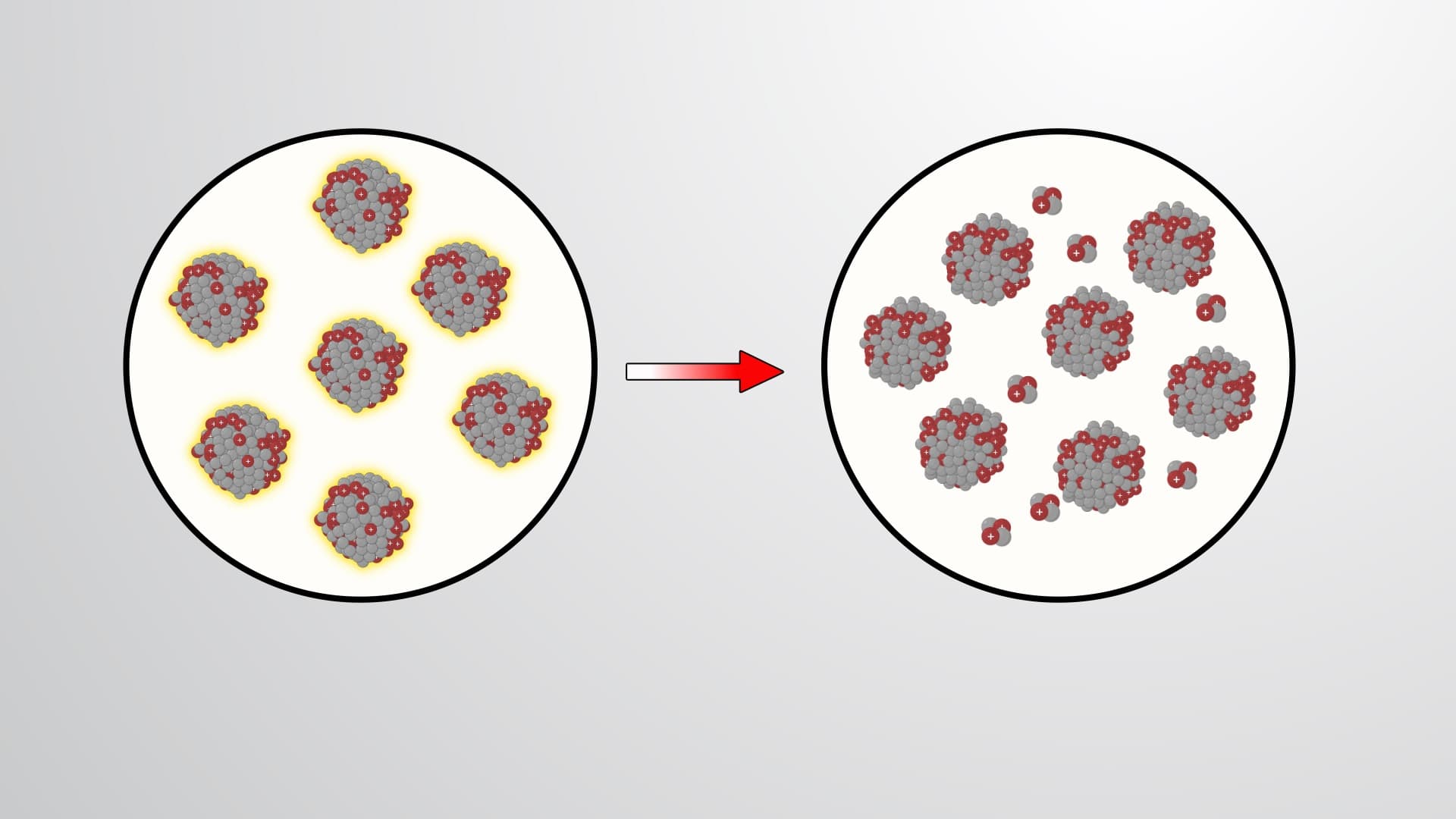
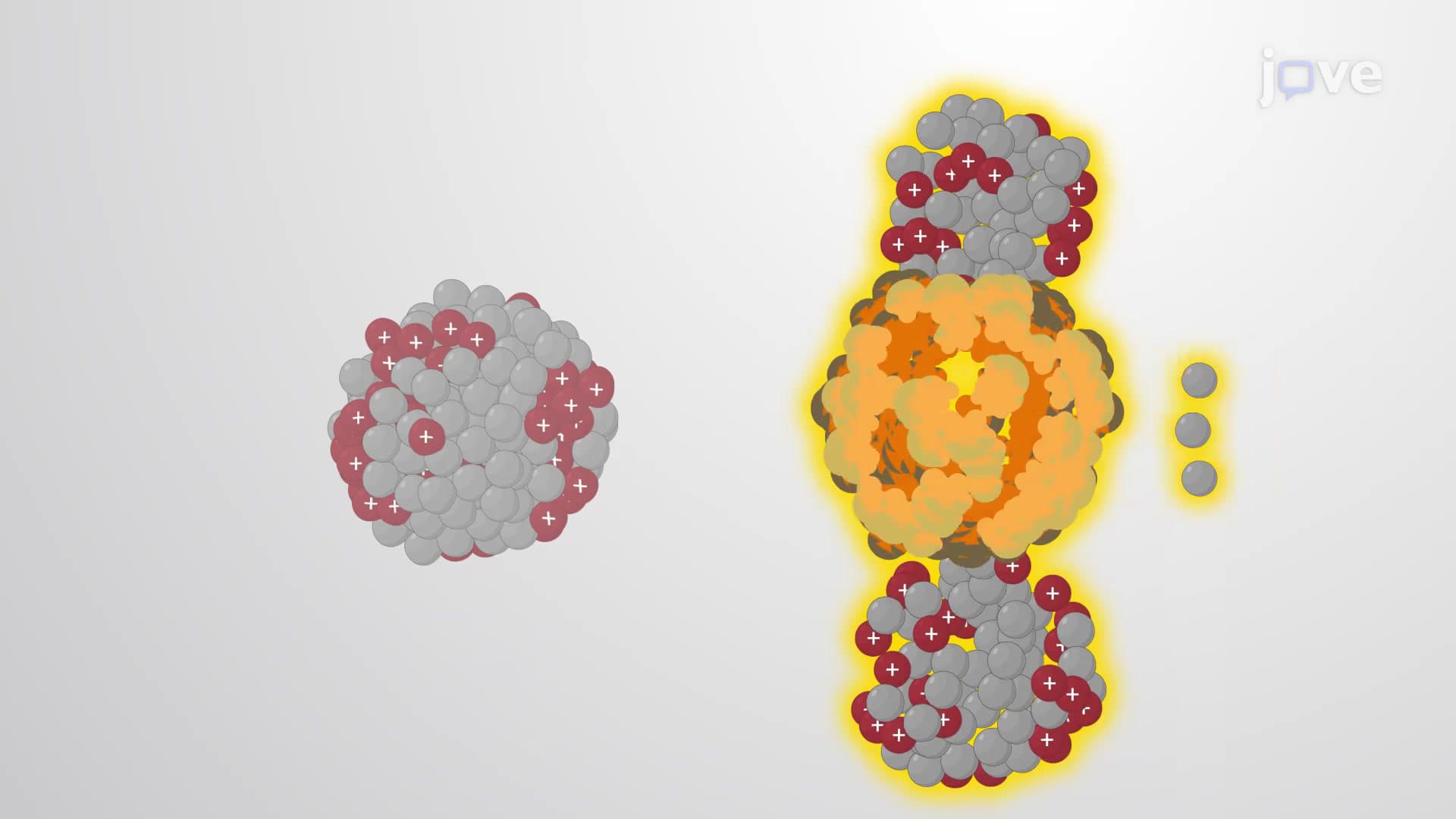
Nuclear transmutation represents one of the most fascinating processes in nuclear physics, fundamentally altering the identity of atoms by changing their nuclear composition. This process occurs through three main pathways: natural radioactive decay, nuclear fusion reactions, and nuclear fission events. Unlike chemical reactions that only rearrange electrons, transmutation actually changes the number of protons in the nucleus, thereby creating entirely different elements.
The historical foundation of artificial transmutation began with Ernest Rutherford's groundbreaking 1917 experiment at the University of Manchester. By bombarding nitrogen-14 nuclei with naturally occurring alpha particles from radium, Rutherford successfully converted nitrogen into oxygen-17, simultaneously ejecting protons. This represented humanity's first artificial creation of one element from another, earning Rutherford recognition as the first alchemist to achieve genuine elemental transformation.
Modern transmutation relies heavily on particle bombardment using either neutral neutrons or charged particles like alpha particles. Neutrons offer significant advantages because their electrical neutrality allows them to approach target nuclei without experiencing electrostatic repulsion. This property makes neutrons particularly effective for transmuting heavy elements, requiring only moderate kinetic energies achievable through nuclear reactor environments.
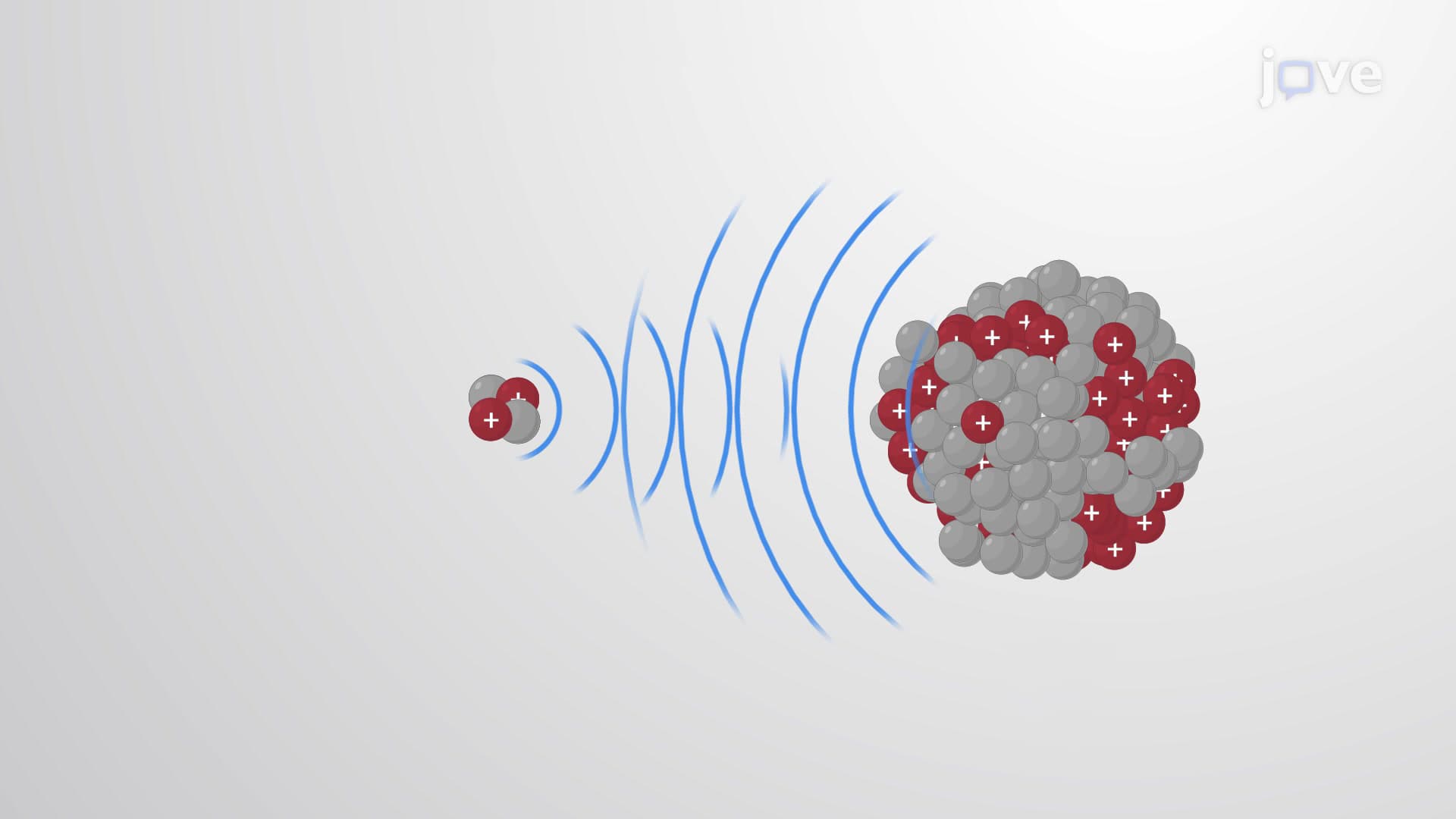
Conversely, charged particles like alpha particles face substantial electrostatic barriers when approaching positively charged nuclei. The repulsive force increases dramatically with target nucleus size, making transuranium element synthesis exceptionally challenging. For example, creating curium (atomic number 96) from plutonium-239 requires alpha particles with enormous kinetic energies to overcome the strong electrostatic repulsion between the +2 alpha particle and the +94 plutonium nucleus.
Elements beyond uranium (atomic number 92) represent prime targets for transmutation research because they exist almost exclusively through artificial synthesis. The Lawrence Berkeley National Laboratory and other US research facilities regularly create these superheavy elements using sophisticated particle accelerators. For instance, neptunium-239 production involves bombarding uranium-238 with neutrons in specialized reactors, followed by beta decay to produce plutonium-239.
These synthetic elements play crucial roles in nuclear medicine, space exploration, and fundamental physics research. Students preparing for AP Chemistry or college-level nuclear chemistry courses should understand that transmutation reactions follow conservation laws for mass-energy, charge, and nucleon number, making them predictable and calculable for exam purposes.
Linear accelerators and cyclotrons represent the primary tools for achieving the extreme energies necessary for heavy element synthesis. Linear accelerators use alternating electric fields across progressively longer tubes to accelerate particles to relativistic speeds, often exceeding 90% of light speed. The Stanford Linear Accelerator Center (SLAC) exemplifies this technology's capabilities.
Cyclotrons employ magnetic fields to curve charged particle paths into spirals, allowing repeated acceleration within compact spaces. These devices enable researchers to bombard nuclei with other heavy nuclei, such as zinc-70 projectiles striking lead-208 targets to create copernicium-277, which subsequently undergoes complex decay chains producing multiple transuranium isotopes.
Related Micro-courses