Loading subject page…

Micro-course: Introduction to Concrete
3,824 views
Learn key concepts and earn your certificate.


Concrete

00:00
01:20
Video Summary: What Is Concrete
Did you know that concrete is the second most consumed material on Earth after water? Concrete forms the foundation of iconic structures like the Hoover Dam and the Interstate Highway System across America. This versatile construction material combines cement, aggregates, and water in precise proportions to create a rock-like mass that's incredibly strong in compression but requires reinforcement for tensile strength. Understanding what is concrete reveals how this fundamental building material transforms from a workable mixture into the backbone of modern infrastructure. Watch the full video on JoVE Coach to master this concept with expert-led visuals and step-by-step explanations.
- Understand what is concrete and its fundamental composition of cementitious materials, aggregates, and water
- Identify the different types of aggregates used in concrete mixtures and their specific functions
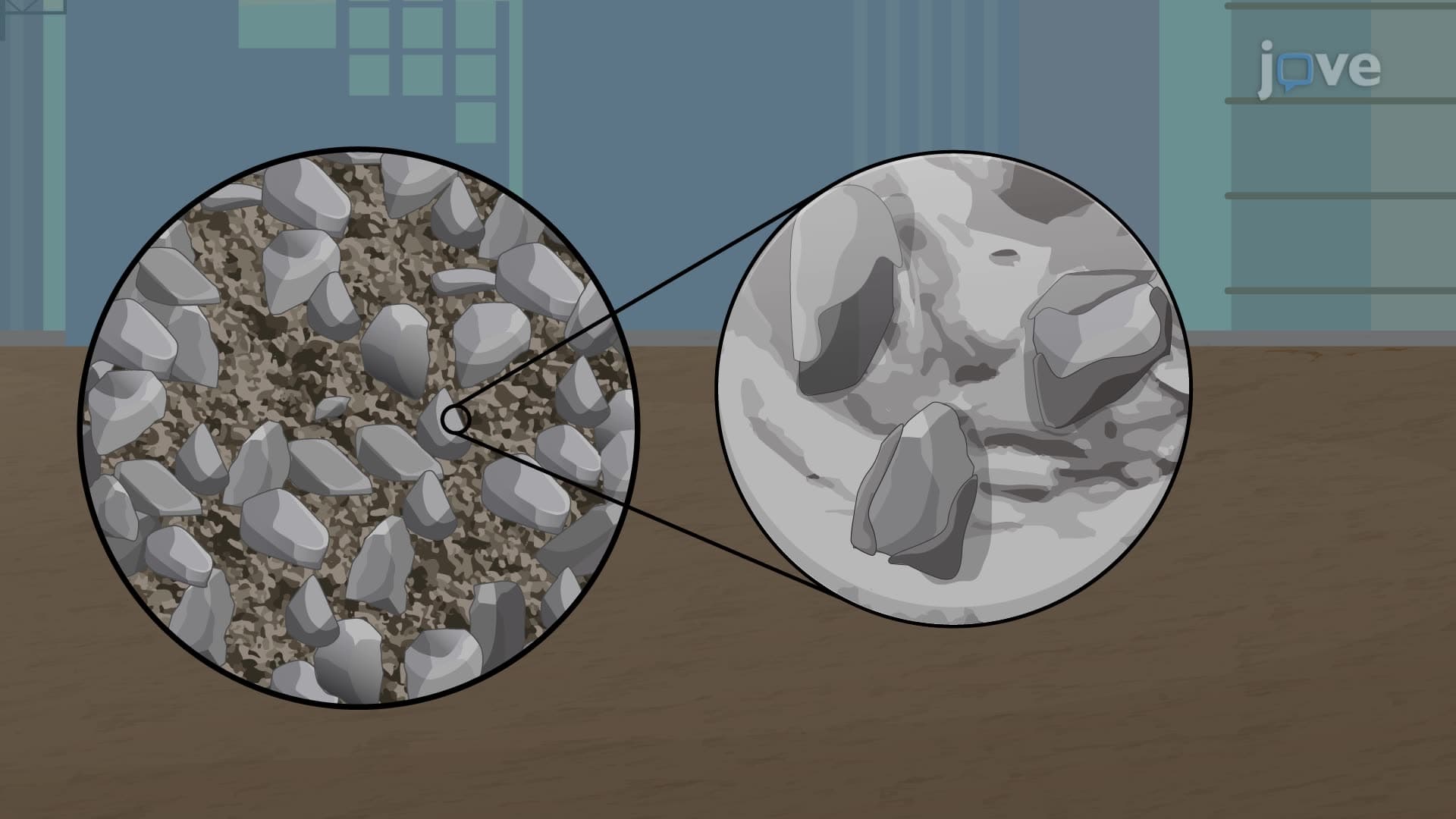
- Analyze how concrete's microstructure develops as cement paste fills voids between aggregates during hydration
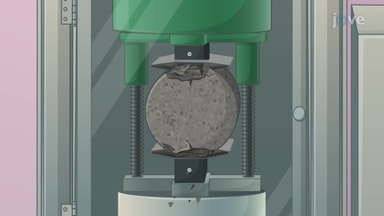
- Compare concrete's compressive and tensile strength properties to explain why reinforcement is necessary
- Evaluate the role of admixtures in modifying concrete characteristics for specific applications
- Apply knowledge of concrete workability requirements to assess fresh concrete quality
- Recognize different concrete production methods including ready-mix, precast, and masonry units
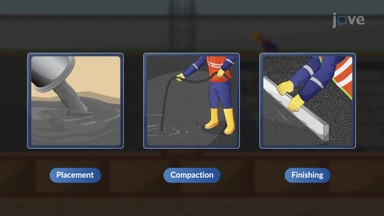
- Explore how proper mixing, placing, compacting, and curing affect concrete's final performance
Understanding What is Concrete: The Foundation of Modern Construction
Concrete represents one of humanity's most important engineering materials, serving as the structural backbone for everything from residential foundations to massive infrastructure projects. At its core, concrete is a composite material that transforms from a plastic, workable mixture into a stone-like solid through a chemical process called hydration.
The Science Behind Concrete Composition
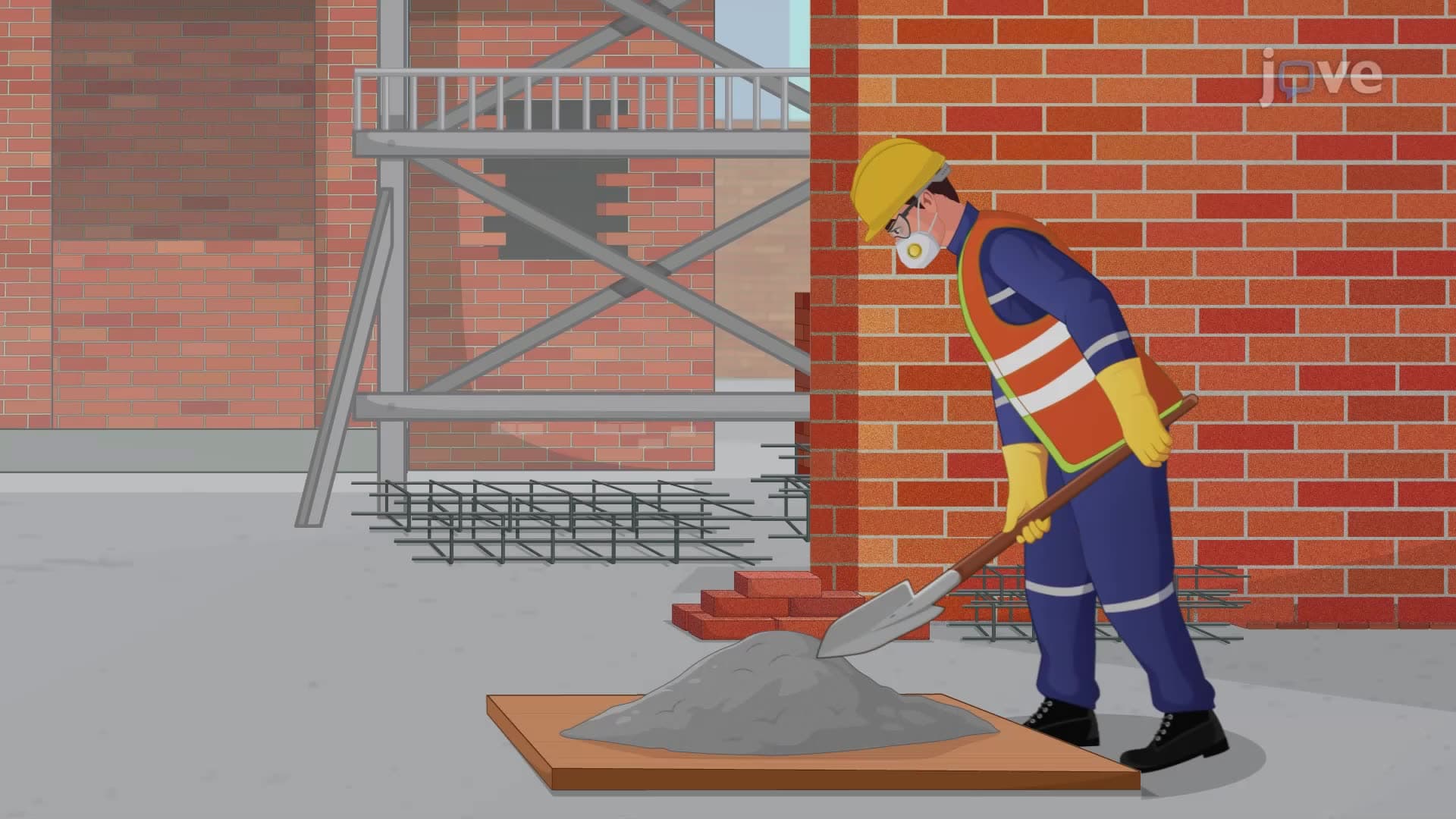
The concrete definition encompasses a carefully engineered blend of four primary components. Cementitious materials, primarily Portland cement, act as the binding agent that holds everything together. Fine aggregates like sand fill smaller voids and provide workability, while coarse aggregates such as gravel or crushed stone form the structural skeleton. Water initiates the chemical reactions that cause hardening and continues to play a role in the material's long-term strength development.
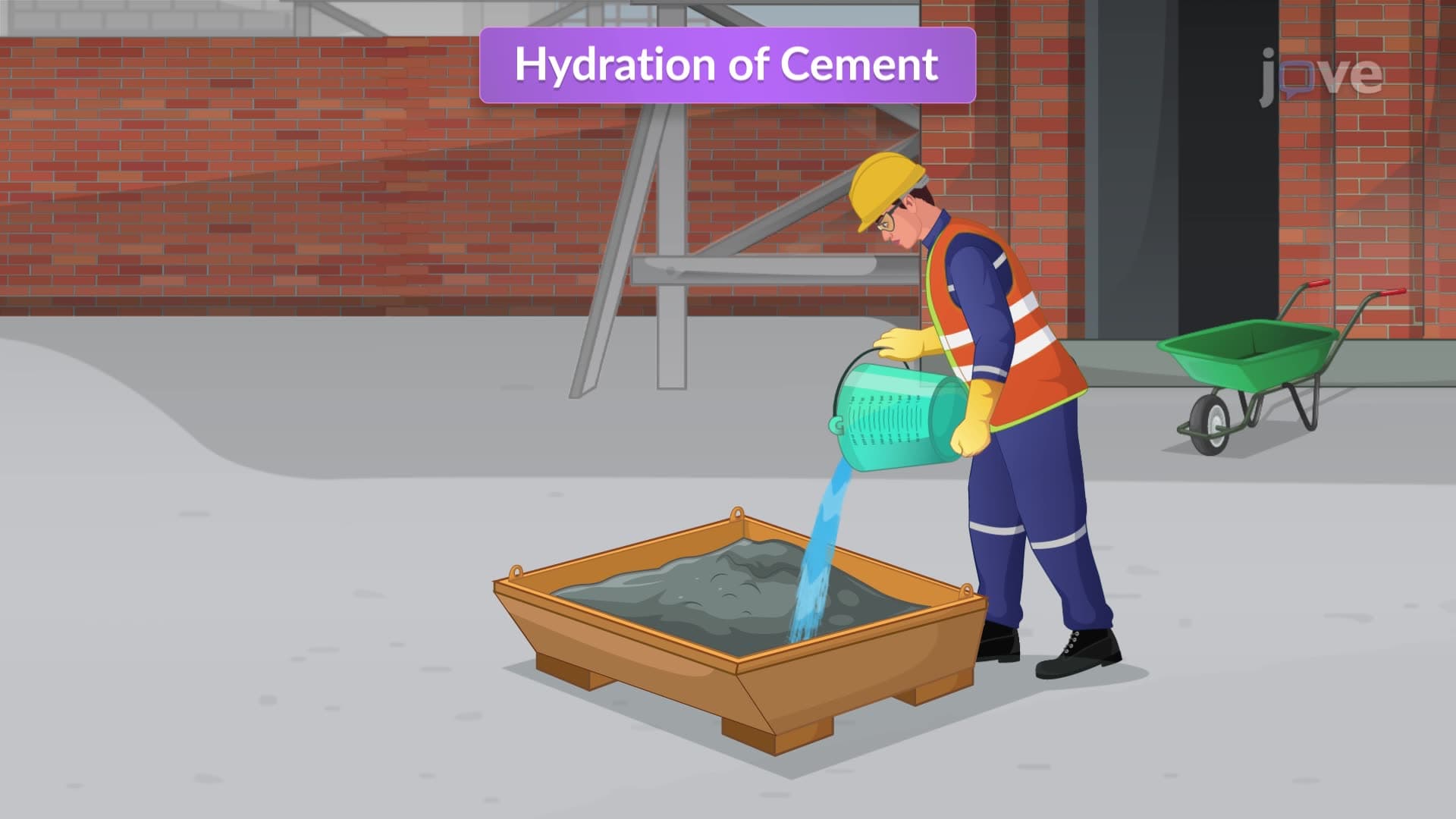
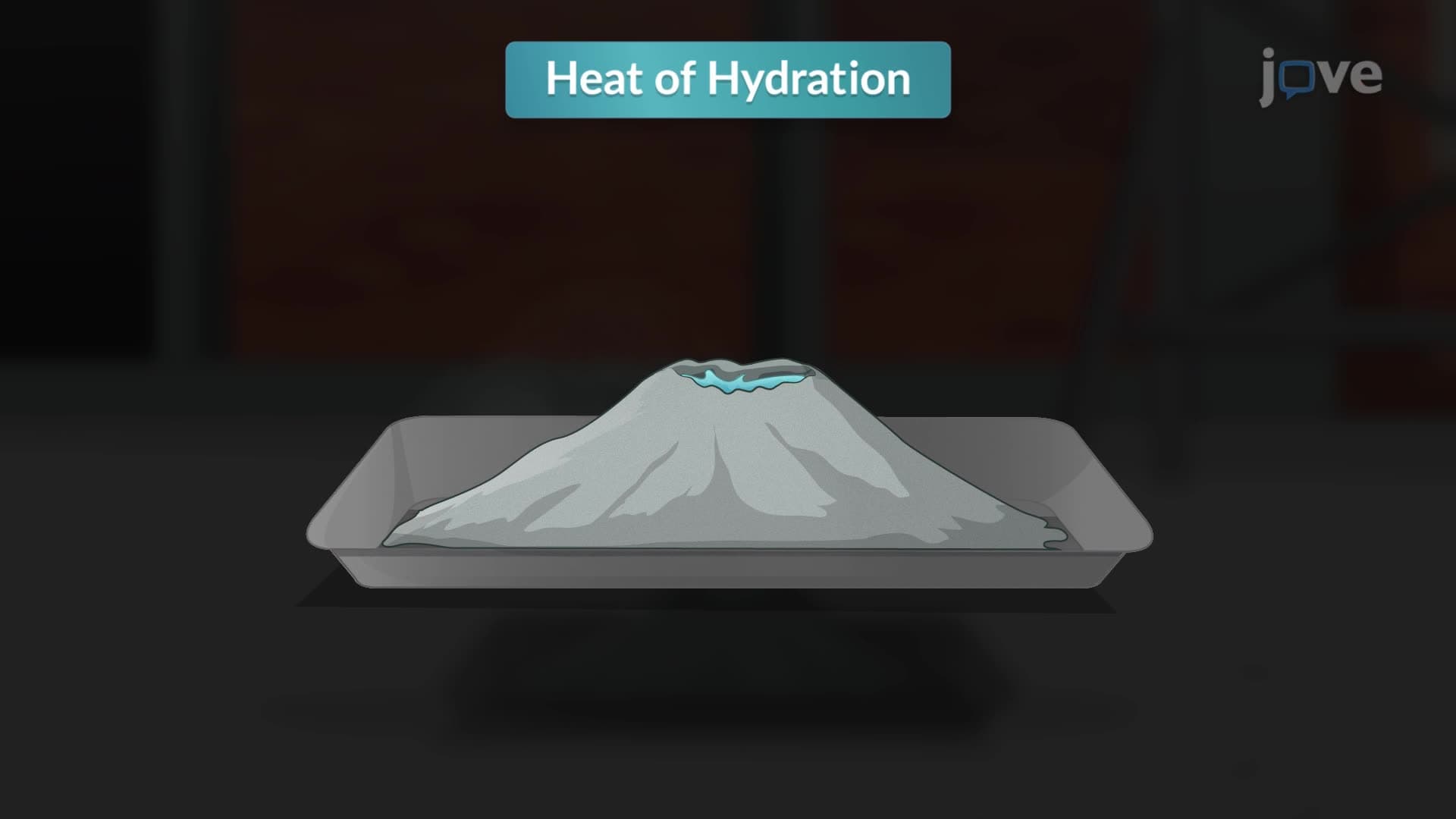
Understanding what is concrete in detail requires examining how these components interact at the microscopic level. During mixing, the cement particles begin hydrating when they contact water, forming calcium silicate hydrate (C-S-H) gel-the primary binding phase that gives concrete its strength. This process creates a dense matrix where larger aggregate particles are surrounded and bound by the hardened cement paste.
Concrete's Mechanical Properties and Reinforcement Needs
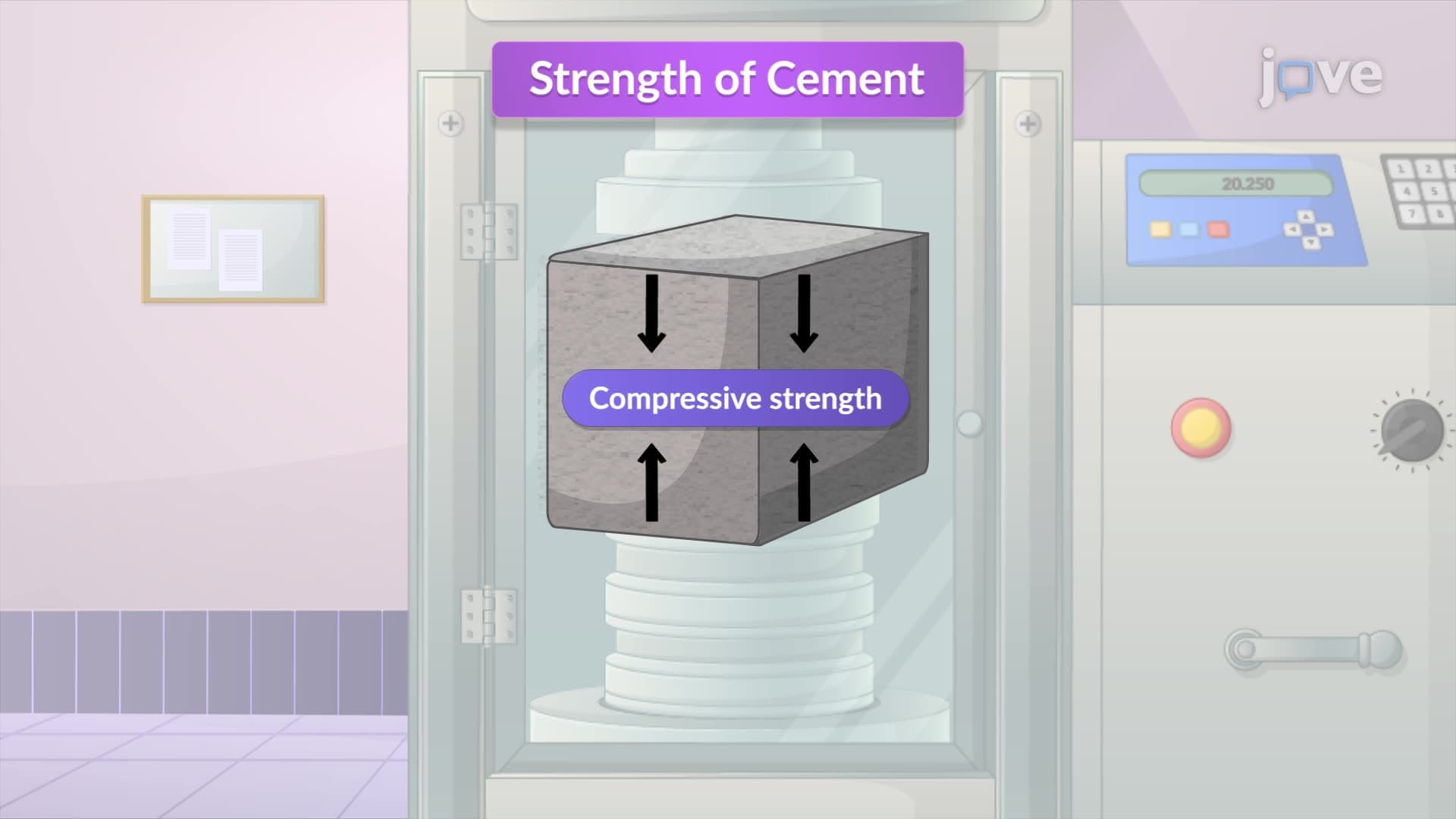
The fundamental characteristic that defines concrete behavior is its exceptional compressive strength paired with relatively weak tensile strength. This property profile makes concrete ideal for applications like foundations, columns, and dams where compression forces dominate. However, structural elements experiencing bending or tension-such as beams and slabs-require steel reinforcement to handle tensile stresses.
This concept appears frequently in engineering coursework and standardized tests. AP Physics students encounter concrete's stress-strain relationships, while college-level materials science courses delve into the microstructural factors controlling concrete performance. Understanding these principles helps students excel in structural engineering problems on exams like the Fundamentals of Engineering (FE) test.
Production Methods and Quality Control
Modern concrete production has evolved into three primary delivery systems, each serving specific construction needs. Ready-mix concrete arrives at job sites in rotating drum trucks, ensuring consistent quality and reducing on-site labor. Precast concrete elements are manufactured in controlled factory environments, allowing for higher strength and architectural finishes. Concrete masonry units (blocks) provide modular construction solutions for walls and smaller structures.
Quality control throughout the production process-from material selection through final curing-directly impacts concrete's performance. Construction management students learn how factors like water-cement ratio, aggregate gradation, and curing conditions affect strength development and durability, knowledge that proves essential for passing professional certification exams in the construction industry.
Frequently Asked Questions
Concrete is a composite construction material made by mixing cement, aggregates, and water, while cement is just one ingredient that acts as the binding agent. Think of cement as the "glue" that holds together sand and gravel to create concrete. This distinction frequently appears on AP Chemistry and materials science exams.
The MCAT may test concrete in physical chemistry contexts, particularly hydration reactions and material properties. Focus on understanding how cement hydration creates chemical bonds and how aggregate particle size affects material strength. Practice problems often involve calculating mixture ratios or analyzing stress-strain relationships.
AP Physics C frequently includes concrete in mechanics problems involving stress, strain, and structural analysis. Students must understand why concrete requires steel reinforcement for tensile loads and calculate forces in reinforced concrete beams. These concepts also appear in free-response questions about material properties and engineering applications.
Major US infrastructure projects showcase concrete's importance: the Interstate Highway System uses over 4 billion cubic yards, the Hoover Dam contains 3.25 million cubic yards, and modern skyscrapers like One World Trade Center rely on high-strength concrete. Understanding these applications helps connect classroom learning to engineering careers.
Concrete concepts are very accessible to high school students with basic chemistry knowledge. The material builds naturally from simple mixture principles to more complex chemical reactions. Most students find concrete engaging because they can observe it in everyday construction projects around their communities.
Focus on three key areas: composition and mixing ratios, hydration chemistry and microstructure development, and mechanical properties including compressive/tensile strength relationships. Create concept maps linking these topics and practice calculating mixture proportions. Many professors emphasize real-world applications in exam problems.
After mastering basic concrete composition, explore advanced topics like admixtures for specific properties, high-performance concrete for extreme environments, and sustainable concrete using recycled materials. These areas connect to current research and emerging construction technologies that appear in upper-level engineering courses.
While concrete rarely appears directly on NCLEX exams, understanding material properties helps nurses grasp concepts like bone density and fracture healing, which follow similar principles of compression versus tension strength. This knowledge also supports understanding of orthopedic hardware and healing processes.
Related Micro-courses