Loading subject page…


3,826 views

Video Summary: What Is Hydration of Cement
Ever wondered why concrete in skyscrapers like New York's One World Trade Center remains solid for decades? The hydration of cement creates the chemical backbone that transforms powdery cement into rock-solid concrete through a fascinating water-driven process. When water meets cement particles, a complex series of chemical reactions begins, forming new crystalline compounds that bind everything together permanently. This fundamental construction chemistry principle determines whether buildings stand strong or crumble. Watch the full video on JoVE Coach to master this concept with expert-led visuals and step-by-step explanations.
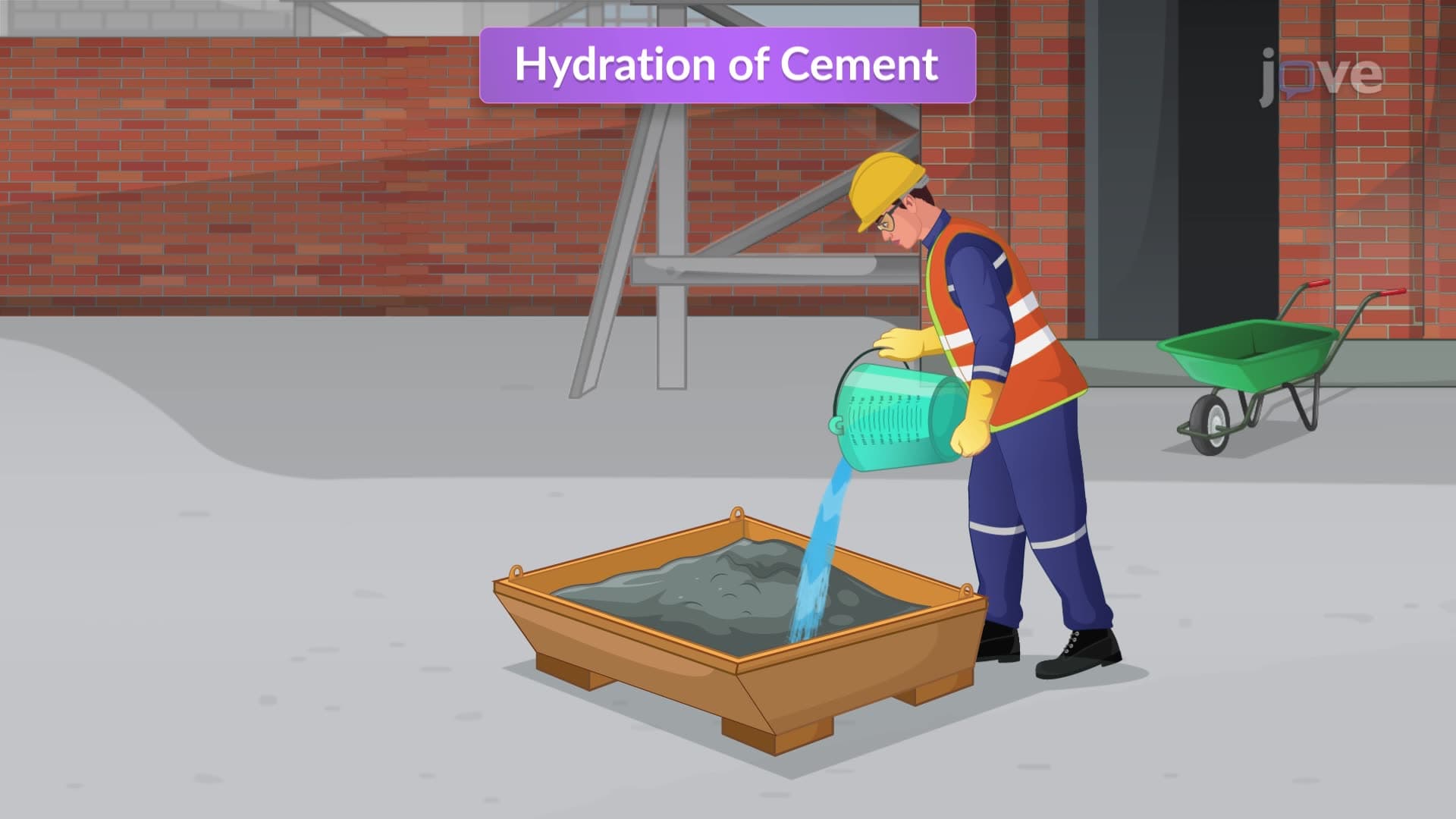
The hydration of cement represents one of the most important chemical processes in construction engineering. This complex series of reactions transforms dry cement powder into the binding matrix that holds concrete structures together. When civil engineers design infrastructure projects like the Golden Gate Bridge rehabilitation or new subway tunnels in major US cities, understanding cement hydration becomes critical for ensuring structural integrity.
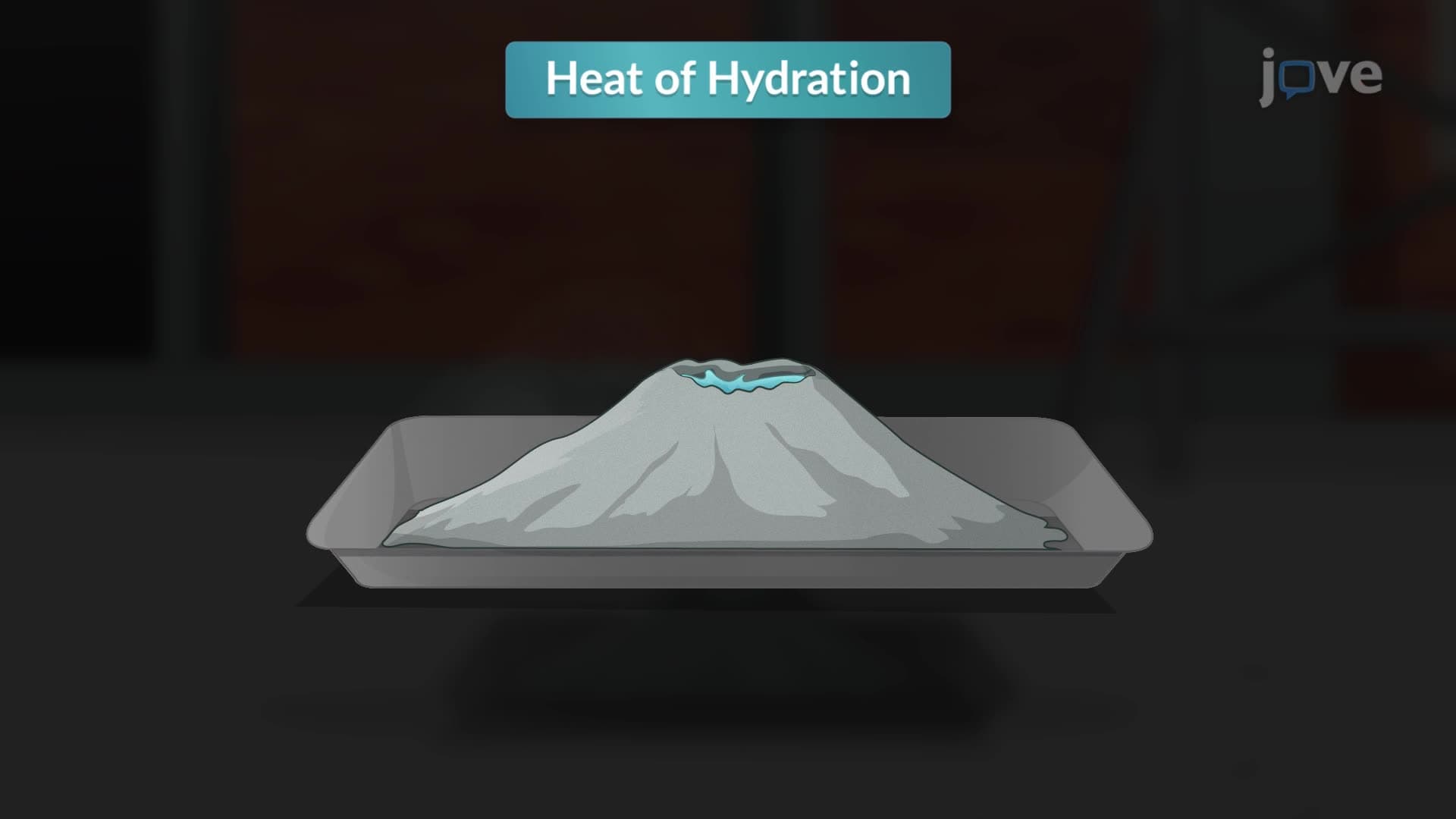
The hydration process begins immediately when water contacts anhydrous (water-free) cement compounds. The four main cement compounds-tricalcium silicate (C₃S), dicalcium silicate (C₂S), tricalcium aluminate (C₃A), and tetracalcium aluminoferrite (C₄AF)-start dissolving and releasing ions into the water solution. This initial stage creates a highly alkaline environment with pH levels around 12-13, which students often encounter in AP Chemistry when studying basic solutions.
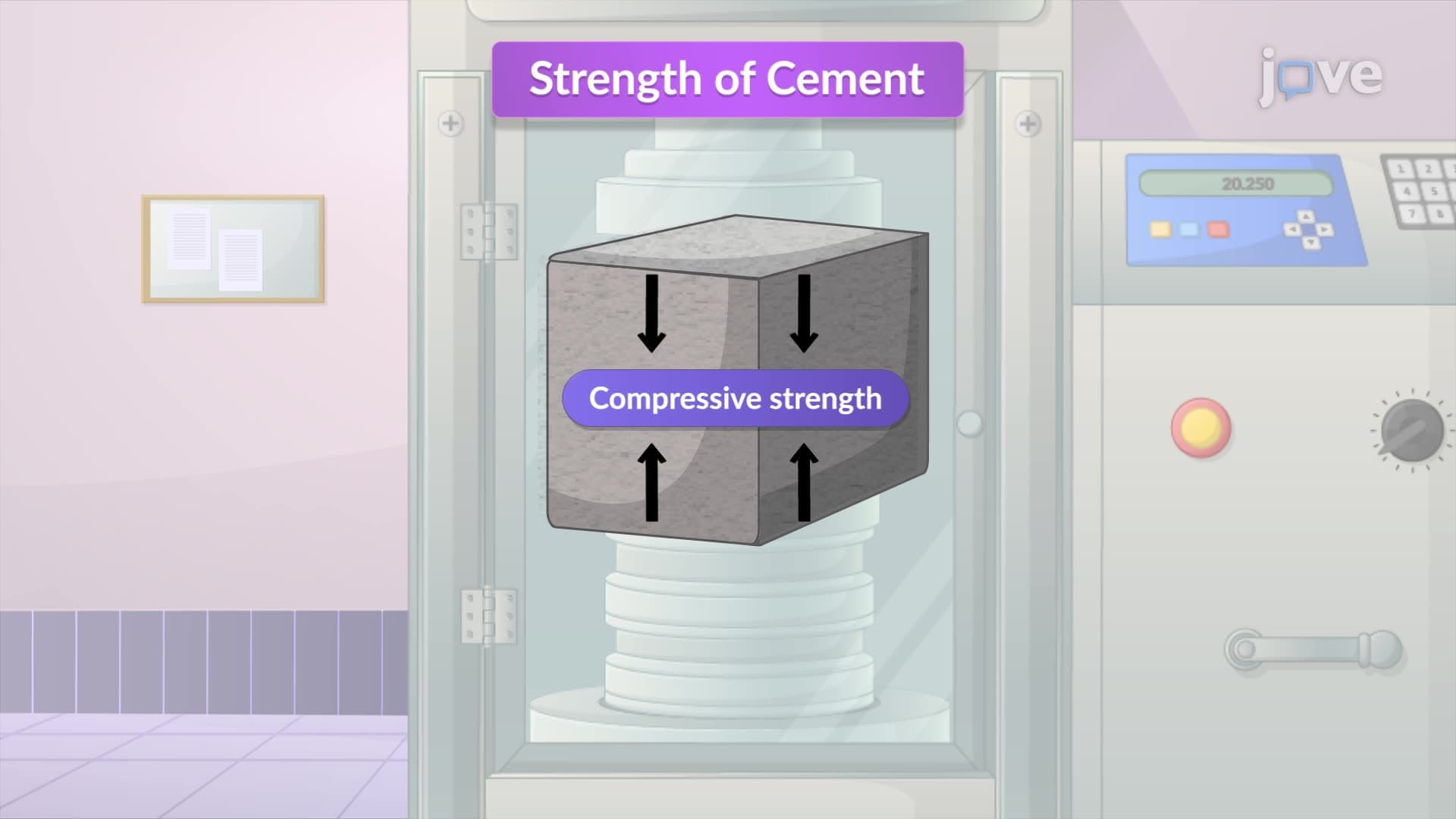
The most significant reactions involve silicate compounds. Tricalcium silicate (C₃S) reacts with water to produce calcium silicate hydrate (C-S-H) gel and calcium hydroxide (CH). This C-S-H gel acts as the primary binding agent, creating the cement paste's strength. Dicalcium silicate (C₂S) undergoes similar reactions but produces more C-S-H gel and less calcium hydroxide compared to C₃S. College students studying materials science learn that C-S-H gel's poorly crystalline structure creates numerous binding sites, explaining concrete's remarkable compressive strength in structures like the Hoover Dam.
Tricalcium aluminate (C₃A) hydration requires careful control through gypsum addition. Without gypsum, C₃A would react too rapidly with water, causing flash setting-a problem that would make concrete unusable. Gypsum regulates this reaction, forming ettringite crystals initially. Over time, ettringite transforms into monosulfoaluminate hydrate as sulfate ions become depleted. This controlled reaction sequence appears frequently on MCAT questions related to chemical kinetics and equilibrium.
Students preparing for civil engineering licensing exams should remember that hydration continues as long as unhydrated cement particles and free water remain in contact. This ongoing process explains why concrete continues gaining strength for months or even years after initial placement, a concept crucial for understanding long-term structural performance in US infrastructure projects.
Related Micro-courses