Loading subject page…


1,409 views


Video Summary: What Is General External Flow Characteristics
Ever wonder why airplane wings are curved while skyscrapers have sharp edges? Boundary layer characteristics determine how fluids behave around objects, creating the forces that keep planes airborne and buildings stable. When air flows over the Golden Gate Bridge's towers, understanding general external flow characteristics helps engineers predict wind loads and prevent catastrophic oscillations. This fundamental concept in fluid mechanics explains drag, lift, and flow separation patterns that govern everything from Formula 1 race cars to hurricane-resistant architecture. Watch the full video on JoVE Coach to master this concept with expert-led visuals and step-by-step explanations.
General external flow characteristics describe how fluids behave when flowing around immersed objects, forming the foundation for countless engineering applications. Unlike internal flows confined within pipes or channels, external flows encounter objects that disrupt their natural motion, creating complex interaction patterns that engineers must understand and predict.
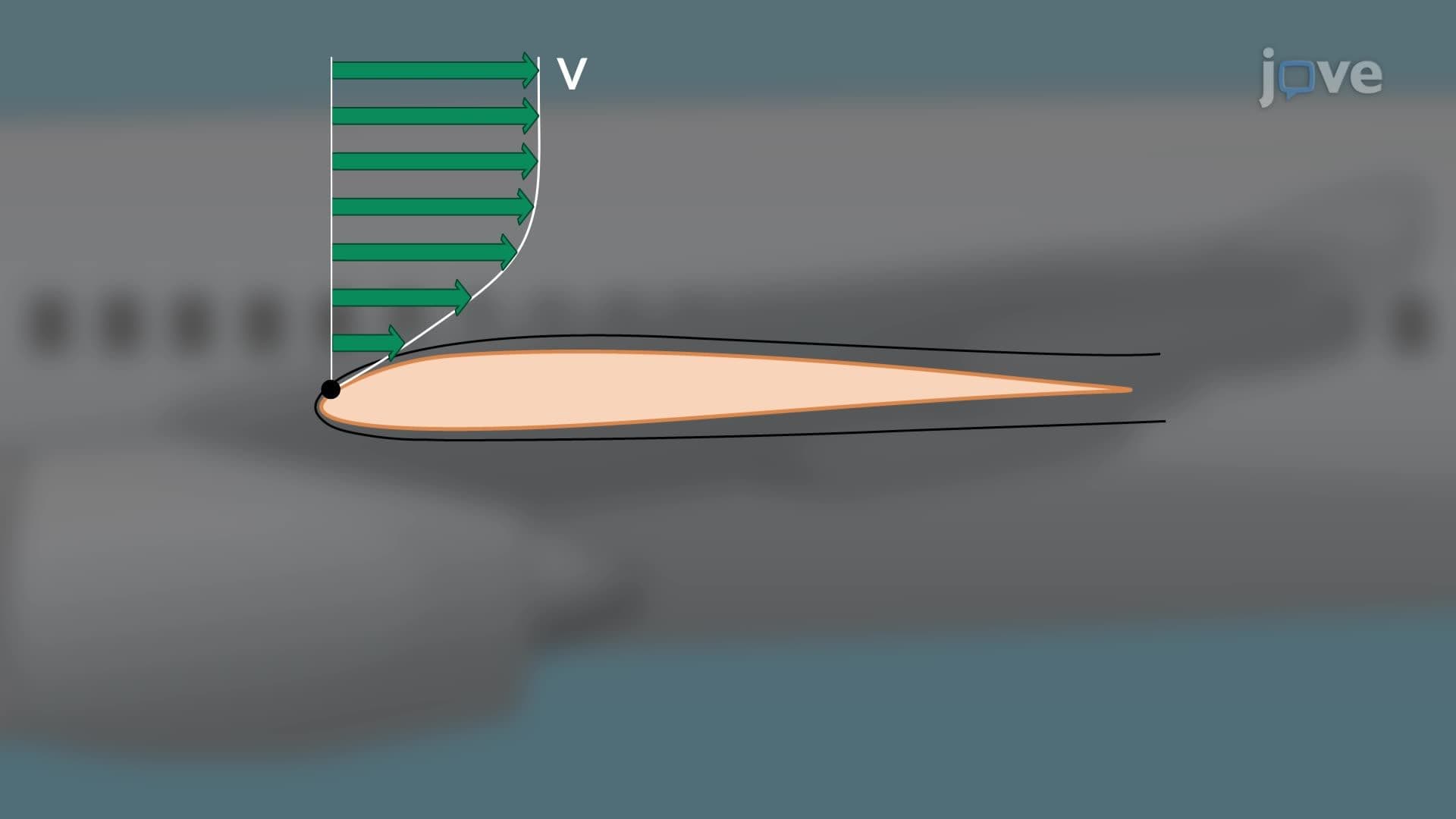
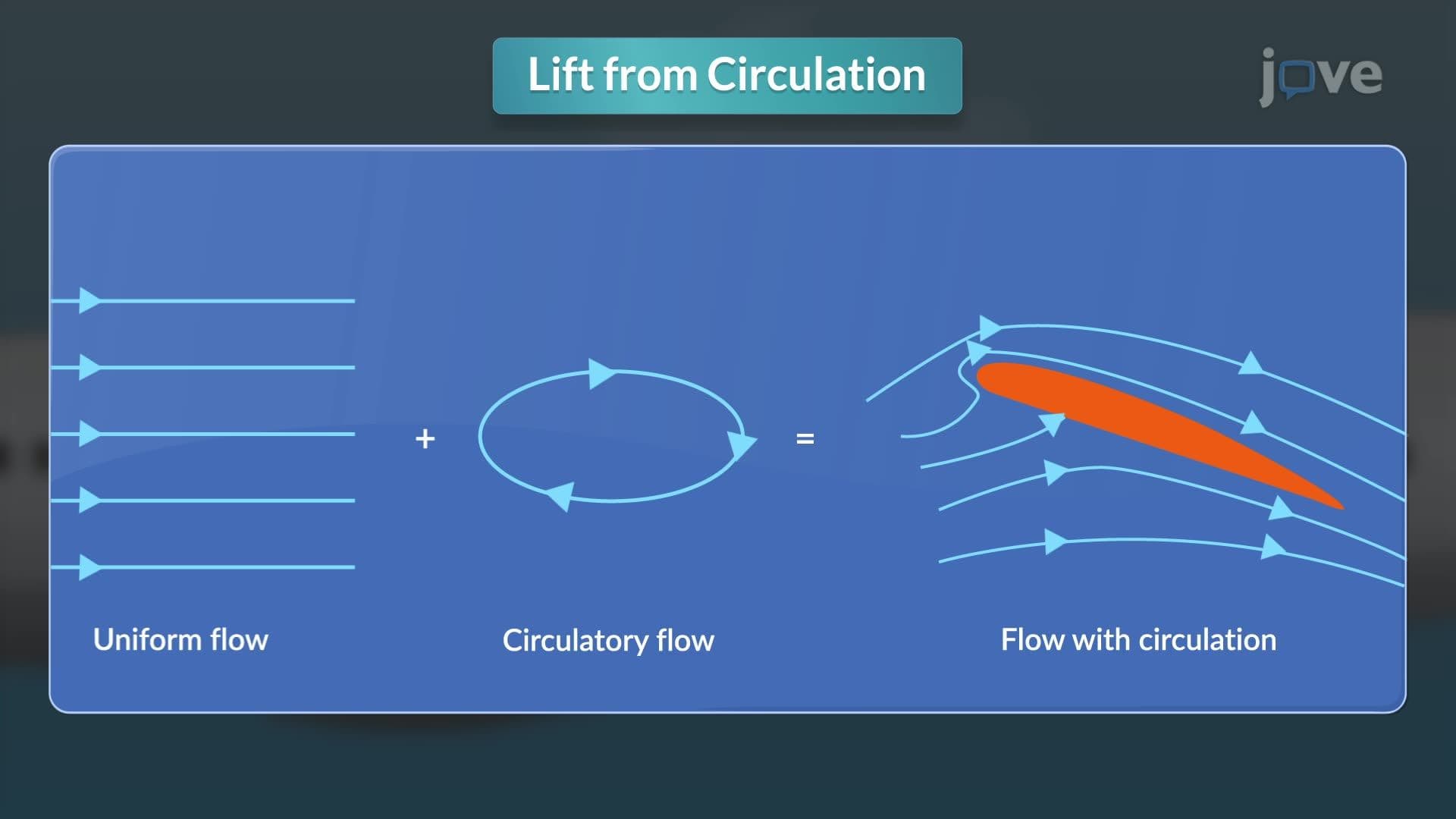
When objects interact with moving fluids, two fundamental forces emerge. Drag force opposes motion parallel to the flow direction, while lift force acts perpendicular to it. These forces depend critically on boundary layer characteristics, which describe how fluid velocity changes from zero at the object's surface to full stream velocity in the freestream.
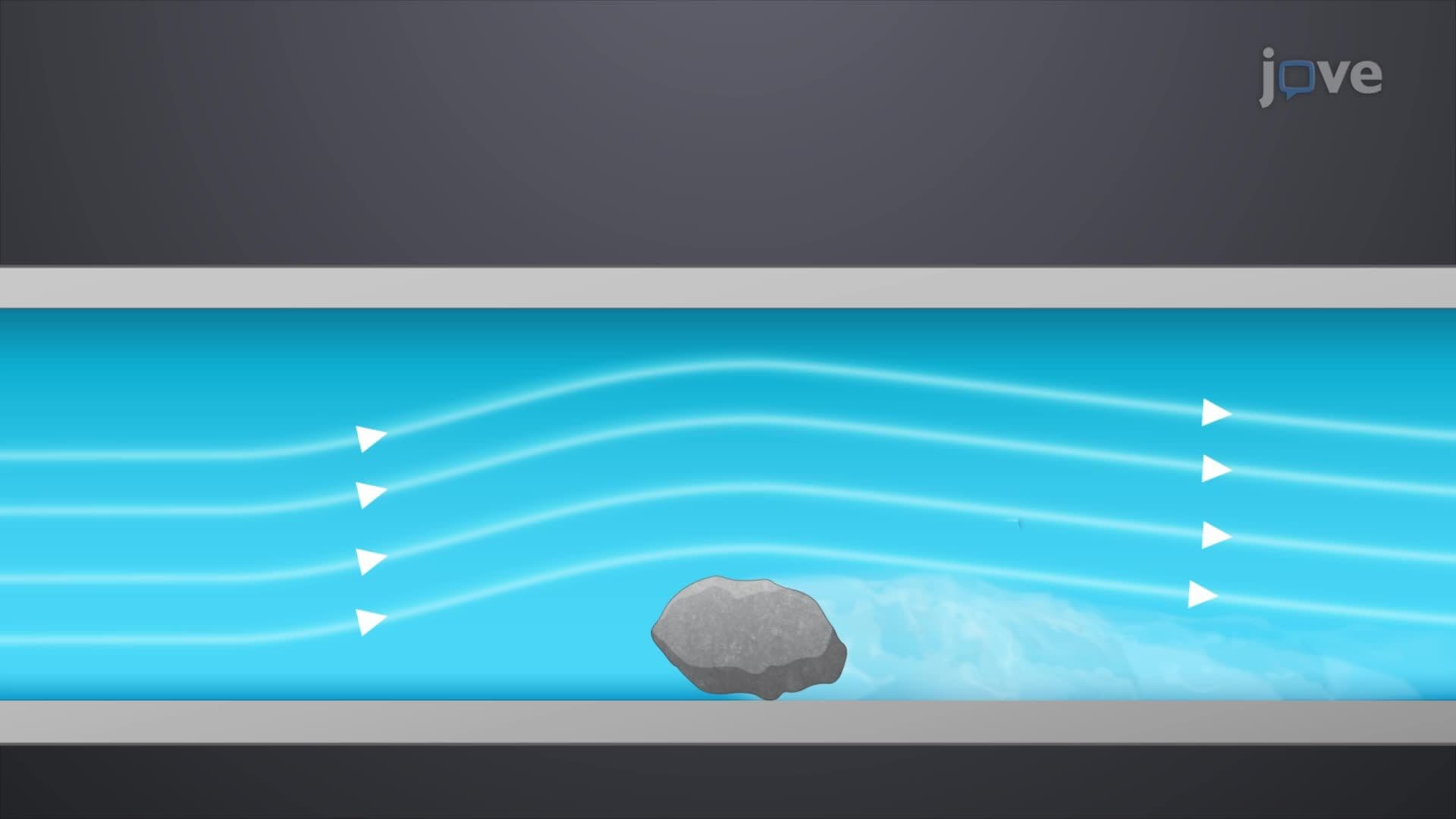
Objects are classified as either streamlined or blunt based on their impact on flow. The Tesla Model S exemplifies streamlined design, with its carefully sculpted body allowing air to flow smoothly around it, minimizing drag and maximizing range. Conversely, the flat face of Chicago's Willis Tower represents blunt geometry, creating significant flow separation and requiring robust structural design to withstand wind loads.
The Reynolds number (Re = ρVL/μ) serves as the key parameter determining flow characteristics. At low Reynolds numbers (Re < 1), viscous forces dominate, creating smooth, predictable flow patterns. As Reynolds numbers increase beyond 10,000, inertial forces take control, producing thin boundary layers and potential flow separation.
This concept frequently appears on AP Physics exams and college fluid mechanics courses, where students must calculate Reynolds numbers and predict flow behavior. For example, a problem might ask students to determine whether flow around a 0.1-meter diameter cylinder at 10 m/s in standard air conditions will exhibit boundary layer separation.
Understanding boundary layer characteristics proves essential for designing everything from NASCAR vehicles to hurricane-resistant buildings. The Millau Bridge in France (though the US equivalent would be the Mackinac Bridge) demonstrates how engineers use external flow analysis to design cable-stayed structures that withstand extreme wind conditions.
In aerospace applications, boundary layer control techniques like vortex generators on aircraft wings help maintain attached flow at high angles of attack, preventing stall conditions that could prove catastrophic. These same principles guide the design of wind turbine blades, where optimized boundary layer characteristics maximize energy extraction efficiency.
Related Micro-courses