Loading…
Loading video…

9,210 views

Capacitors are everywhere in modern electronics, from your smartphone to professional audio equipment. When a sound engineer at a Nashville recording studio needed to bridge their vintage mixing console with modern digital equipment, they discovered how capacitors work alongside operational amplifiers to solve real-world signal processing challenges. This Design Example Vintage Mixing Console Explained demonstrates practical circuit design principles that electrical engineering students encounter in coursework and industry applications. Watch the full video on JoVE Coach to master this concept with expert-led visuals and step-by-step explanations.
The integration of vintage audio equipment with modern recording systems presents unique engineering challenges that highlight fundamental electronic principles. When professional studios acquire classic mixing consoles—like the legendary Neve 1073 modules used at Abbey Road Studios—they often discover that output signal levels don't match contemporary digital audio workstations. This real-world scenario demonstrates how capacitors and other passive components work within amplifier circuits to solve practical problems.
Audio signal conditioning requires careful consideration of frequency response, impedance matching, and gain requirements. The types of capacitors used in audio circuits include electrolytic capacitors for power supply filtering, ceramic capacitors for high-frequency bypass applications, and film capacitors for audio coupling where low distortion is critical. Understanding what are capacitors overview helps students recognize why specific capacitor types appear in different circuit locations.
Professional audio circuits typically employ capacitors for AC coupling between stages, removing DC bias while preserving the audio signal. In the vintage console example, coupling capacitors ensure that only the desired audio frequencies pass between the mixing console and the preamplifier stage, blocking any DC offset that could affect subsequent amplification stages.
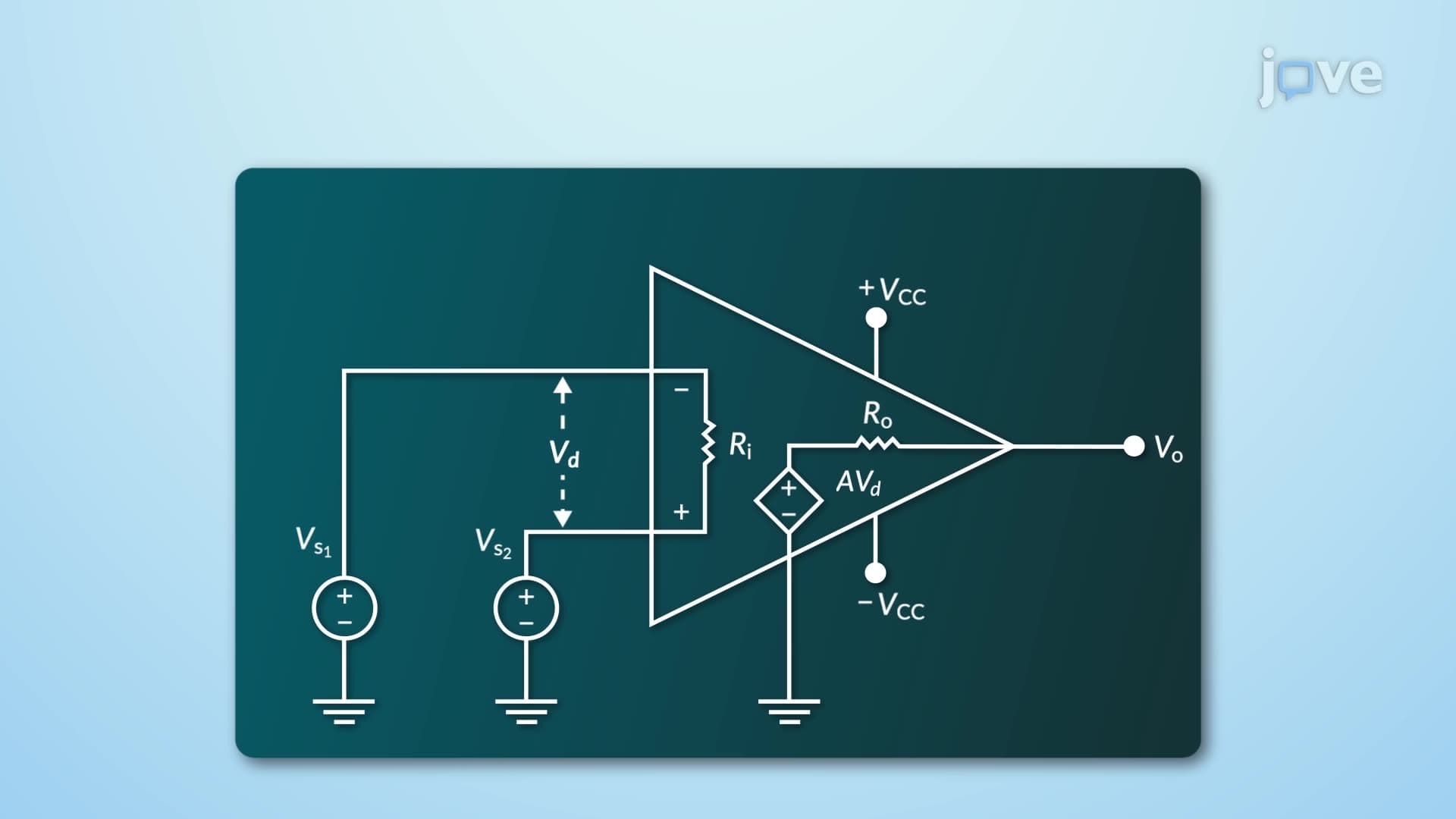
The non-inverting operational amplifier configuration offers several advantages for audio applications, particularly its high input impedance characteristic that prevents loading of the source circuit. Students studying for the AP Physics exam or college-level electronics courses encounter this topology frequently because it demonstrates fundamental feedback principles while providing practical gain control.
The gain equation for non-inverting amplifiers (Gain = 1 + Rf/Rin) allows precise control over signal amplification through resistor selection. In professional applications like those found at studios such as Electric Lady Studios in New York, engineers select precision resistors to achieve exact gain values while maintaining low noise performance across the audio spectrum.
Real-world circuit design extends beyond theoretical calculations to include component tolerances, temperature stability, and long-term reliability. Capacitors basics include understanding how different dielectric materials affect performance characteristics such as temperature coefficient, voltage rating, and equivalent series resistance (ESR). These factors become critical in professional audio equipment where signal quality directly impacts the final recording.
Students preparing for engineering coursework or the Fundamentals of Engineering (FE) exam benefit from understanding how theoretical circuit analysis applies to practical design challenges. The vintage console example bridges classroom learning with industry applications, showing how fundamental electronic principles solve contemporary problems in creative industries.
Frequently Asked Questions
This example demonstrates how vintage audio equipment integration requires modern circuit design solutions, specifically using operational amplifiers to boost signal levels and match impedances. It illustrates practical applications of electronic principles that students encounter in AP Physics, college electronics courses, and professional engineering practice. The scenario shows how theoretical concepts like gain calculations and impedance matching solve real problems in recording studios and audio production facilities.
The example covers key topics tested on AP Physics C and college electronics exams, including operational amplifier configurations, gain calculations, and impedance concepts. Students often encounter similar problems on midterm exams where they must calculate amplifier gain using the formula Gain = 1 + Rf/Rin. The frequency response requirements (20 Hz to 20 kHz) also connect to concepts tested on the MCAT physics section regarding wave properties and signal processing.
Capacitors serve multiple functions in audio circuits, including AC coupling between stages, power supply filtering, and frequency response shaping. In the mixing console example, coupling capacitors allow audio signals to pass while blocking DC voltages that could interfere with proper amplifier operation. Understanding capacitor behavior across the audio frequency spectrum is essential for students studying circuit analysis in electrical engineering programs.
Operational amplifier basics are accessible to high school students who have completed Algebra II and basic physics concepts. The mathematical relationships involve simple ratios and algebraic manipulation, making the gain calculations straightforward once students understand the underlying principles. Many students successfully master these concepts in AP Physics courses or dual-enrollment electronics classes at community colleges.
Focus on understanding the fundamental gain equation and practice calculating component values for specific requirements. Create summary sheets with key formulas and work through practice problems involving different amplifier configurations. For standardized tests like the AP Physics exam, concentrate on the mathematical relationships rather than memorizing specific circuit configurations, as problems often provide schematic diagrams.
These circuit design principles appear throughout the electronics industry, from smartphone audio processing chips to automotive infotainment systems. Audio engineers at companies like Bose and Harman International apply similar concepts when developing consumer electronics. Biomedical engineers use comparable amplifier circuits for ECG and EEG equipment, while aerospace engineers implement similar signal conditioning in satellite communication systems.
Advanced topics include frequency response analysis, feedback stability, and multiple-stage amplifier design. Students can explore digital signal processing concepts that complement analog circuit knowledge, particularly as modern audio equipment increasingly uses hybrid analog-digital architectures. Consider studying filter design and impedance matching networks, which build directly on the foundation established by basic amplifier circuit analysis.
Related Micro-courses



Related Subjects
 Civil Engineering 30 micro-courses›Mechanical Engineering 28 micro-courses›