Loading…
Loading video…

9,210 views

Ever wondered how your smartphone's temperature sensor can trigger emergency shutdowns? The characteristics of opamp circuits make this possible by amplifying tiny sensor signals into powerful control commands. Fire alarm systems across US buildings rely on operational amplifiers to boost weak thermistor signals from heat detectors into full alarm activation. What are operational amplifiers? They're the essential electronic building blocks that transform microscopic electrical signals into meaningful outputs. Watch the full video on JoVE Coach to master this concept with expert-led visuals and step-by-step explanations.
Operational amplifiers represent one of the most versatile and widely-used components in modern electronics. These integrated circuits serve as the backbone for countless applications, from medical devices in US hospitals to automotive sensors in American-manufactured vehicles. The characteristics of opamp circuits make them indispensable for signal conditioning, where weak electrical signals must be amplified to useful levels.
At its core, an operational amplifier is a high-gain voltage amplifier designed to perform mathematical operations on analog signals. Originally developed for analog computers in the 1940s, op-amps have evolved into sophisticated integrated circuits that form the foundation of modern electronic systems. Students preparing for AP Physics or introductory college electronics courses will encounter these devices as fundamental building blocks in circuit analysis.
The types of characteristics of opamp circuits encompass both physical and electrical properties. Physically, most op-amps come packaged as integrated circuits, with the LM741 being the most recognized example in educational settings. This 8-pin dual in-line package (DIP) represents the standard configuration taught in US engineering programs.
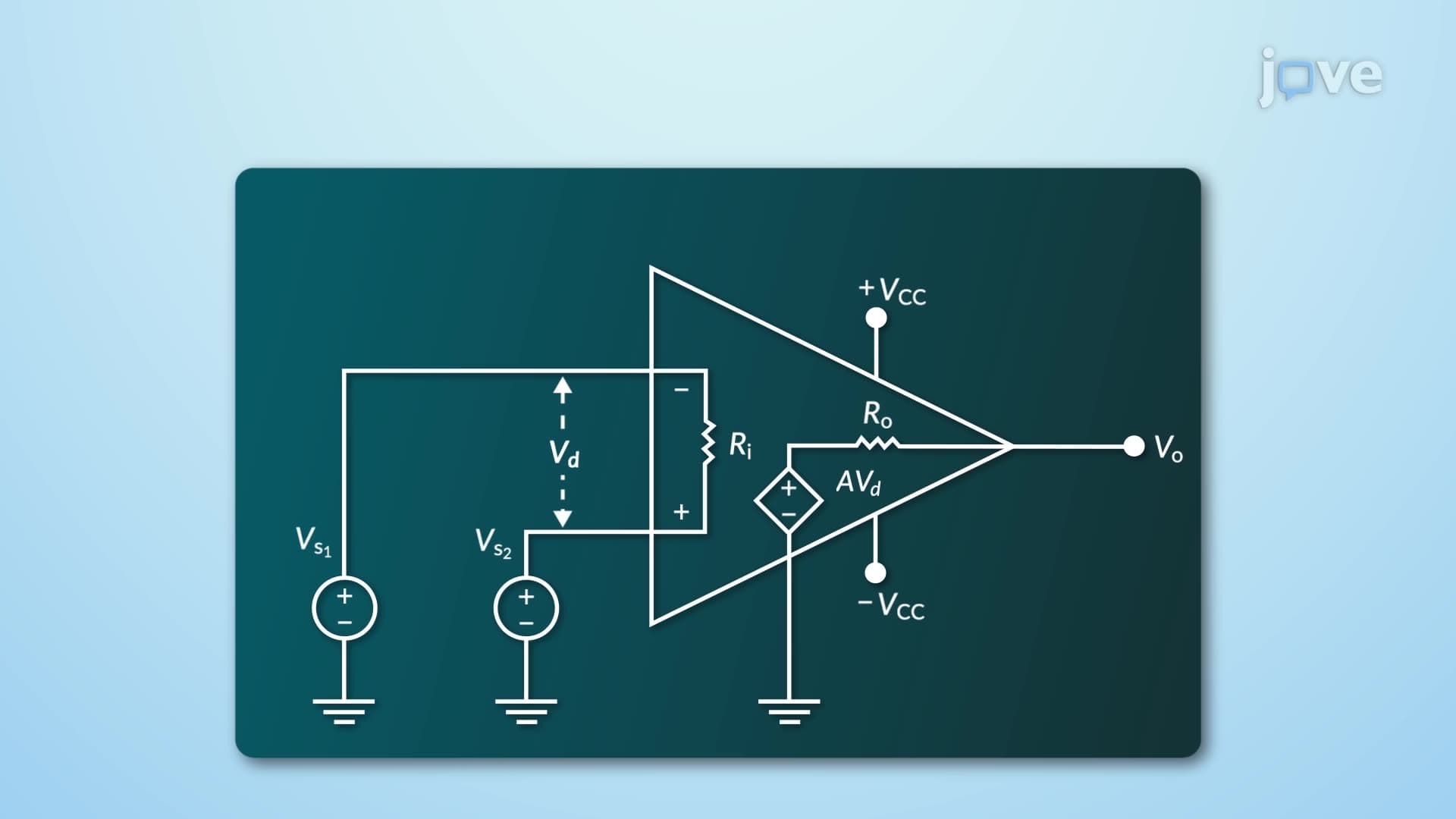
The pin configuration reveals the essential characteristics of opamp overview: two input pins (inverting and non-inverting), one output pin, two power supply pins (typically +Vcc and -Vee), and additional pins for offset adjustment. The triangular circuit symbol, universally recognized in American electrical engineering curricula, clearly identifies the inverting input (marked with a minus sign) and non-inverting input (marked with a plus sign).
Understanding characteristics of opamp requires grasping their ideal electrical properties. In theory, operational amplifiers possess infinite input impedance, zero output impedance, and infinite gain. While real devices approximate these ideals, characteristics of opamp basics include gain values typically ranging from 100,000 to over 1,000,000.
Power consumption represents another crucial characteristic of opamp concept. The total current drawn equals the sum of output current delivered to the load plus the quiescent current required for internal operation. For battery-powered applications common in US consumer electronics, understanding this power budget becomes critical for design optimization.
The characteristics of opamp overview extends to practical applications that students encounter daily. Beyond fire alarm systems, op-amps enable everything from audio amplifiers in American-made speakers to precision measurement equipment in university laboratories. Medical devices approved by the FDA rely heavily on op-amp circuits for signal conditioning from biological sensors.
For students preparing for standardized tests, op-amp problems frequently appear on AP Physics exams and college-level electronics assessments. The MCAT occasionally includes operational amplifier concepts within physics sections, particularly regarding signal amplification in medical instrumentation. Understanding these fundamentals proves essential for engineering students progressing to advanced coursework in controls, communications, and biomedical engineering.
Frequently Asked Questions
An operational amplifier is a high-gain voltage amplifier that can perform various mathematical operations on electrical signals. It's crucial because it amplifies weak signals to usable levels, enabling everything from medical devices to smartphone sensors to function properly.
Key characteristics include high input impedance, low output impedance, high voltage gain (typically 100,000+), and the ability to operate with both positive and negative power supplies. The standard 8-pin configuration and triangular circuit symbol are also fundamental knowledge.
Op-amp questions typically focus on ideal characteristics, basic amplifier configurations, and power calculations. Students should expect problems involving gain calculations, input/output relationships, and circuit analysis using the virtual short concept.
Yes, the MCAT physics section occasionally includes op-amp concepts, particularly in medical instrumentation contexts. Understanding how biological signals get amplified in devices like ECG machines demonstrates practical physics applications in medicine.
Smartphones, medical monitors in hospitals, car engine sensors, home security systems, and audio equipment all rely on op-amps. Even simple devices like digital thermometers use op-amps to amplify tiny temperature sensor signals.
No, basic algebra and understanding of voltage/current relationships suffice for introductory op-amp concepts. Most high school students can grasp fundamental op-amp principles without calculus or complex circuit analysis.
Focus on memorizing the ideal characteristics, practice drawing the circuit symbol correctly, and work through basic gain calculation problems. Understanding the pin configuration and power supply requirements also helps with practical circuit analysis questions.
Progress to specific op-amp configurations like inverting and non-inverting amplifiers, then explore comparators, integrators, and active filters. These build naturally on fundamental op-amp characteristics and prepare you for advanced electronics coursework.
Related Micro-courses



Related Subjects
 Civil Engineering 30 micro-courses›Mechanical Engineering 28 micro-courses›