Loading subject page…


9,204 views

Video Summary: What are Classification of Signals
Ever wonder how your smartphone converts voice into digital data or how Netflix streams video without interruption? Energy and power signals form the backbone of these everyday technologies, requiring engineers to first understand signal classification fundamentals. From the continuous waves of FM radio broadcasts used by stations like NPR to the discrete digital packets powering internet communication, mastering What are Classification of Signals helps decode how modern communication systems operate. Watch the full video on JoVE Coach to master this concept with expert-led visuals and step-by-step explanations.
Signal classification serves as the cornerstone for energy and power signals analysis in electrical engineering and communications. Engineers categorize signals into four primary classification pairs to systematically analyze system behavior, optimize performance, and design robust communication networks. This classification framework enables precise mathematical modeling and practical implementation across diverse applications from medical imaging to satellite communications.
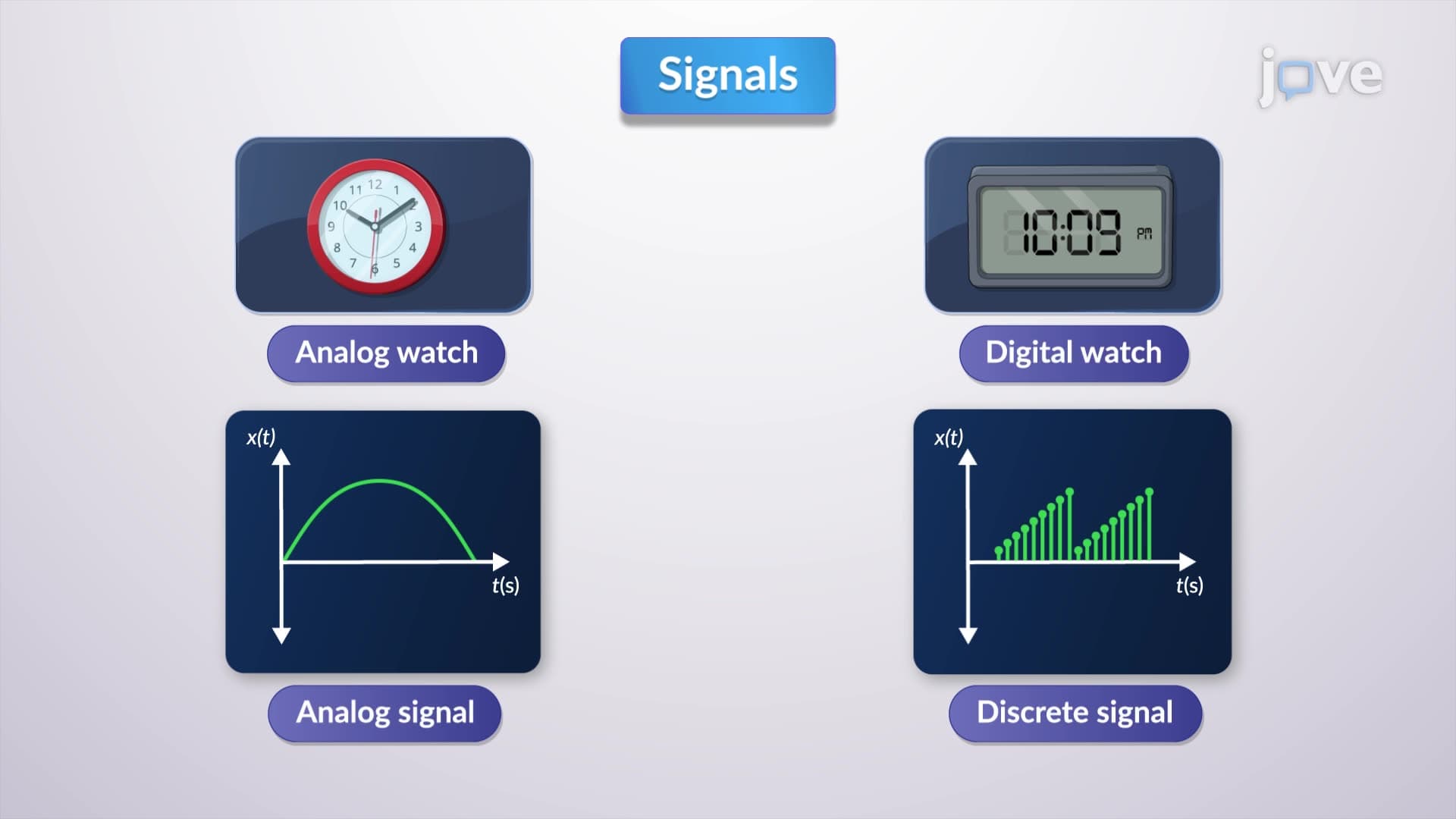
Continuous-time signals exist at every instant, exemplified by the analog audio output from traditional AM/FM radio stations like WXYZ Detroit or KQED San Francisco. These signals maintain values across all time intervals, making them ideal for representing naturally occurring phenomena such as temperature variations or sound waves. Mathematical analysis employs integration techniques, and these signals often appear in AP Calculus BC exam problems involving Fourier transforms.
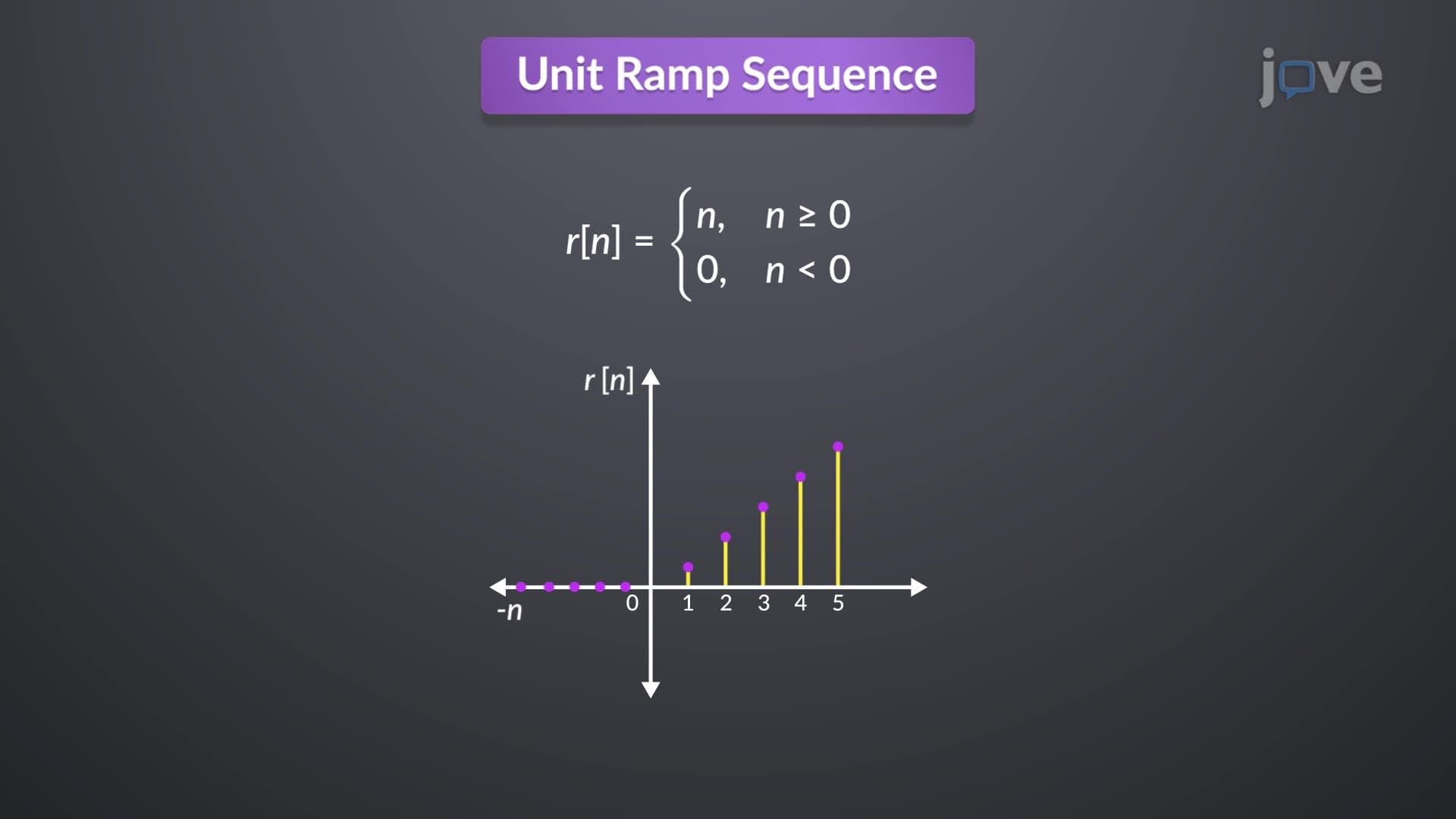
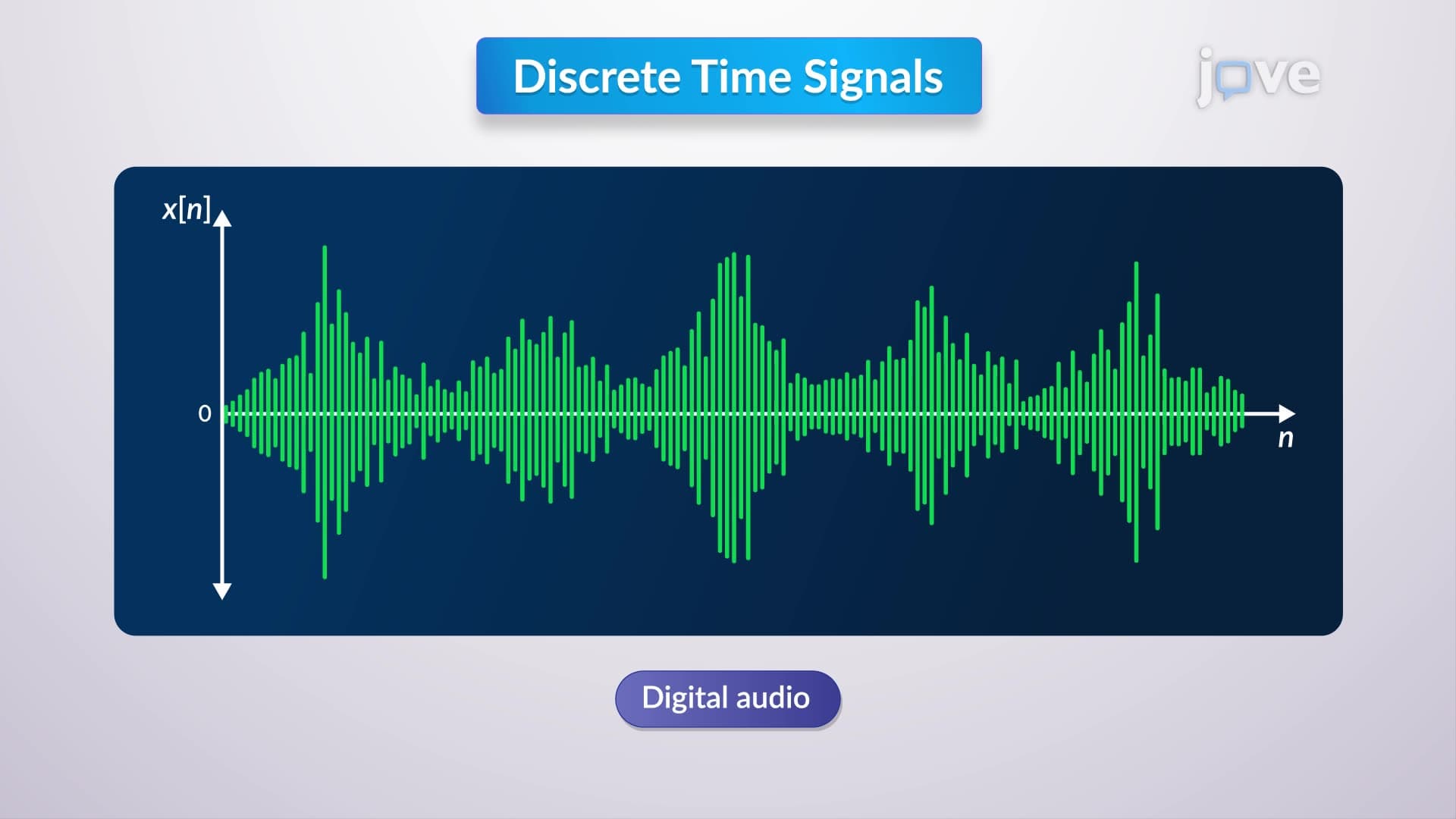
Discrete-time signals, conversely, possess values only at specific time instances, typically denoted as x(n) where n represents integer sampling points. Digital music streaming services like Spotify utilize discrete-time processing, converting continuous audio into discrete samples at 44.1 kHz sampling rates. College-level Digital Signal Processing courses emphasize discrete-time analysis using difference equations and Z-transforms, frequently tested in electrical engineering midterm examinations.
Periodic signals repeat their patterns over fixed time intervals, with continuous-time periodic signals satisfying x(t) = x(t + T) for all time values. The 60 Hz electrical power grid throughout the United States exemplifies periodic continuous-time signals, where T = 1/60 seconds. Types of energy and power signals within periodic categories include sinusoidal power transmission and square wave digital clock signals used in computer processors.
Aperiodic signals lack repetitive patterns, encompassing most real-world communication signals including speech, music, and data transmissions. Understanding periodicity proves crucial for MCAT physics sections covering wave mechanics and appears frequently in AP Physics C: Electricity and Magnetism examinations.
Analog signals exhibit continuously variable amplitude values within specified ranges, enabling smooth representation of physical quantities. Traditional vinyl record playback systems and analog oscilloscopes demonstrate continuous amplitude variation. Energy and power signals overview reveals that analog systems often provide superior signal-to-noise ratios but suffer from accumulating distortion during transmission and processing.
Digital signals restrict amplitude values to finite discrete levels, typically represented in binary format for computer processing. Modern cellular networks, including Verizon and AT&T 5G infrastructure, employ sophisticated digital modulation schemes. Digital signal processing offers superior noise immunity and enables error correction, making it essential for reliable long-distance communications and data storage systems.
Related Micro-courses