Loading video…


 11 Concepts
 9.2K views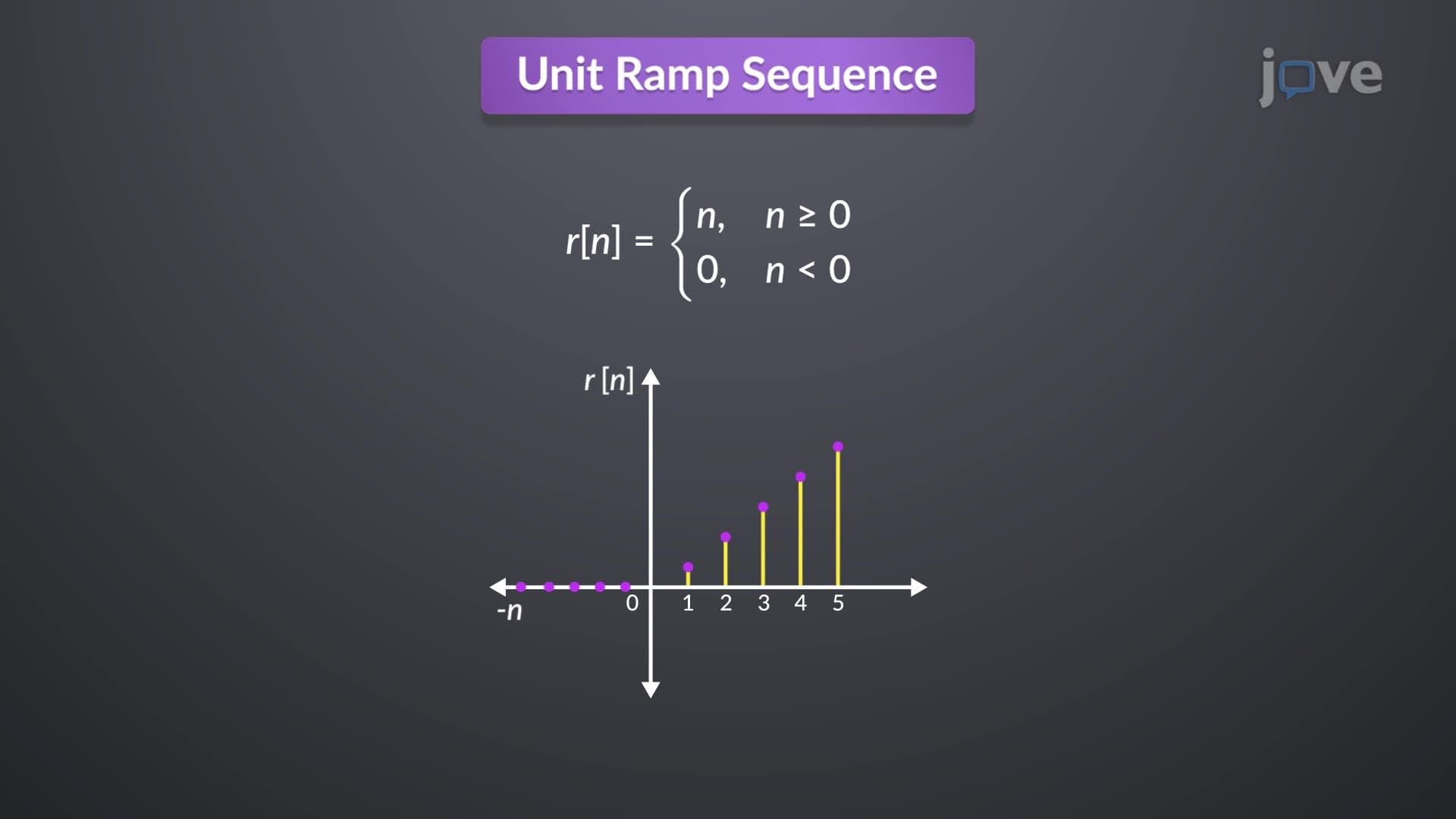

Video Summary: What are Basic Discrete Time Signals
Ever wonder how your smartphone processes the audio when you ask Siri a question? Basic operations on signals transform continuous sound waves into discrete digital data that computers can understand. What are Basic Discrete Time Signals involves fundamental signal types like unit step, impulse, ramp, sinusoidal, and exponential sequences that form the building blocks of digital signal processing used in everything from Netflix streaming to medical imaging equipment. Watch the full video on JoVE Coach to master this concept with expert-led visuals and step-by-step explanations.
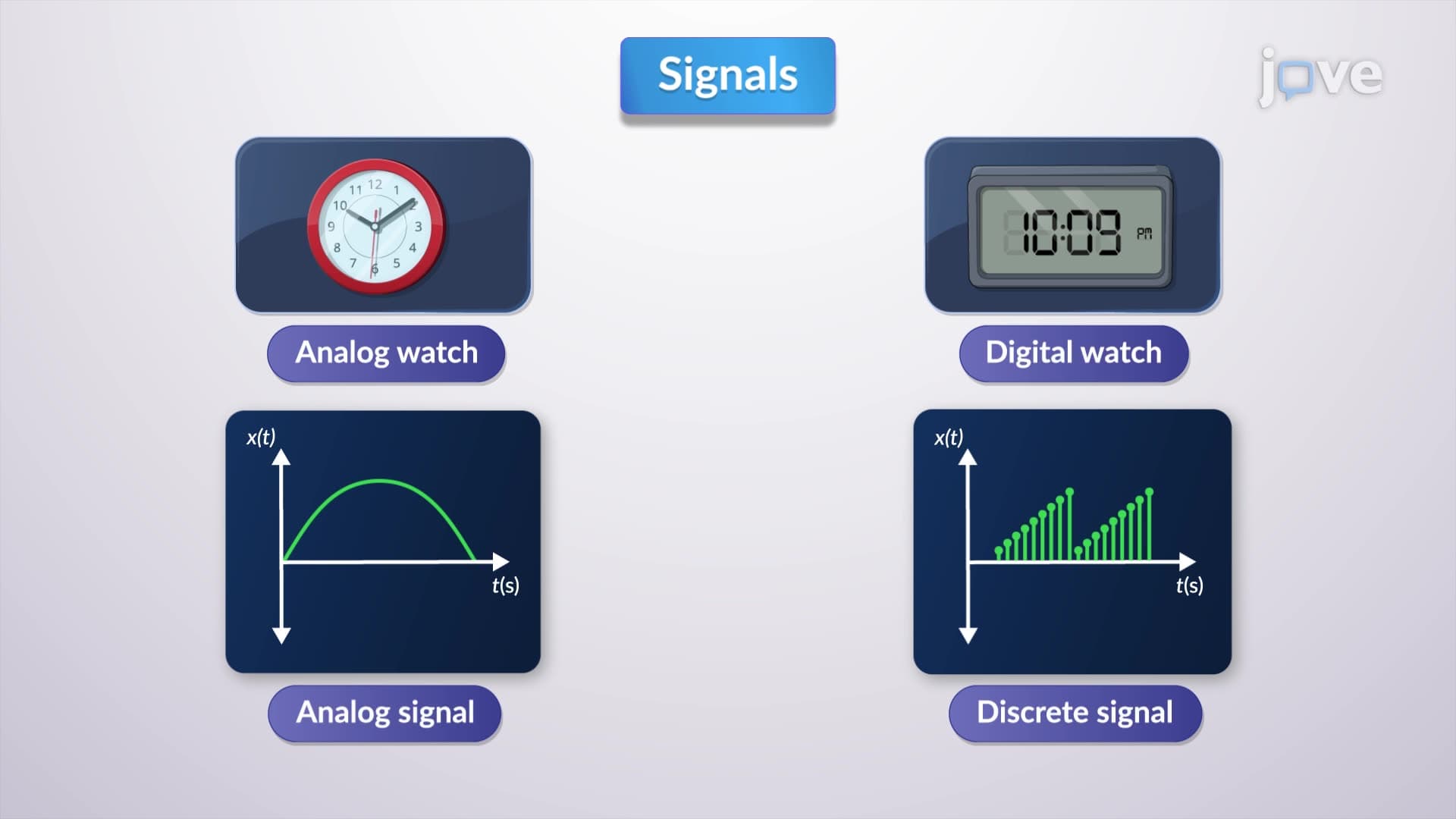
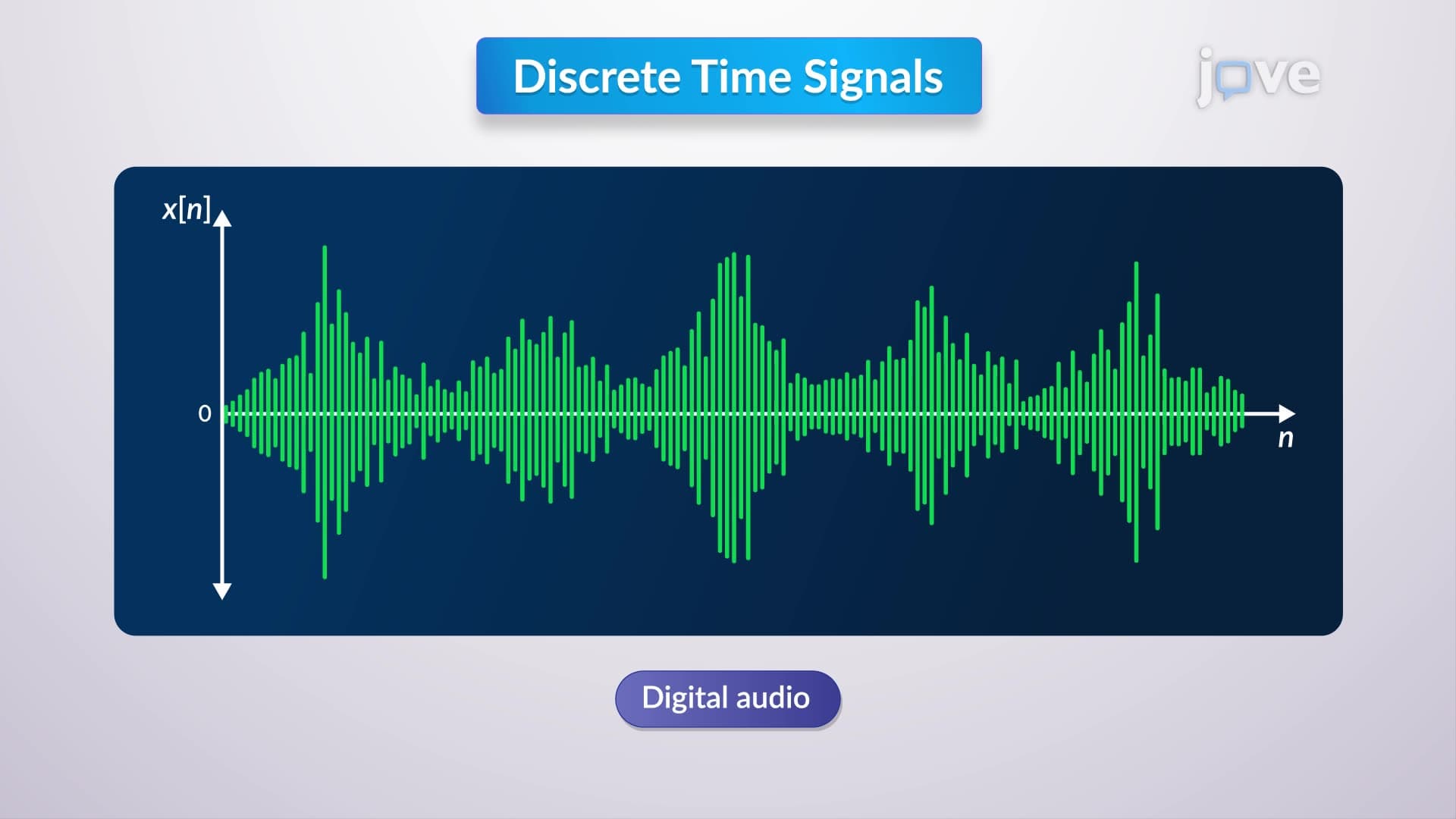
Basic discrete time signals represent the fundamental building blocks of digital signal processing, converting continuous analog information into discrete samples that digital systems can manipulate. Unlike continuous signals that exist at every point in time, discrete signals only have values at specific time instances, typically represented as integer sample numbers (n). This discretization process enables computers, smartphones, and digital devices to process real-world phenomena like sound, images, and sensor data.
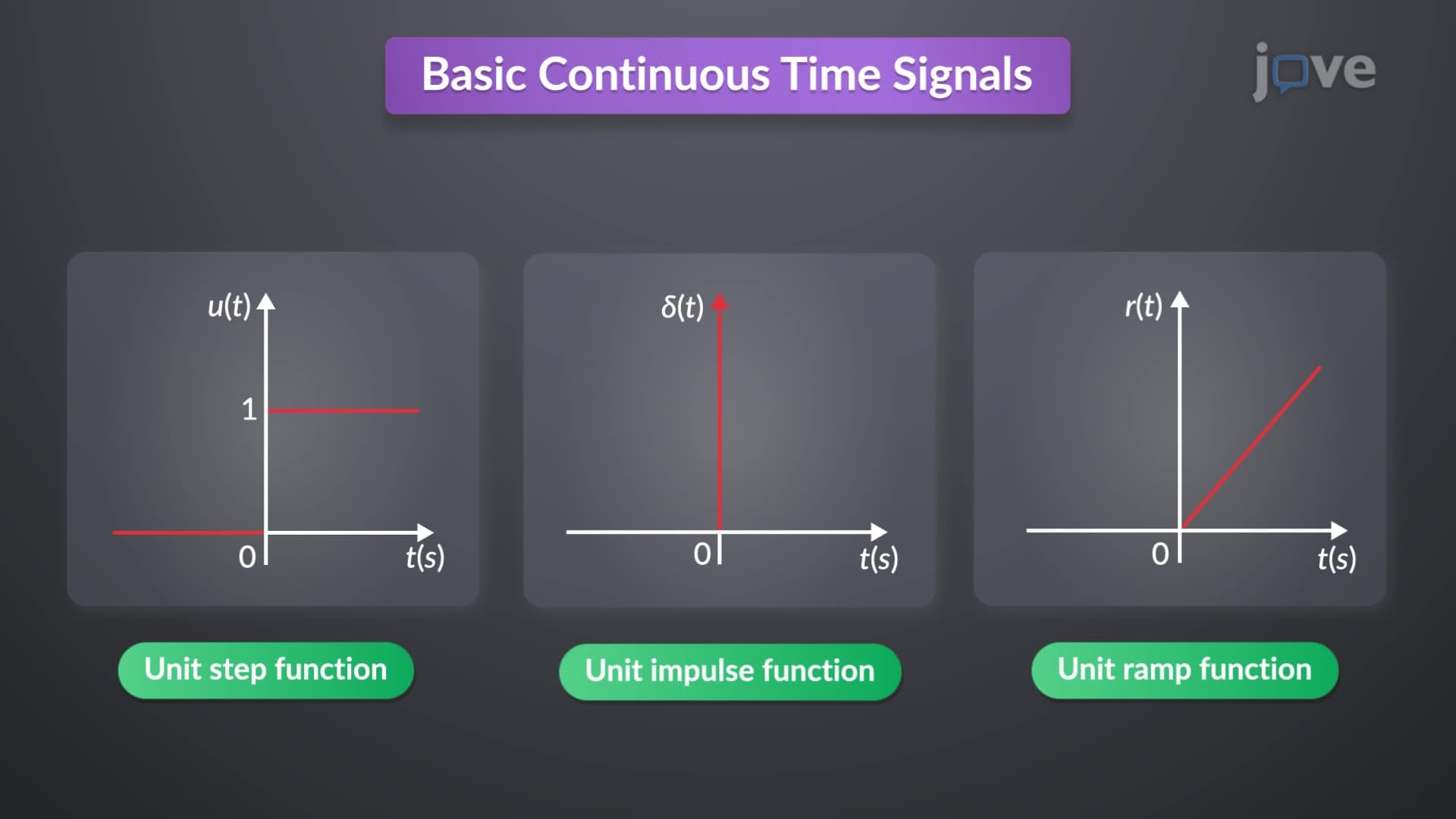
The unit step sequence serves as one of the most important basic operations on signals, defined as u[n] = 1 for n ≥ 0 and u[n] = 0 for n < 0. This signal represents a sudden transition from zero to one, similar to turning on a switch. In practical applications, unit step sequences model sudden changes in systems, such as when a circuit breaker activates or when a digital filter begins processing.
The unit impulse sequence (also called the unit sample sequence) is mathematically expressed as δ[n] = 1 when n = 0 and δ[n] = 0 for all other values of n. This signal has a crucial sampling property - when multiplied with any other signal, it extracts the signal's value at n = 0. The unit impulse relates directly to the unit step through the relationship: δ[n] = u[n] - u[n-1], while u[n] = Σ(k=-∞ to n) δ[k].
The unit ramp sequence demonstrates linear growth, defined as r[n] = n for n ≥ 0 and r[n] = 0 for n < 0. This signal type appears in testing linear systems and modeling gradually increasing phenomena like charging capacitors or ramping motor speeds in industrial control systems.
Sinusoidal sequences take the form x[n] = A cos(ωn + φ), where A represents amplitude, ω represents digital frequency, and φ represents phase. These signals are fundamental in types of basic operations on signals used for communication systems, audio processing, and AC power analysis. Understanding sinusoidal sequences is crucial for AP Physics and college-level electrical engineering courses.
Exponential sequences are expressed as x[n] = A * r^n, where r determines whether the sequence grows (|r| > 1) or decays (|r| < 1). Complex exponential sequences using Euler's formula connect directly to frequency domain analysis, essential for understanding how digital filters and Fourier transforms work in applications like MRI imaging and cellular communication.
These basic operations on signals concepts appear regularly in AP Computer Science A, college calculus courses, and engineering fundamentals. Students preparing for standardized tests should focus on graphical interpretation skills and understanding the mathematical relationships between different signal types. The sampling theorem and digital signal processing principles built on these foundations are increasingly important in STEM careers, from biomedical engineering to data science.
Related Micro-courses