Loading video…


 11 Concepts
 9.2K views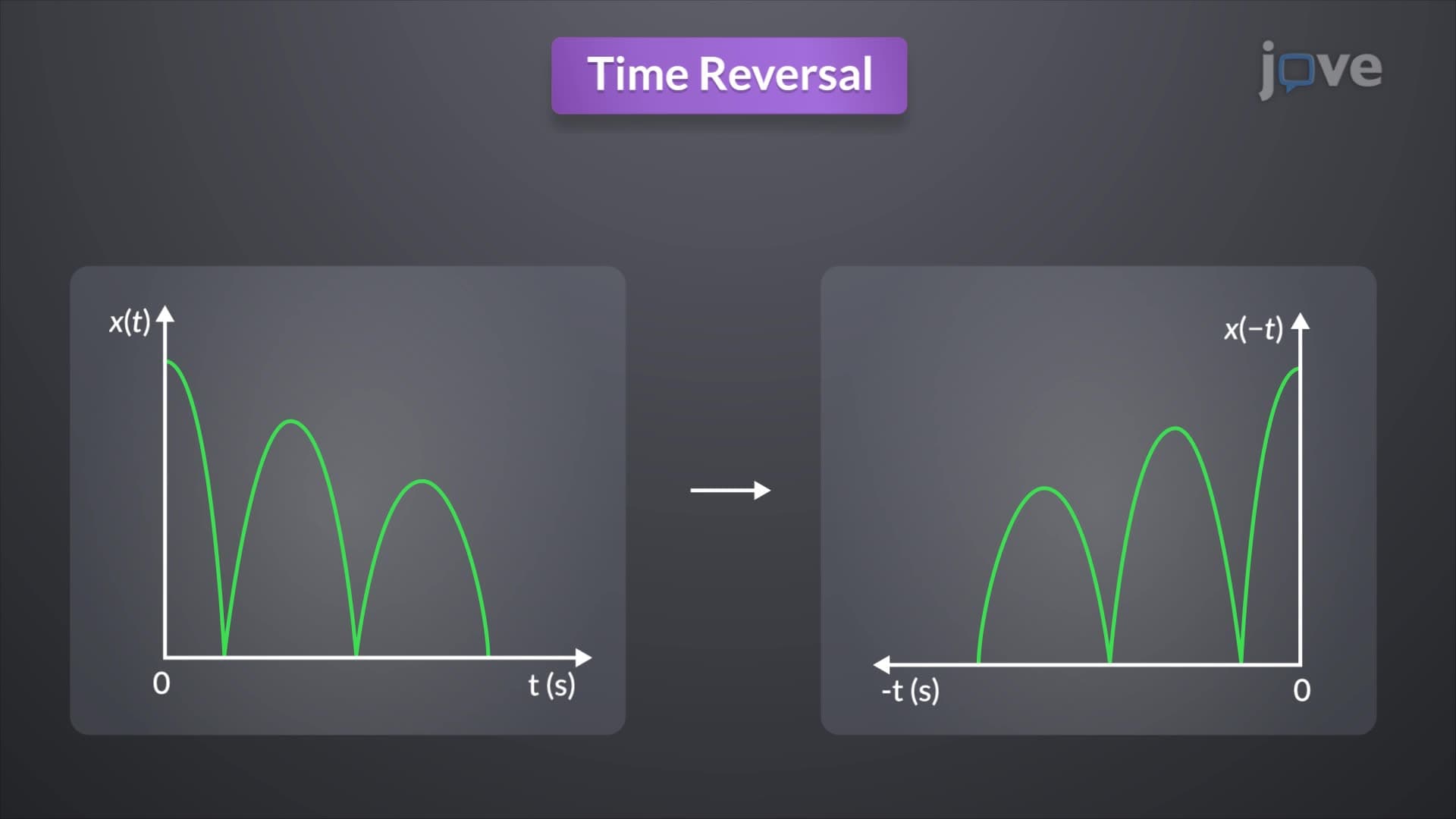

Video Summary: What are Basic Operations on Signals
Ever wondered how your smartphone compresses hours of music into tiny files or how Netflix adjusts video quality in real-time? The classification of systems i relies on understanding basic signal operations-time reversal, scaling, shifting, and amplitude transformations. For instance, when Spotify speeds up a podcast during playback, it's using time scaling operations that electrical engineers at US companies like Texas Instruments design into digital signal processors. These fundamental operations form the backbone of modern signal processing systems. Watch the full video on JoVE Coach to master this concept with expert-led visuals and step-by-step explanations.
What are basic operations on signals forms a cornerstone of signal processing theory, essential for students preparing for AP Physics, electrical engineering coursework, and professional certifications like the FE exam. These operations-time reversal, scaling, shifting, and amplitude transformation-provide the mathematical foundation for manipulating continuous-time signals in both analog and digital systems.
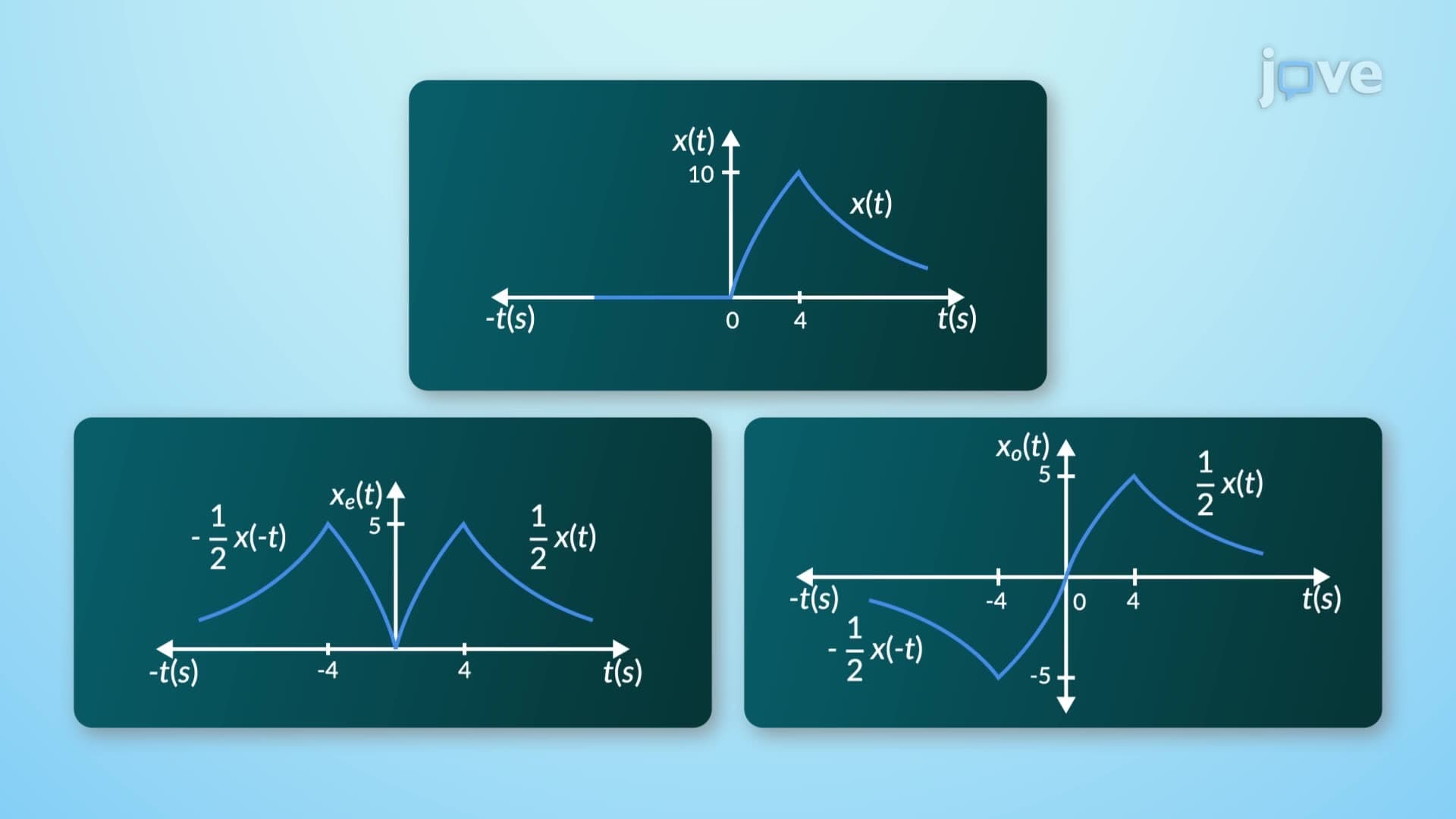
Time reversal transforms a signal x(t) into x(-t), effectively flipping it about the vertical axis at t = 0. This operation proves crucial in correlation analysis and matched filtering applications used by companies like Qualcomm in cellular communication systems. When applied to an audio signal, time reversal would make speech play backward-a technique used in forensic audio analysis by the FBI's Engineering Research Facility.
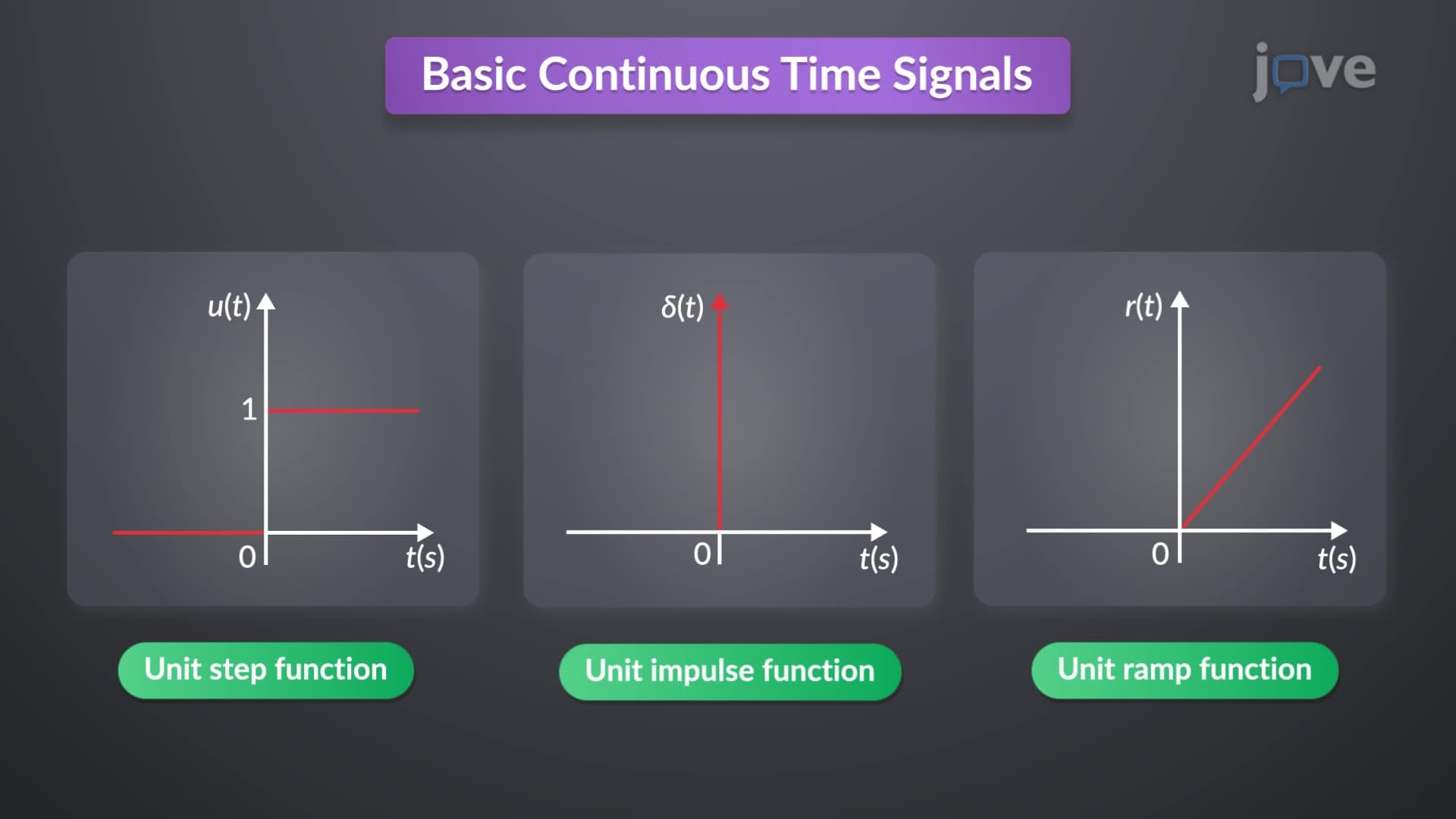
The mathematical implementation involves substituting every occurrence of t with -t in the signal equation. For example, if x(t) = e^(-2t)u(t) where u(t) is the unit step function, then x(-t) = e^(2t)u(-t), fundamentally changing the signal's time-domain behavior.
Time scaling replaces t with at, where 'a' is a scaling constant. This operation directly impacts signal duration and frequency content-concepts tested extensively on the MCAT's physics section and electrical engineering graduate exams like the GRE Subject Test.
When |a| > 1, the signal compresses in time, effectively speeding up the signal. This principle underlies variable-speed playback features in educational platforms used by US universities. Conversely, when |a| < 1, the signal expands, slowing down the temporal evolution. Negative values of 'a' combine scaling with time reversal, creating both time compression/expansion and backward playback simultaneously.
Time shifting, achieved through t → (t - t₀), delays signals when t₀ > 0 and advances them when t₀ < 0. This concept appears frequently in AP Calculus BC problems involving function transformations and forms the basis for delay lines in radar systems manufactured by companies like Raytheon.
Amplitude transformations follow the general form y(t) = Ax(t) + B, where A controls scaling and B adds a DC offset. These operations are fundamental to analog signal conditioning circuits designed by engineers at Texas Instruments and Analog Devices, enabling proper signal levels for analog-to-digital converters.
Related Micro-courses