Loading subject page…


9,204 views

Video Summary: What are Even and Odd Signals
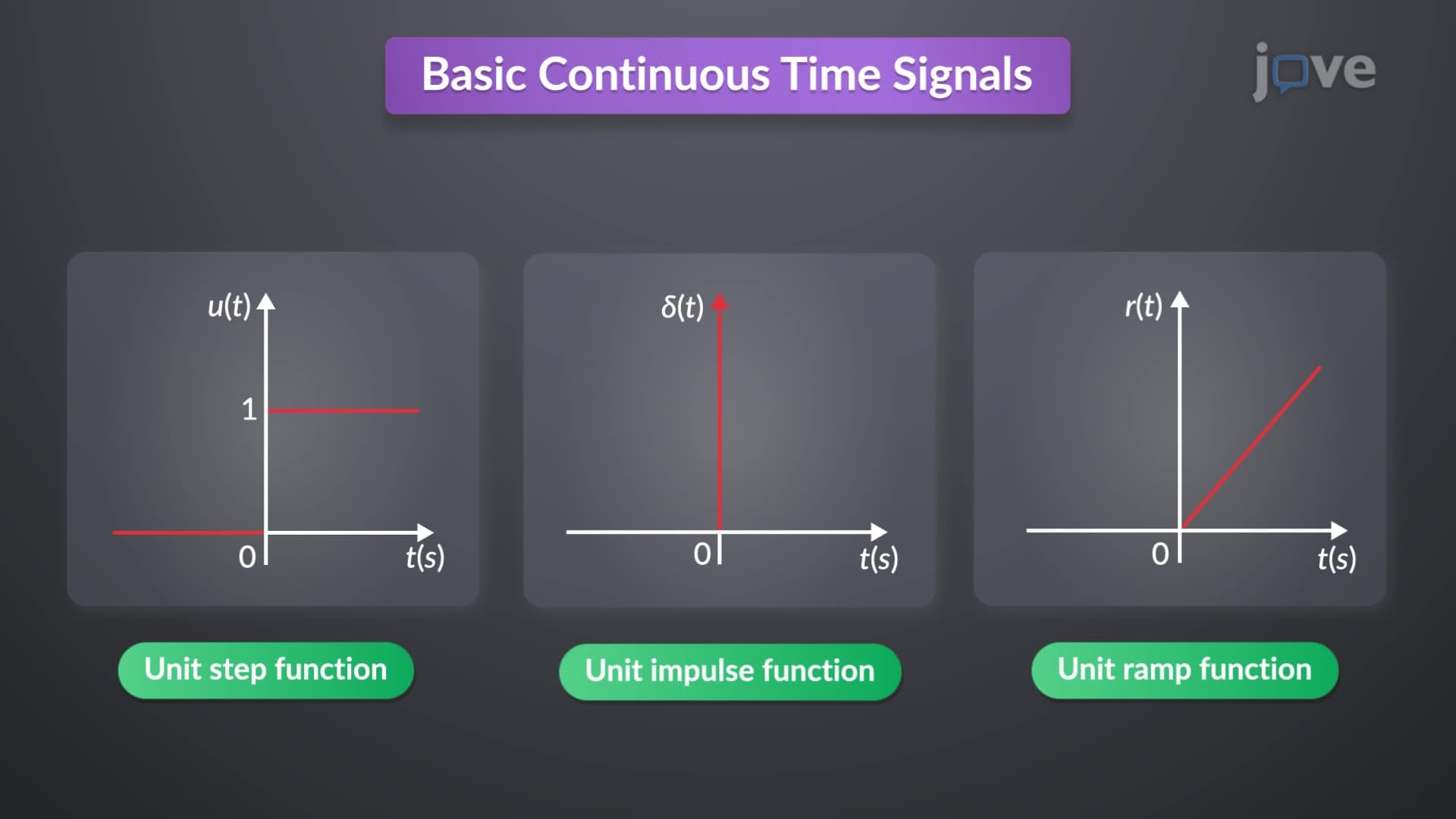
Did you know that the symmetrical patterns in your smartphone's audio equalizer display represent basic continuous time signals with even and odd properties? Understanding What are Even And Odd Signals reveals how engineers at companies like Apple and Qualcomm design noise-canceling algorithms that rely on these mathematical symmetries. These signal types form the foundation for analyzing everything from WiFi transmission patterns to medical EKG readings in US hospitals. Watch the full video on JoVE Coach to master this concept with expert-led visuals and step-by-step explanations.
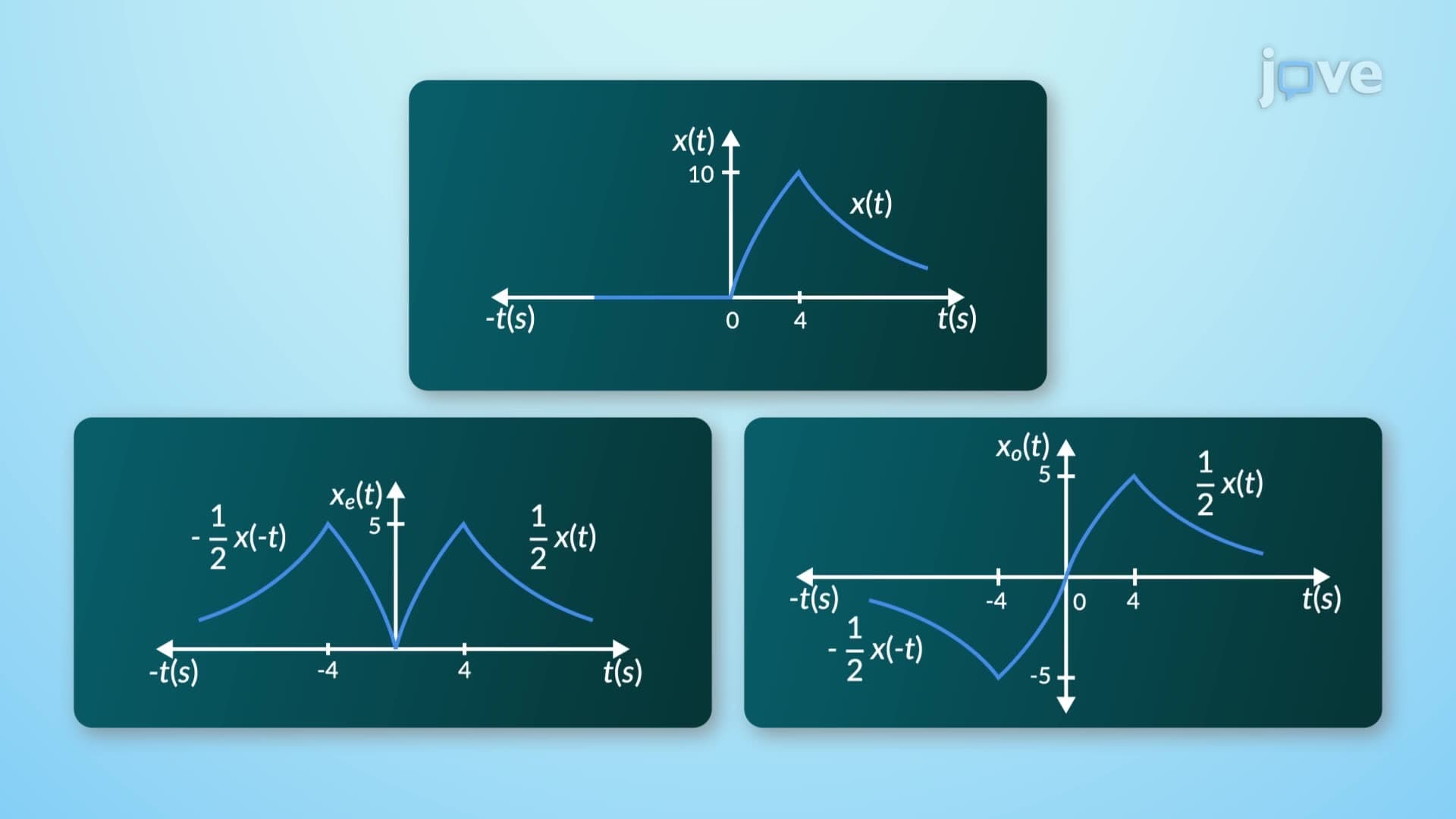
Basic continuous time signals form the cornerstone of signal processing theory, with even and odd signals representing two fundamental categories that engineers encounter daily. An even signal exhibits perfect symmetry around the vertical axis (t = 0), meaning f(t) = f(-t) for all time values. Picture folding a graph along the y-axis, if both halves match perfectly, you're looking at an even signal. Conversely, odd signals demonstrate antisymmetry, where f(t) = -f(-t), creating a pattern that appears to rotate 180 degrees around the origin.
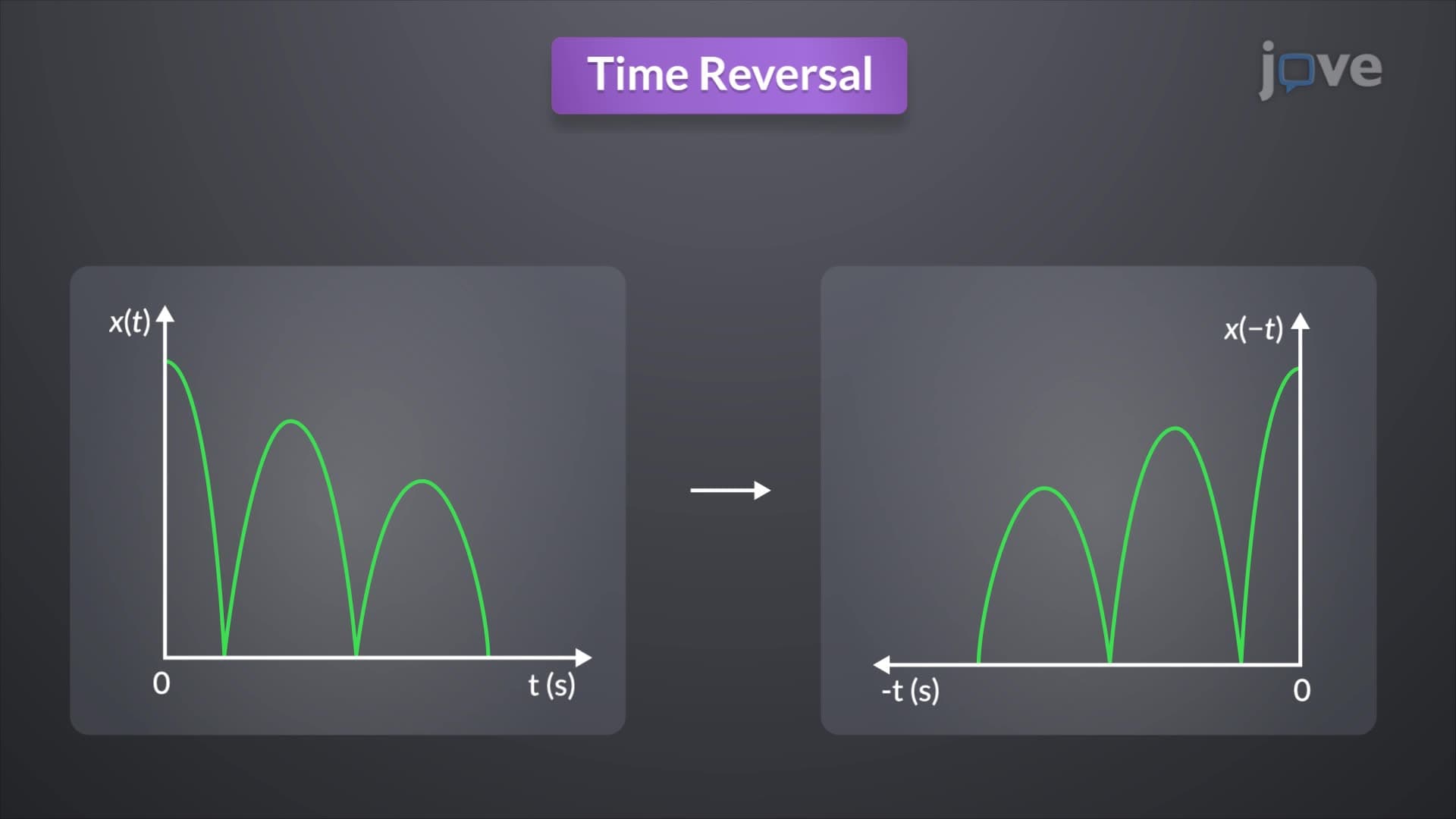
The classification of types of basic continuous time signals extends beyond simple mathematical definitions into practical engineering solutions. At Motorola's research facilities in Illinois, engineers utilize even signal properties to design efficient filters for 5G networks. Even signals like cosine waves maintain their shape under time-reversal operations, making them ideal for creating stable communication protocols. Meanwhile, odd signals such as sine waves find applications in AC power distribution systems across the US electrical grid, where their antisymmetrical properties help maintain balanced three-phase power delivery.
Every continuous-time signal can be mathematically expressed as the sum of an even component and an odd component: f(t) = f_even(t) + f_odd(t). This decomposition principle appears frequently in AP Calculus BC exams and forms a critical concept in undergraduate electrical engineering coursework at institutions like MIT and Stanford. The even component equals [f(t) + f(-t)]/2, while the odd component equals [f(t) - f(-t)]/2. These formulas enable engineers at companies like Intel to analyze complex processor clock signals by breaking them into manageable symmetrical components.
Understanding basic continuous time signals overview proves essential for students preparing for the MCAT's physics section or electrical engineering placement exams. When multiplying signals, remember that even × even = even, odd × odd = even, and even × odd = odd, patterns that mirror algebraic sign rules. These relationships appear in SAT Subject Test Mathematics Level 2 problems and form the foundation for advanced topics like Fourier analysis. In biomedical applications, cardiologists at Johns Hopkins Hospital use these principles to analyze EKG waveforms, where even components might indicate normal cardiac rhythms while odd components could suggest arrhythmias requiring immediate attention.
Related Micro-courses