Loading subject page…


9,204 views

Video Summary: What Is Classification of Systems I
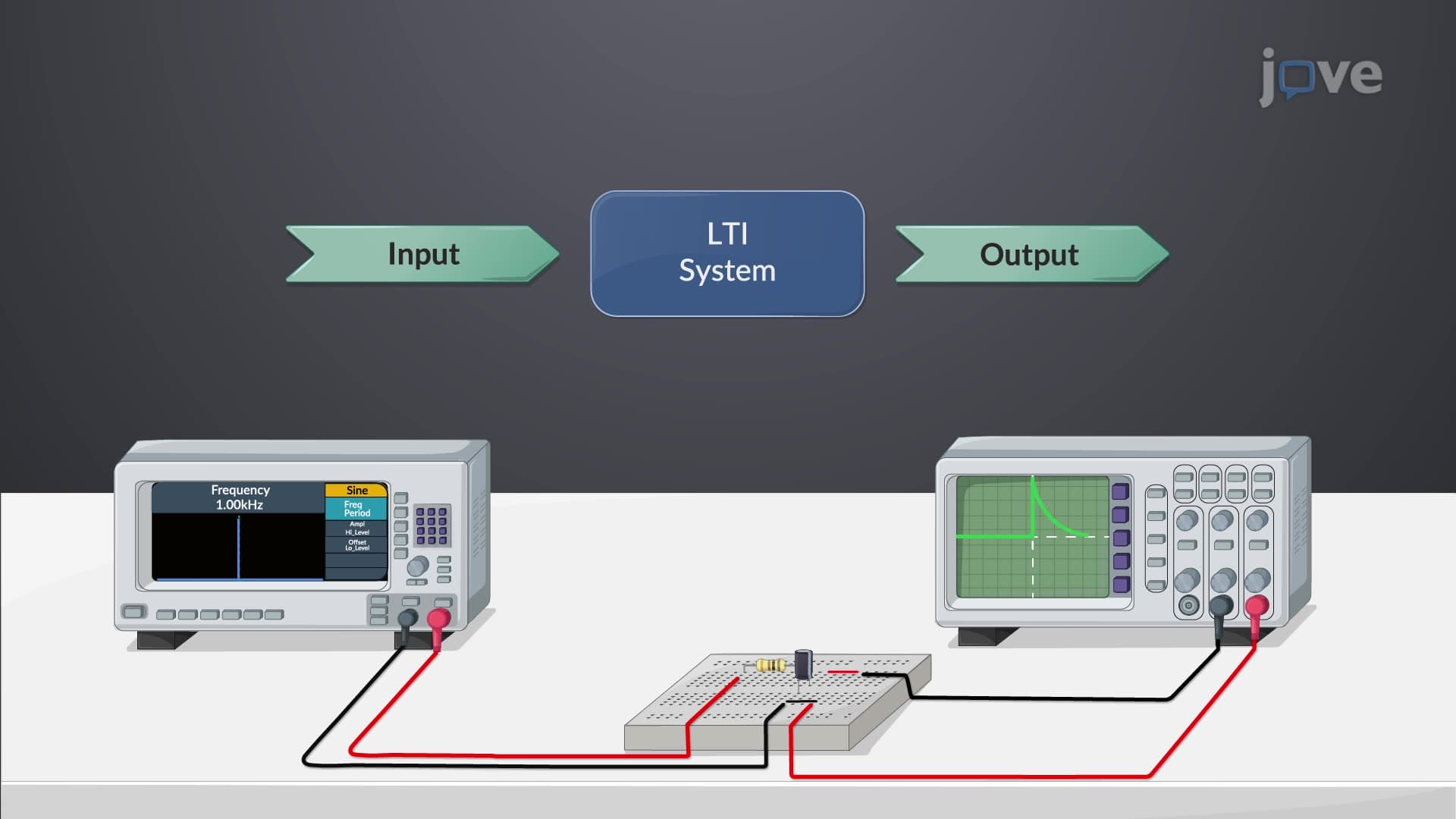
Ever wonder why your smartphone's GPS can predict your arrival time but can't tell you about traffic jams that haven't happened yet? The classification of systems I reveals how engineers categorize systems based on fundamental properties like linearity, causality, and memory. Linear systems, such as the resistor-capacitor circuits in your phone's charging adapter, follow predictable mathematical rules that make complex calculations manageable. Understanding What is Classification of Systems I helps distinguish between systems that can be analyzed using superposition principles versus those requiring more complex approaches. Watch the full video on JoVE Coach to master this concept with expert-led visuals and step-by-step explanations.
Classification of systems I forms the foundation for understanding how engineers analyze and design everything from smartphone circuits to aerospace control systems. This classification system organizes complex engineering systems into manageable categories based on three critical properties: linearity, causality, and memory characteristics.
Linear systems represent the most mathematically tractable category in engineering analysis. A system achieves linearity when it satisfies two key conditions: homogeneity (scaling property) and additivity (superposition property). For homogeneity, if you double the input voltage to a resistor circuit, the output current doubles proportionally. Additivity means that applying two input signals simultaneously produces an output equal to the sum of individual responses.
Consider a typical audio amplifier in your car stereo system. A linear amplifier preserves the original waveform shape while increasing amplitude, ensuring faithful sound reproduction. However, when the amplifier reaches saturation, it becomes nonlinear, creating distortion. This distinction appears frequently on AP Physics exams and college-level circuits courses, where students must identify linear regions of operation.
Real-world linear systems include most passive electrical components (resistors, capacitors, inductors) and many mechanical systems operating within their elastic limits. The mathematical advantage of linear systems lies in the superposition principle, allowing engineers to analyze complex inputs by breaking them into simpler components.
Causality represents a fundamental physical constraint: causal systems produce outputs that depend only on past and present inputs, never future ones. Your car's braking system exemplifies causality, braking force responds to current pedal pressure, not future road conditions you haven't encountered.
Noncausal systems, while mathematically useful, cannot be physically realized in real-time applications. Ideal digital filters used in signal processing theory often exhibit noncausal behavior, requiring future input knowledge. Engineers work around this limitation using techniques like buffering and delay lines.
Dynamic systems exhibit memory, where current output depends on input history. A car's suspension system demonstrates this property, hitting a pothole affects vehicle behavior for several seconds afterward. Static systems, conversely, respond instantaneously to current inputs without considering past events.
This classification proves essential for control systems engineering, appearing prominently in college-level mechanical and electrical engineering curricula. Understanding these distinctions helps students tackle complex system analysis problems on standardized exams and prepares them for advanced coursework in signals and systems.
Related Micro-courses