Loading subject page…

- Electrical Engineering
- Transmission Line Parameters
- Shunt Admittances
Micro-course: Transmission Line Parameters
1,944 views
Learn key concepts and earn your certificate.

Shunt Admittances

00:00
01:26
Video Summary: What Is Shunt Admittances
Ever wonder how power engineers ensure electricity safely travels hundreds of miles from power plants to your home? Transmission line differential equations form the mathematical foundation that governs electrical behavior in these massive power systems. Shunt admittances represent the capacitive effects between conductors and ground in overhead transmission lines, crucial for analyzing voltage regulation across the US electrical grid. Understanding what is shunt admittances helps predict how electrical charges distribute along transmission lines, especially when conductors interact with Earth's surface through image theory. Watch the full video on JoVE Coach to master this concept with expert-led visuals and step-by-step explanations.
- Understand what is shunt admittances and how they model the capacitive coupling between transmission line conductors and ground
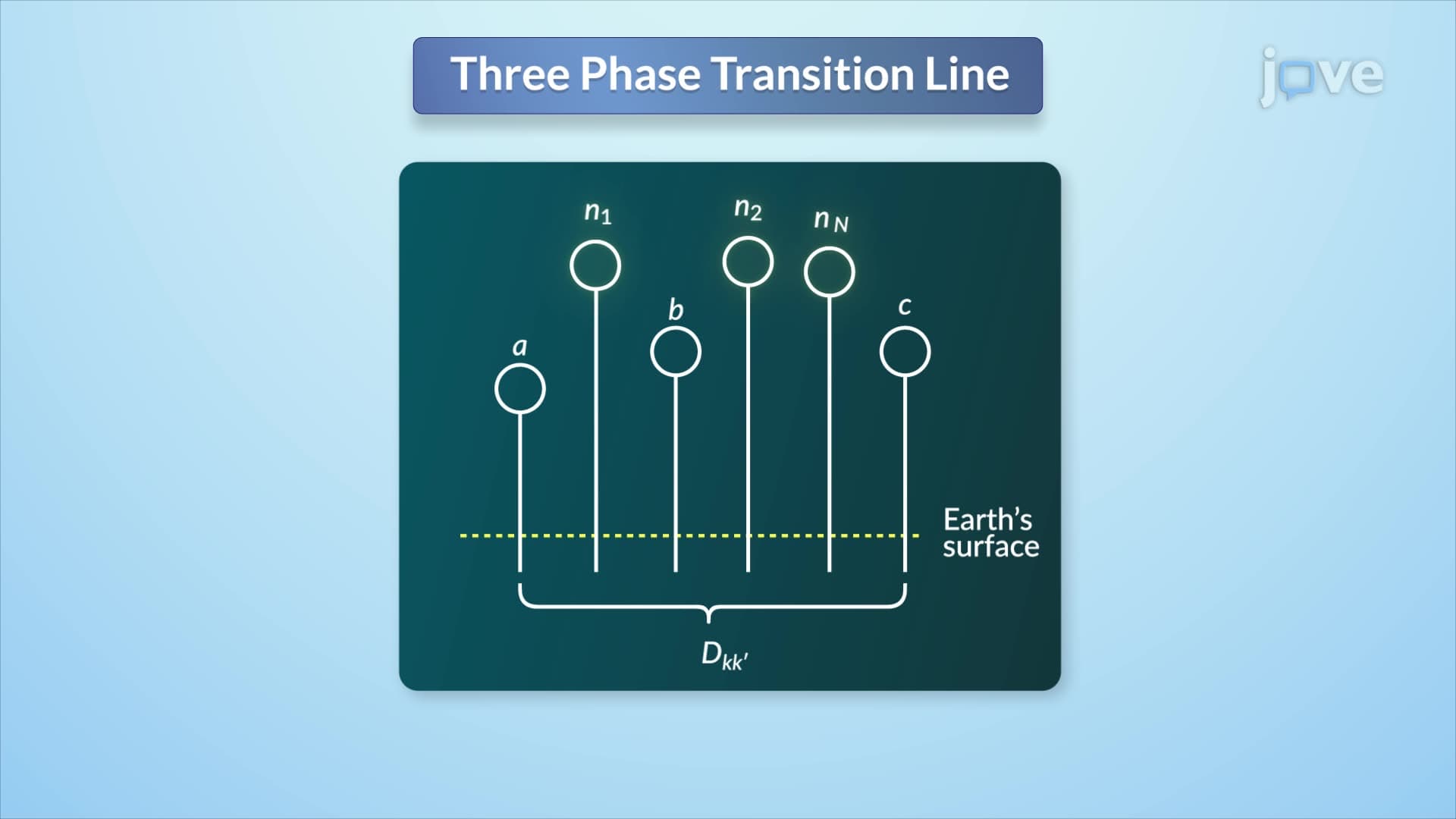
- Identify the role of image conductor theory in calculating electric field distributions for overhead power lines
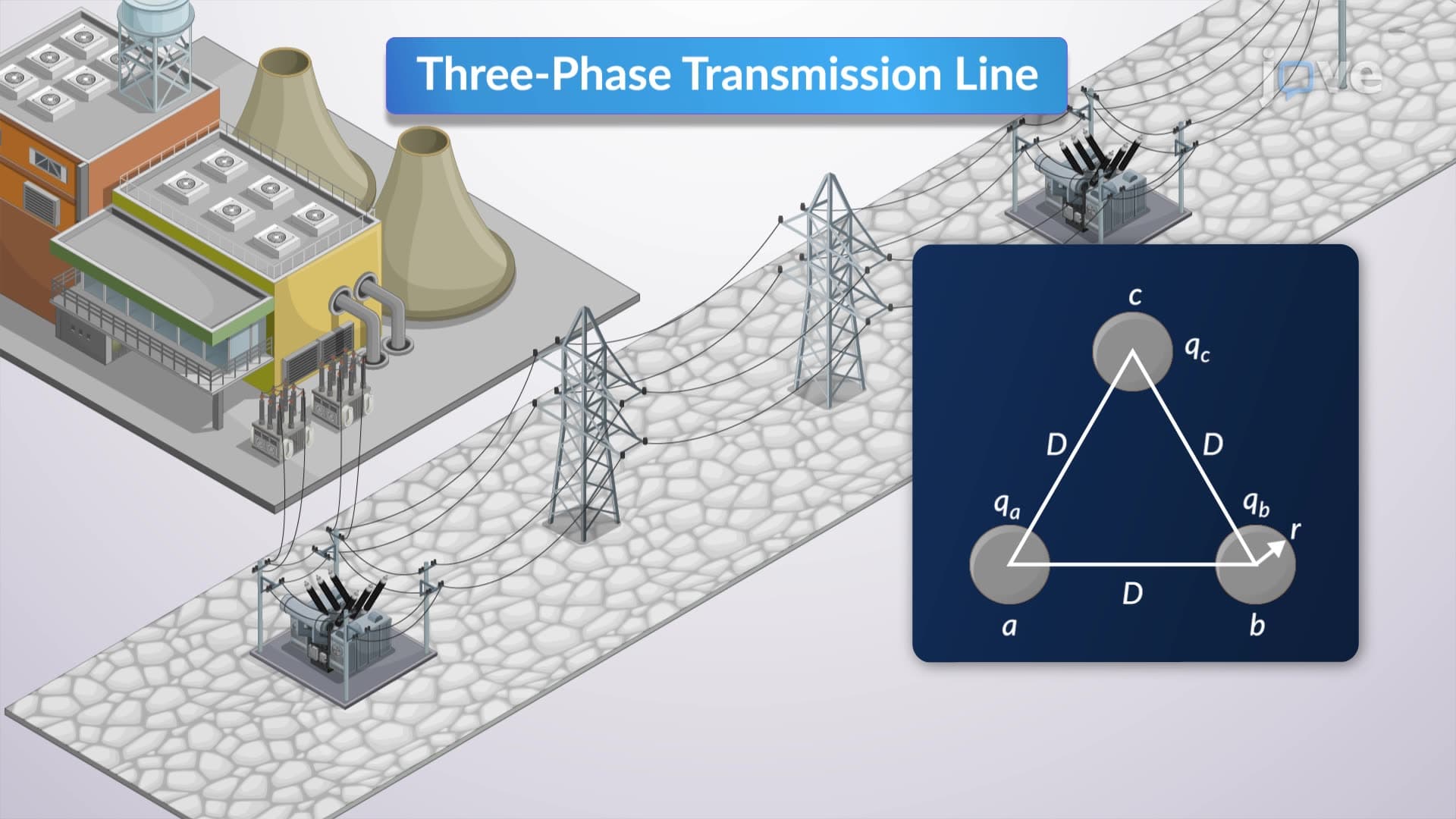
- Analyze how matrix equations relate phase-conductor charges to phase-to-neutral voltages in three-phase power systems
- Compare voltage relationships between conductors and their corresponding image conductors beneath Earth's surface
- Evaluate the effects of line transposition on capacitance matrix elements and shunt admittance calculations
- Apply shunt admittance concepts to solve transmission line problems involving multiple parallel circuits
- Recognize how grounded neutral conductors affect charge distribution in balanced three-phase systems
- Explore the mathematical derivation of equivalent three-by-three shunt admittance matrices for complex transmission configurations
Understanding Shunt Admittances in Power Systems
Transmission line differential equations rely heavily on understanding shunt admittances, which represent the capacitive properties of overhead power lines. These admittances describe how electrical charges accumulate on conductors due to the electric fields created between phases and ground. In the US power grid, this concept is essential for analyzing voltage stability and power quality across long-distance transmission networks.
Image Conductor Theory and Earth Effects
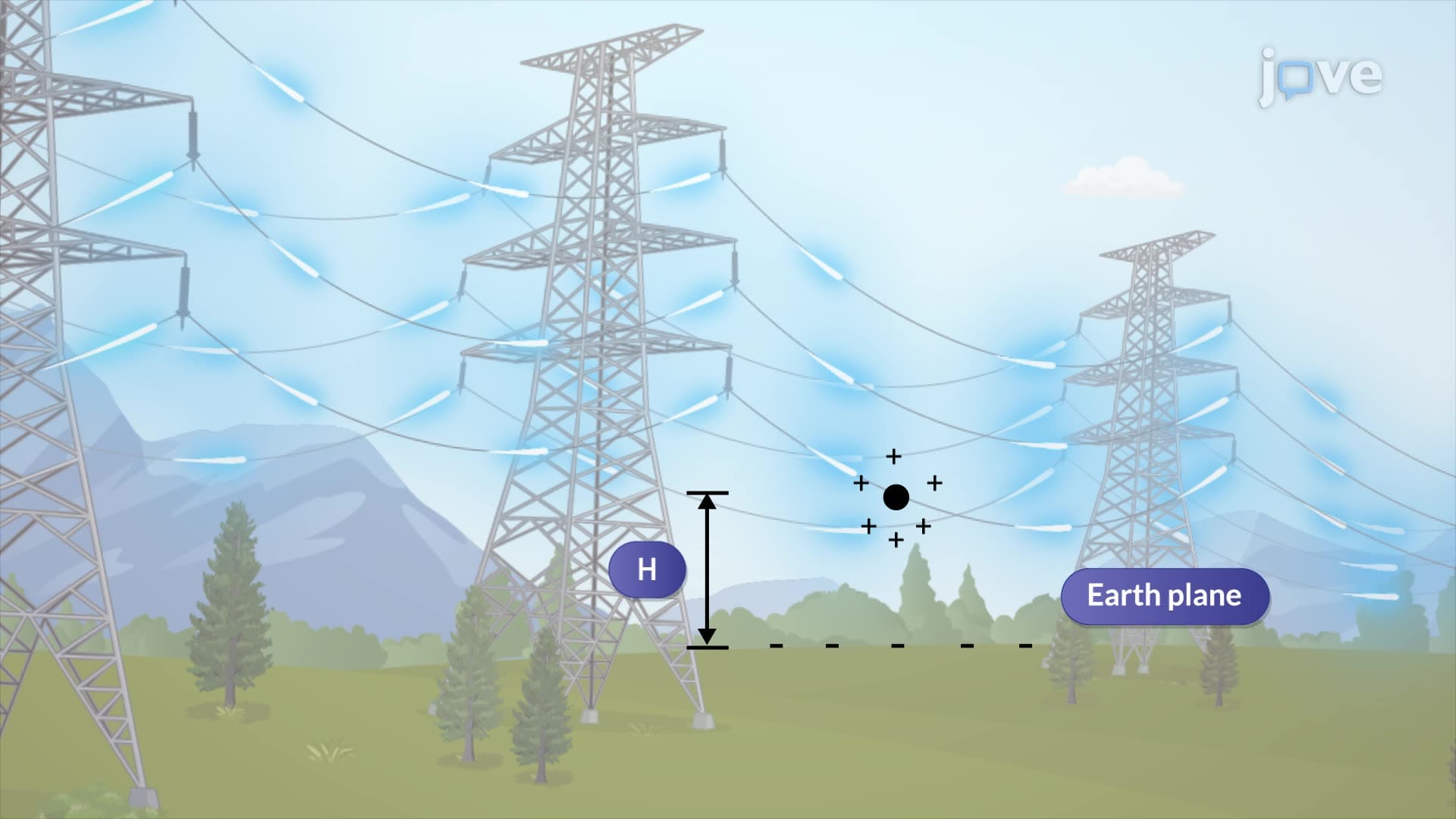
The image conductor method provides an elegant solution for modeling Earth's influence on overhead transmission lines. When a charged conductor exists above ground, it induces an equal but opposite charge on Earth's surface. Engineers model this by placing an imaginary conductor at the same distance below ground as the real conductor is above ground. This technique, widely used by utilities like Pacific Gas & Electric and Duke Energy, simplifies complex three-dimensional electric field problems into manageable two-dimensional calculations.
Matrix Formulation of Transmission Line Differential Equations
Types of transmission line differential equations include those governing voltage, current, and admittance relationships. The shunt admittance matrix connects phase-conductor charges to phase-to-neutral voltages through systematic matrix operations. For a typical 500 kV transmission line, engineers partition these matrices to isolate phase conductors from neutral conductors, enabling precise calculations of voltage distribution under various operating conditions.
Practical Applications in Power System Analysis
Understanding what are transmission line differential equations overview becomes crucial when analyzing real scenarios like the 2003 Northeast blackout, where transmission line modeling errors contributed to cascading failures. Modern power system studies use these differential equations to predict voltage sag, reactive power requirements, and system stability margins. Students preparing for electrical engineering careers will encounter these concepts in power systems courses and professional engineering examinations, where accurate modeling of shunt admittances determines whether transmission lines can safely carry their designed power loads.
Frequently Asked Questions
Shunt admittances represent the capacitive coupling between transmission line conductors and ground, describing how electrical charges distribute along power lines. They're crucial for calculating voltage regulation, reactive power flow, and system stability in electrical power networks. Engineers use shunt admittance values to design transmission systems that maintain proper voltage levels across long distances.
AP Physics typically covers basic transmission line concepts through electromagnetic field problems and circuit analysis questions. Students might encounter problems involving electric field calculations, capacitance between conductors, and basic power transmission concepts. While full differential equations are more common in college-level electrical engineering courses, AP students should understand the underlying physics of electric fields and capacitance.
College power systems courses typically test telegrapher's equations, surge impedance calculations, and steady-state phasor analysis using ABCD parameters. Students often solve problems involving voltage and current distribution along transmission lines, reflection coefficients, and power transfer calculations. Expect both analytical derivations and numerical problem-solving using engineering software tools.
Utility companies use shunt admittance calculations to determine optimal placement of reactive power compensation equipment like capacitor banks and reactors. These calculations help maintain voltage stability during peak load conditions and ensure compliance with NERC reliability standards. Engineers also use shunt admittance data for fault analysis and protective relay coordination across transmission networks.
Basic understanding requires familiarity with partial derivatives, complex numbers, and matrix operations typically covered in Calculus II and linear algebra. While the complete mathematical treatment involves advanced topics, introductory concepts can be grasped with solid algebra and trigonometry skills. Most electrical engineering programs introduce these concepts gradually, building mathematical sophistication alongside physical understanding.
Start by mastering the physical concepts behind electric fields and capacitance before diving into matrix formulations. Practice solving numerical problems using both hand calculations and software tools like MATLAB or PowerWorld. Create concept maps linking image theory, matrix operations, and practical applications to build comprehensive understanding for exam success.
Progress to series impedance calculations, complete transmission line models using π-equivalent circuits, and power flow analysis. Advanced topics include transient analysis, stability studies, and optimization of transmission system operation. These concepts form the foundation for specialized areas like renewable energy integration and smart grid technologies.
Related Micro-courses

8 Concepts
9 Concepts