Loading subject page…


2,914 views


Video Summary: What Is Capital Structure Weights
Capital structure weights drive critical financing decisions that can make or break corporate growth strategies in today's competitive market. Understanding capital structure weights is essential for finance professionals evaluating optimal funding mixes and cost of capital calculations. Companies like General Electric have leveraged strategic debt-to-equity ratios to fund expansion while minimizing financing costs through precise weight calculations. These proportional measurements directly impact WACC calculations, influencing everything from merger valuations to capital allocation decisions. Watch the full video on JoVE Coach to master this concept with expert-led visuals and step-by-step explanations.
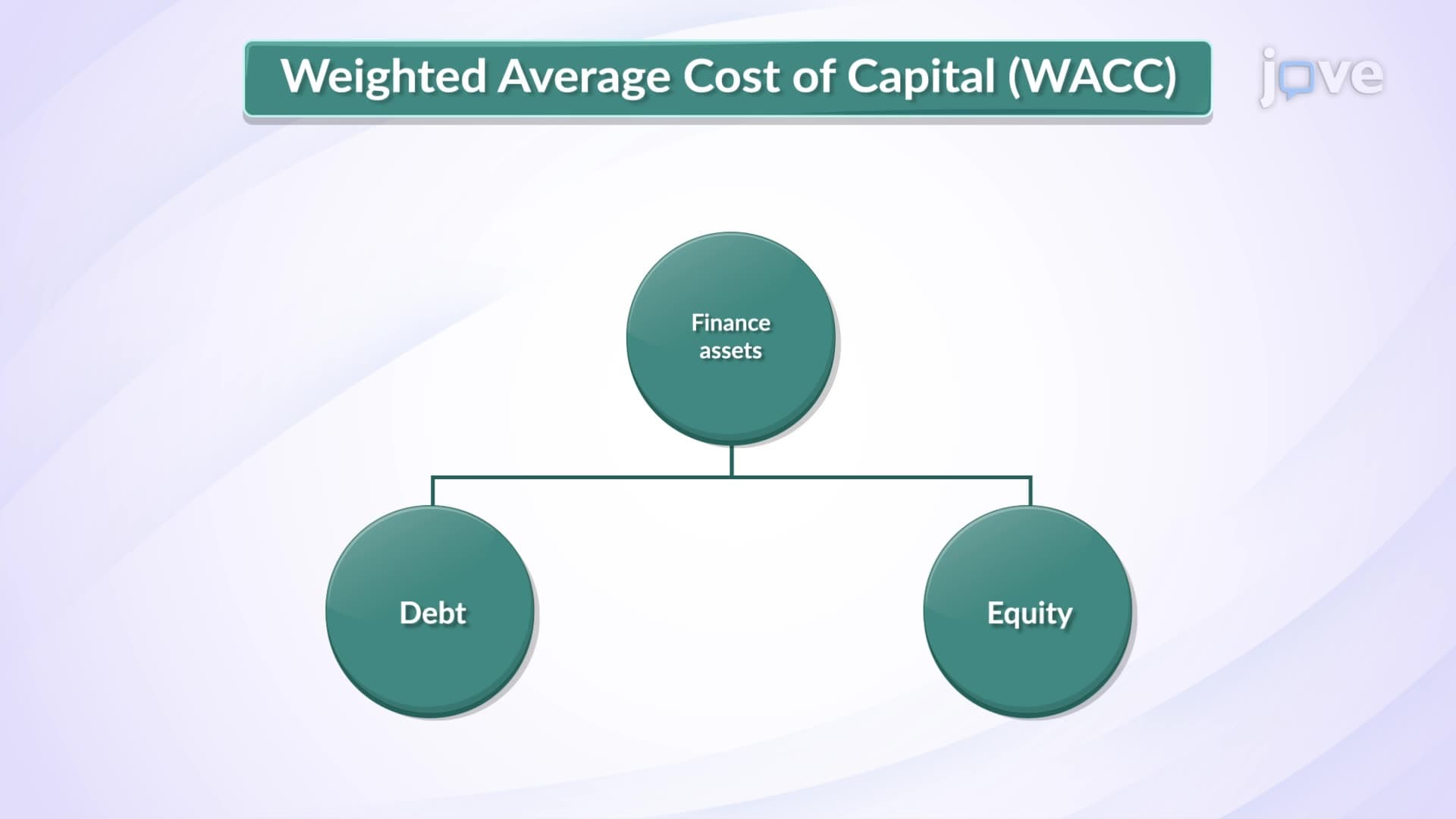
When Microsoft's leadership evaluates financing a major acquisition or Amazon considers funding warehouse expansion, they rely on capital structure weights to determine the most cost-effective funding approach. Capital structure weights represent the proportional breakdown of a company's financing sources-specifically equity, debt, and preferred stock-as percentages of total capitalization.
The weighted average cost of capital (WACC) formula depends entirely on accurate capital structure weights: WACC = (E/V × Re) + (D/V × Rd × (1-T)) + (P/V × Rp), where E/V represents equity weight, D/V represents debt weight, and P/V represents preferred stock weight. These weights directly influence financing costs and, consequently, project approval thresholds, dividend policies, and shareholder value creation.
Consider Apple's capital structure strategy. With approximately $300 billion in total capital comprising roughly 85% equity and 15% debt, Apple's capital structure weights of 0.85 equity and 0.15 debt reflect a conservative approach that maintains financial flexibility while leveraging tax advantages from debt financing. This strategic positioning enables Apple to fund R&D initiatives and return capital to shareholders while maintaining an investment-grade credit rating.
Finance professionals must recalculate capital structure weights regularly as market values fluctuate and financing needs evolve. Unlike book values, market-based weights provide more accurate cost of capital estimates for strategic decision-making. For instance, if equity markets rise significantly, equity weights increase, potentially lowering WACC and making previously marginal projects financially attractive.
Capital structure weights vary significantly across industries based on asset intensity, cash flow predictability, and growth requirements. Utilities like Duke Energy typically maintain higher debt weights (often 50-60%) due to stable, regulated cash flows, while technology companies like Netflix historically maintained lower debt weights to preserve flexibility during rapid growth phases. Understanding these industry benchmarks helps executives optimize their own capital structure positioning and communicate effectively with investors about financing strategy.
Related Micro-courses