Loading subject page…


2,914 views


Video Summary: What Is Cost of Equity
When Goldman Sachs evaluates billion-dollar investment opportunities, cost equity calculations drive critical capital allocation decisions. Understanding what is cost of equity becomes essential when boards must justify returns to institutional investors managing pension funds and endowments. This financial metric determines the minimum return shareholders expect for assuming equity investment risk, directly impacting project approval and strategic planning. Watch the full video on JoVE Coach to master this concept with expert-led visuals and step-by-step explanations.
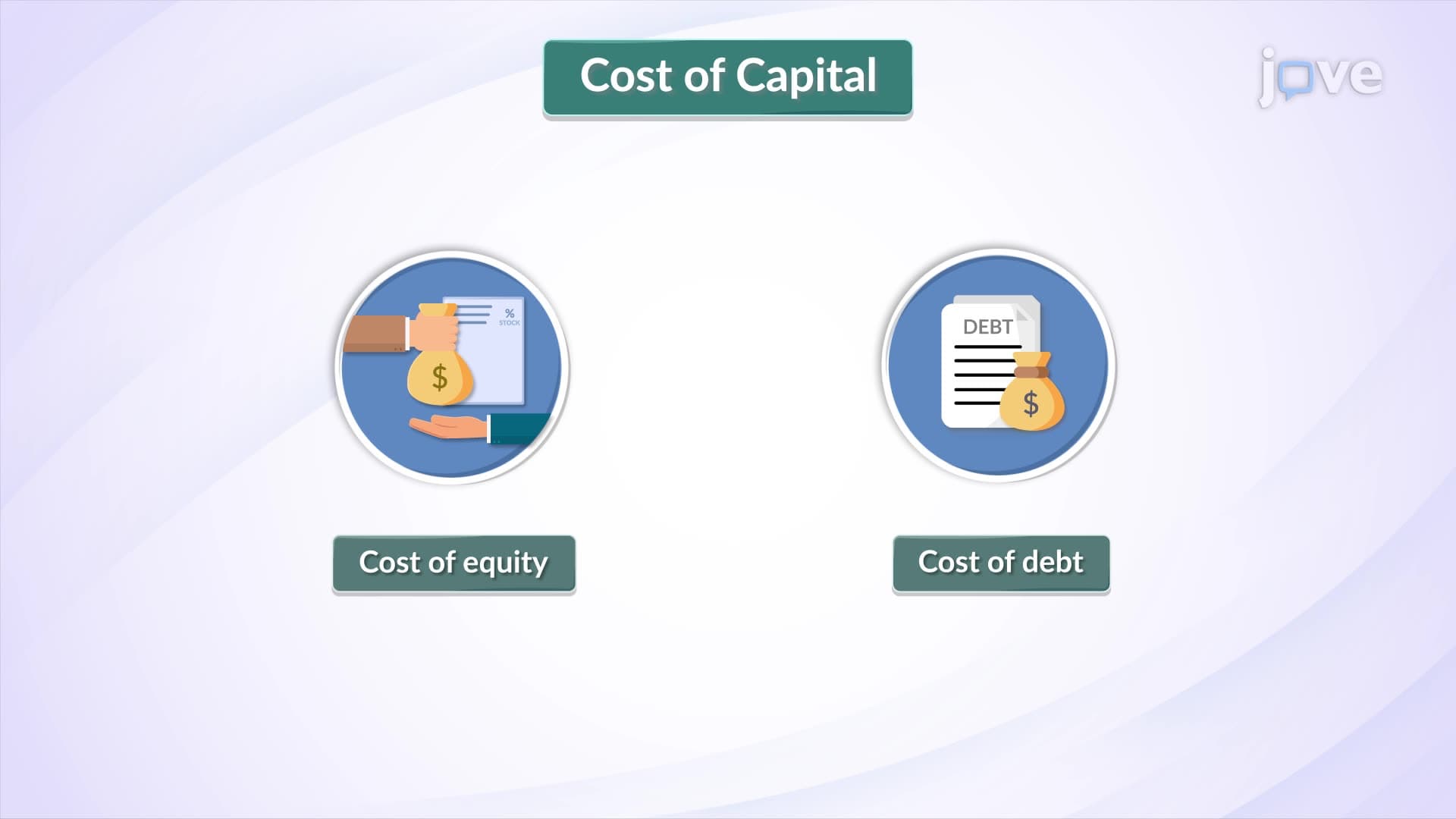
When Microsoft's board evaluates a $10 billion cloud infrastructure expansion, they must ensure projected returns exceed what shareholders could earn investing elsewhere at similar risk levels. The cost of equity definition explained centers on this fundamental principle: it represents the minimum return rate companies must generate to compensate equity investors for their capital and risk assumption.
Professional finance teams rely on CAPM to quantify cost of equity: Required Return = Risk-Free Rate + Beta × Market Risk Premium. Consider Apple's cost of equity calculation during economic uncertainty. With 10-year Treasury yields at 4.5% (risk-free rate), Apple's beta at 1.2, and market risk premium at 6%, Apple's cost of equity equals 4.5% + (1.2 × 6%) = 11.7%. This means Apple's projects must generate returns exceeding 11.7% to create shareholder value.
Cost of equity directly influences capital allocation decisions across corporate America. Amazon's leadership uses these calculations when choosing between warehouse expansion versus technology R&D investments. Projects with internal rates of return below the cost of equity destroy shareholder value, while those exceeding it create wealth. This metric helps executive teams prioritize initiatives, structure financing arrangements, and communicate value creation to institutional investors.
Pharmaceutical giants like Pfizer typically maintain higher cost of equity than utilities like Duke Energy due to regulatory risk and development uncertainties. Understanding these sector-specific variations helps CFOs benchmark performance, negotiate with investors, and position their companies competitively. Private equity firms particularly scrutinize cost of equity calculations when evaluating acquisition targets, as these metrics indicate management's ability to generate returns above market expectations.
Related Micro-courses